Blog

  • DevSecOps Consulting Services: Modernize and Secure Your Software Delivery Pipeline

    Modern engineering teams face an ongoing challenge: shipping software at high speed while maintaining strong security standards. In modern cloud-native environments, traditional security reviews—often conducted right before release—create major bottlenecks. Security assessments delayed until the end of the development lifecycle frequently reveal architectural vulnerabilities or misconfigurations that require costly rework, delaying product launches and frustrating engineering teams.Integrating security directly into the software development lifecycle solves this issue. Specialized DevSecOps Consulting Services help organizations transition from reactive security models to proactive, automated security architectures. By embedding continuous security checks into CI/CD pipelines, cloud platforms, and container management platforms, companies protect their modern delivery pipelines without sacrificing deployment velocity.

    What Is DevSecOps?

    DevSecOps stands for Development, Security, and Operations. It is a cultural, procedural, and technological approach that integrates security practices throughout every phase of the software delivery lifecycle.

    +-------------------------------------------------------------------+
    |                     Continuous DevSecOps Lifecycle                 |
    |                                                                   |
    |   [Plan] -> [Code] -> [Build] -> [Test] -> [Release] -> [Deploy]  |
    |      ^                                                         |  |
    |      |--------------- [Monitor & Operate] <--------------------+  |
    |                                                                   |
    |   Embedded Controls: SAST | SCA | Secrets | DAST | IaC | CSPM    |
    +-------------------------------------------------------------------+
    

    Definition of DevSecOps

    DevSecOps embeds security controls directly into engineering workflows rather than treating security as an isolated perimeter around production environments.

    DevOps vs. DevSecOps

    Traditional DevOps focuses on rapid deployment through automation, continuous integration, and continuous delivery (CI/CD). DevSecOps enhances this model by automating security checks alongside functional code testing.

    Why Security Must Shift Left

    “Shifting left” means introducing security testing earlier in the software development lifecycle (SDLC). Identifying a vulnerability during code writing or pull request reviews costs significantly less time and resources to fix than remediating a breach in production.

    Security Throughout the SDLC

    DevSecOps ensures continuous security across all phases:

    • Planning: Threat modeling and security requirements definition.
    • Development: Static code analysis and secrets detection.
    • Testing: Dynamic security analysis and automated dependency checks.
    • Deployment: Infrastructure as Code (IaC) verification and container scanning.
    • Operations: Runtime protection, observability, and incident response.

    Role of Automation

    Automation keeps security aligned with rapid engineering cycles. Automated security gates block unsafe deployments without requiring manual review for every minor code change.

    What Are DevSecOps Consulting Services?

    DevSecOps Consulting Services provide organizations with expert guidance to design, build, and optimize secure software delivery environments. Transitioning to DevSecOps involves technical, cultural, and operational changes that require structured execution.

    Consultants evaluate current software engineering workflows, identify security risks, and implement targeted security controls across key domain areas:

    • DevSecOps Strategy: Aligning business goals, regulatory compliance, and risk tolerance with development velocity.
    • Security Integration: Embedding security gates and automated testing into existing developer tools and CI/CD platforms.
    • CI/CD Security: Securing build pipelines, code repositories, and artifact management systems against unauthorized access and tamper attacks.
    • Cloud Security: Ensuring infrastructure deployed on cloud platforms follows security posture management and principal-of-least-privilege models.
    • Application Security: Guarding custom code against vulnerabilities such as injection flaws, cross-site scripting, and insecure authentication patterns.
    • Infrastructure Security: Hardening servers, network configurations, and cloud resources using automated policy enforcement.
    • Container Security: Securing container build steps, base images, registries, and runtime environments.
    • Continuous Security Monitoring: Setting up real-time logging, telemetry, threat detection, and incident response systems.

    DevSecOps Implementation Services

    Adopting security automation requires integrating scanning technologies directly into developer tools. Professional DevSecOps Implementation Services help organizations select, configure, and automate critical security capabilities:

    • Static Application Security Testing (SAST): Scans source code for security flaws during development.
    • Dynamic Application Security Testing (DAST): Evaluates running applications for external vulnerabilities.
    • Software Composition Analysis (SCA): Scans third-party open-source libraries for known vulnerabilities and licensing risks.
    • Secrets Scanning: Detects hardcoded API keys, passwords, and tokens before code reaches central repositories.
    • Container Scanning: Identifies OS-level vulnerabilities within container images.
    • Infrastructure as Code (IaC) Security: Identifies cloud misconfigurations within Terraform, CloudFormation, or Ansible files.
    • Policy as Code: Enforces security rules across infrastructure deployments automatically using tools like Open Policy Agent (OPA).
    • Vulnerability Management: Centralizes security findings to help teams prioritize critical fixes.
    • Automated Compliance Checks: Validates systems against frameworks like ISO 27001, SOC 2, or HIPAA during routine pipeline execution.

    Practical CI/CD Pipeline Security Gate Example

    The following pipeline snippet demonstrates automated security gates in a GitLab CI pipeline, incorporating SAST, SCA, and IaC checks before deployment:

    YAML

    stages:
      - test
      - security_scan
      - deploy
    
    sast_code_scan:
      stage: security_scan
      script:
        - echo "Running Static Code Analysis..."
        - run-sast-tool --path ./src --exit-code-on-high 1
    
    dependency_sca_scan:
      stage: security_scan
      script:
        - echo "Scanning Open Source Dependencies..."
        - run-sca-tool --manifest package-lock.json --fail-on-critical
    
    iac_config_scan:
      stage: security_scan
      script:
        - echo "Checking Infrastructure as Code Templates..."
        - run-iac-scanner --directory ./terraform --severity-threshold high
    

    DevSecOps Managed Services

    Managing security pipelines and reviewing continuous vulnerability alerts can overburden internal platform engineering teams. DevSecOps Managed Services provide ongoing operational support, enabling internal teams to focus on delivering product features.

    Core Managed Services Capabilities

    • Pipeline Maintenance: Keeping security scanners, plugins, and custom validation scripts updated.
    • Vulnerability Triage & Prioritization: Filtering out false positives and assigning actionable remediation tasks to development teams.
    • Continuous Monitoring: Tracking security health metrics across cloud deployments, build servers, and application clusters.
    • Incident Response Support: Providing expert assistance during active security incidents or potential pipeline compromises.
    • Compliance Maintenance: Auditing security configurations continuously to verify ongoing compliance standards.

    Organizations usually opt for managed support when expanding into new cloud regions, migrating to microservices, or addressing internal resource limitations.

    DevSecOps Training

    Building secure software requires developer awareness and practical application security skills. DevSecOps Training programs help developers and platform engineers integrate security directly into their daily coding routines.

    Key Training Focus Areas

    • Secure SDLC Fundamentals: Learning how security controls operate at each development stage.
    • Writing Secure Code: Understanding common code vulnerabilities listed in the OWASP Top 10 and learning remediation patterns.
    • CI/CD Pipeline Security: Setting up and configuring automated security plugins within build systems.
    • Cloud & Container Basics: Configuring cloud environments securely and building minimal, secure container base images.
    • Automated Remediation: Understanding vulnerability reports and applying recommended patches effectively.

    Corporate DevSecOps Training

    Enterprises require structured upskilling tailored to cross-functional teams. Corporate DevSecOps Training aligns development, operations, platform, and security engineers under unified operational processes.

    +--------------------------------------------------------------------+
    |               Cross-Functional Engineering Alignment               |
    +-------------------+--------------------+---------------------------+
    | Software Engineeers| Platform / DevOps  | Security & Compliance     |
    | - Secure Coding   | - Pipeline Gates   | - Policy Enforcement      |
    | - Remediation     | - IaC Hardening    | - Threat Modeling         |
    +-------------------+--------------------+---------------------------+
    

    Team-Specific Training Curriculums

    • Software Engineers: Focuses on secure coding techniques, dependency management, and local developer security tools.
    • DevOps & Platform Teams: Covers pipeline security controls, automated infrastructure scanning, and access management.
    • Cloud & SRE Teams: Covers infrastructure hardening, container security policies, and continuous runtime observability.
    • Security Teams: Covers writing automated security policies, managing vulnerability workflows, and optimizing platform security integrations.

    Effective corporate training includes interactive, hands-on labs where engineers remediate real-world security vulnerabilities in realistic sandbox environments.

    DevSecOps Assessment Services

    Before introducing new tools or policies, organizations must assess their current software delivery mechanisms. DevSecOps Assessment Services evaluate existing engineering practices to build a practical security improvement plan.

    Key Assessment Metrics

    1. Pipeline Coverage: The percentage of repositories running automated security scans.
    2. Mean Time to Remediation (MTTR): How quickly teams patch critical vulnerabilities after discovery.
    3. Flaw Density: The volume of security issues found per codebase size.
    4. Cloud Posture Compliance: Misconfiguration frequencies in active cloud accounts.

    Assessments provide clear maturity roadmaps, prioritizing security investments based on tangible operational risks.

    Cloud Security Consulting Services

    Modern applications rely heavily on public cloud environments like AWS, Microsoft Azure, and Google Cloud Platform. Cloud Security Consulting Services integrate security directly into cloud infrastructure provisioned through automated workflows.

    Cloud Security Domains

    • Identity and Access Management (IAM): Enforcing least-privilege policies to restrict user and service account permissions.
    • Infrastructure as Code Scanning: Checking Terraform, CloudFormation, and Bicep configurations before deployment.
    • Cloud Security Posture Management (CSPM): Monitoring active cloud configurations continuously for publicly exposed storage buckets or open security groups.
    • Secrets Management: Securing database credentials, API keys, and certificates using dedicated stores like HashiCorp Vault or AWS Secrets Manager.

    Reference frameworks provided by organizations like the Center for Internet Security (CIS) serve as reliable foundations for cloud hardening efforts.

    Kubernetes Security Consulting Services

    Container orchestration platforms simplify application deployment, but introduce unique cluster and container operational risks. Specialized Kubernetes Security Consulting Services help harden application container environments across every operational layer.

    +-----------------------------------------------------------------+
    |                   Kubernetes Defense-in-Depth                   |
    |                                                                 |
    |   [Cluster Access] -> RBAC & OIDC Authentication                |
    |         |                                                       |
    |   [Admission]      -> Validating & Mutating Gatekeeper / Kyverno|
    |         |                                                       |
    |   [Networking]     -> Calico / Cilium NetworkPolicies           |
    |         |                                                       |
    |   [Runtime]        -> Seccomp / AppArmor / Falco Monitoring     |
    +-----------------------------------------------------------------+
    

    Core Kubernetes Security Controls

    • Role-Based Access Control (RBAC): Restricting cluster API access based on minimal functional needs.
    • Network Policies: Restricting pod-to-pod communication within clusters to prevent lateral movement.
    • Admission Control: Enforcing deployment rules through engines like Open Policy Agent (OPA) Gatekeeper or Kyverno.
    • Container Security Contexts: Restricting privilege escalations, root permissions, and system access within pod configurations.
    • Runtime Protection: Tracking runtime anomalies in active clusters using tools like Falco, aligned with CNCF security recommendations.

    Software Supply Chain Security Services

    Modern software products rely heavily on third-party libraries, modules, and open-source packages. Software Supply Chain Security Services secure the software lifecycle against unauthorized external code changes and vulnerable dependencies.

    +-------------------------------------------------------------------+
    |               Software Supply Chain Verification                  |
    |                                                                   |
    | [Source Code] -> [Dependency SCA Check] -> [Signed Build]         |
    |                                                  |                |
    | [Production Deployment] <- [Verify Signature] <- [Generate SBOM] |
    +-------------------------------------------------------------------+
    

    Supply Chain Security Components

    • Software Bill of Materials (SBOM): Maintaining an inventory of software components and third-party dependencies.
    • Build Pipeline Security: Protecting build nodes, runners, and repositories from unauthorized modifications.
    • Artifact Integrity & Code Signing: Signing and validating application artifacts, container images, and release assets using frameworks like Sigstore/Cosign.
    • Dependency Monitoring: Tracking open-source project security maintainership, license compliance, and emerging vulnerabilities.

    Deploying frameworks like SLSA (Supply-chain Levels for Software Artifacts) helps build verification processes for modern delivery platforms.

    Penetration Testing Services

    While automated security tools identify known vulnerabilities quickly, manual assessments uncover complex business logic flaws and authorization issues. Penetration Testing Services evaluate modern application environments using targeted manual testing methodologies.

    How Penetration Testing Complements DevSecOps

    Penetration testing complements automated security tools:

    • Automated Scanners: Run continuously within CI/CD pipelines to catch common code defects and misconfigurations quickly.
    • Penetration Testing: Evaluates overall application security periodically, testing complex authorization workflows, business logic, and custom API architectures.

    Applying automated scanning alongside periodic penetration testing provides comprehensive defense-in-depth security coverage.

    DevSecOps Security Toolchain

    A successful DevSecOps strategy selects and integrates practical security tools directly into standard engineering workflows. The table below outlines core security domains alongside standard industry tooling:

    Security AreaDomain FocusRepresentative Tooling Options
    Code SecurityStatic Application Security Testing (SAST)SonarQube, Semgrep, Checkmarx
    Dependency SecuritySoftware Composition Analysis (SCA)Snyk, OWASP Dependency-Check, Trivy
    Secret DetectionAPI Key & Token DiscoveryGitGuardian, TruffleHog, Gitleaks
    Container SecurityContainer Image Vulnerability ScanningTrivy, Clair, Anchore
    Infrastructure SecurityInfrastructure as Code (IaC) AnalysisCheckov, tfsec, KICS
    Policy as CodeAutomated Guardrails & ComplianceOpen Policy Agent (OPA), Kyverno
    Runtime SecurityContainer & Cluster MonitoringFalco, Datadog Security, Sysdig
    Supply Chain SecuritySBOM Management & VerificationSyft, Grype, Cosign/Sigstore

    Benefits of DevSecOps Consulting

    Engaging specialized consultants accelerates security adoption while minimizing operational friction across development and security teams.

    Primary Practical Benefits

    • Faster Remediation Times: Catching bugs early simplifies fixes before code deploys to production environments.
    • Automated Compliance Verification: Generating audit logs automatically reduces manual compliance preparations.
    • Reduced Operational Bottlenecks: Eliminating manual security sign-offs keeps release cadences fast.
    • Improved Cloud & Container Security: Preventing misconfigurations keeps cloud environments hardened by default.
    • Enhanced Developer Security Awareness: Providing developers with real-time feedback in their tools builds secure coding skills over time.

    DevSecOps Implementation Process

    Adopting DevSecOps requires a structured, step-by-step rollout:

    Step 1: Current State Assessment
      └── Analyze tools, pipeline structures, and security maturity gaps.
    
    Step 2: Strategy & Architecture
      └── Select security tools and define pipeline enforcement rules.
    
    Step 3: Initial Tooling Integration
      └── Integrate non-blocking SAST, SCA, and secrets scanning into CI/CD.
    
    Step 4: Infrastructure & Container Hardening
      └── Implement IaC checks, container image scans, and cloud posture tools.
    
    Step 5: Enforce Gates & Upskill Teams
      └── Enable blocking security gates and conduct team training sessions.
    
    Step 6: Continuous Runtime Observability
      └── Deploy runtime tracking, incident monitoring, and automated reviews.
    

    Common DevSecOps Mistakes

    Organizations occasionally encounter setbacks when deploying security automation. Here are common implementation pitfalls along with practical solutions:

    1. Deploying Too Many Security Tools at Once
      • Problem: Alert fatigue overburdens engineering teams.
      • Solution: Introduce scanning tools step-by-step, starting with high-accuracy tools like secrets detection and SCA.
    2. Treating Security as a Final Quality Gate
      • Problem: Testing code right before launch delays releases.
      • Solution: Integrate security checks directly into local pull request workflows.
    3. Ignoring Developer Experience
      • Problem: Security tools that are difficult to use get bypassed by developers.
      • Solution: Provide security feedback within native developer environments like IDEs and Git pull requests.
    4. Failing to Prioritize Vulnerabilities
      • Problem: Treating all security alerts as critical leads to work backlogs.
      • Solution: Prioritize vulnerabilities based on exploitability, business context, and asset exposure.
    5. Neglecting Pipeline Access Controls
      • Problem: Insecure CI/CD pipelines allow attackers to compromise build steps.
      • Solution: Enforce strict IAM policies, store pipeline credentials securely, and audit access permissions regularly.

    Best Practices for DevSecOps Success

    • Shift Security Left: Embed automated security checks into local development and pull request reviews.
    • Protect Secrets Rigorously: Never commit passwords, tokens, or private keys into source repositories.
    • Maintain Complete Dependency Visibility: Generate and review Software Bill of Materials (SBOM) documentation continuously.
    • Automate Security Controls: Enforce configuration guardrails using Policy as Code frameworks.
    • Harden Container Runtime Settings: Run container images with non-root privileges and restrict cluster capabilities.
    • Upskill Development Teams: Provide continuous practical secure coding training for engineering teams.

    How to Choose DevSecOps Consulting Services

    When evaluating prospective consulting partners, consider the following selection criteria:

    • Practical Engineering Experience: Verify that consultants have hands-on experience building automated CI/CD pipelines and infrastructure environments.
    • Cloud & Container Expertise: Ensure deep technical proficiency across major cloud platforms (AWS, Azure, GCP) and orchestration systems like Kubernetes.
    • Developer-Focused Approach: Choose partners who prioritize developer workflows and frictionless security tools.
    • Comprehensive Capability Coverage: Confirm capabilities across pipeline security, cloud security, penetration testing, and developer training.
    • Clear Reporting & Metrics: Select providers that offer clear security metrics, practical remediation guidance, and structured transformation roadmaps.

    DevSecOpsNow.com Service Fit

    DevSecOpsNow.com helps organizations build, secure, and scale modern software delivery platforms through specialized engineering services:

    • DevSecOps Consulting Services: Strategic guidance to design and implement secure delivery workflows.
    • DevSecOps Implementation Services: Integration of SAST, SCA, IaC scanning, and secrets detection directly into automated build pipelines.
    • DevSecOps Managed Services: Ongoing maintenance, security triage, and pipeline management.
    • DevSecOps Training & Corporate Training: Targeted educational programs designed to help developers write secure code.
    • DevSecOps Assessment Services: Maturity evaluations that pinpoint security gaps across software pipelines and cloud environments.
    • Cloud & Kubernetes Security Consulting: Hardening services for cloud platforms, container deployment processes, and Kubernetes clusters.
    • Software Supply Chain Security: Implementations for SBOM visibility, artifact signing, and open-source risk management.
    • Penetration Testing Services: Manual security assessments evaluating custom web applications, APIs, and cloud infrastructure platforms.

    Frequently Asked Questions

    1.What are DevSecOps Consulting Services?

    DevSecOps Consulting Services help organizations integrate security automated controls directly into their software development lifecycle. Specialized consultants assess existing delivery setups, design security strategies, integrate security tools into CI/CD pipelines, harden cloud and Kubernetes platforms, and train engineering teams to deliver secure code efficiently.

    2.How does DevSecOps differ from traditional application security?

    Traditional application security often relies on manual security reviews near the end of product release cycles. DevSecOps automates security checks throughout development, identifying code flaws, dependency risks, and infrastructure misconfigurations continuously as developers write code.

    3.What are the key benefits of DevSecOps implementation services?

    Implementation services enable organizations to automate security testing without interrupting delivery cadences. Primary benefits include early vulnerability detection, faster remediation times, automated compliance verification, secure cloud configurations, and reduced manual security workloads.

    4.Why is corporate DevSecOps training important for enterprise teams?

    Corporate DevSecOps training aligns software development, security, and platform engineering teams under shared security workflows. Hands-on training helps engineers identify vulnerability patterns, apply remediation steps quickly, and maintain secure coding habits.

    5.What is involved in a DevSecOps assessment?

    A DevSecOps assessment reviews an organization’s pipelines, cloud architectures, container deployments, and team practices. The assessment identifies operational security gaps, measures team maturity, and provides a prioritized roadmap for security improvements.

    6.How do cloud security consulting services support DevSecOps?

    Cloud security consulting ensures that public cloud environments are configured securely through automated code deployment tools. It focuses on identity policies, data encryption settings, infrastructure scanning, and continuous posture management.

    7.What are the main security concerns in Kubernetes environments?

    Kubernetes security involves securing access permissions, pod configurations, inter-service network communications, secret keys, container base images, and runtime activities within active clusters.

    8.What is software supply chain security and why is it essential?

    Software supply chain security protects applications against vulnerabilities present within external code dependencies, base container images, and build environments. It ensures code integrity using SBOM visibility and artifact signature verification.

    9.Does automated security scanning eliminate the need for penetration testing?

    No. Automated scanning identifies common code bugs and known dependency risks quickly, whereas penetration testing identifies complex logic defects, authorization flaws, and deep architectural risks through manual assessments. Both approaches are essential for comprehensive security.

    10.How do managed DevSecOps services assist operational teams?

    Managed DevSecOps services handle security pipeline updates, alert triage, false-positive filtering, and compliance tracking. This operational support allows internal development teams to focus on shipping software features.

    Conclusion

    DevSecOps transforms security from an operational bottleneck into an integrated component of modern software engineering. By incorporating automated security testing across source code repositories, CI/CD pipelines, cloud environments, and container platforms, organizations protect their delivery channels while maintaining rapid release cadences.Implementing continuous security requires aligning technology, process management, and developer culture. Professional DevSecOps Consulting Services offer the technical expertise needed to assess existing operational maturity, integrate automated security gates, harden cloud and Kubernetes infrastructure, and train engineering teams.

  • How Modern Engineering Teams Can Build Practical DevOps Skills: A Strategic Guide

    Introduction

    The software engineering landscape has undergone a massive shift over the past decade. Traditional IT operations, characterized by manual deployments, isolated development teams, and slow release cycles, can no longer support the speed required by modern markets. Today, organizations are expected to release features quickly, maintain high availability, and secure their systems against increasingly complex threats.This is where structured, practical learning becomes essential. Investing in targeted skill development helps engineering organizations transform disconnected tools into a unified, reliable software delivery capability.

    What Does a DevOps Trainer Do?

    A DevOps Trainer bridges the gap between high-level architectural concepts and daily operational realities. Rather than focusing solely on software commands or user interfaces, an effective instructor teaches the end-to-end workflows that enable automated, secure, and reliable software delivery.

           [ Development ] ---> [ Continuous Integration ]
                                       |
                                       v
           [ Production ]  <--- [ Continuous Delivery ]
                |                      |
                +--- [ Monitoring ] <---+
    

    In a typical learning environment, an instructor covers a broad set of technical practices and tooling, including:

    • Core Principles: Version control strategies, continuous integration, continuous delivery, and infrastructure automation.
    • Tool Demonstration: Showing how tools interact within an enterprise delivery pipeline.
    • Hands-On Exercises: Guiding engineers through setting up build scripts, deployment manifests, and cloud resources.
    • Infrastructure as Code (IaC): Teaching teams how to define network, compute, and storage assets declaratively.
    • Observability and Monitoring: Showing how to gather logs, metrics, and traces to assess system health.
    • Troubleshooting Scenarios: Simulating build failures, broken deployments, network misconfigurations, and cloud outages.

    The primary difference between theoretical education and practical instruction lies in real-world application. Theoretical learning often focuses on passing multiple-choice quizzes or memorizing syntax. Practical instruction focuses on building real-world workflows: configuring a deployment pipeline, containerizing a multi-tier application, or fixing a broken cluster under simulated operational stress.

    Why DevOps Training Matters for Modern Engineering Teams

    Transitioning to modern delivery workflows involves more than installing new software. It requires a fundamental shift in how developers, system engineers, and operational staff collaborate. Organizations often encounter friction during this transition due to inconsistent technical skills across teams.

    A structured learning initiative addresses these challenges by establishing shared technical baselines. Key operational benefits include:

    1. Faster Onboarding: New hires learn established deployment standards and pipeline patterns more quickly.
    2. Reduced Deployment Errors: Automated validation and testing reduce human error during production releases.
    3. Improved Collaboration: Developers gain insight into operational requirements, while operations teams learn software engineering practices like version control and code reviews.
    4. Faster Incident Resolution: Teams trained in systematic troubleshooting identify and resolve production issues faster.
    5. Effective Resource Utilization: Engineers learn to design cloud architectures that scale efficiently without over-provisioning infrastructure.

    While formal instruction accelerates skill acquisition, it works best when combined with hands-on practice. Training provides foundation and context, but long-term mastery requires applying these skills to an organization’s specific codebases and production setups.

    Corporate DevOps Training

    Corporate learning initiatives differ significantly from standard individual courses. Individual learning usually follows a generic, broad curriculum designed for a general audience. In contrast, Corporate DevOps Training aligns directly with an organization’s business goals, architectural standards, and team structures.

    When preparing a custom program for an enterprise, instructors evaluate several factors:

    • Existing Tooling: Integrating with the company’s specific version control, CI/CD tools, and cloud providers.
    • Current Architectural Patterns: Tailoring examples around microservices, serverless designs, or hybrid cloud setups.
    • Team Skill Levels: Balancing basic foundational knowledge with advanced topics depending on team experience.
    • Internal Security and Compliance: Aligning pipeline practices with corporate governance, access controls, and security policies.

    Standard, off-the-shelf courses often fail in corporate environments because they use generic examples that do not reflect complex enterprise systems. Customized workshops allow teams to learn using architectures similar to their own production environments. This approach makes the learning experience more relevant and easier to apply immediately to daily operations.

    Online DevOps Trainer

    The rise of remote and distributed engineering teams has increased demand for remote instruction options. An Online DevOps Trainer delivers interactive technical instruction through virtual classrooms, live demonstrations, and cloud-based lab environments.

    +-----------------------------------------------------------------+
    |                    Virtual Classroom Platform                   |
    +-----------------------------------------------------------------+
                                     |
            +------------------------+------------------------+
            |                                                 |
            v                                                 v
    +-------------------------------+             +-------------------------------+
    |    Interactive Instruction    |             |    Cloud-Based Lab Hosting    |
    | - Live Demonstrations         |             | - Pre-configured Environments |
    | - Code Reviews & Q&A          |             | - Real-world Scenarios        |
    +-------------------------------+             +-------------------------------+
    

    Remote instruction offers several key advantages for modern engineering teams:

    • Flexibility for Distributed Teams: Engineers across multiple time zones can join the same training sessions.
    • Hands-On Remote Labs: Learners use cloud platforms directly through browser-based terminals and management consoles.
    • Recorded Sessions: Participants can revisit complex technical demonstrations to reinforce their understanding.
    • Minimal Operational Disruption: Modules can be scheduled around sprint cycles and release schedules.

    At the same time, online learning presents unique challenges. Without an in-person instructor, participants can easily get distracted or fall behind during complex technical setups. Successful online programs require highly interactive formats, regular Q&A breaks, and automated lab environments to keep learners engaged throughout the session.

    How to Choose a DevOps Trainer in India

    Selecting the right instructor for an enterprise or technical team requires careful evaluation. The Indian technology ecosystem features many training providers, ranging from individual contractors to large corporate agencies. Determining who can deliver genuine practical value requires looking beyond resume buzzwords.

    When evaluating an instructor or training organization, consider the following technical criteria:

    • Production Engineering Background: Does the instructor have real-world experience building and managing cloud applications in production environments?
    • Depth in Core Domains: Can they explain advanced concepts across Linux administration, networking, cloud platforms, containerization, and automated pipelines?
    • Practical Teaching Methodology: Is the program structured around live coding, architectural diagrams, and lab exercises, or rely primarily on slide decks?
    • Clear Communication: Can the instructor explain complex distributed systems concepts in clear, structured language?
    • Adaptability: Can the instructor adjust course material to address questions about specific enterprise environments?

    Technical expertise alone does not guarantee a successful training session. Great engineers do not automatically make effective teachers. An instructor must combine deep domain knowledge with the ability to explain complex technical concepts step-by-step, adapt to different learning speeds, and answer spontaneous troubleshooting questions clearly.

    Kubernetes Trainer: What Should Kubernetes Training Cover?

    As container orchestration becomes the standard for running scalable applications, working with a Kubernetes Trainer has become essential for modern infrastructure teams. However, Kubernetes has a steep learning curve, and training must go beyond basic application deployments to cover real-world operations.

    +-------------------------------------------------------------------+
    |                         Kubernetes Cluster                        |
    |                                                                   |
    |  +---------------------+  +------------------------------------+  |
    |  |   Control Plane     |  |             Worker Node            |  |
    |  | - API Server        |  |  +------------------------------+  |  |
    |  | - etcd              |  |  |             Pod              |  |  |
    |  | - Scheduler         |  |  |  +---------+    +---------+  |  |  |
    |  | - Controller Mgr    |  |  |  | Container|    | Container|  |  |  |
    |  +---------------------+  |  |  +---------+    +---------+  |  |  |
    |                           |  +------------------------------+  |  |
    |                           +------------------------------------+  |
    +-------------------------------------------------------------------+
    

    A comprehensive Kubernetes training curriculum should cover the following core operational areas:

    • Core Architecture: Understanding the API server, etcd, scheduler, control plane components, and worker node agents.
    • Workload Management: Deploying and managing Pods, Deployments, StatefulSets, DaemonSets, and Jobs.
    • Networking and Service Mesh: Configuring Services, Ingress controllers, Network Policies, and CNI plugins.
    • Configuration and Storage: Managing application settings with ConfigMaps, sensitive data with Secrets, and persistent storage with PVCs.
    • Cluster Operations: Managing upgrades, cluster scaling, node maintenance, and backup/restore procedures.
    • Security Practices: Implementing Role-Based Access Control (RBAC), Pod Security Standards, and container image scanning.
    • Observability: Setting up cluster metrics, central logging, and application tracing.

    Training should also demonstrate how managed Kubernetes platforms like Amazon EKS, Azure AKS, and Google GKE streamline cluster management while preserving core open-source workflows.

    AWS DevOps Trainer

    Amazon Web Services remains a primary cloud infrastructure provider for enterprise software delivery. Engaging an AWS DevOps Trainer helps teams move beyond manual console configurations toward fully automated cloud environments.

    An effective AWS-focused program emphasizes infrastructure automation and integrated CI/CD services:

    • Infrastructure as Code: Building reproducible environments using Terraform or AWS CloudFormation instead of manual console setups.
    • Container Services: Deploying microservices using Amazon Elastic Kubernetes Service (EKS) and Amazon Elastic Container Service (ECS).
    • Automated Delivery Pipelines: Building end-to-end delivery flows using AWS CodePipeline, AWS CodeBuild, and AWS CodeDeploy.
    • Serverless Workflows: Automating operational tasks using AWS Lambda and EventBridge triggers.
    • Monitoring and Observability: Configuring Amazon CloudWatch, AWS X-Ray, and central logging infrastructure.

    The goal of cloud-native training is to help teams treat cloud resources as software components. Engineers learn to build, test, and destroy infrastructure using code, ensuring environments remain consistent and predictable.

    Azure DevOps Trainer

    For enterprises embedded in the Microsoft ecosystem, working with an Azure DevOps Trainer provides targeted guidance for modernizing legacy applications and building cloud-native infrastructure on Microsoft Azure.

    Key topics in an Azure-focused delivery curriculum include:

    • Azure Pipelines: Creating YAML-based build and release pipelines for dynamic multi-stage deployments.
    • Azure Kubernetes Service (AKS): Deploying, securing, and maintaining production Kubernetes workloads in Azure.
    • Resource Management: Defining Azure resources using Bicep, Terraform, or Azure Resource Manager (ARM) templates.
    • Security and Identity: Integrating Azure Active Directory (Azure AD/Entra ID), Managed Identities, and Azure Key Vault into deployment pipelines.
    • Enterprise Release Strategies: Managing environment gates, approval workflows, and artifact repositories within Azure Artifacts.

    Structured Azure training helps traditional systems administrators and .NET developers transition smoothly toward modern, cloud-based delivery workflows.

    DevSecOps Trainer

    Security can no longer be treated as an afterthought or handled as a final review right before production release. Working with a DevSecOps Trainer teaches development and operations teams how to integrate security controls directly into automated pipelines.

           +-------------------------------------------------------+
           |               DevSecOps Pipeline Integration          |
           +-------------------------------------------------------+
                                       |
       +-------------------------------+-------------------------------+
       |                               |                               |
       v                               v                               v
    [ Code Scan ]              [ Container Scan ]             [ Secrets Audit ]
    - SAST Analysis            - Base Image Vulnerabilities   - Hardcoded Keys
    - Dependency Audit         - Misconfigurations            - Certificate Expiry
    

    A practical DevSecOps curriculum focuses on automating security checks across the delivery lifecycle:

    • Static Application Security Testing (SAST): Scanning source code for security vulnerabilities during the build process.
    • Dynamic Application Security Testing (DAST): Automated vulnerability scanning against running test environments.
    • Software Supply Chain Security: Auditing open-source dependencies and third-party libraries for known vulnerabilities.
    • Container Security: Scanning container base images for vulnerabilities and misconfigurations before deployment.
    • Secrets Management: Preventing API keys, tokens, and database credentials from being committed to version control.
    • Policy as Code: Automating compliance checks across cloud infrastructure configurations.

    Shift-left security education helps teams catch vulnerabilities early in the development cycle, reducing the cost and effort required to fix security issues.

    SRE Trainer

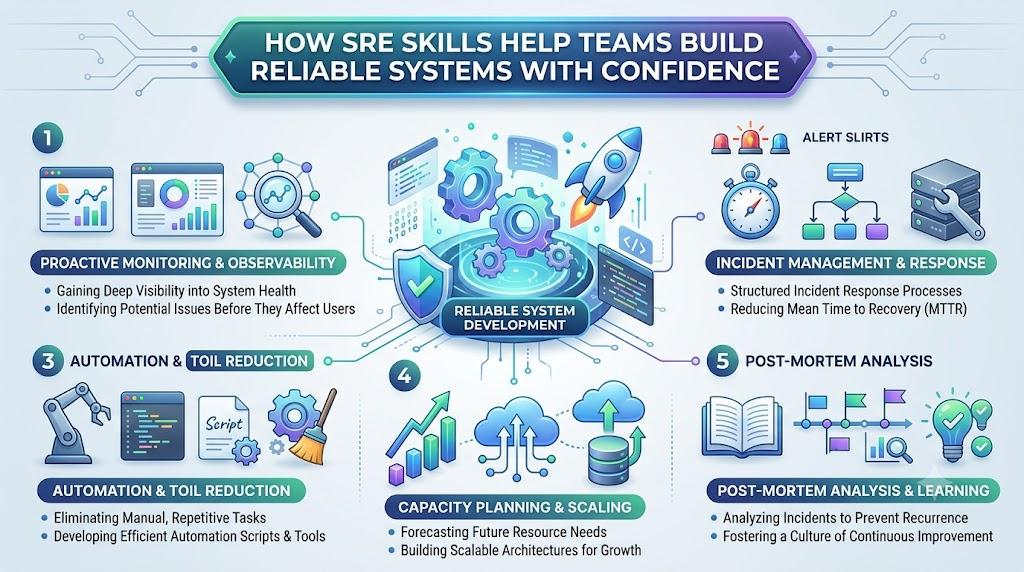
    While DevOps focuses heavily on delivery speed and automation, Site Reliability Engineering (SRE) focuses on system availability, performance, and operational scalability. An SRE Trainer guides teams in applying software engineering principles to solve operations problems.

    Core SRE concepts covered in a structured learning program include:

    • Service Level Frameworks: Defining Service Level Indicators (SLIs), Service Level Objectives (SLOs), and managing Service Level Agreements (SLAs).
    • Error Budgets: Using error budgets to balance release speed with platform stability.
    • Observability Pillars: Implementing structured logging, metrics collection, and distributed tracing.
    • Incident Management: Building structured post-mortem workflows, blameless reviews, and on-call rotation practices.
    • Toil Reduction: Identifying repetitive manual tasks and writing code to automate them.
    • Capacity Planning: Analyzing load trends to forecast infrastructure requirements accurately.

    SRE training helps operations teams shift away from reactive firefighting toward proactive reliability engineering.

    MLOps Trainer

    As machine learning models move from research environments into live production applications, organizations require operational patterns designed specifically for AI workloads. Working with an MLOps Trainer helps data science and engineering teams automate model deployment, testing, and monitoring.

    An effective MLOps program addresses the unique challenges of machine learning delivery:

    • ML Pipeline Automation: Automating data extraction, feature engineering, model training, and validation steps.
    • Model Versioning and Tracking: Tracking code, datasets, hyper-parameters, and model artifacts together.
    • Model Deployment Strategies: Deploying models using REST APIs, batch processing pipelines, or edge computing platforms.
    • Production Model Monitoring: Detecting data drift, concept drift, and performance degradation in real time.
    • Infrastructure Management: Managing GPU/CPU resource allocation for training and inference workloads efficiently.

    MLOps bridges the gap between data science teams and cloud platform engineers, helping machine learning projects transition into reliable, scalable production services.

    DevOps Training Technology Areas

    The following table breaks down core technology areas, common tooling options, and primary learning objectives across modern DevOps domain areas:

    Training AreaCommon Technologies / PracticesLearning Focus
    CI/CDJenkins, GitHub Actions, GitLab CI/CD, Azure PipelinesAutomated build, test, and release delivery pipelines
    CloudAWS, Azure, Google Cloud PlatformScalable, high-availability cloud platform operations
    ContainersDocker, Kubernetes, Helm, ContainerdContainerized workload delivery and orchestration
    Infrastructure as CodeTerraform, OpenTofu, CloudFormation, AnsibleAutomated, code-driven cloud infrastructure management
    SecuritySonarQube, Trivy, Vault, OPAAutomated security testing and vulnerability management
    MonitoringPrometheus, Grafana, Datadog, OpenTelemetrySystem observability, logging, metrics, and tracing
    SRESLI/SLO Frameworks, Chaos Engineering, PagerDutyProduction availability, toil reduction, and incident response
    MLOpsMLflow, Kubeflow, Feast, DVCAutomated machine learning model delivery and monitoring

    Benefits of Practical DevOps Training

    Investing in structured, hands-on skill development yields clear improvements across an organization’s engineering culture and operational capabilities.

           +-------------------------------------------------------+
           |             Key Technical Benefits                     |
           +-------------------------------------------------------+
                |                      |                      |
                v                      v                      v
       [ Faster Deployments ]  [ Higher Reliability ]  [ Embedded Security ]
       Automated delivery      Robust observability   Automated compliance
       pipelines               and recovery           and code scanning
    

    Primary benefits include:

    • Consistent Delivery Standards: Ensures all engineering teams use standard build, test, and deployment practices.
    • Higher Technical Confidence: Hands-on lab exercises give engineers the confidence to perform complex updates and production changes safely.
    • Improved Infrastructure Efficiency: Teams learn to design cost-effective cloud architectures, eliminating unused resources and over-provisioned capacity.
    • Stronger Security Awareness: Security becomes a shared responsibility integrated directly into daily development workflows.
    • Smoother Cross-Functional Collaboration: Shared technical knowledge reduces friction between development, operations, security, and data science teams.

    Common DevOps Training Mistakes

    Organizations frequently make strategic errors when planning and delivering technical upskilling programs. Avoiding these common pitfalls helps ensure training initiatives deliver practical value:

    1. Overemphasizing Theory: Spending too much time on slide decks instead of hands-on lab exercises.
    2. Tool-Centric Learning: Teaching individual tools in isolation without showing how they fit into complete end-to-end delivery pipelines.
    3. Skipping Troubleshooting: Teaching only ideal, success-path scenarios while ignoring real-world build failures and system outages.
    4. Outdated Content: Using legacy deployment examples that fail to reflect modern cloud-native standards.
    5. Ignoring Prerequisites: Expecting advanced outcomes from participants who lack basic Linux administration or networking fundamentals.
    6. One-Size-Fits-All Curricula: Applying identical course material to teams with completely different tech stacks or skill levels.
    7. Neglecting Security: Treating security as an optional separate topic rather than embedding it into every deployment phase.
    8. Lack of Post-Training Practice: Failing to give teams immediate opportunities to apply their new skills on real production projects.

    How to Evaluate a DevOps Training Program

    Before committing time and budget to a technical upskilling initiative, leadership teams should evaluate programs using an objective checklist:

    • Instructor Field Experience: Does the trainer have proven experience managing production cloud infrastructure?
    • Hands-On Lab Ratio: Is at least 60–70% of the course dedicated to practical, terminal-based exercises?
    • Relevance to Tech Stack: Does the curriculum use the cloud providers, CI/CD tools, and frameworks your team uses daily?
    • Scenario-Based Learning: Does the program include realistic exercises like troubleshooting broken pipelines, node failures, or misconfigured cloud resources?
    • Course Materials and Documentation: Will participants receive clear reference materials, sample code repositories, and lab guides for future review?
    • Post-Training Support: Is there a mechanism for follow-up Q&A sessions or architectural reviews as teams implement their new skills?

    Training Area and Learning Need

    Matching an organization’s immediate technical priorities with the right learning path ensures training resources are used effectively:

    Training AreaTypical Learning Need
    DevOps TrainingEstablish core delivery automation, version control, and CI/CD foundations.
    Corporate DevOps TrainingUpskill entire engineering departments using company-specific workflows and tooling.
    Online DevOps TrainingProvide flexible, interactive technical training for distributed or remote teams.
    Kubernetes TrainingBuild internal capabilities for managing containerized workloads in production.
    AWS DevOps TrainingMaster cloud-native automation, EKS, and infrastructure management on Amazon Web Services.
    Azure DevOps TrainingModernize enterprise pipelines and manage container workloads on Microsoft Azure.
    DevSecOps TrainingIntegrate automated security scans, secrets management, and compliance checks into pipelines.
    SRE TrainingImprove application availability, build observability, and establish SLO/SLI metrics.
    MLOps TrainingAutomate machine learning pipelines, model deployment, and production performance monitoring.

    FAQ

    1. What does a DevOps Trainer teach?

    A trainer teaches end-to-end software delivery practices, including version control, continuous integration, continuous deployment, cloud operations, container orchestration, Infrastructure as Code, and observability.

    2. What is Corporate DevOps Training?

    It is a customized upskilling program tailored for business technology teams. The curriculum is adapted to align with an enterprise’s specific technology stack, architecture, and operational processes.

    3. How do I choose a DevOps Trainer in India?

    Evaluate candidates based on real-world engineering experience, teaching clarity, hands-on lab structures, and their ability to tailor course material around your team’s tech stack.

    4. Is an Online DevOps Trainer suitable for corporate teams?

    Yes. Virtual instruction works well for distributed engineering teams, offering interactive lectures, live coding demonstrations, and browser-based lab environments.

    5. What should Kubernetes training include?

    A practical course should cover cluster architecture, workload management, networking, storage, secrets, security configurations, RBAC, cluster upgrades, and troubleshooting.

    6. What does an AWS DevOps Trainer teach?

    An AWS instructor focuses on infrastructure automation using Terraform or CloudFormation, container deployment on EKS/ECS, CI/CD using AWS tools, serverless architectures, and CloudWatch monitoring.

    7. Why is DevSecOps training important?

    It teaches developers and operations teams how to build security checks directly into automated delivery pipelines, identifying vulnerabilities before applications reach production.

    8. What is the difference between DevOps, SRE, and MLOps training?

    DevOps focuses on release speed and delivery automation; SRE focuses on production availability and system reliability; MLOps focuses on automating machine learning model deployment and monitoring.

    Conclusion

    Building modern software delivery capabilities requires ongoing investment in engineering skills. As cloud ecosystems evolve, relying on outdated operational methods leads to slower release cycles, frequent deployment errors, and increased system downtime. Structured learning provides engineering teams with the practical knowledge needed to run complex, cloud-native applications efficiently.Whether an organization needs to adopt container orchestration, migrate to public cloud infrastructure, integrate security into delivery pipelines, or improve platform reliability, success depends on the practical skills of its engineers. Combining theoretical concepts with real-world hands-on exercises ensures teams can apply modern patterns directly to their daily work.

  • Modern DevOps Support Services: A Guide to Cloud Operations, Automation, and Reliability

    Modern software delivery demands unprecedented speed, agility, and system stability. As businesses shift toward cloud-native architectures, microservices, and automated pipelines, the underlying infrastructure grows increasingly complex. Engineering teams often find themselves caught between the pressure to push new features rapidly and the operational reality of managing fragile production environments.To bridge these operational gaps, organizations increasingly turn to continuous infrastructure and operational management strategies. Implementing structured DevOps support enables software teams to maintain stable, secure, and performant systems without overloading their core developers. This guide explores the essential components of modern DevOps support, examining how automated workflows, proactive monitoring, specialized cloud management, and reliability engineering combine to create resilient technology foundations.

    What Are DevOps Support Services?

    DevOps Support Services encompass the ongoing operational management, maintenance, troubleshooting, and optimization of an organization’s software delivery ecosystem and cloud infrastructure. Unlike traditional IT help desks that focus primarily on internal end-user hardware, DevOps support targets the systems, pipelines, platforms, and architectures that host and deliver applications.

    These services span a wide array of technical domains, including:

    • Infrastructure Operations: Managing virtual machines, networks, cloud storage, and database platforms.
    • CI/CD Pipeline Maintenance: Ensuring continuous integration and delivery tools run smoothly, code builds complete, and automated releases proceed without failure.
    • Automation and Infrastructure as Code (IaC): Writing, maintaining, and updating configuration templates using tools like Terraform, OpenTofu, and Ansible.
    • Observability and Monitoring: Configuring metrics, log aggregation systems, and tracing tools to maintain clear visibility into system health.
    • Incident Management: Operating structured incident response protocols to detect, isolate, resolve, and analyze production outages.
    • Performance Tuning: Identifying bottlenecks in infrastructure, resource distribution, and release pathways to improve response times and resource efficiency.

    Ongoing DevOps Support vs. One-Time Implementation

    A common misconception in software engineering is treating DevOps as a single project with a defined end date. Organizations often hire external consultants to set up a CI/CD pipeline or build a initial Kubernetes cluster, assuming the work is complete once deployment finishes.

    However, technology stacks are dynamic. Cloud providers update APIs, software dependencies evolve, security vulnerabilities emerge, and application traffic patterns shift. A pipeline built today may break six months from now due to deprecated tools or changed configurations.

    While one-time implementation establishes the initial framework, ongoing DevOps support ensures that the system remains secure, scalable, functional, and aligned with operational changes over time. It provides continuous maintenance, proactive adjustments, and immediate resolution when systems fail.

    Why Organizations Need Ongoing DevOps Support

    Maintaining modern cloud infrastructure requires a balance of routine operational upkeep and specialized technical problem-solving. As application ecosystems expand, several core challenges highlight the necessity for continuous operational assistance.

    1. Rapid Infrastructure Evolution

    Cloud platforms frequently release new features, update network configurations, and deprecate older system images. Keeping infrastructure components updated without disrupting running services requires routine updates, thorough testing, and operational oversight.

    2. Operational Overhead and Developer Fatigue

    When software developers are routinely pulled away from application coding to fix server misconfigurations, clean up full disks, or debug broken build scripts, productivity drops. External operational assistance offloads routine maintenance, allowing internal development teams to focus on core product features.

    3. Coverage Gaps and Expertise Bottlenecks

    Building an internal team that covers every specialized domain—such as cloud security, container orchestration, database tuning, and telemetry—is difficult and expensive. Dedicated support models give teams access to specialized skill sets on demand without requiring full-time hires for every niche role.

    4. Incident Response Readiness

    Production incidents rarely happen at convenient times. When a database connection pool exhausts its capacity or a memory leak crashes a cluster outside of normal working hours, immediate response is essential to mitigate downtime. Continuous support frameworks ensure that system alerts are monitored and addressed systematically.

    Crucially, external operational support does not aim to replace internal engineering teams. Instead, it complements them. External specialists handle baseline infrastructure monitoring, routine maintenance, and platform support, empowering internal engineers to drive innovation, product logic, and long-term business goals.

    24/7 DevOps Support Services

    In a global digital economy, application availability is a round-the-clock requirement. A minor deployment error or cloud outage occurring overnight can lead to data inconsistency, revenue loss, and diminished customer trust.

    Key Components of Round-the-Clock Support

    Implementing 24/7 DevOps Support Services involves building a continuous operational framework structured around three main pillars:

    +-----------------------------------------------------------------+
    |                    24/7 DevOps Support Engine                   |
    +-----------------------------------------------------------------+
                                    |
            +-----------------------+-----------------------+
            |                       |                       |
            v                       v                       v
    +---------------+       +---------------+       +---------------+
    |   Proactive   |       | Structured    |       | Operational   |
    | Telemetry &   | ----> | Incident      | ----> | Continuity &  |
    | Alerting      |       | Escalation    |       | Maintenance   |
    +---------------+       +---------------+       +---------------+
    
    1. Proactive Telemetry and Alerting: Automated systems continually track resource usage, application status, synthetic user journeys, and security events. Thresholds are calibrated to detect anomalous activity before it leads to system failure.
    2. Structured Incident Escalation: When an alert triggers, on-call engineers follow predefined playbooks to triage the issue, assess business impact, contain the fault, and restore operations. Escalation paths ensure subject matter experts are involved when complex edge cases arise.
    3. Operational Continuity: Routine operations—such as applying non-disruptive security patches, scaling infrastructure for anticipated traffic surges, and managing backup schedules—can be scheduled during low-traffic windows to maintain platform performance.

    By keeping operational eyes on systems at all times, organizations can reduce mean time to detect (MTTD) and mean time to resolve (MTTR) critical issues, maintaining stable service levels without burning out internal engineering personnel.

    Managed DevOps Services

    As technology environments grow, managing every piece of software hardware, pipeline script, and cloud setting can stretch team resources thin. Managed DevOps Services offer a structured model where an external partner takes ownership of maintaining, managing, and refining operational platforms.

    Scope of Managed Operations

    Under a managed service model, external engineers take charge of everyday platform operations, including:

    • CI/CD Ecosystem Management: Administering build servers, maintaining pipeline modules, updating automated test runners, and standardizing deployment templates across repositories.
    • Infrastructure as Code Administration: Managing central code registries for infrastructure definitions, enforcing configuration patterns, and ensuring state files stay synchronized and secure.
    • Configuration and Patch Management: Applying operational system updates, keeping database engines on supported versions, and updating container base images.
    • Observability Maintenance: Managing log pipelines, metrics servers, dashboard views, and alerting rules to reflect application topology changes.

    Managed Services vs. Traditional IT Consulting

    Traditional consulting typically follows an project-based model: consultants evaluate a setup, recommend changes or implement a tool, and exit once the assignment ends.

    In contrast, managed operations operate as a continuous partnership. The service provider assumes ongoing responsibility for system health, operating alongside internal software teams under established operational protocols and shared service expectations.

    Kubernetes Support Services

    Containerization has fundamentally altered application deployment, with Kubernetes serving as the standard platform for orchestrating container workloads. However, running Kubernetes in production brings significant operational complexity.

    +-----------------------------------------------------------------+
    |                 Kubernetes Operational Domain                   |
    +-----------------------------------------------------------------+
    |  +-----------------------------------------------------------+  |
    |  | Cluster Lifecycle Management (Upgrades, Node Provisioning) |  |
    |  +-----------------------------------------------------------+  |
    |  | Networking & Ingress (Service Mesh, CNI, Load Balancing)   |  |
    |  +-----------------------------------------------------------+  |
    |  | Workload Optimization (Autoscaling, Resource Quotas, HPA)   |  |
    |  +-----------------------------------------------------------+  |
    |  | Platform Security (RBAC, Network Policies, Secrets)       |  |
    |  +-----------------------------------------------------------+  |
    +-----------------------------------------------------------------+
    

    Key Kubernetes Operational Challenges

    • Cluster Upgrades: Kubernetes releases major updates regularly. Upgrading production control planes and worker node groups without service interruptions requires careful API deprecation checks, ingress management, and rolling node replacements.
    • Networking and Ingress Management: Managing Container Network Interfaces (CNI), service meshes, ingress controllers, TLS certificates, and internal DNS rules requires specialized network engineering skills.
    • Resource Optimization and Scaling: Misconfigured resource requests and limits can lead to CPU throttling, Out-Of-Memory (OOM) pod crashes, or expensive over-provisioning. Establishing functional Horizontal Pod Autoscalers (HPA) and Cluster Autoscalers is vital for efficient operation.
    • Security and Policy Enforcement: Managing Role-Based Access Control (RBAC), isolating network namespaces, enforcing pod security standards, and securely handling runtime secrets are essential steps to keep cluster platforms secure.

    Whether managing self-hosted control planes or cloud services like AWS EKS, Azure AKS, or Google GKE, specialized container support ensures workloads remain stable, isolated, and resilient.

    AWS DevOps Support Services

    Amazon Web Services (AWS) offers an extensive set of tools for building modern cloud applications. Managing these environments efficiently, however, requires deep knowledge of cloud architecture and operational best practices.

    Core AWS Operational Focus Areas

    • Compute and Orchestration: Operating virtual servers via Amazon EC2, managing container deployments using Elastic Kubernetes Service (EKS) or Elastic Container Service (ECS), and configuring serverless architectures with AWS Lambda.
    • Infrastructure Provisioning: Utilizing AWS CloudFormation or HashiCorp Terraform to define networks, VPC peerings, security groups, route tables, and storage buckets programmatically.
    • CI/CD Integration: Building and maintaining delivery paths using AWS CodePipeline, AWS CodeBuild, or third-party orchestration tools integrated securely with AWS IAM roles.
    • Cloud Security and Identity: Implementing least-privilege policies across IAM, enabling AWS CloudTrail auditing, configuring AWS KMS for encryption, and managing network isolation using private subnets and security boundary configurations.

    Successful AWS operations depend on choosing architectural components based on actual workload demands—such as choosing between serverless executions, managed containers, or dedicated virtual instances—and systematically updating those resources over time.

    Azure DevOps Support Services

    Microsoft Azure provides a comprehensive ecosystem for enterprise cloud workloads, hybrid cloud environments, and Windows/Linux hybrid software pipelines.

    Key Azure Management Capabilities

    • Pipeline Automation: Maintaining Azure Pipelines for automated build, test, and release flows across multi-cloud and on-premises deployment targets.
    • Azure Kubernetes Service (AKS) Operations: Managing cluster lifecycles, integrating Azure Active Directory (Microsoft Entra ID) for unified RBAC, and applying container monitoring solutions.
    • Infrastructure Management: Provisioning ARM templates or Bicep modules to manage Azure App Services, Azure Functions, Virtual Network Peering, and Key Vault configurations.
    • Governance and Observability: Setting up Azure Monitor, Log Analytics workspaces, and Application Insights to track application telemetry, enforce policy controls, and manage operational costs.

    Providing structured support for Azure environments helps organizations maintain consistency across build environments, manage enterprise access controls, and run cloud operations reliably.

    DevSecOps Support Services

    Historically, security checks occurred at the end of the software development lifecycle. Security teams conducted manual reviews or penetration tests right before software releases, often discovering issues late and causing release delays or rushed code fixes.

    DevSecOps embeds security practices directly into every phase of the continuous delivery pipeline.

           +-------------------------------------------------------+
           |            Continuous Security Lifecycle              |
           +-------------------------------------------------------+
                                       |
        +------------------------------+------------------------------+
        |                              |                              |
        v                              v                              v
    +------------------------+  +------------------------+  +------------------------+
    |   Code & Dependency    |  |  Container & Runtime   |  | Configuration & Policy |
    |       Scanning         |  |        Security        |  |       As Code          |
    |  (SAST, DAST, SCA)     |  |   (Image Analysis)     |  |   (Secrets, IAM)       |
    +------------------------+  +------------------------+  +------------------------+
    

    Core DevSecOps Practices

    • Static and Dynamic Testing: Integrating Static Application Security Testing (SAST) and Dynamic Application Security Testing (DAST) tools directly into pipeline stages to flag code vulnerabilities automatically during build checks.
    • Software Composition Analysis (SCA): Continuously scanning third-party libraries and code dependencies for known vulnerabilities (CVEs) and license compliance issues.
    • Container Security: Automated scanning of container images in registries to catch vulnerabilities, elevated privileges, or outdated packages before pods are deployed.
    • Secrets Management: Replacing hardcoded credentials, API keys, and certificates with centralized secret management systems like HashiCorp Vault, AWS Secrets Manager, or Azure Key Vault.
    • Policy as Code: Automated checking of infrastructure code files to prevent insecure configurations—such as open S3 buckets or unencrypted storage volumes—from ever being provisioned.

    Incorporating security into pipeline workflows allows teams to address vulnerabilities early, lower remediation costs, and build compliance checks directly into daily operations.

    SRE Support Services

    Site Reliability Engineering (SRE) applies software engineering principles to solve operational and infrastructure problems. Rather than viewing operations as manual administrative work, SRE uses software, automation, and statistical metrics to run large-scale systems reliably.

    Core Metrics and Concepts

    • Service Level Indicators (SLIs): Quantifiable metrics that measure service performance in real time (e.g., request latency, error rate, throughput, and system availability).
    • Service Level Objectives (SLOs): Target values or ranges set for specific SLIs that define acceptable service performance (e.g., maintaining an average latency under 200ms for 99.9% of requests over a 30-day window).
    • Service Level Agreements (SLAs): Formal commitments made to end customers regarding service availability, often including financial penalties if thresholds are breached.
    • Error Budgets: The acceptable margin of unreliability ($100\% – \text{SLO}$). If an application has a 99.9% SLO, the 0.1% error budget represents the time available for riskier activities, like deploying experimental features or updating infrastructure. When the error budget exhausts, feature deployments pause to focus on stability improvements.
    +-----------------------------------------------------------------+
    |                   SRE Reliability Engine                        |
    +-----------------------------------------------------------------+
    |                                                                 |
    |   100% Availability Limit                                       |
    |   |---------------------------------------------------------|   |
    |   |                                                         |   |
    |   |   SLO Target: 99.9% Operational Uptime                  |   |
    |   |   (Guaranteed system behavior & performance standards)  |   |
    |   |                                                         |   |
    |   |---------------------------------------------------------|   |
    |   |   Error Budget: 0.1% Permissible Downtime / Experimentation|   |
    |   +---------------------------------------------------------+   |
    |                                                                 |
    +-----------------------------------------------------------------+
    

    SRE support helps teams maintain an objective balance between rapid feature releases and platform stability, utilizing automation, capacity planning, and post-incident reviews to strengthen production systems.

    MLOps Support Services

    As artificial intelligence and machine learning applications mature, transitioning models from experimental notebooks to scalable production systems introduces unique operational challenges.

    MLOps (Machine Learning Operations) adapts traditional DevOps practices to meet the needs of machine learning lifecycles.

    MLOps Operational Tasks

    • ML Pipeline Automation: Building reproducible pipelines for data ingestion, feature extraction, model training, evaluation, and deployment.
    • Model Deployment Infrastructure: Provisioning auto-scaling serving infrastructure (e.g., using tools like KServe, Triton, or custom container endpoints) to handle inference requests with low latency.
    • Data and Model Drift Monitoring: Monitoring production inputs and predictions in real time to detect statistical shifts (drift) that degrade model accuracy over time, triggering automated retraining workflows when necessary.
    • Resource Optimization: Allocating specialized hardware—such as GPU clusters—efficiently, ensuring compute resources scale down when idle to manage operational costs.

    MLOps support bridges the gap between data science teams and cloud infrastructure engineering, ensuring AI services remain scalable, verifiable, and performant in production environments.

    DevOps Support Technology Areas

    The modern DevOps landscape relies on a wide array of specialized open-source tools, cloud platforms, and monitoring software. The following matrix illustrates key technology areas and their practical roles in engineering environments:

    Technology DomainCommon Tools and FrameworksPrimary Operational Purpose
    CI/CD OrchestrationJenkins, GitHub Actions, GitLab CI, Azure Pipelines, ArgoCDAutomates testing, building, and deploying software across environments.
    Cloud PlatformsAmazon Web Services (AWS), Microsoft Azure, Google Cloud (GCP)Provides scalable, dynamic compute, network, and storage infrastructure.
    ContainerizationDocker, Podman, Kubernetes, Helm, ContainerdStandardizes runtime environments and manages multi-container deployments.
    Infrastructure as CodeHashiCorp Terraform, OpenTofu, AWS CloudFormation, Pulumi, AnsibleEnables automated, reproducible, and version-controlled infrastructure provisioning.
    Observability & LogsPrometheus, Grafana, Datadog, ELK Stack, OpenTelemetryCollects metrics, traces, and logs to maintain system health visibility.
    Security & SecretsHashiCorp Vault, SonarQube, Trivy, Aqua Security, AWS KMSScans code vulnerabilities, manages runtime keys, and enforces access policies.
    Site ReliabilityPagerDuty, Chaos Mesh, Cortex, OpenCostCoordinates incident response, runs resilience testing, and monitors infrastructure costs.
    MLOps ToolsKubeflow, MLflow, Feast, BentoML, RayManages ML pipelines, feature stores, model registries, and inference endpoints.

    Benefits of Continuous DevOps Support

    Investing in continuous operational management yields tangible benefits for technology teams, improving system health, security posture, and engineering efficiency.

    • Shorter Time to Resolution: Structured monitoring and incident response playbooks reduce the time required to triage and resolve unexpected production issues.
    • Standardized Infrastructure Configurations: Automating deployment paths and infrastructure definitions reduces manual errors, prevents configuration drift, and ensures environments remain reproducible.
    • Enhanced System Observability: Unified telemetry frameworks give teams clear insight into performance bottlenecks, application errors, and resource allocation issues.
    • Improved Security Hygiene: Automated security scans, routine patch schedules, and controlled credential management reduce overall attack surfaces.
    • Predictable Operational Effort: Partnering with specialized support professionals offloads routine maintenance tasks, allowing internal development teams to stay focused on high-value product initiatives.

    Common DevOps Support Challenges

    Implementing or outsourcing operational support models involves navigating potential pitfalls. Understanding these common operational challenges helps organizations build stronger support workflows:

    1. Incomplete Technical Documentation: Operating systems without current architecture diagrams, environment guides, or runbooks leads to slow troubleshooting and reliance on individual tribal knowledge.
    2. Ambiguous Service Ownership: Unclear boundaries regarding who manages specific pipeline steps, cloud components, or incident alerts cause confusion during active outages.
    3. Inadequate Observability Tools: Lacking structured log collection, tracing details, or granular metrics makes identifying the root causes of complex system issues difficult.
    4. Manual Operational Work (Toil): Relying on manual server commands or repetitive human interventions instead of writing automation scripts creates operational overhead and increases human error.
    5. Configuration Drift: Modifying cloud resources manually in management consoles without updating Infrastructure as Code definitions creates inconsistencies across development, staging, and production environments.
    6. Siloed Communication: Isolating support operations from development engineering hinders post-incident learning, knowledge sharing, and long-term system improvements.
    7. Neglecting Knowledge Transfer: Failing to train internal teams on newly implemented platform components creates over-reliance on external specialists.
    8. Underestimating Security Standards: Neglecting access control policies, credential rotations, or data isolation rules during support activities increases platform vulnerability risks.

    How to Choose a DevOps Support Provider

    Selecting an external partner or defining an internal operational model requires careful evaluation. Organizations should assess support capabilities against technical, security, and operational standards.

    +-----------------------------------------------------------------+
    |               DevOps Support Evaluation Checklist               |
    +-----------------------------------------------------------------+
      [ ] Domain Expertise (Multi-Cloud, Kubernetes, IaC Mastery)
      [ ] Incident Response Framework & SLA Structure
      [ ] Robust Observability & Telemetry Practices
      [ ] Comprehensive Security & Compliance Integration
      [ ] Structured Knowledge Transfer & Clear Documentation
    +-----------------------------------------------------------------+
    

    Key Evaluation Criteria

    • Technical Depth and Platform Compatibility: Assess hands-on experience with your specific technology stack, including cloud platforms (AWS, Azure, GCP), orchestration platforms (Kubernetes), and automation frameworks (Terraform, CI/CD tools).
    • Incident Response Frameworks: Review operational escalation procedures, triage workflows, incident communication plans, and service level targets.
    • Security Practices: Ensure the support partner follows strict security controls, including encrypted communications, least-privilege access models, audit logging, and compliance guidelines (e.g., SOC 2, ISO 27001, HIPAA, GDPR).
    • Documentation and Knowledge Sharing: Verify that operational teams prioritize building clear runbooks, infrastructure documentation, and architectural guides to prevent knowledge silos.
    • Communication Standards: Confirm that team communication channels, operational handoffs, and status reporting align with your internal development cadences.

    DevOps Support Area and Business Need

    Matching engineering requirements with the appropriate support domain ensures efficient resource allocation and clear operational outcomes.

    Support AreaPrimary Business NeedKey Operational Outcomes
    DevOps SupportOngoing maintenance of pipelines, environments, and delivery workflows.Stable builds, reliable code deployments, and reduced operational friction.
    24/7 DevOps SupportRound-the-clock monitoring and rapid incident resolution for mission-critical systems.Lower downtime risks, quick incident containment, and business continuity.
    Managed DevOpsOffloading full platform infrastructure maintenance and operational administration.Reduced internal operational burden and access to platform management practices.
    Kubernetes SupportManaging container clusters, node scaling, ingress setups, and platform updates.Scalable microservices, optimized resource usage, and smooth cluster upgrades.
    AWS DevOps SupportOperating, automating, and maintaining AWS cloud services and infrastructure networks.Well-architected cloud setups, secure access controls, and automated scaling.
    Azure DevOps SupportAdministering Azure pipelines, AKS clusters, identity management, and cloud resources.Unified Microsoft ecosystem operations, governance, and reliable pipelines.
    DevSecOps SupportAutomating security scans, dependency updates, compliance checks, and access controls.Early vulnerability detection, safer deployment flows, and simpler compliance.
    SRE SupportImplementing reliability targets (SLOs/SLIs), error budgets, and system resilience.Objective uptime balance, systematic post-mortems, and scalable systems.
    MLOps SupportAutomating ML pipelines, managing inference servers, and tracking model drift.Smooth transition from ML models to production and automated model retraining.

    Frequently Asked Questions

    1. What are DevOps Support Services?

    DevOps Support Services provide ongoing operational assistance, maintenance, automation, monitoring, and troubleshooting for an organization’s cloud platforms, software delivery pipelines, and production environments. They ensure that systems remain functional, performant, and secure over time.

    2. Why do companies need ongoing DevOps support instead of a one-time setup?

    Cloud platforms, security definitions, software dependencies, and codebases change continuously. A one-time setup provisions the initial environment, but ongoing support is required to perform system updates, resolve build errors, handle production incidents, manage scaling needs, and keep infrastructure configurations secure.

    3. What do 24/7 DevOps Support Services include?

    Round-the-clock support includes continuous automated system monitoring, real-time alert triaging, rapid incident response, non-disruptive off-peak maintenance, emergency infrastructure repair, and escalation flows designed to maintain platform availability at all times.

    4. What is the difference between Managed DevOps and traditional DevOps Consulting?

    DevOps consulting typically involves short-term, project-based assignments focused on advising, designing architectures, or setting up initial systems. Managed DevOps provides ongoing operational ownership, where external engineers continuously operate, maintain, update, and support the organization’s platform infrastructure.

    5. When is specialized Kubernetes support necessary?

    Kubernetes support becomes valuable when teams run production workloads using microservices architectures, experience complex cluster upgrade challenges, run into pod scaling and networking issues, or require assistance managing cloud-managed engines like EKS, AKS, or GKE.

    6. What does AWS DevOps Support cover?

    AWS support covers managing AWS compute resources (EC2, ECS, EKS, Lambda), infrastructure automation using Terraform or CloudFormation, network isolation (VPC), IAM security policies, CI/CD pipeline integrations, and CloudWatch operational monitoring.

    7. How does DevSecOps support improve overall system security?

    DevSecOps support embeds security checks directly into continuous delivery pipelines using automated tools like static code analysis (SAST), dynamic testing (DAST), software composition analysis (SCA), container scanning, and policy enforcement. This flags vulnerabilities early in development, before code reaches production environments.

    8. What is the practical role of SRE and MLOps support?

    Site Reliability Engineering (SRE) support focuses on system reliability using metrics like SLIs, SLOs, and error budgets, combined with incident management and reliability automation. MLOps support manages the operational lifecycle of machine learning systems, including automated pipelines, model serving endpoints, compute resource management, and model performance tracking.

    Conclusion

    Managing modern cloud environments requires balancing deployment speed, system stability, robust security, and cost efficiency. As technology stacks incorporate containers, multi-cloud platforms, infrastructure pipelines, and AI frameworks, maintaining operational control becomes increasingly complex.Relying solely on software developers to handle routine infrastructure upkeep, platform upgrades, and overnight production alerts often leads to engineering burnout, higher incident recovery times, and delayed product releases. Adopting a structured support strategy—whether through internal specialization, managed operational partnerships, or round-the-clock monitoring—enables organizations to build resilient software delivery foundations.

  • DevOps Consulting Services for Modern Kubernetes Infrastructure

    Software delivery has changed significantly as businesses adopt cloud platforms, containers, automation, and distributed applications. While these technologies offer flexibility, they also create new operational challenges. Teams may struggle with complex deployments, inconsistent environments, limited monitoring, security risks, and increasing infrastructure management work.DevOps Consulting Services help organizations improve how development and operations teams build, deploy, secure, and maintain software systems. Instead of treating development, infrastructure, and reliability as separate activities, DevOps brings them together through automation, shared processes, and continuous improvement.

    Building a More Efficient Software Delivery Process

    One of the main goals of DevOps consulting is to reduce unnecessary manual work in software delivery.Consultants may review how code moves from development to production and identify areas where automation can improve consistency. This can include automated builds, testing, deployment pipelines, infrastructure provisioning, and rollback processes.CI/CD practices allow development teams to release software through standardized workflows rather than relying on repetitive manual procedures.Infrastructure as Code tools such as Terraform and CloudFormation can also help teams create environments in a repeatable and controlled way.

    Supporting Cloud-Based Infrastructure

    Cloud platforms provide businesses with flexible infrastructure, but managing cloud environments effectively requires proper architecture and operational practices.AWS DevOps Consulting Services may help teams design automated workflows for services such as EC2, ECS, EKS, and Lambda. Infrastructure automation, monitoring, access management, and deployment pipelines can be combined to create a more manageable cloud environment.The appropriate architecture should depend on application needs, security requirements, expected workload, and internal technical capabilities.

    Making Security Part of DevOps

    Security should not be treated as an activity that happens only before an application goes live.DevSecOps Consulting Services focus on including security throughout development and deployment.

    Teams can introduce practices such as:

    • Source code security scanning
    • Dependency vulnerability checks
    • Container image scanning
    • Secrets protection
    • Infrastructure security checks
    • Automated compliance controls
    • Security validation in CI/CD pipelines

    By introducing security earlier, developers can identify and address certain issues before they reach production.

    Managing Kubernetes Environments

    Kubernetes has become an important platform for running containerized applications, but operating it successfully requires more than deploying a cluster.Teams must consider networking, security, workload scheduling, monitoring, scaling, upgrades, storage, and resource usage.Kubernetes Consulting Services can help organizations design and manage Kubernetes environments across platforms such as AWS EKS, Azure AKS, and Google GKE.Consulting can also help determine whether Kubernetes is appropriate for a particular application. Not every workload needs the additional complexity of a Kubernetes platform.

    Connecting DevOps with Cloud Migration

    Cloud migration is often treated as an infrastructure project, but successful migration also requires changes in deployment, automation, security, and monitoring practices.Cloud Migration Services India may involve evaluating existing applications, understanding dependencies, designing cloud infrastructure, automating environments, testing workloads, planning migration stages, and improving systems after migration.DevOps practices make cloud environments easier to reproduce and maintain after the migration is complete.

    Improving Developer Productivity Through Platform Engineering

    As engineering teams grow, developers may spend increasing amounts of time managing infrastructure-related tasks.Platform Engineering Consulting Services focus on creating reusable platforms and standardized workflows that simplify common engineering activities.

    Organizations may build Internal Developer Platforms that provide:

    • Self-service infrastructure
    • Reusable deployment templates
    • Standard application environments
    • Developer portals
    • Automated infrastructure provisioning
    • Golden paths for common workloads

    The aim is to reduce repeated operational work while allowing developers to focus more on application development.

    Using SRE to Improve Reliability

    DevOps focuses strongly on collaboration and automation, while Site Reliability Engineering adds measurable reliability practices.SRE Consulting Services can help organizations define how reliable services should be and establish processes for managing operational risk.

    Common practices include:

    • Service Level Indicators
    • Service Level Objectives
    • Error budgets
    • Incident management
    • Observability
    • Capacity planning
    • Reliability automation
    • Performance analysis

    These practices help teams make informed decisions about when to prioritize new features and when to focus on system stability.

    When Managed DevOps Makes Sense

    Some businesses do not need or cannot maintain a large internal DevOps team.In these situations, Managed DevOps Services can provide ongoing support for activities such as:

    • CI/CD maintenance
    • Deployment assistance
    • Cloud infrastructure management
    • Monitoring
    • Incident support
    • Automation
    • Configuration management
    • Operational maintenance

    Managed services can complement internal engineering teams, but organizations should still maintain visibility and ownership of important systems.

    DevOps Outsourcing for Additional Engineering Capacity

    DevOps Outsourcing Services can be useful when a company needs temporary or specialized expertise.For example, external engineers may support a Kubernetes migration, CI/CD implementation, cloud modernization project, infrastructure automation initiative, or long-term platform operation.However, outsourcing should include proper documentation and knowledge transfer. Organizations should avoid creating systems that only an external provider understands.

    Common Areas Covered by DevOps Consulting

    AreaTypical Focus
    CI/CDAutomated build, testing, and deployment
    Infrastructure as CodeConsistent infrastructure provisioning
    Cloud EngineeringScalable and manageable cloud environments
    KubernetesContainer orchestration and operations
    DevSecOpsSecurity integrated into software delivery
    ObservabilityMonitoring, logs, metrics, and traces
    Platform EngineeringDeveloper self-service and reusable platforms
    SREReliability, performance, and incident management

    These areas often overlap, and organizations may need only a few of them depending on their current technical challenges.

    Selecting a DevOps Consulting Provider

    Choosing a DevOps consulting provider should be based on practical technical requirements rather than the number of tools listed on a service page.

    Organizations should consider whether the provider can:

    • Understand the existing infrastructure
    • Work with internal engineering teams
    • Design maintainable automation
    • Support relevant cloud platforms
    • Handle Kubernetes when required
    • Integrate security practices
    • Apply reliability principles
    • Provide useful documentation
    • Transfer knowledge to internal teams
    • Avoid unnecessary technical complexity

    A strong consulting engagement should leave the organization with systems and processes that its teams can understand and maintain.

    Conclusion

    DevOps is not simply a collection of automation tools. It is an engineering approach that connects software development, infrastructure, cloud operations, security, containers, observability, and reliability.The right DevOps strategy depends on an organization’s current systems, engineering maturity, business priorities, and operational responsibilities. Some teams may need better CI/CD automation, while others may require cloud migration, Kubernetes support, platform engineering, or SRE practices.Organizations exploring DevOps Consulting Services can focus on identifying the specific delivery and infrastructure challenges that need improvement before selecting technologies or operating models.

  • Building a Balanced Diet: Essential Tips for Healthy Eating and Nutrition

    Introduction

    Everyday food choices play a fundamental role in overall health, energy levels, and long-term well-being. However, with so much conflicting information available, deciding what to eat can often feel confusing or overwhelming.Building sustainable, long-term habits is far more useful than jumping from one short-term restrictive diet to another. As highlighted by the World Health Organization (WHO), healthy diets are based on variety, balance, adequacy, and moderation rather than one specific eating pattern.To explore general health resources, learn about preventive wellness, and find reliable educational information, visit Mydoctorsnow.

    What Is Healthy Eating?

    Healthy eating means consuming a balanced variety of nutrient-dense foods that provide adequate energy and essential nutrients to support bodily functions while maintaining overall health.

    Key principles of healthy eating include:

    • Balanced Nutrition: Combining different food groups to obtain a broad spectrum of vitamins, minerals, proteins, carbohydrates, and healthy fats.
    • Variety: Eating a wide assortment of foods across and within food groups to ensure diverse nutrient intake.
    • Adequacy: Consuming enough calories and nutrients to meet individual daily requirements without excess.
    • Moderation: Enjoying foods in appropriate portion sizes, particularly limiting items high in free sugars, unhealthy fats, and sodium.
    • Food Safety: Practicing proper hygiene, handling, and storage to prevent foodborne illness.

    There is no single “perfect” diet that looks exactly the same for everyone. Cultural preferences, local food availability, and personal lifestyle choices all shape what a healthy plate looks like around the world.

    Key Components of a Healthy Diet

    Fruits and Vegetables

    Fruits and vegetables are rich sources of dietary fibre, vitamins, minerals, and protective plant compounds. Eating a colourful variety helps ensure a diverse intake of nutrients. The WHO recommends at least 400 grams of fruits and vegetables per day for people older than 10, with lower age-specific amounts for younger children. Fresh, frozen, and appropriately prepared canned options all contribute valuably to daily intake.

    Whole Grains

    Whole grains—such as oats, brown rice, whole-wheat products, millets, and barley—retain all parts of the grain kernel, providing sustained energy, B vitamins, and essential dietary fibre compared to heavily refined grains.

    Protein Foods

    Protein is essential for building and repairing body tissues, supporting immune function, and maintaining muscle mass. Protein sources can come from both plant and animal origins, including beans, lentils, chickpeas, peas, eggs, fish, poultry, lean meats, dairy or fortified alternatives, nuts, and seeds.

    Healthy Fats

    Unsaturated fats support cell health and help absorb fat-soluble vitamins. Good sources include vegetable oils, nuts, seeds, fatty fish, and avocados. The WHO recommends replacing saturated and trans fats with healthier unsaturated fats where possible.

    How to Build a Balanced Meal

    Building a balanced meal is simple when you focus on combining different nutritional elements on your plate. A practical framework includes:

    • Vegetables or Fruits: Filling a significant portion of your meal with colorful produce.
    • Whole Grains or Complex Carbohydrates: Choosing nutrient-dense energy sources.
    • Protein: Adding a source of plant- or animal-based protein.
    • Healthy Fats: Incorporating small amounts of beneficial fats like olive oil, nuts, or seeds.
    • Appropriate Fluids: Accompanying meals with water or another suitable, unsweetened beverage.

    Everyday Meal Examples:

    • Breakfast: Oatmeal topped with fresh fruit, nuts, and a side of plain yogurt.
    • Lunch: Whole-grain roti or brown rice served with mixed vegetable curry, lentil dal, and a fresh salad.
    • Dinner: Roasted or steamed vegetables paired with quinoa or whole wheat, alongside fish, beans, tofu, or lean chicken.
    • Snack: A piece of fresh fruit paired with a small handful of unsalted nuts or yogurt.

    Note: These are general structural examples and do not constitute individualized meal plans.

    Healthy Eating Tips for Everyday Life

    1. Eat a wide variety of foods to ensure broad nutrient intake.
    2. Include vegetables and fruits regularly throughout your day.
    3. Choose whole grains over refined grain options more often.
    4. Include a quality protein source in your main meals.
    5. Opt for healthier unsaturated fats instead of saturated fats.
    6. Drink adequate fluids, prioritizing water as your everyday choice.
    7. Limit foods and drinks high in free sugars.
    8. Be mindful of sodium and salt intake in packaged foods.
    9. Reduce heavily processed convenience foods when practical.
    10. Read nutrition labels to understand ingredient lists and serving sizes.
    11. Plan meals ahead of time to make balanced choices easier.
    12. Keep nutritious snacks readily available at home or work.
    13. Avoid skipping meals if it leads to excessive hunger and overeating later.
    14. Eat slowly, paying gentle attention to your body’s natural hunger and fullness cues.
    15. Maintain proper kitchen hygiene and food safety practices.
    16. Make small, gradual changes rather than drastic lifestyle overhauls.
    17. Choose affordable, seasonal, and local produce when possible.
    18. Avoid unnecessary, restrictive fad diets that eliminate entire food groups.
    19. Balance nutritional guidelines with your cultural food preferences and traditions.
    20. Focus on long-term consistency rather than chasing dietary perfection.

    How Much Fruit and Vegetables Should You Eat?

    Fruits and vegetables provide essential dietary fibre, vitamins, and minerals that support immune health and digestion. Enjoying a wide variety of colours and types ensures a broad spectrum of micronutrients.

    Fresh, frozen, dried, and appropriately canned fruits and vegetables without added heavy syrups or excess salt can all contribute to your daily intake. However, fruit juice should not automatically be treated as equivalent to whole fruit, as juicing removes beneficial dietary fibre and concentrates natural sugars. The WHO recommends at least 400 g of fruits and vegetables daily for people over age 10.

    Understanding Carbohydrates

    Carbohydrates are the body’s primary source of energy, fueling the brain, muscles, and organs. They are found in a wide variety of plant and dairy foods.

    • Whole Carbohydrates: Found in whole grains, legumes, vegetables, and whole fruits. They provide sustained energy along with valuable dietary fibre.
    • Refined Carbohydrates: Processed grains (like white flour or white rice) where much of the natural fibre and nutrients have been stripped away.

    Eliminating all carbohydrates is unnecessary and unhelpful for most people. The WHO notes that dietary carbohydrates should primarily come from whole grains, vegetables, fruits, and pulses.

    Understanding Protein

    Protein is a crucial macronutrient made of building blocks called amino acids, which are vital for tissue repair, enzyme production, immune defense, and muscle maintenance.

    Protein can be sourced from both animal products (such as fish, poultry, eggs, and dairy) and plant sources (such as beans, lentils, chickpeas, soybeans, nuts, and seeds). Combining various plant-based foods throughout the day easily provides all essential amino acids. Individual protein needs vary based on age, body weight, activity level, and life stage.

    Understanding Dietary Fats

    Fats are essential for energy storage, cellular structure, hormone production, and nutrient absorption. However, the type of fat consumed matters greatly:

    • Unsaturated Fats: Considered heart-healthy fats found in olive oil, nuts, seeds, avocados, and oily fish.
    • Saturated Fats: Found in fatty meats, full-fat dairy, and tropical oils; intake should be limited.
    • Trans Fats: Industrially produced trans fats found in certain processed and fried foods; the WHO recommends avoiding them entirely.

    Sugar and Healthy Eating

    Sugars occur naturally in wholesome foods like whole fruits (fructose) and milk (lactose), accompanied by fibre, vitamins, and minerals. In contrast, “free sugars” refer to monosaccharides and disaccharides added to foods and drinks by manufacturers, cooks, or consumers, as well as sugars naturally present in honey, syrups, and fruit juices.

    High consumption of sugary drinks, desserts, and sweetened snacks contributes excess energy without nutritional benefits. The WHO recommends limiting free sugars to less than 10% of total energy intake, with additional health benefits possible at 5% or less.

    Sodium and Salt

    Sodium is a mineral essential for fluid balance and nerve function, but excessive intake is linked to elevated blood pressure and cardiovascular risk. Most dietary sodium comes from processed, packaged, and restaurant foods rather than the salt shaker at the dinner table.

    The WHO recommends limiting sodium intake to less than 2 g per day, which is equivalent to less than 5 g of salt per day (just under one teaspoon). Reading food labels helps identify hidden sodium in everyday packaged items.

    Hydration and Healthy Eating

    Water is essential for nearly every bodily function, including digestion, temperature regulation, and nutrient transport. Plain water is the simplest, most effective everyday choice for maintaining hydration without added sugars or calories.

    Fluid requirements vary widely between individuals depending on physical activity levels, environmental climate, body size, and health status. Thirst is a natural indicator, though regular fluid intake throughout the day is ideal.

    Healthy Snacking Ideas

    Snacks can help bridge the gap between meals, maintain energy, and prevent overeating, provided they are chosen wisely. Practical, nutritious snack options include:

    • Fresh whole fruit paired with a small handful of nuts or a spoonful of nut butter
    • Plain or low-fat yogurt topped with berries or seeds
    • Crunchy vegetable sticks (carrots, cucumbers, bell peppers) with hummus
    • Roasted chickpeas or spiced lentils
    • Whole-grain crackers with avocado or cottage cheese

    Snacks should fit comfortably into your personal schedule, hunger levels, and overall dietary pattern.

    Healthy Eating on a Budget

    Eating nutritiously does not require expensive specialty items or imported superfoods. Practical, budget-friendly strategies include:

    • Buying fresh fruits and vegetables that are currently in season.
    • Stocking up on dried beans, lentils, and peas, which are affordable, shelf-stable, and nutrient-dense.
    • Planning meals and writing a grocery list before heading to the store to avoid impulse buys.
    • Comparing unit prices to find the best value for staple items.
    • Cooking larger batches and freezing portions for busy days.
    • Utilizing frozen vegetables and fruits, which retain their nutrients and reduce food waste.

    Healthy Eating for Busy People

    A hectic schedule does not have to derail healthy eating habits. Practical approaches for busy lifestyles include:

    • Simple Breakfasts: Preparing overnight oats or keeping boiled eggs ready in the fridge.
    • Batch Cooking: Preparing grain bowls, soups, or stews on weekends for quick reheating during the week.
    • Convenience Shortcuts: Using pre-washed salad greens or frozen pre-cut vegetables to save prep time.
    • Smart Packing: Bringing balanced homemade lunches and portable snacks to work or school.
    • Mindful Dining Out: Choosing grilled, baked, or steamed dishes with extra vegetables when eating at restaurants.

    How to Read a Nutrition Label

    Nutrition labels and ingredient lists are valuable tools for making informed food choices. When examining a label, check:

    • Serving Size: Always compare the package serving size to the amount you actually plan to consume.
    • Calories/Energy: Understand the energy contribution per serving.
    • Nutrient Content: Look at dietary fibre, protein, sodium, and saturated fat levels.
    • Ingredient List: Ingredients are listed in descending order by weight. Foods where whole grains, vegetables, or legumes appear first are often nutrient-dense.

    The WHO supports clear nutrition labeling as an effective tool for helping consumers understand the nutrient content of packaged foods.

    Healthy Eating for Different Life Stages

    • Children: Require nutrient-dense foods supporting rapid physical growth, bone development, and cognitive progress.
    • Teenagers: Experience increased caloric and nutrient demands due to adolescent growth spurts and higher physical activity.
    • Adults: Benefit from balanced nutrition focused on maintaining sustained energy, metabolic health, and disease prevention.
    • Older Adults: Often require higher nutrient density, adequate protein to preserve muscle mass, careful attention to hydration, and adaptations for changing appetite or dental health.

    Healthy Eating and Weight Management

    Sustainable nutrition plays a central role in achieving and maintaining a healthy body weight. True weight management involves looking at your entire lifestyle—including dietary patterns, physical activity, sleep quality, and stress management—rather than focusing on a single food or nutrient.

    Crash diets and extreme restrictions are difficult to maintain and often lead to nutrient deficiencies. Gradual, enjoyable lifestyle changes support long-term weight stability and overall vitality.

    Common Healthy Eating Mistakes

    • Eliminating entire food groups unnecessarily without professional guidance.
    • Falling for extreme diets promising rapid, miraculous results.
    • Consuming hidden liquid calories through sugary sodas, energy drinks, and sweetened teas.
    • Eating too little dietary fibre by avoiding whole plant foods.
    • Ignoring natural portion sizes and overeating even healthy foods.
    • Relying heavily on highly processed “diet” or convenience snacks.
    • Assuming that a product labeled “natural” or “organic” is automatically healthy or low in calories.
    • Neglecting to read food labels and ingredient lists.
    • Taking unnecessary high-dose nutritional supplements without a confirmed deficiency.
    • Trying to copy someone else’s exact meal plan instead of listening to your own body.

    Popular Nutrition Myths vs Facts

    MythFact
    Healthy eating means never eating your favorite treats.An overall balanced dietary pattern matters far more than occasional perfection.
    All carbohydrates are unhealthy and cause weight gain.Whole grains, fruits, vegetables, and pulses are nutritious carbohydrate sources.
    You need expensive superfoods to eat healthily.Many affordable, everyday local foods provide exceptional nutritional value.
    Dietary fat should be completely eliminated from your diet.Certain fats are essential for health; the type of fat consumed matters most.
    Skipping meals is a great strategy for weight control.Meal patterns should fit individual schedules and prevent extreme hunger.
    Nutritional supplements can replace a balanced diet.Most people should focus on obtaining nutrients through varied, whole foods.
    Healthy food has to be bland and boring.A diverse diet can incorporate incredible flavors, spices, and global cuisines.
    One specific diet works equally well for everyone.Nutritional needs and preferences vary significantly between individuals.

    When Should You Talk to a Healthcare Professional or Dietitian?

    While general nutrition tips support everyday wellness, professional medical or dietary guidance is important for individuals managing specific health conditions. You should consult a doctor or registered dietitian if you have:

    • Diagnosed conditions such as diabetes, kidney disease, or cardiovascular disorders.
    • Digestive disorders, food allergies, or suspected food intolerances.
    • Nutritional needs related to pregnancy or breastfeeding.
    • Eating disorders or complicated relationships with food.
    • Unexplained or significant unintended weight changes.
    • Confirmed vitamin or mineral deficiencies.
    • Complex medical symptoms requiring individualized dietary therapy.

    How Mydoctorsnow.com Can Help

    Navigating health information and finding reliable guidance can sometimes feel challenging. Platforms like Mydoctorsnow.com help bridge the gap by offering accessible educational resources where readers can:

    • Explore general health, wellness, and nutrition concepts.
    • Understand the foundations of a healthy lifestyle and preventive self-care.
    • Find reliable, evidence-based health education.
    • Prepare thoughtful questions to discuss with healthcare professionals during clinical visits.

    FAQs

    1.What are the best tips for healthy eating and nutrition?

    Focus on balance, variety, whole foods, adequate fruits and vegetables, hydration, and sustainable everyday habits.

    2.What is a balanced diet?

    A balanced diet provides adequate energy and essential nutrients through a diverse mix of food groups in moderate proportions.

    3.What foods should be included in a healthy diet?

    Fruits, vegetables, whole grains, pulses, lean proteins, nuts, seeds, and healthy unsaturated fats.

    4.How many fruits and vegetables should I eat?

    The WHO recommends at least 400 g of fruits and vegetables daily for individuals over age 10.

    5.Are whole grains healthier than refined grains?

    Yes, whole grains retain fibre, vitamins, and minerals that are often stripped away during the refining process.

    6.What are good sources of protein?

    Both plant sources (beans, lentils, chickpeas, nuts, seeds) and animal sources (fish, poultry, eggs, dairy).

    7.Which fats are considered healthier?

    Unsaturated fats found in olive oil, nuts, seeds, avocados, and fatty fish.

    8.How much sugar should I consume?

    The WHO recommends limiting free sugars to less than 10% of total daily energy intake.

    9.How much salt should I eat?

    The WHO recommends limiting sodium intake to less than 2 g per day (under 5 g of salt).

    10.Is drinking water important for healthy eating?

    Yes, plain water is essential for hydration, digestion, and metabolic function.

    Final Conclusion

    Healthy eating is centered around overall dietary quality and sustainable habits rather than chasing perfection with one “super” food. A varied diet containing vegetables, fruits, whole grains, pulses, quality protein foods, and appropriate healthy fats provides the essential nutrients your body needs to thrive.Limiting excess free sugars, sodium, saturated fats, and industrial trans fats forms an important pillar of healthy dietary patterns. Individual nutritional requirements vary based on age, activity level, health status, and culture.

  • How to Stay Safe During Flu Season: A Comprehensive Guide

    Introduction

    As temperatures cool and indoor gatherings become more frequent, influenza activity routinely rises. Flu season poses an annual public health challenge, affecting millions of individuals, families, and workplaces. While seasonal respiratory viruses are common, influenza should not be dismissed as a minor inconvenience. It can cause significant illness, disruption to daily routines, and, in vulnerable populations, severe medical complications.Understanding how influenza spreads—and knowing what steps to take if you or a family member falls ill—empowers you to navigate flu season with confidence. Educational resources like MYDOCTORSNOW help individuals and families explore general health information, learn about preventive care, and make informed decisions during respiratory virus season.

    What Is the Flu?

    Influenza (commonly called the “flu”) is a contagious respiratory illness caused by influenza viruses that infect the nose, throat, and sometimes the lungs. Flu viruses are categorized into different types, with Influenza A and B viruses primarily responsible for seasonal epidemics.

    INFLUENZA VIRUS VS. COMMON COLD
    ┌───────────────────────────┐         ┌───────────────────────────┐
    │       SEASONAL FLU        │         │        COMMON COLD        │
    │ • Abrupt, sudden onset    │   VS.   │ • Gradual symptom onset   │
    │ • High fever & chills     │         │ • Low or no fever         │
    │ • Severe muscle body aches│         │ • Mild body discomfort    │
    │ • Prominent fatigue       │         │ • Sneezing & runny nose   │
    └───────────────────────────┘         └───────────────────────────┘
    

    It is common to confuse the flu with a standard cold, but flu symptoms are generally more severe and come on abruptly. Typical influenza symptoms include:

    • Fever or feeling feverish/chills (Note: Not everyone with the flu develops a fever)
    • Cough and sore throat
    • Runny or stuffy nose
    • Significant muscle or body aches
    • Headaches
    • Persistent fatigue and weakness
    • Vomiting and diarrhea (more common in young children than adults)

    While most healthy individuals recover from influenza within a week or two without lasting effects, the virus can lead to secondary bacterial infections (such as pneumonia), ear or sinus complications, and worsening of chronic underlying medical conditions.

    How Does the Flu Spread?

    Understanding transmission mechanics is key to breaking the chain of infection. Influenza viruses spread mainly through respiratory droplets generated when an infected person coughs, sneezes, or talks.

    • Direct Droplet Transmission: Droplets can land directly in the mouths, noses, or eyes of people standing nearby (typically within 6 feet).
    • Airborne Particle Suspension: Fine respiratory aerosols can remain suspended in poorly ventilated indoor air for brief periods.
    • Surface Contamination (Fomites): A person can contract influenza by touching a surface or object that has the virus on it—such as a doorknob, phone, or shared counter—and subsequently touching their own eyes, nose, or mouth.

    Contagion Window: According to guidance from the Centers for Disease Control and Prevention (CDC), adults can infect others starting one day before symptoms even appear, and remain contagious for 5 to 7 days after becoming sick. Young children and people with weakened immune systems can spread the virus for even longer periods.

    Get the Seasonal Flu Vaccine

    Annual vaccination represents a primary, evidence-based strategy for reducing influenza transmission and severe disease.

    HOW FLU VACCINATION PROTECTS
    ┌────────────────────────────────────────────────────────┐
    │ 1. Reduces overall risk of contracting influenza       │
    │ 2. Lessens symptom severity if breakthrough infection  │
    │ 3. Decreases risk of flu-related hospitalizations      │
    │ 4. Provides community protection for vulnerable groups │
    └────────────────────────────────────────────────────────┘
    

    Flu viruses constantly evolve and mutate—a process known as antigenic drift. Consequently, global health organizations review and update flu vaccine formulations annually to match the circulating viral strains expected for the upcoming season.

    • Why Annual Vaccination Matters: Immunity from previous vaccination or natural infection wanes over time. Annual shots ensure your immune system recognizes current viral variants.
    • Realistic Protection: The flu vaccine does not guarantee 100% immunity. However, if you do contract the flu after being vaccinated, the vaccine significantly reduces the severity of illness, lowering your risk of ICU admission, hospitalization, and serious complications.
    • Timing: Public health agencies generally recommend getting vaccinated in early autumn, before widespread community transmission begins, as it takes about two weeks for protective antibodies to develop fully.

    Who Should Take Extra Precautions?

    While anyone can contract the flu, certain populations are at higher risk for severe complications, hospitalizations, or secondary infections.

    • Young Children: Especially those under 5 years old, and particularly infants under 6 months who are too young to be vaccinated.
    • Older Adults: Individuals aged 65 and older make up the majority of flu-related hospitalizations and complications due to age-related changes in immune function.
    • Pregnant People: Pregnancy alters immune, heart, and lung function, making pregnant individuals more susceptible to severe flu illness. Vaccination during pregnancy also helps pass protective antibodies to the newborn.
    • Individuals with Chronic Medical Conditions: People living with asthma, chronic obstructive pulmonary disease (COPD), heart disease, diabetes, kidney disorders, or neurological conditions.
    • Immunocompromised Individuals: People with weakened immune systems due to cancer treatments, HIV, organ transplants, or immunosuppressive medications.

    Members of these high-risk groups, as well as those living with or caring for them, should prioritize annual vaccination and consult healthcare providers early if respiratory symptoms develop.

    Wash Your Hands Properly

    Hand hygiene is a simple, highly effective defense against influenza and other respiratory viruses.

    • Proper Technique: Wet your hands with clean, running water, apply soap, and lather thoroughly. Scrub all surfaces—including the backs of hands, between fingers, and under nails—for at least 20 seconds (about the time it takes to sing “Happy Birthday” twice).
    • Key Times to Wash:
      • After coughing, sneezing, or blowing your nose
      • After using public transportation or touching shared public surfaces
      • Before preparing food or eating
      • After caring for a sick household member
      • Upon returning home from public outings
    • Hand Sanitizers: When soap and water are unavailable, use an alcohol-based hand sanitizer containing at least 60% alcohol. Apply enough product to cover all surfaces of your hands and rub them together until dry.

    Avoid Touching Your Face

    Throughout the day, your hands touch dozens of shared surfaces that may harbor invisible respiratory pathogens.

    The mucous membranes of your eyes, nose, and mouth serve as primary entry portals for the influenza virus. Unconsciously rubbing your eyes, scratching your nose, or eating with unwashed hands transfers viral particles directly from contaminated surfaces into your respiratory system.

    Practicing mindfulness regarding facial touching—and keeping hand sanitizer readily accessible in workplaces, schools, and public transit—dramatically reduces indirect viral transmission.

    Practice Good Cough and Sneeze Etiquette

    Respiratory etiquette prevents infected droplets from entering shared air and settling on nearby surfaces.

    • Use Tissues: Cover your mouth and nose with a tissue whenever you cough or sneeze. Dispose of used tissues immediately in a lined waste bin.
    • Elbow Cover: If a tissue is not immediately available, cough or sneeze into the crook of your inner elbow rather than into your bare hands.
    • Clean Hands Immediately: Always wash your hands or apply alcohol sanitizer immediately after coughing, sneezing, or blowing your nose.

    Reduce Close Contact With Sick People

    Minimizing exposure to individuals demonstrating active respiratory symptoms reduces your likelihood of inhaling viral droplets.

    • Maintain Distance: Keep a reasonable physical distance (at least 6 feet) from anyone exhibiting visible coughing, sneezing, or feverish symptoms.
    • Improve Indoor Ventilation: Stagnant indoor air allows viral particles to concentrate. Open windows when weather permits, utilize HVAC systems with high-efficiency MERV filters, or operate portable HEPA air purifiers in shared spaces to increase air exchange.
    • Avoid Sharing Personal Items: Do not share drinking glasses, eating utensils, towels, or bedding with someone who is currently ill.
    • Separate Household Sick Rooms: When a family member contracts the flu, designate a separate bedroom and, if possible, a separate bathroom for their use during their contagious period.

    Stay Home When You Are Sick

    If you develop influenza symptoms, one of the most practical ways to protect your community, coworkers, and schoolmates is to stay home.

    CDC ISOLATION GUIDANCE FOR FLU
    ┌────────────────────────────────────────────────────────┐
    │ • Stay home and isolate from housemates where possible │
    │ • Rest, hydrate, and monitor your symptoms             │
    │ • Resume normal activities ONLY after being:           │
    │   1. Fever-free for at least 24 hours (without using   │
    │      fever-reducing medications like acetaminophen)    │
    │   2. AND overall symptoms are steadily improving      │
    └────────────────────────────────────────────────────────┘
    

    Going to work, school, or public gatherings while experiencing flu symptoms spreads the virus to others, including higher-risk individuals who could experience severe illness.

    Keep Frequently Touched Surfaces Clean

    Influenza viruses can survive on hard, non-porous surfaces (such as plastic and stainless steel) for up to 24 to 48 hours.

    Regularly cleaning and disinfecting high-touch areas in your home and workplace lowers surface transmission risks:

    • High-Touch Targets: Doorknobs, light switches, refrigerator handles, cabinet hardware, smartphones, computer keyboards, remote controls, and shared desks.
    • Proper Cleaning Method: Clean surfaces first with soap and water or standard household cleaner to remove dirt, followed by an EPA-registered disinfectant to eliminate viral pathogens. Always follow product label instructions for required wet-contact times.

    Protect Your Household During Flu Season

    Tailoring prevention strategies to different settings helps keep every family member healthy.

    Families with Children

    • Teach Hand Hygiene Early: Make handwashing fun for young children by using songs or colorful soap dispensers.
    • Model Respiratory Etiquette: Demonstrate covering coughs into the elbow and praise children when they do so.
    • Keep Sick Kids Home: Do not send children experiencing fever, active coughing, or vomiting to daycare or school.
    • Stay Up-to-Date on Vaccines: Ensure routine childhood immunizations, including annual flu shots, are current.

    Older Household Members

    • Prioritize High-Dose Vaccines: Adults aged 65 and older should discuss higher-dose or adjuvanted flu vaccines with their doctor, which are specifically designed to create a stronger immune response in older bodies.
    • Prompt Medical Evaluation: Ensure older family members are evaluated promptly if flu-like symptoms develop, as antiviral treatments are most effective when initiated early.

    Workplaces & Schools

    • Support Sick Leave: Employers and schools should encourage sick individuals to stay home without fear of penalty.
    • Provide Hygiene Supplies: Maintain stocked soap dispensers, hand sanitizer stations, and tissue boxes in common areas.
    • Optimize Air Quality: Ensure ventilation systems are functioning properly and circulating clean, outdoor air.

    Build a Simple Flu-Season Health Kit

    Being prepared before flu season arrives prevents frantic trips to the pharmacy when you feel unwell. Assemble a basic household health kit containing:

    Essential ItemPurpose / Utility
    Digital ThermometerAccurately monitoring body temperature for fever tracking
    Tissues & Paper TowelsContaining respiratory droplets and hygienic disposal
    Soap & Hand SanitizerMaintaining hand hygiene (min. 60% alcohol sanitizer)
    Surface DisinfectantCleaning high-touch surfaces in living spaces
    Oral Rehydration Salts / FluidsPreventing dehydration from fever, sweating, or fluid loss
    Over-the-Counter MedicationsManaging pain/fever (acetaminophen, ibuprofen) as approved
    Surgical / High-Filtration MasksReducing droplet spread if a sick person must leave home
    Emergency Contact ListPhone numbers for primary care clinic, advice nurse, or pharmacy

    Note: Avoid stockpiling unnecessary prescription medications. Check expiration dates on existing supplies annually.

    What to Do If You Develop Flu Symptoms

    If you begin experiencing flu-like symptoms, take immediate steps to support your recovery and protect others:

    1. Isolate at Home: Limit contact with family members and stay home from work or public places.
    2. Prioritize Rest: Allow your body energy to fight off the viral infection.
    3. Maintain Hydration: Drink plenty of fluids—such as water, clear broths, herbal teas, or electrolyte solutions—to replace fluids lost from fever.
    4. Monitor Symptoms: Keep track of your temperature, breathing ease, and overall energy levels.
    5. Seek Early Medical Advice if High-Risk: If you belong to a high-risk group or are concerned about your symptoms, contact a healthcare professional promptly.
    6. Understand Antiviral Medications: Prescription antiviral drugs (such as oseltamivir) can reduce symptom duration and lower complication risks. They are most effective when started within 48 hours of symptom onset. Antivirals require a prescription and medical evaluation.

    When Should You Contact a Doctor?

    Most healthy people recover from the flu without medical intervention. However, contacting a healthcare provider is recommended if:

    • You are in a high-risk category (young child, senior, pregnant, or living with chronic medical conditions).
    • Your symptoms improve initially but then return with a higher fever or worsening cough (a potential sign of a secondary bacterial infection).
    • Fever persists for more than 3 to 4 days without reduction.
    • You experience persistent vomiting and struggle to keep fluids down.
    • You are unsure whether your symptoms require professional evaluation.

    Emergency Warning Signs

    🚨 CRITICAL SAFETY WARNING:

    Certain severe symptoms indicate a medical emergency. If you or a loved one experience any of the following, seek immediate emergency medical care:

    In Adults:

    • Difficulty breathing or severe shortness of breath
    • Persistent chest pain or pressure
    • Sudden dizziness, confusion, or difficulty waking up
    • Severe muscle pain or extreme weakness
    • Seizures or inability to urinate

    In Children:

    • Fast breathing or trouble breathing (ribs pulling inward)
    • Bluish or pale lips, face, or nail beds
    • High fever above 104°F (40°C) or any fever in infants under 12 weeks
    • Dehydration (no wet diapers for 8 hours, no tears when crying, dry mouth)
    • Not alert, refusing to interact, or extreme irritability

    Flu Prevention for People at Higher Risk

    Preventive strategies require heightened diligence for vulnerable individuals:

    • Consult Healthcare Providers Early: Formulate a plan with your primary care physician before flu season begins, ensuring you know how to access testing and antiviral prescriptions quickly if exposed.
    • Encourage Household Vaccination: Ensure everyone living in the same home as a high-risk individual is vaccinated to create a protective barrier (cocooning).
    • Consider Wearing Masks in Crowded Settings: High-risk individuals may choose to wear a well-fitted N95 or KN95 mask in crowded, indoor public spaces during peak flu activity.

    Flu Season: Common Mistakes to Avoid

    • Skipping Annual Vaccination: Assuming previous year vaccines or past infections provide sufficient lasting protection.
    • Powering Through Work While Sick: Heading into offices or public spaces while ill, spreading viruses to colleagues and commuters.
    • Delaying Medical Care for High-Risk Individuals: Waiting several days before seeking advice, missing the critical 48-hour window for optimal antiviral efficacy.
    • Misusing Antibiotics: Expecting doctors to prescribe antibiotics for the flu. Antibiotics kill bacteria, not viruses like influenza, and unnecessary use leads to antibiotic resistance.
    • Relying Solely on Unproven Supplements: Substituting unverified home remedies or high-dose vitamin supplements for proven prevention strategies like hand hygiene and vaccination.
    • Ignoring Hand Hygiene After Coughing: Coughing into your hands and immediately touching shared doorknobs or equipment.

    Myths vs. Facts

    MythFact
    Myth: The flu vaccine can give you the flu.Fact: Flu vaccines contain inactivated (killed) virus or recombinant components that cannot cause influenza illness.
    Myth: Healthy people do not need to worry about getting the flu.Fact: Even healthy individuals can become severely ill and can easily transmit the virus to vulnerable family members.
    Myth: The flu is just a slightly worse version of the common cold.Fact: Influenza is caused by different virus families, causes more severe systemic symptoms, and carries higher complication risks.
    Myth: You can only spread the flu if you have an active fever.Fact: People infected with flu can transmit the virus starting 24 hours before any symptoms appear.
    Myth: Taking high doses of Vitamin C completely prevents the flu.Fact: No supplement replaces annual vaccination, hand hygiene, and exposure management in preventing influenza.
    Myth: If you missed getting vaccinated in autumn, it is too late to get the shot.Fact: Vaccination remains beneficial as long as flu viruses are actively circulating, even into late winter or spring.

    How MYDOCTORSNOW.COM Can Help

    Navigating seasonal health concerns requires accessible, reliable health information. MyDoctorsNow.com provides evidence-based educational guides to help individuals and families stay informed.

    MYDOCTORSNOW PLATFORM ROLE:
    ┌─────────────────────────┐     ┌─────────────────────────┐     ┌─────────────────────────┐
    │  EDUCATE ON PREVENTION  │ ──► │  RECOGNIZE WARNINGS    │ ──► │ INFORMED DECISIONS      │
    │ Learn vaccine, hygiene  │     │ Distinguish colds, flu  │     │ Prepare for primary     │
    │ & household care tips   │     │ & emergency red flags   │     │ medical consultations   │
    └─────────────────────────┘     └─────────────────────────┘     └─────────────────────────┘
    

    The platform supports readers by:

    • Explaining Preventive Strategies: Delivering clear breakdowns of hygiene guidelines, vaccine information, and household preparation.
    • Promoting Public Health Awareness: Helping readers distinguish mild symptoms from emergency red flags that require professional medical care.
    • Supporting Patient Autonomy: Supplying practical health information so individuals can prepare thoughtful questions for their personal physicians.

    Frequently Asked Questions

    1.How can I stay safe during flu season?

    Combine annual flu vaccination with frequent 20-second handwashing, avoiding facial touching, staying away from sick individuals, cleaning high-touch surfaces, and staying home when you feel unwell.

    2.How can I prevent the flu naturally?

    While vaccination is the primary preventive measure, supportive natural habits include maintaining hand hygiene, sleeping 7 to 9 hours nightly, eating a balanced nutrient-rich diet, staying hydrated, and staying physically active.

    3.Does the flu vaccine prevent the flu completely?

    No vaccine is 10% effective, but the flu shot significantly reduces your risk of catching the virus and substantially decreases symptom severity and hospitalization risks if you contract a breakthrough infection.

    4.How does influenza spread?

    Influenza spreads primarily through airborne respiratory droplets produced when an infected person coughs, sneezes, or talks, as well as by touching virus-contaminated surfaces and then touching your eyes, nose, or mouth.

    5.How often should I wash my hands during flu season?

    Wash your hands frequently throughout the day, especially after returning home from public places, coughing, sneezing, blowing your nose, using the restroom, and before eating or preparing food.

    6.Should I stay home if I have flu symptoms?

    Yes. Staying home prevents transmitting the virus to coworkers, classmates, and vulnerable community members who could experience severe complications.

    7.How long should I stay home after having a fever?

    According to CDC guidelines, stay home until you have been fever-free for at least 24 hours without using fever-reducing medications like acetaminophen or ibuprofen.

    8.Who is at higher risk of flu complications?

    High-risk groups include children under 5, adults 65 and older, pregnant individuals, immunocompromised people, and those with chronic medical conditions like asthma, diabetes, or heart disease.

    9.What should I do if someone in my family has the flu?

    Designate a separate room and bathroom for the sick person if possible, clean shared high-touch surfaces daily, ensure frequent handwashing, avoid sharing utensils/towels, and consider wearing masks in shared indoor spaces.

    10.Can I get the flu without having a fever?

    Yes. Many people with influenza experience classic symptoms like cough, sore throat, and severe body aches without ever developing a fever.

    Conclusion

    Staying safe during flu season requires a balanced, multi-layered approach. No single action guarantees complete immunity, but combining annual flu vaccination with consistent hand hygiene, respiratory etiquette, surface cleaning, and staying home when ill creates a strong defense for you, your family, and your community.If you belong to a high-risk group or develop concerning symptoms, seek timely evaluation from a healthcare professional. Taking proactive preventive steps ensures you navigate the winter virus season with confidence and peace of mind.

  • Understanding Legal Consultation: A Practical Guide

    Introduction

    Navigating the Indian legal system can feel overwhelming. Whether you are an individual dealing with a property dispute, a family resolving a matrimonial matter, an entrepreneur founding a startup, or a business managing corporate compliance, understanding your legal rights and options is essential. The legal landscape in India is vast, encompassing civil, criminal, corporate, family, and cyber laws. Without clear guidance, identifying the right steps to take—or knowing which legal professional to consult—can be intimidating.This comprehensive guide outlines the fundamental steps to understanding your legal needs, evaluating legal specializations, preparing for consultations, and discovering qualified advocates across India. Platforms like WakilSahab serve as structured legal discovery and information directories, helping individuals and businesses connect with legal professionals tailored to their specific requirements.

    Understanding the Indian Legal System & Practice Specializations

    The legal system in India is governed by statutory laws, judicial precedents, and constitutional frameworks. Legal issues generally fall into distinct practice areas, each requiring specialized expertise. Choosing an advocate with experience in the specific domain of your matter ensures that your case is handled effectively.

    Key Legal Practice Areas in India

    • Civil Law: Deals with disputes between individuals, organizations, or entities over rights, contracts, property, and obligations.
    • Criminal Law: Covers offenses against the state or society, including assault, fraud, theft, and white-collar crimes.
    • Family Law: Handles domestic matters such as divorce, child custody, alimony, maintenance, and inheritance disputes.
    • Property Law: Focuses on land disputes, title verification, property partition, tenancy agreements, and real estate transactions.
    • Corporate & Commercial Law: Governs business formation, contract drafting, regulatory compliance, intellectual property, and employment law.
    • Cyber Crime Law: Addresses digital offenses including online financial fraud, identity theft, data breaches, and cyber harassment.
    +-----------------------------------------------------------------------------------+
    |                            INDIAN LEGAL PRACTICE AREAS                            |
    +---------------------+-----------------------------------+-------------------------+
    | Practice Area       | Common Matters Included           | Typical Objective       |
    +---------------------+-----------------------------------+-------------------------+
    | Civil Law           | Property, Contracts, Recovery     | Rights Enforcement      |
    | Criminal Law        | FIR, Bail, Criminal Trials        | Defense / Prosecution   |
    | Family Law          | Divorce, Custody, Maintenance     | Personal Dispute Relief |
    | Corporate Law       | Contracts, Compliance, IP         | Business Protection     |
    | Cyber Crime Law     | Online Fraud, Data Theft, Hacking | Digital Crime Remedy    |
    +---------------------+-----------------------------------+-------------------------+
    

    Why Professional Legal Guidance Matters

    Attempting to resolve complex legal disputes without professional guidance can lead to missed procedural deadlines, inadequate documentation, and compromised rights. While general legal research offers useful context, every legal matter involves unique factual nuances.

    When Legal Guidance Becomes Essential

    1. Protecting Statutory Rights: Ensuring that your rights under Indian legislation are upheld during court proceedings or negotiations.
    2. Drafting and Reviewing Agreements: Preventing future litigation by creating legally enforceable contracts, sale deeds, or settlement terms.
    3. Navigating Court Procedures: Complying with specific rules of civil procedure, criminal procedure, and evidence rules laid down by Indian courts.
    4. Mitigating Risks: Identifying potential legal liabilities before entering into business transactions or signing legal undertakings.

    Types of Legal Professionals in India

    Understanding the roles of different legal professionals helps you identify the appropriate advocate for your matter. In India, legal practice is governed by the Advocates Act, 1961, under the regulatory oversight of the Bar Council of India.

    Table 1: Legal Practice Areas and Professional Scope

    Practice AreaCommon Matters HandledSuitable For
    Criminal LawyerFIR registration, Bail applications, Criminal trials, Anticipatory bail, Cyber offencesIndividuals facing criminal allegations or victims seeking criminal prosecution
    Divorce & Family LawyerMutual consent divorce, Contested divorce, Child custody, Maintenance, Domestic violence mattersIndividuals and families resolving matrimonial or domestic disputes
    Property LawyerTitle search reports, Property partition, Land disputes, Sale deed drafting, Builder-buyer disputesBuyers, sellers, property owners, heirs, and real estate investors
    Corporate LawyerStartup incorporation, Shareholder agreements, Intellectual property registration, Contract draftingEntrepreneurs, startups, SMEs, and corporate entities
    Cyber Crime LawyerOnline banking fraud, Identity theft, Unauthorized data access, Cyber stalkingVictims of online fraud and businesses managing cybersecurity breaches

    How to Find and Choose the Right Lawyer in India

    Selecting the right advocate requires careful evaluation of several key criteria. Rather than choosing a lawyer solely based on proximity or cost, consider their domain expertise and relevant courtroom experience.

                 +-------------------------------------------------+
                 |           LAWYER SELECTION CRITERIA             |
                 +-------------------------------------------------+
                                          |
             +----------------------------+----------------------------+
             |                            |                            |
             v                            v                            v
    +------------------+        +------------------+        +------------------+
    | Domain Expertise |        | Court Experience |        | Engagement Terms |
    | Specialization   |        | Jurisdiction     |        | Professional Fees|
    +------------------+        +------------------+        +------------------+
    

    Key Factors to Evaluate

    1. Specialization & Experience: Verify that the advocate primarily practices in the legal domain relevant to your case. A criminal lawyer may not be suitable for complex corporate contract negotiation.
    2. Jurisdiction & Court Experience: Ensure the lawyer regularly appears before the specific court where your matter will be heard—such as District Courts, High Courts, or specialized tribunals (e.g., NCLT, NGT, DRT).
    3. Communication and Transparency: Choose a legal professional who explains procedural steps clearly, maintains open communication, and sets realistic expectations.
    4. Fee Structure: Discuss professional fees, consultation charges, and incidental costs upfront to ensure complete clarity before engagement.

    Comparison of Legal Service Channels

    Modern legal discovery allows individuals to seek legal information and consult advocates through multiple formats.

    Table 2: Consultation Channels Comparison

    FactorOnline ConsultationIn-Person ConsultationKey Difference
    AccessibilityConnect from anywhere in India via video or phoneRequires travel to advocate’s office or court chamberOnline consultation eliminates geographical barriers
    Initial AssessmentIdeal for preliminary advice, document review, and strategy discussionBest for detailed case strategy, physical file handovers, and signingOnline works well for early evaluation; in-person for formal engagement
    Preparation NeededDigital copies (PDF/Scans) of relevant legal documentsPhysical hard copies organized chronologicallyDigital preparation required for online sessions
    ConvenienceFlexible scheduling, time-savingDependent on office hours and court schedulesDigital options offer higher scheduling convenience

    Costs and Consultation Considerations

    Legal fees in India are not uniform; they vary based on multiple factors. Understanding these variables helps clients plan effectively.

    Factors Influencing Legal Fees

    • Lawyer’s Seniority & Reputation: Senior advocates charging higher appearance fees versus junior or mid-level practitioners.
    • Complexity of the Matter: Straightforward documentation versus multi-party litigation or complex corporate restructuring.
    • Type of Legal Work: One-time legal consultation, document drafting, notice drafting, or ongoing court representation.
    • Jurisdiction & Location: Court representation fees in metro cities or High Courts/Supreme Court differ from tier-2 district courts.

    Modern Legal Discovery and Online Directories

    Historically, finding a lawyer in India relied on word-of-mouth recommendations or visiting court premises directly. Digital technology has streamlined this process through structured legal directories and discovery platforms like WakilSahab.

    Benefits of Digital Legal Discovery Platforms

    1. Categorized Practice Areas: Easily browse professionals categorized under specific fields such as property law, family law, corporate law, or criminal law.
    2. Location-Based Search: Locate an advocate near your city or specific court jurisdiction.
    3. Access to General Legal Information: Educate yourself on legal terminology, processes, and documentation requirements before speaking to a lawyer.
    4. Structured Consultations: Schedule preliminary discussions efficiently with clear communication expectations.

    Common Legal Mistakes to Avoid

    Navigating legal issues without adequate preparation often leads to preventable errors. Avoiding these common pitfalls protects your legal standing.

    +-----------------------------------------------------------------------------------+
    |                           COMMON LEGAL MISTAKES TO AVOID                          |
    +----------------------------------------------------+------------------------------+
    | Mistake                                            | Risk / Consequence           |
    +----------------------------------------------------+------------------------------+
    | Delaying legal consultation                        | Expiry of limitation period  |
    | Signing documents without review                   | Unfavorable contractual terms|
    | Relying solely on social media / generic advice    | Misleading or invalid steps  |
    | Choosing a lawyer based only on lowest fees        | Inadequate specialization    |
    | Concealing relevant facts from your advocate       | Weakened case strategy       |
    +----------------------------------------------------+------------------------------+
    

    Table 3: Summary of Legal Mistakes vs. Recommended Practices

    Common MistakePotential ImpactRecommended Best Practice
    Missing Statutory DeadlinesCases may be dismissed under Limitation lawsConsult a lawyer promptly upon cause of action
    Incomplete DocumentationDelayed court proceedings and evidentiary issuesMaintain organized, chronological file records
    Publicly Sharing Case DetailsCan compromise confidentiality or weaken legal stanceDiscuss details strictly with your legal representative
    Hiding Material FactsAdverse inference in court and failed defense strategiesDisclose all facts—favorable or unfavorable—to your lawyer

    Expert Tips for Preparing for a Legal Consultation

    To maximize the value of your legal consultation, thorough preparation is essential.

    Actionable Preparation Steps

    1. Prepare a Written Timeline: Write down a chronological summary of events, including relevant dates, actions, and key individuals involved.
    2. Organize Documents: Gather relevant contracts, emails, legal notices, financial records, or police complaints into a single organized file or PDF folder.
    3. List Specific Questions: Prepare clear questions regarding procedural steps, estimated timelines, potential outcomes, and fee structures.
    4. Maintain Complete Honesty: Full disclosure allows your advocate to assess your legal position accurately and formulate an effective strategy.
    5. Understand the Scope: Clarify what services are included in the consultation or representation fee (e.g., notice drafting, court appearances, negotiations).

    Best Practices for Managing Your Legal Matters

    Adopting disciplined best practices ensures smoother interactions with the legal system and your chosen professional.

    • Verify Professional Experience: Check the legal practitioner’s background, area of specialization, and primary court of practice.
    • Keep Written Records: Maintain copies of all signed documents, notices sent/received, and formal communications.
    • Respect Court Procedures: Follow the advice of your advocate regarding court etiquette, submission deadlines, and appearance requirements.
    • Consider Alternate Dispute Resolution (ADR): Explore mediation, arbitration, or conciliation when appropriate to save time and reduce litigation costs.
    • Seek Second Opinions When Necessary: For major corporate transactions or complex litigation, getting a second professional opinion can validate your strategy.

    The Future of Legal Discovery in India

    The Indian legal ecosystem is undergoing significant digital modernization. From e-filing systems in High Courts and virtual court hearings to legal technology directories, technology is making justice and legal information more transparent and accessible. Structured legal directories empower citizens by demystifying legal specializations, enabling location-based lawyer discovery, and providing educational legal content.

    Platforms like WakilSahab lead this evolution by serving as central information hubs where individuals, startups, and enterprises can discover appropriate legal professionals across India.

    Why Choose WakilSahab for Legal Discovery?

    WakilSahab is designed as a user-friendly legal discovery and legal information platform in India. Whether you need a corporate lawyer in a major business hub, a divorce lawyer, a property advocate for title verification, or a cyber crime lawyer, WakilSahab simplifies the search process.

    Platform Highlights

    • Comprehensive Advocate Directory: Explore lawyer profiles categorized by practice areas and geographic locations across India.
    • Educational Legal Resources: Access easy-to-understand legal articles, procedural guides, and informative content.
    • Streamlined Discovery: Connect with advocates offering online consultations or in-person legal services tailored to your needs.
    • Transparent Information Hub: Empowers individuals and businesses to make informed decisions before engaging legal counsel.

    Legal Disclaimer

    This article is published strictly for general educational and informational purposes. It does not constitute formal legal advice, does not establish an advocate-client relationship, and should not be relied upon as a substitute for personalized legal consultation with a qualified legal professional registered with the Bar Council of India. Legal outcomes depend on individual facts and applicable laws.

    Frequently Asked Questions (FAQs)

    1. How do I find a lawyer near me in India?

    You can search through structured legal discovery directories like WakilSahab, which categorize lawyers by city, state, court practice, and specialization area. This allows you to locate professionals close to your jurisdiction.

    2. What is the difference between a lawyer and an advocate in India?

    In India, a person with a law degree is a lawyer. An advocate is a lawyer who has enrolled with a State Bar Council and passed the All India Bar Examination (AIBE), granting them the right to represent clients in court.

    3. How does online lawyer consultation work?

    Online legal consultation allows you to discuss your matter with an advocate via video, phone, or digital messaging. You share relevant digital documents beforehand so the advocate can evaluate your matter and provide general guidance.

    4. When should I consult a criminal lawyer near me?

    You should consult a criminal lawyer immediately if an FIR has been lodged against you, if you face potential arrest, if you need anticipatory or regular bail, or if you are a victim of a criminal offense seeking legal prosecution.

    5. What does a property lawyer do during a land or home purchase?

    A property lawyer conducts title search reports, verifies property ownership records, checks for encumbrances, drafts sale agreements, and ensures that the property transaction complies with local state land laws.

    6. What is the process for mutual consent divorce in India?

    Mutual consent divorce involves both spouses jointly filing a petition under relevant personal laws, declaring that they have lived separately for the required statutory period and mutually agree to dissolve the marriage amicably.

    7. How do I select the right corporate lawyer for my startup?

    Look for a corporate lawyer with experience in startup business formation, co-founder agreements, corporate compliance, intellectual property protection, and investment deal drafting tailored to your industry.

    8. What should I do if I fall victim to an online financial fraud?

    Report the incident immediately on the National Cyber Crime Reporting Portal (cybercrime.gov.in), inform your bank to freeze transactions, and consult a cyber crime lawyer to pursue legal remedies.

    9. How vary legal consultation fees across India?

    Legal consultation fees vary widely based on the lawyer’s experience, city, complexity of the issue, and consultation duration. Upfront discussions regarding professional fees help avoid misunderstandings.

    10. Can I get free legal advice online in India?

    Many educational platforms and government schemes (such as Tele-Law under the Ministry of Law and Justice) offer preliminary legal information. However, complex matters usually require formal legal representation.

    11. What documents should I prepare before meeting a lawyer?

    Bring all relevant physical and digital records, including contracts, legal notices, government IDs, communications (emails/letters), financial statements, and a written timeline of events related to your matter.

    12. Is legal information on the internet the same as legal advice?

    No. Generic online legal information provides background awareness. Personalized legal advice applies statutory provisions and case law directly to your specific facts and requires a qualified advocate.

    13. What is an FIR and how is it filed?

    A First Information Report (FIR) is a written document prepared by the police upon receiving information about a cognizable offense. It sets the criminal justice process and police investigation in motion.

    14. What is title verification in real estate transactions?

    Title verification is a legal audit of property documents covering 13 to 30 years to confirm that the seller holds clear, marketable ownership without pending litigation, mortgages, or legal disputes.

    15. Can I seek a second opinion from another advocate?

    Yes. Seeking a second legal opinion is common practice in complex corporate transactions, high-stakes civil litigation, or serious criminal matters to validate legal strategy.

    Conclusion

    Understanding your legal rights, statutory obligations, and options is the first step toward resolving any legal matter effectively in India. Whether dealing with personal family disputes, property title verifications, corporate contracts, or criminal allegations, securing professional legal assistance ensures your interests are protected under the law.Choosing the right advocate requires assessing practice area specialization, court experience, and clear fee structures. Online legal discovery directories like WakilSahab bridge the gap between citizens and legal professionals, offering a transparent, searchable platform to find advocates and explore legal resources. Equipped with proper documentation and clear expectations, you can confidently navigate the Indian legal system.

  • Dental Tourism: The Complete Guide to Safe, High-Quality Dental Care Abroad

    In recent years, cross-border healthcare has evolved from a niche alternative into a global movement. High domestic Dental tourism expenses, long waiting periods for specialized procedures, and gaps in insurance coverage have led millions of patients from the United States, Canada, the United Kingdom, Europe, and Australia to seek dental treatment abroad.This resource provides a clinical, transparent, and practical breakdown of international dental travel. Whether you require a single implant, complex full-mouth rehabilitation, or cosmetic restorations, this guide outlines how to evaluate providers, balance costs against quality, and safeguard your oral health throughout your travel journey.

    What is Dental Tourism?

    Dental tourism refers to the practice of traveling outside one’s home country or local region to receive preventive, restorative, cosmetic, or surgical dental care. This sector forms a major part of global medical travel, supported by dedicated international patient departments in hospitals, multilingual clinical teams, and integrated travel support services.

    Scope of Dental Travel

    Patients travel abroad for a broad spectrum of dental procedures, which generally fall into four categories:

    • Routine Maintenance & General Care: Cleanings, fillings, root canal therapy, and simple extractions.
    • Cosmetic Dentistry: Porcelain veneers, composite bonding, professional whitening, and smile design.
    • Restorative & Surgical Dentistry: Single or multiple dental implants, bone grafting, sinus lifts, and crown/bridge restorations.
    • Complex Rehabilitation: Full-mouth reconstruction, All-on-4 / All-on-6 fixed prostheses, and maxillofacial surgeries.
    +-------------------------------------------------------------------------------+
    |                           DENTAL TOURISM SPECTRUM                             |
    +-------------------------------------------------------------------------------+
    | Routine / General   | Cosmetic Dentistry  | Restorative / Implant | Full-Mouth |
    | - Cleanings         | - Veneers           | - Single Implants     | - All-on-4 |
    | - Root Canals       | - Smile Design      | - Bone Grafting       | - All-on-6 |
    +-------------------------------------------------------------------------------+
    

    Advantages vs. Limitations

    While international treatment offers notable advantages, it also presents distinct limitations that require careful consideration before booking care.

    Key Advantages

    • Significant Cost Savings: Lower operating overhead, labor costs, and living expenses in host countries allow clinics to offer treatment at reduced rates without compromising clinical quality.
    • Advanced Clinical Infrastructure: Leading international dental centers often feature modern 3D Cone Beam Computed Tomography (CBCT), CAD/CAM digital impression scanners, in-house milling laboratories, and surgical lasers.
    • Specialist Access: Patients can consult with board-certified prosthodontists, periodontists, and oral surgeons within a single facility.
    • Combined Travel: Patients have the opportunity to combine necessary healthcare procedures with personal travel or recuperation in a new destination.

    Critical Limitations

    • Follow-up Logistics: Managing post-surgical adjustments or unexpected complications once back in your home country can be challenging.
    • Compressed Timelines: Complex surgical interventions require structured healing intervals. Attempting to rush clinical protocols to fit tight flight schedules increases the risk of complications.
    • Regulatory Variances: Quality standards, licensing checks, and mal-practice protections vary by country.

    Why Do People Seek Dental Treatment Abroad?

    The decision to seek dental treatment abroad is driven by several economic, systemic, and clinical factors:

    High Costs in Home Countries

    In countries like the United States, Canada, the United Kingdom, and Australia, complex restorative procedures—such as implant-supported bridges or full-mouth rehab—can require significant out-of-pocket spending. Standard dental insurance plans often cap annual benefits at levels well below the cost of major surgical care.

    Lack of Comprehensive Insurance Coverage

    Basic dental plans frequently class major restorative work, advanced surgical placement, and cosmetic porcelain veneers as elective procedures. As a result, patients are left responsible for the full cost of these treatments.

    Long Wait Times for Specialist Appointments

    In public healthcare systems like the UK’s NHS or Canada’s provincial systems, waiting times for specialized oral surgery or complex restorative consultations can extend for months. International private hospitals can typically schedule treatments within weeks.

    Access to Specialized Facilities

    Leading dental destinations have built high-capacity, specialized facilities catering specifically to international patients. These centers offer complete care under one roof, including preliminary imaging, surgical placement, in-house laboratory milling, and custom shade fitting.

                              WHY PATIENTS TRAVEL ABROAD
                                          |
             +----------------------------+----------------------------+
             |                            |                            |
       High Domestic Costs        Long Wait Times             Lack of Coverage
      (50-70% savings abroad)   (Immediate scheduling)    (Elective/Implant gaps)
    

    How to Choose the Best Dental Hospital

    Selecting an international healthcare provider requires evaluating clinical credentials, safety protocols, and operational transparency. Finding the best dental hospitals involves inspecting several core areas:

    1. Dentist Qualifications and Credentials

    Ensure that the attending dentists hold formal postgraduate certifications in their respective specialties (e.g., Prosthodontics, Periodontics, Oral and Maxillofacial Surgery). Verify their memberships in recognized international bodies, such as the International Congress of Oral Implantologists (ICOI) or the European Association for Osseointegration (EAO).

    2. Hospital Experience and Volume

    Inquire about the clinic’s experience with your specific procedure. High-volume centers that regularly handle complex implantology and full-mouth rehabilitations generally possess refined clinical protocols and well-practiced surgical teams.

    3. International Accreditations

    Look for independent third-party certifications. Relevant accreditations include:

    • Joint Commission International (JCI): The gold standard for global healthcare facility safety and clinical quality.
    • ISO 9001 Certification: Demonstrates adherence to standardized quality management systems.
    • TEMOS (Trust Effective Medicine Out of State): Validates specialized services and support protocols for international patients.

    4. Infection Control and Sterilization Protocols

    Verify that the facility adheres to strict infection control measures. These should include autoclaving instruments, using disposable surgical drapes, operating designated sterile surgical suites, and following international cross-contamination prevention standards (such as US CDC or European CE guidelines).

    5. Diagnostic and Treatment Technology

    A modern center should be equipped with up-to-date diagnostic tools, including:

    • 3D CBCT (Cone Beam Computed Tomography): Essential for evaluating bone density, nerve pathways, and sinus positions prior to implant surgery.
    • Intraoral Digital Scanners: Replaces manual impressions with precise 3D optical maps.
    • CAD/CAM Dental Milling Systems: Enables precise, in-house fabrication of crowns, bridges, and surgical guides.
                      CRITICAL HOSPITAL SELECTION CHECKLIST
      [ ] Board-certified specialists (Prosthodontist / Oral Surgeon)
      [ ] Third-party accreditation (JCI, ISO, TEMOS)
      [ ] On-site 3D CBCT imaging and digital intraoral scanners
      [ ] Tier-1 implant systems with manufacturer traceability
      [ ] Documented sterilization protocols (Autoclave / Class B)
      [ ] Transparent, itemized pricing without hidden fees
      [ ] Clear written warranty and revision policy
    

    6. Implant Systems and Material Traceability

    Confirm that the clinic uses established, research-backed implant systems (e.g., Straumann, Nobel Biocare, Astra Tech, Zimmer Biomet). The hospital should provide official manufacturer serial numbers and authentic passports for all components placed.

    7. Emergency Support and Revision Protocols

    Inquire about the hospital’s contingency plans for managing unexpected complications during or immediately following treatment. Review their written warranty terms to understand what covers potential material failures or clinical adjustments.

    Best Countries for Dental Tourism

    Evaluating the best countries for dental tourism requires assessing geographic convenience, regulatory frameworks, clinical specializations, and typical treatment costs. No single country is universally “best”; suitability depends on your specific treatment needs, travel distance, and budget.

                          GLOBAL DENTAL TOURISM HUB MAP
      
       [ North America ]           [ Europe ]                   [ Asia ]
           Mexico                  Turkey                       India
           Colombia                Hungary                      Thailand
                                   Spain / Poland / Croatia     Malaysia
    

    Country Comparison Matrix

    The table below outlines key features across major international dental destinations based on market availability, clinical reputation, and common travel routes:

    CountryPopular TreatmentsCost ConsiderationsSpecialist AvailabilityTravel ConvenienceKey Considerations
    MexicoImplants, All-on-4, Crowns, Veneers50%–70% lower than US/CanadaHigh in border towns & tourist centersExcellent for North American travelersIdeal for US/Canadian patients; high drive-over accessibility in border regions.
    TurkeyCosmetic Dentistry, Veneers, All-on-4, Implants60%–75% lower than UK/USHigh in major cities (Istanbul, Antalya)Excellent for European & UK travelersHigh-capacity facilities; ensure careful verification of conservative crown vs. veneer preparations.
    HungaryComplex Restorative Care, Implants, Full Rehab50%–65% lower than Western EuropeVery high; established European dental hubShort flights within EuropeStrong academic traditions; rigorous European Union regulatory standards.
    ThailandImplants, Full-Mouth Rehab, Cosmetic Dentistry50%–65% lower than Australia/USHigh in Bangkok & Phuket (JCI accredited facilities)Excellent for Asia-Pacific & Australian travelersModern hospital infrastructure; highly trained multilingual clinical teams.
    IndiaImplants, All-on-4/6, Maxillofacial Surgery, Restorative65%–80% lower than US/UKHigh; world-class oral surgeons in major metrosModerate-to-long travel distanceSignificant cost efficiency; highly experienced English-speaking specialists.
    SpainImplants, Periodontics, General Restorative30%–50% lower than UK/Northern EuropeHigh throughout major metropolitan hubsVery convenient within EuropeStrictly regulated under European Union healthcare guidelines.
    ColombiaCosmetic Dentistry, Smile Makeovers, Implants50%–70% lower than USHigh in major hubs (Medellín, Bogotá)Convenient flight access from the USRapidly growing hub for cosmetic transformations and digital smile design.
    PolandImplants, Restorative Dentistry, Crowns45%–60% lower than UK/GermanyHigh; modern regional dental clinicsShort flight travel from Europe/UKHigh standard of clinical care backed by EU safety protocols.

    Dental Implants Abroad

    Getting dental implants abroad is one of the most common reasons for medical travel. A dental implant is a biocompatible titanium or zirconia post surgically anchored into the jawbone, functioning as an artificial tooth root to support a crown, bridge, or full fixed denture.

                               ANATOMY OF A DENTAL IMPLANT
                               
                                  [ Porcelain Crown ]
                                           ||
                                  [ Abutment Screw ]
                                           ||
                                [ Titanium Implant Post ]
                                           ||
                                =======================  <-- Gum Line
                                /\/\/\/\/\/\/\/\/\/\/\/  <-- Jawbone Integration
    

    The Clinical Implant Timeline

    Implant treatment requires planned physiological healing. Patients should understand that durable implant placement generally requires a multi-phase approach over several months:

                              TYPICAL IMPLANT TIMELINE
      
      PHASE 1: Initial Visit (3-7 Days)
      - 3D CBCT Scan & Clinical Evaluation
      - Tooth Extraction & Bone Grafting (if required)
      - Implant Fixture Surgical Placement
      - Placement of Temporary Crown/Bridge
                │
                ▼
      HEALING PERIOD (3 to 6 Months)
      - Osseointegration: Bone fuses with implant surface at home
                │
                ▼
      PHASE 2: Final Restoration (5-10 Days)
      - Abutment Placement
      - Final Digital Impression / Optical Scanning
      - Fabrication and Permanent Crown/Bridge Fitting
    
    1. Phase 1: Diagnostic Assessment & Surgical Placement (3–7 Days)
      • 3D CBCT scanning to evaluate jawbone structure and nerve position.
      • Extraction of compromised teeth and necessary bone grafting or sinus elevation.
      • Precision placement of the titanium implant post into the jawbone.
      • Placement of a protective healing cap or temporary restoration.
    2. Osseointegration Period (3–6 Months)
      • The patient returns home while the bone fuses with the implant surface (osseointegration).
      • Temporary restorations maintain aesthetics and basic function during this healing window.
    3. Phase 2: Final Prosthetic Restoration (5–10 Days)
      • Uncovering the implant and securing the permanent abutment connector.
      • Taking intraoral digital impressions to craft the final porcelain or zirconia crown.
      • Custom color-matching, structural fitting, and occlusal adjustments for long-term comfort.

    Note: Immediate-load implants (“same-day teeth”) are an option in specific anatomical conditions, but adequate initial bone density is strictly required.

    Dental Implant Cost Comparison

    Conducting a practical dental implant cost comparison requires understanding the full scope of components that make up a final quote. Advertised baseline prices often list only the implant post, excluding essential restorative components.

                          COMPLETE IMPLANT COST BREAKDOWN
      
        +---------------------------------------------------------------+
        |  Surgical Placement Fee (Implant Titanium Post)              |
        +---------------------------------------------------------------+
        |  Abutment Connection (Custom or Stock Titanium/Zirconia)      |
        +---------------------------------------------------------------+
        |  Final Crown Restoration (Porcelain-Fused-to-Metal/Zirconia)  |
        +---------------------------------------------------------------+
        |  Diagnostic Imaging (3D CBCT / Panoramic X-Rays)              |
        +---------------------------------------------------------------+
        |  Surgical Preparation (Bone Grafting / Sinus Lift - if needed)|
        +---------------------------------------------------------------+
    

    Regional Cost Ranges

    The estimates below represent average ranges for a single complete implant unit (Implant Post + Abutment + Permanent Crown). Final costs vary based on clinical complexity, bone grafting requirements, brand selection, and location:

    Country / RegionSingle Implant (Complete Unit)All-on-4 System (Per Arch)Typical InclusionsPotential Exclusions
    United States / UK$3,000 – $5,000 / £2,000 – £3,500$15,000 – $30,000 / £12,000 – £22,000Consultation, standard restoration3D CBCT, extraction, complex bone grafts
    Mexico$800 – $1,500$6,000 – $10,000Implant post, abutment, standard crownBone grafting, sinus lift, premium zirconia upgrades
    Turkey$500 – $1,200$4,500 – $8,500Implant, abutment, temporary teeth, local transfersAdvanced bone grafting, custom surgical guides
    Hungary$800 – $1,600$6,500 – $11,000Consultation, surgical placement, final crownCBCT imaging, extractions, overnight stays
    Thailand$900 – $1,800$7,000 – $12,000Diagnostics, premium implant systems, crownExtensive bone grafting, general anesthesia
    India$400 – $900$3,500 – $6,500Complete restoration kit, surgical placementTravel expenses, complex sinus elevation

    Disclaimer: Figures are general estimates based on international clinical survey data. Actual costs depend on your specific medical evaluation, chosen component brands, structural complications, and currency exchange rates.

    How to Compare Dental Implant Quotes

    When assessing estimates from international clinics, look beyond the baseline price and request an itemized breakdown.

    Essential Line Items to Request

    Make sure your quote clearly details costs for the following areas:

                       ITEMIZED QUOTE CHECKLIST
      [ ] Comprehensive diagnostic CBCT 3D Scan & Clinical Exam
      [ ] Extraction fees (simple vs. surgical)
      [ ] Bone graft material & resorbable membrane (if required)
      [ ] Sinus elevation / lift (lateral or internal, if required)
      [ ] Titanium implant fixture (with brand name specified)
      [ ] Abutment (standard stock vs. custom milled zirconia/titanium)
      [ ] Immediate temporary restoration (for healing phase)
      [ ] Final prosthetic crown (Monolithic Zirconia / E-Max / PFM)
      [ ] Anesthesia/sedation fees
      [ ] Prescription post-op medications and surgical kits
    
                              THE "HIDDEN COST" TRAP
                              
      Advertised Headline Rate:  $499  (Post ONLY)
      + Diagnostic CBCT Scan:    $150
      + Custom Abutment:         $250
      + Final Zirconia Crown:    $400
      + Bone Grafting Material:  $300
      -----------------------------------------
      TRUE TOTAL COST:          $1,599 per unit
    

    Always clarify if the quoted price covers the entire treatment process or only the initial surgical visit.

    Best Dental Implant Hospitals

    Evaluating the best dental implant hospitals means looking past promotional claims and reviewing objective performance indicators. Top-tier implant centers generally share several core features:

                     EVALUATION MATRIX FOR IMPLANT CENTERS
                     
       CLINICAL EXPERTISE          INFRASTRUCTURE           SAFETY STANDARDS
      -------------------        ------------------        ------------------
      - Dedicated Oral           - In-house 3D CBCT        - Sterile Operating
        Surgeons/Prosthodontists   Diagnostics               Suites
      - High Volume Success      - Integrated CAD/CAM      - Hospital-Grade
        Rates                      Milling Lab               Autoclaves
      - ICOI / EAO Fellowships   - Recognized Implant      - Written Revision
                                   Brands                    Policies
    

    Core Hospital Metrics

    • Specialist Integration: Implants should be placed by experienced Oral & Maxillofacial Surgeons or Periodontists, and fitted by certified Prosthodontists.
    • Traceable Brands: Use of world-recognized implant platforms (such as Straumann, Nobel Biocare, Dentsply Sirona, BioHorizons, or Megagen) that provide global support and easily sourceable replacement parts.
    • On-Site CAD/CAM Laboratories: Dedicated in-house dental laboratories allow lab technicians, prosthodontists, and patients to collaborate directly on shade matching and precise prosthetic fitting.
    • Transparent Revision Policies: Clear written commitments detailing how adjustments, remakes, or rare healing failures are handled financially and operationally.

    All-on-4 Dental Implants Abroad

    For patients experiencing extensive tooth loss or advanced periodontal disease, All-on-4 dental implants abroad offer a streamlined alternative to replacing individual teeth one by one.

                            ALL-ON-4 SURGICAL ARCH DESIGN
                            
                         [ Full Arch Fixed Prosthetic Bridge ]
                         ===================================
                           /       |           |       \
                          /        |           |        \
                [Angled Rear]  [Straight]  [Straight]  [Angled Rear]
                   Implant      Implant     Implant       Implant
                 (30-45 deg)                            (30-45 deg)
                -----------------------------------------------------
                                    JAWBONE
    

    How the All-on-4 Technique Works

    Developed by Dr. Paulo Malo in partnership with Nobel Biocare, the All-on-4 method uses four strategically placed implants to support a complete, fixed arch bridge:

    • Two Anterior Implants: Placed vertically in the front of the jaw, where bone density is naturally higher.
    • Two Posterior Implants: Placed at an angle (up to 45 degrees) in the back of the jaw. Tilting the implants maximizes support in available bone and often avoids the need for sinus bone grafting.

    Benefits vs. Limitations

    Key Benefits

    • Eliminates the need for removable dentures, providing a stable, fixed tooth replacement.
    • Often avoids complex, costly bone grafting procedures.
    • Allows for immediate provisional fitting (“Teeth-in-a-Day”) in qualified candidates.
    • Restores natural chewing function and facial aesthetic structure.

    Key Limitations

    • Requires precise surgical execution; incorrect angles can compromise prosthetic stability.
    • Cleaning underneath the fixed bridge demands meticulous oral hygiene routines (such as water flossing and specialized interdental brushes).
    • If one implant fails to integrate, the entire prosthetic arch may require temporary removal and surgical modification.

    Full Mouth Dental Implants Abroad

    The term full mouth dental implants abroad covers a range of complex restorative options for patients who have lost most or all of their teeth. Treatment plans are customized based on jawbone health, facial structure, and patient preferences:

                         FULL MOUTH REHABILITATION OPTIONS
                                         |
             +---------------------------+---------------------------+
             |                                                       |
      Fixed Arch Options                                   Removable Implant Options
      - All-on-4 System (4 implants per arch)              - Overdentures (2 to 4 implants)
      - All-on-6 / All-on-8 (6-8 implants per arch)        - Locator Retained Snap-on Bridges
      - Individual Segmented Bridges                       - Bar-Retained Removable Options
    

    Full-Mouth Restoration Approaches

    • Fixed All-on-6 / All-on-8 Systems: Utilizes 6 to 8 implants per arch to distribute biting forces across a broader area. Recommended for patients with sufficient bone volume seeking maximum stability.
    • Implant-Supported Overdentures (Snap-On Dentures): Uses 2 to 4 implants per arch fitted with locator attachments. The acrylic denture snaps securely over the implants, offering better stability than traditional dentures while remaining removable for easy cleaning.
    • Segmented Fixed Bridges: Uses multiple independent implant-supported bridges across the arch. This approach yields exceptional aesthetic results, but requires high bone density and higher component counts.

    Cosmetic Dentistry Abroad

    Patients seeking treatment at best cosmetic dentistry hospitals are usually looking to improve smile aesthetics through conservative, durable procedures.

                          COSMETIC DENTISTRY OPTIONS
                          
           PORCELAIN VENEERS                 FULL PORCELAIN CROWNS
      ---------------------------         ---------------------------
      - Ultra-thin ceramic shells         - Full 360-degree tooth coverage
      - Minimal front enamel reduction    - Substantial enamel reduction required
      - Preserves underlying tooth        - Recommended for severely damaged
        structure                           or structural teeth
      - Ideal for gaps/minor stains       - Used for major alignment issues
    

    Core Cosmetic Treatments

    • Porcelain Veneers: Thin ceramic shells bonded to the front surface of teeth to correct minor gaps, slight misalignments, or persistent discoloration. They require minimal surface enamel reduction.
    • Zirconia / E-Max Crowns: Full-coverage restorations used when teeth have sustained structural damage, large fillings, or root canal therapy.
    • Smile Makeovers: Comprehensive treatment plans combining digital smile design, gum contouring, whitening, and ceramic restorations.

    Preserving Natural Tooth Structure

    A critical consideration in cosmetic dental travel is ensuring conservative treatment. Patients should avoid aggressive, unnecessary reduction of healthy natural teeth (“crown preparations”) when non-invasive alternatives or thin porcelain veneers can achieve the desired aesthetic result. Always discuss treatment plans in detail before consenting to enamel removal.

    Dental Treatment Abroad: Complete Process

    A successful international dental treatment abroad journey requires careful organization across every phase:

                        THE 11-STEP DENTAL TRAVEL WORKFLOW
      
      PRE-TRAVEL
      [Step 1] Identify dental needs & obtain local baseline X-Rays / Diagnostic Records
      [Step 2] Contact shortlisted international hospitals & submit digital records
      [Step 3] Receive preliminary virtual consultation & compare itemized plans
      [Step 4] Verify dentist credentials, accreditation, and implant brand options
      
      TRAVEL & TREATMENT
      [Step 5] Finalize travel logistics (flights, visas, medical travel insurance)
      [Step 6] Arrive for in-person 3D CBCT scan, diagnostic confirmation & consent
      [Step 7] Surgical Phase (Implants placed / teeth prepared / temporaries fitted)
      [Step 8] Healing interval at hotel / initial post-op recovery checks
      
      RESTORATION & AFTERCARE
      [Step 9] Second Visit (or final prosthetic fitting in immediate-load cases)
      [Step 10] Bite calibration, occlusal adjustment & final aesthetic approval
      [Step 11] Discharge with records, warranty passports & home aftercare plan
    

    Risks of Dental Tourism

    While traveling abroad for care offers clear benefits, patients must also evaluate and prepare for potential risks:

                             RISK MITIGATION MATRIX
      
      POTENTIAL RISK                  PREVENTION / MITIGATION STRATEGY
      ------------------              ----------------------------------
      Biological Failure              Ensure proper healing time; do not force
      (Implant Non-Integration)       "immediate load" if bone density is low.
      
      Communication Barriers          Work with clinics offering dedicated, 
                                      fluent international patient coordinators.
      
      Inflexible Timelines            Build buffer days into your travel itinerary 
                                      to accommodate extra adjustments.
      
      Follow-up Care Gaps             Secure a local dentist comfortable handling 
                                      routine care for your chosen implant brand.
    

    Risk Factors to Consider

    • Biological Non-Integration: Implants fail to integrate with the jawbone in approximately 2% to 5% of cases worldwide. Factors such as smoking, uncontrolled diabetes, or inadequate bone density increase this risk.
    • Time Pressure Complications: Attempting to compress multi-step surgical procedures into a short vacation can compromise healing protocols.
    • Regulatory & Legal Differences: Medical malpractice laws and patient protection frameworks differ by country, making legal remedies more complex if disputes arise.
    • Post-Operative Follow-Up: Finding a local dentist willing to service or adjust specific foreign implant brands can sometimes require extra coordination.

    Aftercare After Dental Treatment Abroad

    Proper long-term care is crucial for the success and durability of your dental restorations.

                               AFTERCARE PROTOCOLS
                               
        IMMEDIATE PHASE (Days 1–14)        LONG-TERM MAINTENANCE (Lifetime)
      ---------------------------------   ---------------------------------
      - Prescribed antibiotics/rinses     - Daily water flossing & brushing
      - Soft food diet (avoid pressure)   - Soft-nightguard usage (if grinding)
      - No heavy physical exertion        - Semi-annual hygiene cleanings
      - Avoid smoking/alcohol             - Annual radiographic monitoring
    

    Post-Treatment Best Practices

    1. Obtain Complete Treatment Records: Request digital copies of your pre- and post-op 3D CBCT scans, treatment summaries, surgical notes, and implant passport certificates before leaving the clinic.
    2. Follow Medication Schedules: Take all prescribed antibiotics, anti-inflammatory medications, and specialized oral rinses exactly as directed.
    3. Maintain Dietary Restrictions: Stick to soft foods during the initial healing period to avoid applying excessive force to integrating implants or temporary crowns.
    4. Coordinate Home Care: Identify a local dentist in your home country who is comfortable conducting routine hygiene cleanings and monitoring your restorations long-term.

    Dental Tourism Travel Checklist

    Use this practical checklist to stay organized when preparing for your dental travel:

                          PATIENT TRAVEL DOCUMENTATION
                          
      MEDICAL & DENTAL RECORDS              TRAVEL & LOGISTICS
      [ ] Recent panoramic X-rays/CBCT      [ ] Passport (6+ months validity)
      [ ] Written dental history            [ ] Required medical entry visas
      [ ] List of current medications       [ ] Flight tickets & hotel bookings
      [ ] Physician clearance (if needed)   [ ] Medical travel insurance policy
      
      TREATMENT CLEARANCE                   FINANCIAL PREPARATION
      [ ] Signed itemized quote             [ ] Primary credit/debit card
      [ ] Confirmed clinical schedule       [ ] Backup payment method
      [ ] Clinic emergency contact details  [ ] Local currency for initial expenses
    

    Dental Tourism Cost Checklist

    When planning your total budget, account for all associated travel and clinical expenses using this simple framework:

    $$\text{Total Travel Cost} = \text{Clinical Treatment} + \text{Diagnostics} + \text{Flights} + \text{Accommodation} + \text{Daily Expenses} + \text{Contingency Fund}$$

                          COMPLETE BUDGET CALCULATOR
      
      [ ] Base Dental Treatment Fee:    $_____________
      [ ] Diagnostic CBCT / X-Rays:     $_____________
      [ ] Medications & Post-Op Kit:    $_____________
      [ ] Roundtrip Flights:            $_____________
      [ ] Hotel / Accommodation:        $_____________
      [ ] Local Transfers / Meals:      $_____________
      [ ] Medical Travel Insurance:     $_____________
      [ ] Emergency Contingency (15%):  $_____________
      ------------------------------------------------
      ESTIMATED GRAND TOTAL:            $_____________
    

    Dental Tourism: Price vs Quality

    The key to a successful experience is striking the right balance between cost savings and clinical quality. Selecting a clinic based solely on the lowest advertised price can lead to unexpected risks.

                       BALANCING PRICE AND QUALITY
      
          LOWEST PRICE FOCUS                   HIGH QUALITY FOCUS
      ---------------------------          ---------------------------
      - Unbranded/generic implants         - Tier-1 global implant brands
      - Rushed treatment timelines         - Proper, phased healing periods
      - Vague, bundled pricing             - Itemized, transparent quotes
      - Minimal aftercare support          - Clear warranties & follow-up
    

    Key Considerations

    • High-Quality Materials Have Base Costs: Tier-1 implant systems, precision-milled monolithic zirconia, and custom E-Max ceramics have inherent material costs. Quotes well below standard market rates may indicate the use of unbranded components or unverified laboratories.
    • Specialist Experience Matters: Complex surgeries require years of specialized postgraduate training. Prioritize surgeon credentials and experience over low prices.
    • Invest in Diagnostic Precision: Adequate pre-operative 3D imaging, digital surgical guides, and comprehensive treatment planning are essential for long-term clinical success.

    Summary Comparison Matrix

    Use this evaluation checklist to systematically compare candidate hospitals during your research:

    Evaluation FactorWhat to InspectWhy It MattersStatus
    Dentist QualificationsSpecialist certifications, ICOI/EAO membershipsVerifies advanced training in complex procedures.[ ]
    Hospital AccreditationThird-party certifications (JCI, ISO 9001, TEMOS)Confirms adherence to international safety and quality standards.[ ]
    Diagnostic TechnologyIn-house 3D CBCT imaging, digital scannersEssential for precise surgical planning and nerve safety.[ ]
    Component QualityRecognized implant platforms with serial passportsEnsures long-term component availability and replacement options.[ ]
    Price TransparencyItemized quotes detailing surgical, prosthetic, and imaging feesPrevents unexpected costs during treatment.[ ]
    Patient ReviewsVerified long-term patient feedbackProvides insight into clinical outcomes and patient care standards.[ ]
    Aftercare PolicyWritten warranty terms and post-op protocolsClarifies support policies in the event adjustments are needed.[ ]

    How to Identify a Trustworthy Dental Provider

    Distinguishing between reliable international medical centers and promotional clinics is critical for your safety.

                              PROVIDER TRUST SIGNAL MATRIX
      
      GREEN LIGHTS (Trustworthy Signals)         RED FLAGS (Warning Signals)
      ----------------------------------         ----------------------------
      [+] Detailed 3D CBCT diagnostic plan       [-] Guarantees 100% treatment success
      [+] Verifiable specialist credentials      [-] Pressures immediate booking/deposits
      [+] Explicit component brand names         [-] Refuses itemized cost breakdowns
      [+] Clear, written revision terms          [-] Lacks 3D CBCT pre-op imaging
      [+] Focuses on tooth preservation          [-] Recommends filing down healthy teeth
    

    Dental Tourism for Different Patient Needs

    Treatment approaches vary significantly based on your specific dental conditions and goals:

                       CLINICAL PATHWAYS BY PATIENT NEED
                       
       SINGLE MISSING TOOTH              MULTIPLE MISSING TEETH
       --------------------              ----------------------
       - 1 Implant Post                  - Segmented Implant Bridges
       - 1 Custom Abutment               - Strategic Implant Placement
       - 1 Single Crown                  - Preserves Surrounding Bone
       
       FULL ARCH LOSS                    COSMETIC TRANSFORMATIONS
       ------------------                ------------------------
       - All-on-4 / All-on-6 Systems     - Porcelain Thin Veneers
       - Full Fixed Arch Bridge          - Digital Smile Design
       - Reconstructs Occlusal Height    - Conservative Tooth Preparation
    

    Common Mistakes to Avoid

    To help ensure a smooth, successful experience, avoid these common pitfalls:

    • 1. Choosing Solely on Advertised Base Rates: Selecting a clinic based only on cheap headline rates without accounting for component fees, diagnostic imaging, or travel expenses.
    • 2. Rushing Clinical Healing Windows: Forcing multi-stage implant procedures into a single short trip instead of allowing necessary bone integration time.
    • 3. Accepting Vague Quotes: Consenting to treatment plans that lack specific implant brand names, material specifications, or procedural details.
    • 4. Skipping Diagnostic 3D Imaging: Undergoing implant placement using only 2D panoramic X-rays, which do not show detailed bone depth or nerve locations.
    • 5. Overlooking Aftercare Planning: Failing to establish a plan for post-treatment care or check-ups with a dentist in your home country.

    Expert Tips for Dental Tourists

    Follow these practical guidelines when planning your international treatment:

    1. Obtain Baseline Local Records: Get a recent 2D panoramic X-ray or 3D scan and a preliminary assessment from a local dentist before starting your international search.
    2. Consult Multiple Providers: Share your diagnostic files with two or three accredited international facilities to compare treatment approaches and itemized quotes.
    3. Verify Component Traceability: Confirm that your clinic uses established implant platforms and provides official manufacturer certificates with serial numbers.
    4. Plan Flexible Travel Dates: Add buffer days to your trip itinerary to accommodate extra adjustments or recovery time.
    5. Maintain Realistic Expectations: Focus on achieving a healthy, stable, and natural-looking result rather than an artificially uniform “perfect” appearance.
    6. Keep All Medical Records: Retain digital copies of all surgical notes, X-rays, invoices, and material passports for your personal medical files.

    Frequently Asked Questions (FAQs)

    1. What is dental tourism?

    Dental tourism is the practice of traveling to another country or region to receive dental care—such as implants, crowns, veneers, or full-mouth restorations—often to access lower costs, shorter waiting times, or specialized care.

    2. Is getting dental treatment abroad safe?

    Yes, provided you choose an accredited hospital with qualified specialists, strict sterilization protocols, and established diagnostic tools (such as 3D CBCT scanning). Safety depends on thorough research rather than location alone.

    3. How much can I save by traveling abroad for dental care?

    Patients typically save between 50% and 70% on major restorative procedures compared to pricing in the US, UK, Canada, or Australia, even after factoring in travel expenses.

    4. Why are dental procedures less expensive in top dental tourism countries?

    Lower costs are primarily driven by reduced operating overhead, lower labor costs, less expensive real estate, and favorable exchange rates—not lower clinical standards.

    5. What are the best countries for dental tourism?

    Popular destinations include Mexico (for North Americans), Turkey, Hungary, Poland, and Spain (for Europeans), and Thailand, Malaysia, and India (for Asia-Pacific and global travelers). The best choice depends on your specific needs, travel distance, and budget.

    6. How long do I need to stay abroad for dental implants?

    Implant treatment usually requires two separate visits. Phase 1 (surgical placement) takes 3 to 7 days. After a 3 to 6 month healing period for osseointegration, Phase 2 (permanent crown fitting) takes 5 to 10 days.

    7. What is the difference between All-on-4 and traditional dental implants?

    Traditional implants replace individual teeth one-by-one with single posts. All-on-4 uses four strategically angled implants to support a complete fixed arch bridge, often eliminating the need for extensive bone grafting.

    8. What should a comprehensive dental implant quote include?

    An itemized quote should list the 3D CBCT scan, surgical placement fee, titanium post, abutment, provisional restoration, final permanent crown, bone grafting (if needed), medications, and local transfer services.

    9. What happens if I experience complications after returning home?

    Reputable clinics offer written warranties covering material components and remakes. For minor immediate issues, you can consult a local dentist or coordinate with your treating hospital’s international support team.

    10. Can I get immediate-load (“same-day”) dental implants abroad?

    Immediate-load implants are possible if your jawbone meets specific bone density and primary stability criteria. Your surgeon will confirm suitability using a 3D CBCT scan.

    11. Are international dental clinics accredited?

    Leading international dental centers hold certifications from recognized bodies such as Joint Commission International (JCI), ISO 9001, or TEMOS, confirming adherence to global safety protocols.

    12. Will the dental clinic team speak English?

    Major international dental centers employ dedicated, multilingual international patient teams and fluent, English-speaking dentists to ensure clear communication.

    13. What diagnostic imaging is required before getting implants abroad?

    A 3D Cone Beam Computed Tomography (CBCT) scan is essential. It provides detailed cross-sectional views of bone volume, density, and surrounding nerve structures necessary for safe implant placement.

    14. What is an implant passport, and why do I need it?

    An implant passport is an official document from the manufacturer listing the exact brand, model, diameter, and batch serial numbers of your implants. It ensures any dentist worldwide can source compatible components if adjustments are ever needed.

    15. Are porcelain veneers abroad safe for my teeth?

    Porcelain veneers are safe when performed conservatively by experienced prosthodontists. Ensure your provider prioritizes minimal enamel reduction rather than aggressively filing down healthy teeth.

    Conclusion

    Dental tourism offers a practical, highly effective way for patients to access top-tier restorative and cosmetic care at manageable costs. However, achieving a successful outcome requires focusing on clinical quality, patient safety, and detailed preparation rather than chasing the lowest advertised price.By thoroughly evaluating dentist credentials, selecting accredited facilities, understanding the clinical stages of your treatment, and securing clear aftercare protocols, you can plan your care abroad with confidence.

  • The Ultimate City Guide: How to Discover, Book, and Experience Events in Bangalore

    Introduction

    Bengaluru—affectionately called Namma Bengaluru—is far more than India’s premier Silicon Valley. It is an energetic metropolis driven by creativity, culture, tech innovation, and diverse local experiences. On any given day, the city comes alive with acoustic indie gigs, side-splitting stand-up comedy specials, high-energy tech hackathons, artisanal flea markets, rooftop culinary showcases, and hands-on creative workshops. selecting the right venue, and securing verified digital tickets requires a single, unified discovery platform. This ultimate city guide explores BangaloreOrbit thriving event ecosystem, breaks down popular event categories, offers practical tips for attendees and organizers, and highlights how modern event platforms simplify discovering, booking, and managing local experiences.

    Why Bangalore Has a Thriving, Multifaceted Event Culture

    Bangalore’s unique socio-cultural atmosphere creates an ideal environment for diverse events. Home to a vibrant mix of tech innovators, young professionals, artists, musicians, and international expats, the city naturally fosters rich social experiences. Areas like Indiranagar, Koramangala, Whitefield, HSR Layout, and MG Road serve as cultural hotspots where cozy cafes, open-air amphitheaters, microbreweries, and dedicated performance auditoriums host events throughout the week.

    The city’s temperate climate encourages year-round outdoor flea markets, rooftop live acoustic sessions, sports meets, and garden festivals. Simultaneously, its status as a technological hub powers a continuous stream of AI developer conferences, founder meetups, cloud summits, and startup pitch nights. This mix of traditional heritage and modern creativity ensures that every weekend brings thousands of fresh opportunities to learn, network, laugh, and unwind.

    Exploring Popular Event Categories Across the City

    Bangalore offers a wide range of entertainment, cultural, and professional activities suited to diverse tastes and interests.

    Electrifying Live Music Events in Bangalore and Indie Gig Venues

    Bangalore is widely regarded as the live music capital of India. From classic rock tributes and metal showcases to soulful Carnatic fusion, indie pop, and electronic dance music (EDM) club nights, the music scene is constantly buzzing. Venues like Fandom at Gilly’s Redefined, Hard Rock Cafe, and open-air convention spaces regularly host local independent bands alongside international touring artists, making live music events in Bangalore a cornerstone of the city’s nightlife.

    Stand-Up Comedy Shows in Bangalore: Unwinding with Pure Laughter

    The city’s comedy scene has exploded, turning Bangalore into a major hub for stand-up talent. On any weeknight, neighborhood comedy clubs, intimate theater spaces, and craft venues feature established comedians testing new material alongside open-mic nights showcasing fresh local talent. Attending comedy shows in Bangalore offers an easy way to de-stress after work or kick off a fun weekend with friends.

    Interactive Workshops in Bangalore: Upskilling and Creative Arts

    For those who prefer active learning, weekend workshops in Bangalore offer countless hands-on experiences. Creative studios and community spaces offer pottery sessions, resin art tutorials, sourdough baking workshops, terrarium crafting, and photography masterclasses. Concurrently, technical workshops focusing on full-stack development, machine learning, stock market investing, and digital marketing cater to career-focused professionals looking to level up their skills.

    Tech Conferences, Hackathons, and Startup Meetups in Silicon Valley

    As the tech capital of the nation, Bangalore hosts world-class professional gatherings. Developers, product managers, and entrepreneurs gather in hubs like HSR Layout and EPIP Zone Whitefield for AI hackathons, blockchain summits, venture capital networking mixers, and SaaS founder roundtables. These events provide powerful platforms for career advancement, funding opportunities, and knowledge sharing.

    Your Curated Weekend Blueprint: Things to Do in Bangalore

    When Friday arrives, deciding how to spend your precious free time can be challenging. Here is a curated guide to structuring an unforgettable weekend using local event listings:

    • Saturday Morning – Fitness & Wellness: Start early with an outdoor yoga session at Cubbon Park, a guided heritage walking tour through Basavanagudi, or an early morning cycling expedition toward Nandi Hills.
    • Saturday Afternoon – Creative Learning: Drop by a neighborhood art studio for a two-hour pottery or watercolor painting workshop, followed by brunch at a rooftop cafe.
    • Saturday Evening – Music & Nightlife: Head out to a live music venue or a high-energy DJ club night featuring local indie bands, electronic beats, or acoustic covers.
    • Sunday Mid-Day – Food & Flea Markets: Explore curated flea markets showcasing handmade crafts, sustainable fashion, live street food stalls, and acoustic acoustic sets.
    • Sunday Evening – Stand-Up Comedy: Wrap up your weekend with an intimate stand-up comedy show, sharing plenty of laughs before the new workweek begins.

    Structural Comparisons: Unpacking Event Formats and Booking Channels

    Choosing between different event formats, ticketing channels, and operational setups helps attendees and organizers make informed decisions.

    Comparison 1: Ticketing Access Channels

    FeaturesOnline Ticket Booking PlatformTraditional Offline On-Site Ticketing
    ConvenienceInstant booking 24/7 from mobile or desktopRequires physical queueing at venue box offices
    Seat AssuranceGuaranteed entry with instant QR code deliveryRisk of sold-out shows or long wait times
    Payment OptionsUPI, Credit/Debit Cards, Net Banking, WalletsOften limited to cash or basic card machines
    Cancellations & UpdatesAutomated email/SMS notifications and digital passesManual receipts, difficult refund processes
    Best ForHigh-demand concerts, workshops, comedy showsCasual, walk-in community gatherings

    Comparison 2: Entertainment Format Showcase

    FeaturesLive Music ConcertsStand-Up Comedy Shows
    AtmosphereHigh energy, dynamic lighting, standing/dancingIntimate, seated, conversational, relaxed
    Average Duration2 to 4 hours (including opening acts)60 to 90 minutes
    Venue TypeLarge arenas, amphitheaters, pub stagesIntimate auditoriums, comedy clubs, cafes
    Audience EngagementCollective singing, dancing, crowd participationDirect comedian banter, observational humor
    Best ForGroup outings, music lovers, high-energy nightsDate nights, casual catch-ups, unwinding

    Comparison 3: Learning and Professional Gatherings

    FeaturesHands-On Creative WorkshopsProfessional Industry Conferences
    Group SizeSmall, intimate (10 to 30 participants)Large scale (100 to 1,000+ attendees)
    FormatPractical, interactive step-by-step guidanceKeynote speeches, panel talks, networking halls
    DeliverablesFinished physical artwork, practical skill masteryIndustry insights, corporate connections, certificates
    Price PointBudget to moderate (includes raw materials)Premium corporate pricing or sponsored entry
    Best ForHobbyists, weekend learners, small groupsEntrepreneurs, tech professionals, executives

    How to Find and Choose the Right Event for Your Vibes

    With hundreds of events in Bangalore this weekend, picking the right activity comes down to a few practical steps:

    1. Define Your Mood and Goal: Decide whether you want a high-energy night out, a relaxing creative session, a family-friendly activity, or a high-value professional networking event.
    2. Check Location and Travel Logistics: Bangalore traffic is a real factor. Choose events hosted in accessible neighborhoods or near Namma Metro stations to save time on transit.
    3. Review Venue Amenities: Confirm whether the venue offers adequate parking, food and beverage options, wheelchair accessibility, and indoor air-conditioning or outdoor seating.
    4. Read Ticket Details Carefully: Check age restrictions, dress codes, entry cutoff times, and material inclusions (especially for art or cooking workshops) before completing your booking.
    5. Verify Event Reviews and Hosts: Look for events hosted by verified organizers with solid track records to ensure a smooth, high-quality experience.

    The Strategic Guide for Event Organizers in Bangalore

    Organizing a successful event in Bangalore requires careful planning, venue selection, and clear attendee communication.

    • Select the Ideal Venue: Match your event’s scale with suitable event venues in Bangalore. Whether booking convention centers like MLR Convention Centre, intimate performance spaces like Fandom, or community banquet halls, ensure the venue aligns with your technical and seating requirements.
    • Leverage a Robust Ticketing Platform: Partner with a specialized event ticketing platform for organizers that provides custom event landing pages, instant QR code ticket generation, automated confirmation emails, and real-time sales analytics.
    • Implement Tiered Pricing Models: Offer Early Bird discounts, VIP access passes, and group booking bundles to drive early ticket sales and accurately forecast attendance.
    • Streamline On-Site Check-Ins: Use digital QR code scanning apps at event entrances to eliminate long entry lines, verify ticket validity in milliseconds, and maintain real-time entry counts.

    Essential Best Practices for Event Attendees and Organizers

    Following proven best practices helps ensure smooth, hassle-free event experiences for everyone involved.

    For Attendees:

    • Book Early for Popular Shows: High-demand comedy specials and acoustic concerts sell out quickly. Reserve your tickets early to lock in early bird pricing and prime seating.
    • Plan Your Travel Schedule: Calculate your route including peak traffic buffers, or travel via the Namma Metro to arrive relaxed and on time.
    • Keep Digital Passes Handy: Download your QR code digital pass or save it to your phone’s wallet beforehand to speed through entry gates smoothly.

    For Event Organizers:

    • Start Promotion Early: Launch your ticket listings at least 3 to 4 weeks before the event date to build organic momentum and run targeted local social campaigns.
    • Maintain Clear Attendee Communication: Send event updates, parking instructions, venue maps, and schedule details via email or SMS 24 hours before doors open.
    • Collect Attendee Feedback: Send quick post-event pulse surveys to gather suggestions, build a loyal community, and refine future event experiences.

    Expert Tips for Maximizing Your Weekend Outings and Event Operations

    Expert Tips for Attendees:

    • Discover Hidden Neighborhood Gems: Look beyond major commercial hubs. Independent cafes and cultural spaces in Malleshwaram, Jayanagar, and Whitefield regularly host fantastic low-key acoustic sessions and art meetups.
    • Form Local Activity Groups: Join weekend hobby clubs or meetup communities to share group ticket discounts and explore new activities with like-minded locals.
    • Check Venue Food & Beverage Policies: Some theater and acoustic venues prohibit outside food but offer great in-house menus, while open-air flea markets feature diverse street food pop-ups.

    Expert Tips for Organizers:

    • Optimize for Mobile Discovery: Ensure your event description is concise, visually engaging, and easy to read on mobile devices, as over 80% of local ticket bookings happen on smartphones.
    • Provide Clear On-Site Signage: Set up clear physical banners and directional signs leading from venue parking areas directly to registration desks.
    • Engage Your Audience Post-Event: Share event photo galleries and highlight videos with attendees on social media to turn one-time visitors into repeat guests.

    Common Mistakes Event Attendees and Organizers Make (And How to Fix Them)

    Avoiding these frequent pitfalls guarantees better outcomes for both attendees and event creators.

    1. Booking Tickets at the Last Minute

    Delaying ticket purchases often leads to sold-out shows, higher tier pricing, or poor seat selection.

    • Solution: Follow curated local event platforms like BangaloreOrbit and set up alerts for your favorite categories so you can grab tickets the moment they drop.

    2. Overlooking Venue Logistics and Travel Distance

    Ignoring venue locations across Bangalore can turn a fun outing into hours stuck in peak-hour traffic jams.

    • Solution: Filter events by neighborhood and choose venues accessible via primary arterial roads or metro lines. Always check real-time traffic maps before heading out.

    3. Relying Solely on Word-of-Mouth Promotion (For Organizers)

    Organizers who rely only on personal posts often struggle to reach audiences outside their immediate networks.

    • Solution: List your event on dedicated local ticketing platforms, utilize targeted search keywords, and run structured digital campaigns to reach interested attendees across the city.

    The Evolution of Digital Ticketing and Intelligent Event Discovery

    The event industry in Bangalore has transformed significantly over the past decade. The era of physical paper passes, manual box office counters, and unverified entries has been replaced by seamless digital ticketing ecosystems. Modern event platforms incorporate instant UPI payments, encrypted QR code passes, dynamic venue maps, and contactless smartphone check-ins.

    Looking ahead, AI-driven event discovery will personalize recommendations based on individual interests, location preferences, and past attendance history. Real-time crowd management analytics, digital community boards, and interactive event forums are transforming passive ticket platforms into active local engagement hubs. This digital-first approach empowers independent creators to build sustainable audiences while giving city residents instant, effortless access to the best local experiences.

    Why Choose BangaloreOrbit for Your Event Discovery and Booking Needs

    When exploring things to do in Bangalore this weekend, having a dedicated, locally focused event platform makes all the difference. BangaloreOrbit serves as the definitive digital gateway for discovering, booking, and managing events across the city. Designed specifically for Bangalore’s vibrant cultural landscape, the platform connects enthusiastic attendees directly with event creators and premier venues.

    Whether searching for events in Bangalore today, booking seats for comedy shows in Bangalore, or looking for a comprehensive event ticketing platform for organizers, BangaloreOrbit delivers an easy-to-use experience:

    • Curated Event Listings: Explore a wide range of event categories, including live music concerts, stand-up comedy, tech conferences, workshops, sports meets, nightlife parties, art exhibitions, and family festivals.
    • Instant Digital Ticketing: Enjoy fast, safe ticket bookings with instant QR code delivery directly to your email or phone, ensuring seamless entrance at the venue door.
    • Comprehensive Venue Directory: Discover top event venues in Bangalore—from convention centers like MLR Convention Centre and JB Arena to iconic performance spots like Fandom at Gilly’s Redefined.
    • Powerful Organizer Dashboard: Event creators can easily publish listings, set up ticket tiers, track real-time sales analytics, and manage contactless attendee check-ins effortlessy.
    • Community Forums & Travel Insights: Access local guides, travel tips, and community discussion boards to discover hidden city spots, weekend trekking getaways, and local cultural hotspots.

    Frequently Asked Questions (FAQs)

    1. How can I discover upcoming events in Bangalore this weekend?

    You can easily discover top weekend events by visiting BangaloreOrbit. Use category filters to browse live music, stand-up comedy, workshops, tech meetups, and family activities hosted across Indiranagar, Koramangala, Whitefield, HSR Layout, and central Bangalore.

    2. Is it safe to book event tickets online through BangaloreOrbit?

    Yes, booking tickets on BangaloreOrbit is completely secure. The platform utilizes encrypted payment gateways supporting UPI, debit/credit cards, and net banking, delivering instant digital QR tickets straight to your registered email and mobile device.

    3. What types of events can I find on BangaloreOrbit?

    BangaloreOrbit features a wide variety of event categories, including live music concerts, stand-up comedy specials, creative workshops, tech developer summits, startup networking nights, sports meets, nightlife DJ parties, theatre performances, food festivals, and family-friendly activities.

    4. Can event organizers list and sell tickets on BangaloreOrbit?

    Yes! Event creators, artists, corporate planners, and workshop hosts can register as organizers on BangaloreOrbit. You can publish event details, customize ticket tiers, manage registrations, track sales in real-time, and execute smooth digital check-ins at the venue.

    5. What are the most popular event venues in Bangalore?

    Bangalore features iconic venues suited to every event scale. Popular choices include Fandom at Gilly’s Redefined, Hard Rock Cafe, MLR Convention Centre, JB Arena, EBISU Convention Center, Balan Farm Convention Center, and various open-air amphitheaters across the city.

    6. Are there free events available to attend in Bangalore?

    Yes, Bangalore hosts many free community gatherings, open-air art exhibitions, public cultural festivals at parks, tech meetups, and open-mic nights. You can easily filter for free events on BangaloreOrbit to plan budget-friendly outings.

    7. How do QR code digital tickets work at event entrances?

    When you book a ticket online, a unique QR code is generated and sent to your email or account dashboard. Upon reaching the venue, present the QR code on your mobile screen for the entrance team to scan, granting instant, paperless access.

    8. What should I do if I don’t receive my event ticket via email?

    If your confirmation email doesn’t appear in your inbox within a few minutes, check your spam or promotions folder. You can also log into your BangaloreOrbit user account dashboard at any time to view, download, or resend your digital QR passes.

    9. Can I get a refund if an event is canceled by the organizer?

    If an event is officially canceled by the organizer, automated refund procedures are initiated according to the platform’s terms and conditions. The refund amount will be credited back to your original payment method within the designated processing timeline.

    10. How early should I arrive at a venue for a live show or concert?

    It is recommended to arrive 30 to 45 minutes before the scheduled start time. This gives you plenty of time to park, complete security and digital ticket check-ins, grab food or drinks, and find your seats without feeling rushed.

    11. What kind of workshops are popular in Bangalore on weekends?

    Popular weekend workshops include hands-on pottery making, resin art, watercolor painting, terrarium building, coffee brewing masterclasses, sourdough baking, stock market investing seminars, full-stack coding bootcamps, and digital marketing workshops.

    12. Are comedy shows in Bangalore suitable for family audiences?

    Age recommendations vary by performance. While many stand-up comedy shows are tailored for adults (18+), many family-friendly, observational comedy shows and bilingual plays are suitable for teenagers and families. Always check the event description before booking.

    13. How far in advance should organizers list their events online?

    Organizers should publish their events 3 to 4 weeks in advance for standard workshops, comedy shows, or club nights, and 6 to 8 weeks in advance for major concerts, multi-day tech conferences, or large-scale festivals to maximize ticket sales.

    14. What are the best options for avoiding traffic when attending events in Bangalore?

    Using the Namma Metro network is often the fastest way to avoid traffic delays, especially when heading to central areas like MG Road, Indiranagar, or Rajajinagar. For venues not directly connected by metro, consider carpooling or booking rideshares well in advance.

    15. How can I stay updated on trending events happening in Bangalore?

    Stay updated by bookmarking BangaloreOrbit, subscribing to the weekly event newsletter, and checking the platform regularly for newly listed concerts, comedy specials, workshops, and weekend activities happening across Namma Bengaluru.

    Conclusion

    Bangalore’s energetic cultural landscape offers infinite possibilities for entertainment, learning, networking, and celebration. From soulful live music sessions and side-splitting comedy nights to hands-on workshops and high-impact tech summits, the city’s events bring people together and create lasting memories. Taking advantage of everything the city has to offer starts with organizing your schedule and securing reliable event tickets.By choosing event categories that match your interests, planning travel around city traffic, and booking tickets early through verified digital channels, you can make every weekend outing stress-free and enjoyable.

  • The Ultimate Business & Tax Guide: How to Find the Right Chartered Accountant

    Introduction

    Running a business, managing personal wealth, or maintaining cross-border compliance requires precise financial oversight. In an evolving regulatory ecosystem defined by frequent updates to tax codes, Ministry of Corporate Affairs (MCA) mandates, and Goods and Services Tax (GST) rules, managing finances without qualified guidance can lead to costly errors. Whether you are an individual taxpayer filing annual returns, a tech startup structuring equity, an established MSME preparing for a statutory audit, or an NRI managing domestic investments, securing proper financial advice is critical.A certified Chartered Accountant (CA) serves as a strategic partner who ensures regulatory compliance, optimizes tax liabilities, and identifies growth opportunities. Selecting the right financial professional requires evaluating technical expertise, industry focus, and consultation methods. Modern digital platforms now BestCaNow this process, allowing businesses and individuals to connect with verified accounting experts seamlessly.

    Why Hiring a Qualified Chartered Accountant Matters

    Financial administration involves far more than basic record-keeping. While basic software can log income and expenses, legal compliance and strategic financial planning require specialized expertise. Chartered Accountants undergo years of rigorous professional training, practical articleship, and strict professional regulation. This depth of knowledge enables them to interpret complex legal provisions, maintain compliance with statutory frameworks, and safeguard organizations from regulatory penalties.

    Collaborating with a qualified professional ensures that your financial reporting adheres to local and international accounting standards, such as Accounting Standards (AS) and Ind AS. Furthermore, when dealing with tax assessments, legal disputes, or complex corporate restructurings, a licensed CA provides formal representation before statutory authorities. Entrusting financial management to a qualified expert mitigates risks, streamlines cash flow operations, and preserves corporate governance standards.

    Core Financial, Tax, and Compliance Services Offered by CAs

    Chartered Accountants provide a broad spectrum of services tailored to different stages of personal and business development.

    Comprehensive Income Tax Filing and Strategic Planning

    Tax management involves both past-year reporting and forward-looking strategic planning. CAs help individual taxpayers, self-employed professionals, and corporate entities compute accurate tax liabilities, claim permissible deductions, and submit annual returns within statutory deadlines. Strategic tax planning legally minimizes tax exposure by leveraging official incentives, capital gain exemptions, and eligible deductions under applicable income tax statutes.

    End-to-End GST Registration and Monthly Return Filing

    The Goods and Services Tax framework requires meticulous ongoing documentation. CAs evaluate business turnover thresholds to determine registration requirements, assist with GST registration, and manage ongoing filings, including GSTR-1, GSTR-3B, and annual returns. They conduct regular input tax credit (ITC) reconciliations to ensure businesses claim valid credits without triggering audit red flags or interest penalties.

    Corporate Governance, MCA Compliance, and ROC Filings

    Incorporated entities must adhere to regulatory timelines established by the Ministry of Corporate Affairs. CAs oversee corporate governance requirements, including maintaining statutory registers, drafting board resolutions, filing annual financial statements (AOC-4), and submitting annual returns (MGT-7) to the Registrar of Companies (ROC). Proper corporate compliance prevents director disqualifications and keeps companies in good standing.

    Independent Audit and Assurance Services

    Audits provide stakeholders, banking partners, and tax authorities with assurance regarding the accuracy of financial statements. Chartered Accountants perform various independent audits:

    • Statutory Audits: Verifying financial statements in accordance with corporate laws.
    • Tax Audits: Ensuring tax compliance under relevant income tax provisions.
    • Internal Audits: Evaluating operational efficiency, internal control mechanisms, and risk management policies.

    Tailored Financial Guidance: Use Cases for Startups, MSMEs, and NRIs

    Financial requirements vary based on organizational size, industry, and residency status.

    Specialized Advisory for Startup Incorporation

    Startups encounter unique financial and regulatory considerations during early development stages. Specialized CA services for startups include:

    • Entity Selection: Evaluating sole proprietorships, LLPs, and Private Limited structures based on equity distribution plans.
    • Regulatory Registrations: Securing PAN, TAN, GST, MSME/Udyam, and DPIIT startup recognitions.
    • Cap Table Management: Structuring founders’ equity, Employee Stock Ownership Plans (ESOPs), and convertible notes.
    • Valuation Certificates: Issuing formal business valuation reports required for equity financing rounds under regulatory guidelines.

    MSME Financial Management and Credit Planning

    Micro, Small, and Medium Enterprises (MSMEs) rely on CAs to optimize working capital and access credit. CAs prepare Detailed Project Reports (DPRs), compile audited financial reports for bank loans, and ensure compliance with MSME payment timelines to prevent penalties for delayed payments to suppliers.

    Cross-Border NRI Tax Management and FEMA Guidelines

    Non-Resident Indians (NRIs) managing income sources across jurisdictions face complex taxation environments. Specialized NRI tax consultants advise on:

    • Residential Status Determination: Assessing physical presence under income tax rules to clarify tax obligations.
    • Double Taxation Avoidance Agreements (DTAA): Applying tax treaty relief to avoid paying double tax on foreign and domestic earnings.
    • Repatriation Services: Processing Form 15CA and Form 15CB certificates required to transfer funds from domestic bank accounts (NRO/NRE) overseas in compliance with Foreign Exchange Management Act (FEMA) rules.

    Structural Comparisons: Strategic Business and Tax Models

    Selecting business structures, accounting resources, and consultation channels requires comparing available options. The following comparison tables highlight key operational differences.

    Comparison 1: Business Structure Analysis

    FeaturesSole ProprietorshipLimited Liability Partnership (LLP)Private Limited Company
    Legal StatusUnincorporated (Owner & business share legal identity)Separate legal entitySeparate legal entity
    LiabilityUnlimited personal liabilityLimited to partner contributionsLimited to shareholder capital
    Compliance LoadMinimal (Standard tax filings)Moderate (ROC & Annual returns)High (Statutory audit, MCA/ROC filings)
    Investor ReadinessVery Low (Cannot issue equity)Low (Venture capital rarely invests)High (Standard vehicle for equity investment)
    Cost ConsiderationsLow initial set-up & minimal ongoing costsModerate formation and filing expensesHigher establishment and recurring compliance costs
    Best Use CasesFreelancers, local shop owners, sole consultantsProfessional services firms, small partnershipsHigh-growth startups seeking venture funding

    Comparison 2: Accounting Resource Allocation

    FeaturesIn-House AccountantTax ConsultantChartered Accountant (External Firm)
    Scope of WorkDaily bookkeeping, invoicing, payroll entryBasic tax filing, return submissionComplex tax strategy, statutory audits, representation
    Technical ExpertiseOperational transaction entrySpecialized in routine tax filingsAdvanced statutory, legal, and financial advisory
    Statutory AuthorityCannot sign statutory audit reportsCannot represent as chartered auditorAuthorized to issue statutory audit certificates
    Cost StructureMonthly salary, benefits, workplace overheadVariable per-filing fee modelMonthly retainership or project-based fee
    Best Use CasesHigh-volume daily operational transaction handlingSimple individual tax filingsComprehensive business compliance and audit needs

    Comparison 3: Consultation Service Delivery Channels

    FeaturesOnline CA ConsultationTraditional In-Person CA Office
    AccessibilityInstant access regardless of geographyConstrained by local physical geography
    Turnaround TimeRapid digital document processingManual document exchange and scheduling
    Cost EfficiencyLower overhead fees, clear fixed pricingOften incurs higher overhead retainers
    Personalized ContactVideo calls, screen sharing, digital messagingFace-to-face meetings and physical reviews
    Document SecurityEncrypted cloud storage and digital uploadsPhysical paper files and manual archives
    Best Use CasesBusy professionals, startups, NRIs, remote firmsComplex, legacy enterprise negotiations

    How to Select the Ideal Chartered Accountant for Your Business

    Choosing the right financial partner requires systematically evaluating qualifications and alignment with your business goals.

    1. Verify Official Credentials: Ensure the professional holds an active Certificate of Practice (COP) and a valid membership number from the Institute of Chartered Accountants of India (ICAI).
    2. Assess Domain Expertise: Confirm the CA has experience in your specific industry—such as e-commerce, real estate, manufacturing, or cross-border trade.
    3. Evaluate Technology Adoption: Seek CAs who utilize modern cloud accounting software, secure client communication portals, and automated document management systems.
    4. Clarify Fee Structures: Discuss billing frameworks upfront. Transparent retainers, project-based pricing, or hourly rates prevent unexpected costs later.
    5. Review Communication Protocols: Confirm the availability of clear communication channels for time-sensitive compliance questions and routine status updates.

    Essential Best Practices for Corporate Financial Management

    Adopting disciplined financial practices protects organizations from operational disruptions and unexpected tax liabilities.

    • Maintain Continuous Bookkeeping: Record financial transactions weekly rather than delaying accounting entries until the end of the financial year.
    • Separate Personal and Business Accounts: Maintain dedicated corporate bank accounts to preserve clear audit trails and avoid tax complications.
    • Conduct Monthly Tax Reconciliations: Reconcile sales registers, purchase registers, and GST portal data monthly to claim valid input tax credits.
    • Build an Audit Trail: Store invoices, receipts, vendor contracts, and bank statements securely in digital formats for at least seven years.
    • Monitor Cash Flow Statements: Track monthly cash flow to ensure sufficient liquidity for operating expenses, debt service, and upcoming tax liabilities.

    Expert Tips for Streamlining Accounting and Tax Operations

    • Automate Routine Invoicing: Deploy cloud accounting systems that generate e-invoices, send automated payment reminders, and sync bank feeds automatically.
    • Establish a Compliance Calendar: Maintain a centralized calendar with alert reminders for major statutory deadlines, including advance tax installments, TDS deposits, and GST returns.
    • Review Tax Strategy Quarterly: Meet with your CA quarterly—rather than annually—to review financial performance, evaluate advance tax obligations, and optimize deductions.
    • Implement Internal Financial Controls: Establish multi-step approval workflows for expenses exceeding set thresholds to reduce operational errors and unauthorized spending.
    • Periodically Re-evaluate Entity Structures: As business revenue grows, consult your CA to determine if transitioning from a sole proprietorship to an LLP or Private Limited company offers tax or liability advantages.

    Common Tax and Compliance Mistakes to Avoid

    Avoiding operational blunders saves businesses significant time and money.

    Delaying Tax Filings and Missing Statutory Deadlines

    Filing returns past due dates incurs interest penalties, late fees, and potential loss of tax-loss carryforward privileges. Consistently missing statutory filing dates can also damage your credit standing and regulatory compliance score.

    • Solution: Set up automated reminders for compliance deadlines and provide financial records to your accountant well before filing cutoffs.

    Poor Record-Keeping and Unorganized Bookkeeping

    Lacking supporting documentation for business expenses can lead tax authorities to disallow deductions during audits, resulting in higher tax assessments and penalties.

    • Solution: Implement cloud-based digital document collection tools so employees upload receipts and vendor bills immediately upon receipt.

    Prioritizing Low Fees Over Technical Expertise

    Selecting accounting services based solely on cheap pricing often leads to poor advice, missed compliance steps, and lower quality audit coverage.

    • Solution: Evaluate CA professionals based on verified experience, industry familiarity, and client feedback rather than selecting the lowest bidder.

    The Digital Evolution: Online CA Consultations vs. Traditional Services

    Digital transformation has restructured professional financial services. Traditional accounting models required physical visits, paper document submissions, and regional geographic proximity. Modern digital accounting platforms remove these geographical constraints, giving businesses and individuals direct access to specialized financial experts regardless of location.

    Online CA consultations utilize secure file-sharing systems, remote digital signatures, and video meeting tools to complete filings efficiently. This digital model lowers travel time, accelerates document processing, and offers clear, fixed fee structures. While traditional local offices remain valuable for complex face-to-face legal proceedings, online consultation platforms offer an accessible, highly efficient alternative for routine return filings, startup setups, and specialized cross-border advisory.

    Why Choose BestCaNow for Your Accounting and Taxation Needs

    Finding qualified, trustworthy financial experts tailored to your specific requirements can be challenging. BestCaNow simplifies this search by providing an intuitive directory platform connecting individuals, startups, NRIs, and growing enterprises with verified Chartered Accountants and corporate finance professionals.

    Whether you need an income tax consultant near me, specialized audit services near me, or an online CA consultation, BestCaNow streamlines client discovery:

    • Comprehensive Directory: Filter CA profiles by geographical location, years of experience, direct industry specialization, and supported consultation modes.
    • Verified Expertise: Access professional profiles offering services across personal income tax, corporate GST, company incorporation, cross-border NRI taxation, statutory auditing, and business advisory.
    • Flexible Consultation Options: Connect with professionals who offer remote digital consultations, in-person meetings, or hybrid engagement models based on your preference.
    • Direct Professional Networking: Search through customized profiles to find specialized advisors for startup capital structuring, MSME financing, or complex ROC corporate filings.

    BestCaNow helps you make informed choices, connecting you directly with the right financial expertise to keep your financial operations compliant, organized, and optimized.

    Frequently Asked Questions (FAQs)

    1. What is the difference between an accountant and a Chartered Accountant?

    A general accountant handles basic bookkeeping, daily transaction entries, and simple financial summaries. A Chartered Accountant is a qualified professional registered with the ICAI who has completed rigorous technical training and exams. CAs are authorized to perform statutory audits, provide complex tax planning, issue official financial certifications, and represent clients before legal tax authorities.

    2. How do I find a verified Chartered Accountant near me?

    You can find verified CAs by using professional online directory platforms like BestCaNow. Search profiles based on location, specialized practice areas, industry experience, and client feedback. Always verify that the professional maintains an active Certificate of Practice (COP) issued by the Institute of Chartered Accountants of India.

    3. What are the advantages of an online CA consultation?

    Online CA consultations save time, eliminate the need to travel to physical offices, and give you access to specialized regional or national experts regardless of location. Digital consultations utilize secure document uploads, video calls, and electronic signatures, accelerating turnaround times for tax filings, startup registrations, and general financial advice.

    4. When should a new business or startup hire a CA?

    Startups should consult a Chartered Accountant before formal incorporation. Early CA guidance helps founders select the right legal entity, structure shareholder agreements, navigate founder equity setups, secure necessary GST or MSME registrations, and set up tax-compliant accounting systems right from the start.

    5. What documents are needed for individual income tax return filing?

    Basic documentation includes Form 16 issued by employers, bank statements for all active accounts, Form 26AS, Annual Information Statement (AIS), Taxpayer Information Summary (TIS), investment proofs for tax deductions, and details of capital gains from stocks, mutual funds, or real estate transactions.

    6. Is GST registration mandatory for all businesses?

    GST registration is mandatory if your annual business turnover exceeds statutory threshold limits (typically ₹40 Lakhs for goods and ₹20 Lakhs for services in most states). Registration is also required regardless of turnover for e-commerce sellers, interstate service providers, and businesses operating under the reverse charge mechanism.

    7. What services does an NRI tax consultant provide?

    NRI tax consultants help non-residents determine their residential tax status, apply Double Taxation Avoidance Agreement (DTAA) provisions, manage tax on income earned in India, file tax returns, and issue Form 15CA and Form 15CB certifications required to transfer funds out of Indian bank accounts under FEMA guidelines.

    8. What is the difference between an internal audit and a statutory audit?

    A statutory audit is a legally mandatory independent review of financial statements conducted according to corporate laws to assure regulatory authorities and shareholders of accuracy. An internal audit is an operational review conducted to evaluate internal controls, improve operational efficiency, and identify risk management improvements.

    9. How much do Chartered Accountant services cost in India?

    CA service fees vary widely depending on the complexity of the work, the professional’s years of experience, business scale, and geographical location. Simple individual tax filings may start at modest fixed rates, while monthly corporate retainers, complex audits, or business valuations involve higher project-based pricing.

    10. How can a CA help my business save money legally?

    CAs help businesses save money by identifying legal tax deductions, claiming eligible input tax credits under GST, structuring business transactions tax-efficiently, and avoiding costly penalties, interest charges, or legal disputes resulting from missed statutory deadlines or incorrect filings.

    11. What is MCA compliance, and why is it important for companies?

    MCA compliance involves fulfilling statutory filing obligations mandated by the Ministry of Corporate Affairs for incorporated entities. This includes submitting annual financial reports (AOC-4), annual returns (MGT-7), and maintaining statutory corporate registers. Staying compliant prevents financial penalties, legal prosecution, and director disqualifications.

    12. Can a Chartered Accountant assist with business loan applications?

    Yes, CAs assist with business loan applications by compiling audited financial statements, preparing Projected Financial Statements, creating Detailed Project Reports (DPRs), and issuing essential financial health ratios required by banks and financial institutions during loan underwriting.

    13. What happens if I file my income tax return late?

    Filing your income tax return past the statutory deadline incurs late filing fees under Section 234F, incurs interest charges on unpaid tax liabilities under Section 234A, and prevents you from carrying forward certain business or capital losses to offset future tax years.

    14. What is the difference between a tax consultant and a CA?

    A tax consultant may provide general assistance with basic tax filings and return preparation without requiring a formal professional degree. A Chartered Accountant is a qualified professional legally authorized to perform statutory audits, issue certified financial reports, and handle complex corporate legal disputes.

    15. How do I switch my business accounting to a new CA firm?

    To switch CAs, request a No Objection Certificate (NOC) from your current CA, retrieve all historical financial ledgers, tax filings, access credentials, and audit workpapers, and hand them over to your new CA firm to ensure a smooth transition without compliance gaps.

    Conclusion

    Navigating modern taxation, accounting standards, and statutory compliance requires clear financial foresight and technical expertise. From individual income tax filings and startup incorporation to complex statutory audits and cross-border NRI taxation, working with a qualified Chartered Accountant protects your financial health and prevents compliance risks.

    Establishing sound bookkeeping habits, conducting routine tax reconciliations, avoiding cheap, unverified options, and choosing qualified advisors ensures your operations remain compliant and positioned for growth. Embracing modern digital consultation tools further makes finding specialized financial advice easier than ever before. Choosing the right financial professional is an investment in stability, compliance, and strategic long-term business success.