Introduction
Robot fleet management helps teams control many robots from one system. It makes robot work easier to watch and manage. It is useful in warehouses, factories, hospitals, and other work areas.
Modern robots often work at the same time. Each robot may have a different task, location, and status. Fleet management helps teams see this activity in one place. It also helps teams respond when a robot has a problem.
For example, a warehouse may use dozens of mobile robots. The system can show where each robot is working. It can also help teams manage tasks and reduce delays.
What Is Robot Fleet Management?
Robot fleet management is a system for managing many robots. It helps teams track robot status, tasks, locations, and daily work. The main goal is simple control and better visibility.
Without fleet management, teams may need to check robots one by one. This can take time and create more work. A central system gives teams a clear view of the whole robot fleet.
For example, a delivery center may have 50 robots. Managers can check their activity from one dashboard. They can also find robots that need attention.
Why Is Robot Fleet Management Important?
Managing one robot can be simple. Managing many robots can become much harder. Robots may need different tasks, routes, charging times, and software updates.
Fleet management brings these tasks into one process. It helps teams understand what robots are doing during daily operations. This can also make it easier to find problems early.
For example, one robot may stop during a warehouse task. The system can show its status and location. A worker can then check the robot before the delay grows.
How Does Robot Fleet Management Work?
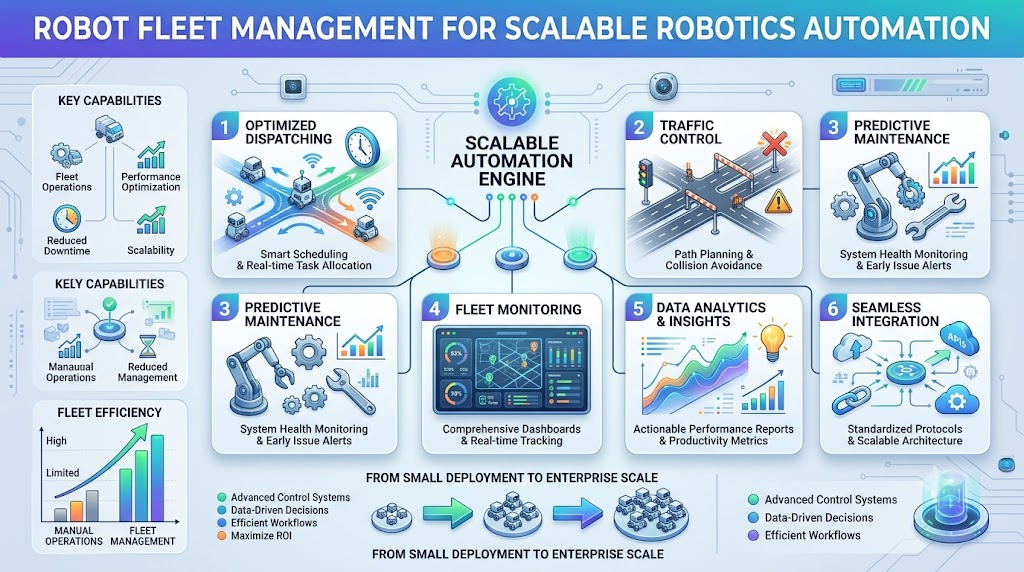
A fleet management system connects with robots through software. It receives information about robot activity, location, battery level, and tasks. The system then presents this information to the operations team.
Teams can use the system to assign tasks and manage robot movement. Some systems can also help plan routes and balance workloads. This reduces the need for manual control.
For example, several robots may need to collect products. The system can help assign tasks based on robot status. This helps keep work moving across the facility.
Key Features of Robot Fleet Management
A good fleet system can provide many useful functions. These functions help teams manage robots during normal work and unexpected problems.
Common features include:
- Robot status monitoring
- Task assignment
- Route management
- Battery tracking
- Robot location tracking
- Error alerts
- Workload management
- Performance monitoring
These features give teams better control over robot operations. They also help workers spend less time checking each robot manually.
Robot Task Management
Task management is an important part of robot fleet operations. Robots may need to complete different jobs during the same work period. A fleet system helps organize these jobs.
The system can assign tasks based on robot status and availability. It can also help prevent too many robots from working on the same task. This creates a more organized workflow.
For example, a warehouse may have robots moving boxes. Some robots may be free while others are busy. The fleet system can help send new tasks to available robots.
Robot Route Management
Robots often need to move through shared work areas. Poor route planning can cause delays or blocked paths. Route management helps robots move in a more organized way.
A fleet system can track robot locations and planned routes. It can help reduce conflicts between robots working in the same space. This is especially useful in busy facilities.
For example, ten robots may need to cross one warehouse area. The system can help manage their movement. This can reduce waiting time and improve workflow.
Battery and Charging Management
Robot batteries need regular monitoring during daily operations. A robot with low battery may stop before finishing its task. This can create delays and affect other work.
Fleet management helps teams track battery levels across the fleet. It can show which robots need charging and which robots are ready for work. Some systems can also support automated charging plans.
For example, a robot may have a low battery after several hours. The system can identify the issue before the robot stops. The robot can then be sent for charging at the right time.
Robot Health Monitoring
Robot health monitoring helps teams understand the condition of their robots. It can track errors, warnings, battery health, and other system information.
Early alerts can help teams find problems before they become serious. This can reduce unexpected downtime and support better maintenance planning.
For example, a robot may show repeated motor warnings. The team can inspect the robot before a major failure happens. This can help protect daily operations from long interruptions.
Benefits of Robot Fleet Management
Robot fleet management can improve how teams operate large robot groups. It gives teams one place to monitor robots and manage their work.
It can also reduce manual effort and improve visibility. Teams can find problems faster and understand robot performance more clearly.
Some common benefits include:
- Better robot visibility
- Easier task management
- Faster problem detection
- Better use of robot resources
- Reduced manual work
- Improved workflow control
The exact benefits depend on the robot type and work environment. Good planning is still needed for successful fleet operations.
Challenges in Robot Fleet Management
Robot fleet management also has some challenges. Robots may use different software, hardware, and communication systems. Connecting them can require careful planning.
Large fleets can also create more data and more operational complexity. Teams need clear rules for task management, safety, maintenance, and system access.
For example, a factory may use robots from different vendors. These robots may not work with one fleet system by default. The team may need suitable software integration before managing them together.
Robot Fleet Management in Warehouses
Warehouses are a common use case for robot fleets. Robots can move products, carry items, scan goods, and support order fulfillment.
Fleet management helps coordinate these activities. It gives warehouse teams better visibility into robot locations and tasks. It can also help reduce delays caused by poor coordination.
For example, many robots may move through narrow warehouse paths. The fleet system can help organize their movement. Workers can also see which robots are busy or available.
Robot Fleet Management in Manufacturing
Manufacturing plants may use robots for transport, inspection, assembly, and other tasks. These robots often work around machines and human workers.
Fleet management helps teams monitor robot activity across the plant. It can also support task planning and maintenance work.
For example, robots may carry parts between production areas. The system can help track their tasks and status. This gives operators a clearer view of material movement.
How Teams Can Choose a Fleet Management System
Teams should first understand their robot needs. They should consider the number of robots, robot types, work areas, and daily tasks.
Integration is also important. The system should work well with the robots and software already in use. Teams should also consider monitoring, security, scalability, and ease of use.
For example, a small facility may need simple monitoring tools. A large warehouse may need advanced task and route management. The right system should match the real needs of the operation.
Future of Robot Fleet Management
Robot fleets are becoming more common across many industries. As robot numbers grow, teams need better ways to manage them.
Future systems may use more automation and smarter decision tools. These systems may help robots share tasks, manage routes, and respond to changing conditions.
For example, a future warehouse could adjust robot tasks automatically. The system could react when demand changes. This could help teams manage larger robot fleets with less manual work.
Conclusion
Robot fleet management helps teams manage many robots from one system. It improves visibility, supports task control, and helps teams find problems faster.
The technology is useful in warehouses, factories, hospitals, and other work areas. It can make robot operations more organized and easier to monitor.
As robot use grows, fleet management will become more important. Teams that plan their robot operations carefully can build safer and more efficient workflows.
Leave a Reply