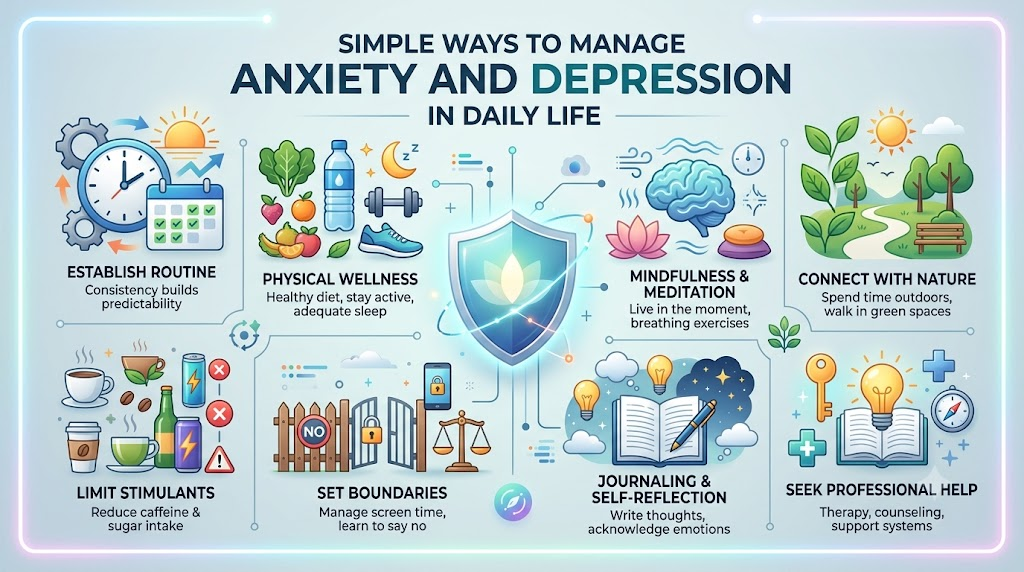
Introduction
Anxiety and depression can affect how a person feels each day. They can affect sleep, energy, focus, work, and relationships. Everyone feels worried or sad at times. These feelings often pass with time and support.But strong or lasting symptoms can make daily life hard. They may need support from a qualified health professional. Healthy habits can also support emotional well-being. MyDoctorsNow offers health information for people seeking care. Professional care and healthy routines can work together. There is no need to feel ashamed about asking for help.
What Are Anxiety and Depression?
Anxiety is more than normal short-term worry. It can cause strong fear, tension, or restlessness. A person may find it hard to relax or focus. Physical signs can also occur with anxiety.
Depression is more than feeling sad for a short time. It may cause low mood, low energy, or lost interest. Sleep, appetite, thoughts, and daily habits may also change. Anxiety and depression can happen together in some people.
Symptoms can have many possible causes. This means symptoms alone cannot confirm a condition. A health professional can review concerns and suggest suitable support.
Common Signs of Anxiety
Anxiety symptoms can affect both the mind and body. Some people feel worried most of the time. Others may feel tense, restless, or unable to relax. Trouble focusing can also happen during stressful periods.
Physical signs may include a fast heartbeat or muscle tension. Sleep problems can also occur. These signs do not always mean someone has an anxiety disorder. Other health or life issues can cause similar feelings.
Notice symptoms without using them for self-diagnosis. If concerns continue or affect daily life, seek help. A healthcare professional can assess the situation and discuss anxiety management options.
Common Signs of Depression
Depression can affect mood, thoughts, energy, and daily activities. Some people feel sad for long periods. Others lose interest in things they once enjoyed. Low energy can make simple tasks feel harder.
Sleep or appetite may also change. Some people find it hard to focus. Others may pull away from friends and family. Feelings of hopelessness can also occur.
Symptoms differ from person to person. They can also have different causes. Persistent symptoms deserve attention, especially when daily life becomes harder.
Anxiety and Depression Can Occur Together
Some people experience anxiety and depression at the same time. Worry can make rest and sleep harder. Low energy can then make daily tasks harder. These changes may create more stress.
The two conditions can share some symptoms. Sleep problems, poor focus, and reduced activity can overlap. Still, one condition does not always cause the other.
Professional assessment can help clarify what support may help. A healthcare professional can look at symptoms, daily habits, and other factors. This can support a safer and more suitable care plan.
Build a Simple Daily Routine
A simple routine can add structure to the day. Try to keep regular times for waking and meals. Add time for work, study, movement, and rest. A regular bedtime can also help create stability.
The routine does not need to be perfect. Start with one or two small changes. For example, eat breakfast at a regular time each day. Then add a short walk when you feel ready.
Some days will feel harder than others. That does not mean you have failed. Small steps can still support coping with anxiety and depression.
Improve Sleep Habits
Good sleep supports energy, focus, and emotional health. Try to keep similar sleep and wake times. A calm bedtime routine may also help the body prepare for sleep.
You can reduce bright screens before bed if possible. Quiet reading or gentle breathing may feel more calming. Keep your sleep space comfortable and peaceful when you can.
Sleep habits do not treat every mental health problem. Ongoing sleep trouble may need professional attention. Talk with a healthcare professional when poor sleep affects daily life.
Stay Physically Active
Regular movement can support overall physical and emotional health. Walking, stretching, cycling, and gentle exercise are simple options. Choose activities that fit your health and ability.
You do not need a hard workout to start. A short walk can be a useful first step. You can slowly build a routine that feels realistic.
Exercise is not a cure for depression or anxiety. It works best as one part of wider care. Other support may still be needed when symptoms continue.
Practice Simple Stress Management
Stress can make anxiety symptoms feel stronger. Simple calming activities may help some people manage stress. Slow breathing, quiet time, and gentle stretching are possible choices.
Mindfulness means paying attention to the present moment. Journaling can also help people notice thoughts and feelings. A short walk may provide a useful break from pressure.
Different methods work differently for each person. No single method works for everyone. When stress becomes hard to manage, professional mental health support can help.
Stay Connected With Trusted People
Strong social support can help people feel less alone. Talk with someone you trust when you feel ready. This could be a friend, family member, counselor, or another trusted person.
You can also stay connected through simple activities. Try a phone call, shared meal, short walk, or quiet visit. Small moments of connection can feel easier than long social events.
Friends and family cannot replace needed professional care. Still, they can offer comfort and practical support. Let trusted people know when you are having a difficult time.
Manage Negative Thoughts Carefully
Anxiety and depression can change how people view problems. A person may expect the worst or blame themselves. These thoughts can feel real during emotional distress.
Try to notice a thought without treating it as fact. Writing the thought down may help create some distance. Then discuss difficult thoughts with someone you trust.
Therapy can teach healthier ways to manage difficult thoughts. A therapist can also help identify patterns that affect daily life. This support can be useful during anxiety and depression treatment.
Reduce Overload and Set Small Goals
Large tasks can feel overwhelming during emotional distress. Breaking tasks into smaller steps can make them easier. Instead of cleaning the whole house, clean one small area.
You could also answer one email instead of many. Another option is to take one short break before starting again. Small goals can feel more manageable than large demands.
Do not pressure yourself to stay productive at all times. Rest is also part of self-care. Focus on realistic steps that fit your current energy.
Healthy Food and Daily Self-Care
Regular meals can support energy throughout the day. Choose balanced foods when possible and drink enough fluids. Avoid relying on special foods or supplements for treatment.
Basic self-care also matters during difficult periods. Showering, changing clothes, and keeping a simple routine can help. Rest and personal care can support a sense of daily structure.
Self-care supports overall well-being but does not replace medical care. If symptoms continue, speak with a qualified professional. Good habits and professional support can work side by side.
| Daily habit | Possible purpose |
|---|---|
| Regular meals | Support steady daily energy |
| Gentle movement | Support physical and emotional health |
| Sleep routine | Support healthy sleep habits |
| Social contact | Reduce feelings of isolation |
| Quiet breaks | Give the mind time to rest |
Limit Alcohol and Other Harmful Coping Habits
Some people use alcohol or other habits to handle emotional pain. Others may smoke, use drugs, overeat, or isolate themselves. These habits may offer short-term relief but create more problems later.
Safer coping choices can include talking with someone trusted. Gentle movement, quiet time, or journaling may also help. Choose options that do not create new risks.
If a coping habit feels hard to control, seek professional help. There is no shame in needing support. A professional can help you find safer ways to cope.
Therapy and Professional Mental Health Support
Therapy is a form of professional support for emotional and mental health. It can help people understand thoughts, feelings, and behavior. Different types of therapy may suit different needs.
A psychologist, psychiatrist, counselor, therapist, or primary care doctor may help. These professionals have different roles and training. A suitable professional can assess concerns and discuss care options.
Treatment should match the person’s needs and situation. This is why assessment matters. Professional mental health support can be an important part of depression management.
Medicines and Medical Treatment
Some people may receive medicine for anxiety, depression, or related conditions. Medicine is not suitable or needed for everyone. A qualified healthcare professional should decide if it is appropriate.
If you already use medicine, discuss concerns with your healthcare provider. Tell them about side effects or other worries. Do not start, stop, or change medicine without professional advice.
Anxiety and depression treatment can involve more than one type of care. Therapy, medical care, and healthy habits may sometimes work together. The right approach depends on the person’s needs.
When Professional Help Is Important
Consider professional help when symptoms continue or become severe. Support can also help when symptoms affect work or study. Changes in sleep, eating, or normal activities also matter.
Daily tasks may start feeling difficult. Relationships may also become harder to manage. These changes are good reasons to speak with a qualified healthcare professional.
Asking for help is not a weakness. Mental health concerns deserve the same care as other health concerns. Early support may also help prevent problems from becoming harder to manage.
| Warning sign | Helpful next step |
|---|---|
| Symptoms continue | Talk with a healthcare professional |
| Daily tasks become hard | Seek mental health support |
| Sleep or eating changes | Discuss the changes with a doctor |
| Work or study suffers | Ask for a professional assessment |
| Safety feels uncertain | Seek urgent help immediately |
Mental Health Emergency Support
Thoughts of suicide or self-harm need urgent attention. If you feel unable to stay safe, seek immediate help. Contact local emergency services or a crisis service. You can also contact a trusted healthcare professional.
Do not stay alone when there is an immediate safety concern. Ask someone you trust to stay with you. Move toward a safe place and seek urgent professional care.
Mental health emergencies can happen during severe emotional distress. Getting urgent help is the right step. You deserve support, care, and safety during a crisis.
Frequently Asked Questions About Managing Anxiety and Depression
Can anxiety and depression happen together?
Yes, some people experience both conditions together. A professional can assess symptoms and discuss suitable support.
What are common signs of anxiety?
Common signs include worry, tension, restlessness, poor focus, and sleep problems. Symptoms can vary between people.
What are common signs of depression?
Signs may include low mood, lost interest, low energy, and sleep changes. Persistent symptoms should receive professional attention.
Can lifestyle changes help with anxiety and depression?
Healthy habits may support emotional well-being. They should not replace professional care when symptoms continue.
Can exercise help with anxiety and depression?
Regular movement can support physical and emotional health. It works best as part of wider care.
How can I improve sleep when I feel anxious or depressed?
Keep regular sleep times and use a calm bedtime routine. Seek help when sleep problems continue.
When should I talk to a mental health professional?
Seek support when symptoms persist or affect daily life. Professional help can also support difficult emotional changes.
Can therapy help with anxiety and depression?
Therapy can help people manage thoughts, feelings, and behaviors. The best approach depends on each person’s needs.
Do all people with anxiety or depression need medicine?
No, medicine is not needed or suitable for everyone. A qualified professional can discuss whether it may help.
What should I do during a mental health emergency?
Seek immediate help if you cannot stay safe. Contact emergency services, crisis support, or a trusted healthcare professional.
Final Thoughts
Learning how to manage anxiety and depression often takes small steps. Healthy routines, sleep, movement, and social support can help. Stress management and self-care can also support emotional well-being.Therapy and professional care may be needed when symptoms continue. Anxiety and depression can affect people in different ways. Persistent or severe symptoms deserve proper attention.MyDoctorsNow.com can be part of your search for health information. Always seek urgent help during a mental health emergency. You do not have to face serious emotional distress alone.
Leave a Reply