Introduction
Neurological disorders are health problems that affect the brain, spinal cord, or nerves. These parts of the body help us think, speak, move, feel, remember, and keep our balance. Learning about common neurological disorders can help people understand possible symptoms and know when to seek medical care.
Some neurological conditions cause mild symptoms, while others can be serious or life-threatening. Some develop slowly over time. Others begin suddenly and need urgent medical help. Symptoms such as headaches, tingling, weakness, or memory changes can have many causes. They do not always mean a person has a neurological disorder.
This guide explains common conditions, their possible signs, how doctors assess them, and the treatment options that may help. For general health information and guidance on finding medical care, MyDoctorsNow can be a useful starting point. However, a qualified healthcare professional should assess any symptoms that are new, ongoing, or getting worse.
What Are Neurological Disorders?
Neurological disorders are conditions that affect the nervous system. This system carries messages between the brain and the rest of the body. It helps control movement, speech, memory, sensation, and many other functions.
The nervous system has three main parts:
- The brain: It helps control thoughts, memory, movement, feelings, and many body functions.
- The spinal cord: It carries messages between the brain and the body.
- The nerves: They carry signals that help us move, feel touch, notice pain, and respond to our surroundings.
Neurological conditions can be short-term or long-term. Some are mild, while others can affect daily life or need emergency treatment. Certain disorders develop slowly, while others appear suddenly.
These conditions have different causes and treatments. A person may have symptoms that seem similar to another person’s symptoms but have a very different health problem. A proper medical assessment is important to find the likely cause.
What Are the Most Common Neurological Disorders?
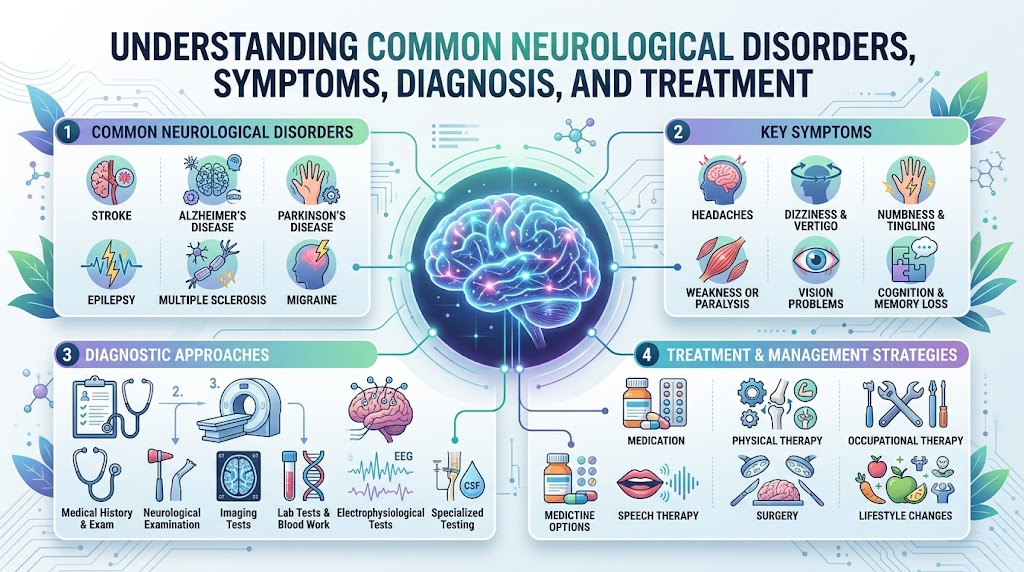
Several neurological conditions affect movement, memory, sensation, or other body functions. Their symptoms and severity can vary from person to person.
Migraine
Migraine is a condition that can cause repeated headaches. The pain may be strong and may affect one or both sides of the head. Some people also feel sick, vomit, or become sensitive to light and sound.
Some people notice warning signs before a migraine, such as flashing lights or changes in vision. These signs are known as an aura. Not everyone has them. A clinician can help identify migraine and discuss ways to manage attacks.
Epilepsy
Epilepsy is a condition that causes a person to have a lasting tendency to experience repeated seizures. A seizure happens when there is a sudden burst of unusual electrical activity in the brain.
Seizures can cause shaking, staring, unusual movements, or a brief loss of awareness. Not all seizures look the same. A single seizure does not always mean a person has epilepsy, so medical assessment is needed.
Stroke
A stroke happens when blood flow to part of the brain is blocked or when a blood vessel in the brain bleeds. Brain cells can become damaged when they do not receive enough blood and oxygen.
Possible signs include sudden weakness, facial drooping, trouble speaking, vision changes, or loss of balance. A stroke is an emergency. Quick medical care can help reduce the risk of serious harm.
Parkinson’s Disease
Parkinson’s disease affects the brain cells involved in controlling movement. It may cause shaking, muscle stiffness, slow movement, and balance problems.
Symptoms often begin slowly and may change over time. Some people also have sleep problems, mood changes, or other symptoms. Treatment can help manage symptoms, but the right plan depends on the person’s needs.
Alzheimer’s Disease
Alzheimer’s disease is a progressive brain condition that affects memory and thinking. A person may have trouble remembering recent events, finding words, planning tasks, or managing familiar activities.
Memory changes can also result from other causes, including some medicines, poor sleep, or other health problems. A medical assessment can help identify the cause. Alzheimer’s disease usually worsens over time, and care focuses on managing symptoms and supporting daily life.
Multiple Sclerosis
Multiple sclerosis, often called MS, is a condition in which the immune system damages the protective covering around nerves in the brain and spinal cord.
This damage can affect the way messages travel through the nervous system. Possible symptoms include weakness, vision problems, numbness, tiredness, or balance changes. Symptoms vary, and not everyone experiences the same pattern. Treatment may help manage the condition and reduce certain risks.
Peripheral Neuropathy
Peripheral neuropathy affects nerves outside the brain and spinal cord. These nerves help control movement and carry information about touch, pain, and temperature.
Symptoms may include tingling, burning pain, numbness, or weakness, often in the feet or hands. Diabetes, certain medicines, injuries, and other health problems can cause nerve damage. Finding the cause can help guide treatment.
Meningitis
Meningitis is inflammation of the coverings around the brain and spinal cord. It can result from infections caused by viruses, bacteria, or other germs. Some forms can be life-threatening.
Possible symptoms include fever, headache, a stiff neck, vomiting, confusion, or unusual sleepiness. Symptoms can vary, especially in young children. Suspected meningitis needs urgent medical assessment.
What Are the Common Signs and Symptoms of Neurological Disorders?
Neurological disorder symptoms depend on the part of the nervous system affected and the condition involved.
Possible signs include:
- Frequent, severe, or unusual headaches.
- Numbness, tingling, or changes in sensation.
- Muscle weakness, stiffness, or shaking.
- Problems with balance or coordination.
- Changes in memory, focus, or thinking.
- Trouble speaking or understanding words.
- Vision changes or dizziness.
- Seizures or periods of lost awareness.
- Changes in mood or behaviour.
These symptoms can have many causes. For example, dizziness may relate to an inner ear problem, a medicine, or another health issue. A headache does not always mean a person has a serious brain condition.
Seek medical advice if symptoms are new, keep returning, last longer than expected, or get worse. Sudden or severe symptoms may need emergency care.
Common Neurological Disorders and Their Possible Symptoms
| Condition | Possible Symptoms | Important Point |
|---|---|---|
| Migraine | Headache, nausea, sensitivity to light or sound | Symptoms and patterns vary between people |
| Epilepsy | Repeated seizures or changes in awareness | Medical assessment is needed to identify the cause of seizures |
| Stroke | Sudden weakness, speech problems, or vision changes | Suspected stroke is an emergency |
| Parkinson’s disease | Tremor, stiffness, slower movement | Symptoms and progression vary |
| Alzheimer’s disease | Increasing problems with memory and thinking | Memory problems can have other causes |
| Multiple sclerosis | Possible weakness, vision changes, or balance problems | Symptoms may vary over time |
| Peripheral neuropathy | Tingling, numbness, pain, or weakness | Several conditions can cause nerve damage |
| Meningitis | Possible fever, headache, stiff neck, or confusion | Suspected meningitis needs urgent medical assessment |
These symptoms are examples, not a diagnostic checklist. Only a qualified healthcare professional can assess the person’s medical history, examine symptoms, and decide whether tests are needed.
What Causes Neurological Disorders?
Neurological disorders can have many different causes. Some are linked to genes passed through families. Others develop because of illness, injury, or changes in how the body works.
Possible causes include:
- Genetic changes: Some conditions are inherited or linked to changes in genes.
- Infections: Certain viruses, bacteria, and other germs can affect the brain or spinal cord.
- Blood flow problems: A blocked or bleeding blood vessel can cause a stroke.
- Injuries: Damage to the head or spinal cord can affect movement, memory, or sensation.
- Immune system problems: The immune system may attack healthy nerve tissue in some conditions.
- Changes in brain cells: Certain diseases affect brain cells over time.
- Tumours and structural problems: Growths or changes in body structures can affect the nervous system.
- Other illnesses: Some metabolic problems and long-term health conditions can damage nerves.
Doctors can identify the cause of some conditions, while the cause of others may remain unclear. Not every neurological disorder can be prevented.
How Are Neurological Disorders Diagnosed?
A neurological diagnosis starts with a review of the person’s symptoms and health history. The clinician may ask when symptoms began, how often they occur, whether they are getting worse, and whether family members have similar conditions.
The clinician may perform a neurological examination. This can include checks of strength, movement, sensation, reflexes, speech, memory, vision, and balance.
Depending on the suspected condition, tests may include:
- Blood tests: These can help find certain infections, vitamin problems, or other health issues.
- MRI or CT scans: These create images of the brain or other body structures.
- Electroencephalography (EEG): This records electrical activity in the brain and may help assess suspected seizures.
- Electromyography (EMG): This checks the electrical activity of muscles.
- Nerve conduction studies: These measure how well electrical signals travel through certain nerves.
Not everyone needs every test. The clinician chooses tests based on the symptoms and the possible cause. Test results are considered alongside the person’s medical history and examination.
What Treatment Options Are Available for Neurological Disorders?
Neurological treatment depends on the exact condition, its cause, its severity, and the person’s needs. There is no single treatment that works for every disorder.
Possible treatment approaches include:
- Medicines: These may help control symptoms, prevent certain complications, or treat a specific cause.
- Physical therapy: This can help improve movement, strength, balance, or daily function when appropriate.
- Occupational therapy: This helps people manage everyday tasks, such as dressing, bathing, or working.
- Speech and swallowing therapy: These services may help people with certain speech or swallowing problems.
- Rehabilitation: This may support recovery after a stroke, injury, or other illness.
- Procedures or surgery: Some conditions may need an operation or another medical procedure.
- Ongoing reviews: Regular visits help the care team check symptoms and adjust the care plan when needed.
Some treatments aim to reduce symptoms. Others help slow disease activity, address an underlying cause, or lower the risk of complications. Certain conditions can be treated, while others need long-term support.
Never start, stop, or change a medicine without advice from the clinician who manages your care.
Diagnosis and Treatment Approaches
| Medical Approach | Main Purpose | What Patients Should Know |
|---|---|---|
| Neurological examination | Assess nervous system function | Helps guide further testing |
| Blood tests | Look for selected medical causes | Tests depend on symptoms and suspected conditions |
| MRI or CT scan | Create images of the brain or other structures | A scan is ordered when clinically appropriate |
| EEG | Record electrical activity in the brain | May help assess suspected seizures |
| EMG or nerve conduction study | Assess nerve and muscle function | Used for selected nerve or muscle problems |
| Physical or occupational therapy | Support movement and daily function | Goals depend on the person’s condition |
| Medicines or procedures | Treat a specific condition or its symptoms | Benefits and risks should be discussed with the treating clinician |
No single test or treatment is right for every neurological disorder. The healthcare team will explain why a test or treatment is being considered and what its possible benefits and risks are.
When Should You Seek Urgent Medical Help?
Some neurological symptoms need emergency care. Do not wait for a routine appointment if serious warning signs appear.
Contact emergency services immediately if someone has:
- Sudden facial drooping.
- Sudden weakness or numbness on one side of the body.
- Sudden trouble speaking or understanding speech.
- Sudden loss of vision or severe loss of balance.
- A sudden, severe headache that is unusual for them.
These can be signs of a stroke or another serious problem. Seek emergency help even if the symptoms improve.
A first seizure, a seizure lasting five minutes or longer, repeated seizures without recovery, or trouble breathing after a seizure also requires emergency help.
A severe headache with fever and a stiff neck, new confusion, reduced consciousness, or rapidly worsening neurological symptoms needs urgent medical assessment. This list does not include every possible emergency. If someone appears seriously unwell, seek help without delay.
Living With a Neurological Condition
Some neurological conditions need ongoing care. They may affect work, school, relationships, movement, or daily routines. The level of support needed depends on the condition and how it affects the person.
Keeping medical appointments and following the agreed care plan can help people manage their health. Patients should ask questions about symptoms, treatment goals, and possible side effects. They should also tell their healthcare team about new or worsening symptoms.
Rehabilitation and support services may help with daily tasks or changes in movement, speech, or memory. Emotional support can also be useful when a long-term condition feels difficult to manage.
Family members and carers may need guidance too. With the person’s permission, they can take part in appointments and help keep track of questions or changes in symptoms.
Can Neurological Disorders Be Prevented?
Not all neurological disorders can be prevented. Some are linked to inherited factors, while the causes of others are not fully known.
However, certain steps may reduce some health risks. Wearing suitable head protection during activities where injuries can happen may lower the risk of head injury. Managing existing health conditions with professional support can also help reduce certain risks, including some risks linked to stroke.
Seeking prompt care for serious symptoms is important. Regular medical care can help identify and manage health problems that may affect the nervous system.
Healthy habits can support general well-being, but they cannot guarantee protection from neurological disease. Lifestyle changes should not replace medical assessment or treatment.
Fictional Example: Recognizing the Need for Medical Assessment
This example is fictional and does not describe a real patient.
A person notices tingling in one hand that keeps returning. At first, they think it may be caused by the way they sit or sleep. When the symptom continues, they arrange a medical visit instead of assuming they know the cause.
The clinician asks when the tingling began, whether it affects other areas, and whether there are other symptoms. The clinician also reviews the person’s health history and performs an examination. Based on these findings, the clinician decides whether tests or specialist care may be needed.
This example shows why ongoing symptoms should be assessed rather than guessed at. It does not point to a specific diagnosis or guarantee any treatment outcome.
Frequently Asked Questions
1. What are neurological disorders?
Neurological disorders are conditions that affect the brain, spinal cord, or nerves. They can change movement, memory, speech, sensation, balance, or other body functions. Some are short-term, while others need long-term care. A healthcare professional can assess symptoms and help identify the likely cause.
2. What are the most common neurological disorders?
Important neurological conditions include migraine, epilepsy, stroke, Parkinson’s disease, Alzheimer’s disease, multiple sclerosis, peripheral neuropathy, and meningitis. They differ in their causes, symptoms, and treatments. Some develop over time, while others begin suddenly. A medical assessment is needed to identify a person’s specific condition.
3. What are the early signs of a neurological problem?
Possible signs include recurring headaches, tingling, numbness, weakness, tremors, balance problems, memory changes, or difficulty speaking. These symptoms can have many causes and do not confirm a neurological disorder. Arrange medical advice for new or ongoing symptoms. Sudden weakness, speech trouble, or vision loss needs emergency care.
4. Can headaches be a sign of a neurological disorder?
Yes, headaches can occur with conditions such as migraine, but many headaches have other causes. The type, severity, and pattern of pain can help guide an assessment. Seek urgent help for a sudden, severe, unusual headache, especially with weakness, confusion, fever, or a stiff neck.
5. How do doctors diagnose neurological conditions?
Doctors review symptoms, medical history, and medicines, then perform an examination. They may check strength, reflexes, movement, sensation, speech, memory, vision, and balance. Depending on the suspected condition, they may order blood tests, scans, or nerve tests. Not everyone needs every test.
6. Which tests may be used to assess neurological symptoms?
Tests may include blood tests, MRI or CT scans, EEG, EMG, and nerve conduction studies. Each test looks for different problems. The clinician chooses tests based on the person’s symptoms and examination. No single test can diagnose every neurological condition, and some people may not need additional testing.
7. Can neurological disorders be treated?
Many neurological disorders can be managed with medicines, rehabilitation, therapy, procedures, or ongoing medical care. The right approach depends on the condition and the person’s needs. Some treatments control symptoms or lower risks, while others target a specific cause. Not every condition can be cured.
8. When should someone see a neurologist?
A clinician may recommend a neurologist when symptoms suggest a problem with the brain, spinal cord, or nerves. Reasons may include recurring seizures, ongoing numbness, unexplained weakness, movement changes, or certain memory problems. Sudden severe symptoms need emergency care rather than waiting for a specialist appointment.
9. Which neurological symptoms need emergency care?
Sudden facial drooping, weakness on one side, trouble speaking, sudden vision loss, or sudden severe balance problems may signal a stroke. A first seizure, a seizure lasting five minutes or more, severe breathing trouble, or reduced consciousness also needs urgent help. Contact emergency services for serious or rapidly worsening symptoms.
10. Can neurological disorders be prevented?
Some risks can be reduced, but not all neurological disorders can be prevented. Protecting the head from injury and managing health conditions with professional guidance may lower certain risks. Some disorders are inherited or have unclear causes. Healthy habits support general health but cannot guarantee protection from neurological disease.
Conclusion
Understanding common neurological disorders can help people recognize possible symptoms, learn about diagnosis, and make informed choices about care. Conditions such as migraine, epilepsy, stroke, Parkinson’s disease, and peripheral neuropathy affect people in different ways, so their treatment needs also differ.
Symptoms alone cannot confirm a diagnosis. New, persistent, or worsening symptoms should be discussed with a qualified healthcare professional. Sudden or severe warning signs need urgent medical attention.
MyDoctorsNow.com can serve as a starting point for general health information, but personal medical decisions should be guided by a qualified clinician. Asking questions, understanding the care plan, and seeking help when needed are important steps in looking after nervous system health.
Leave a Reply