Headaches can make work, study, and daily tasks much harder. Migraine can also cause nausea, light sensitivity, and strong head pain. Knowing your symptoms may help you find safer ways to manage them.
Learning how to manage migraine and headaches starts with understanding possible causes. Rest, steady sleep, regular meals, and good care may help some people. This article explains headache triggers, headache relief, migraine prevention, and warning signs.
The best approach depends on the type of headache and your health. A doctor can help you understand your symptoms and choose suitable care. You can explore health support options at Mydoctorsnow.
What Are Headaches and Migraines?
A headache causes pain or pressure in part of the head. The pain may feel dull, tight, sharp, or throbbing. It may last a short time or continue for much longer.
Migraine is a type of headache disorder. It can cause strong pain and other symptoms that affect daily life. Some people feel pain on one side of the head.
Migraine symptoms may include:
- Throbbing or pulsing head pain
- Nausea or vomiting
- Sensitivity to light
- Sensitivity to sound
- Blurred vision or other visual changes
- Trouble doing normal daily tasks
Some people have warning signs called aura. They may see flashing lights, zigzag lines, or blind spots. Others may feel tingling or have trouble speaking.
Not every headache is a migraine. Other health issues can also cause head pain. A health professional can help assess the likely cause.
Common Types of Headaches
Headaches can have different causes and patterns. Learning about common types can help you describe your symptoms. However, symptoms alone cannot confirm a diagnosis.
Tension Headaches
Tension headaches often feel like pressure around the head. The pain may affect both sides of the head. Stress, poor sleep, or muscle tension may play a role.
Migraine
Migraine can cause moderate or severe head pain. It may also cause nausea and sensitivity to light or sound. Some people need rest in a dark, quiet room.
Cluster Headaches
Cluster headaches cause severe pain around or behind one eye. The pain may happen in repeated attacks over a period of time. A person may also have a watery eye or a blocked nose on that side.
Sinus-Related Headaches
Sinus problems can cause facial pain and pressure. They may also cause a blocked nose or thick nasal discharge. Still, many headaches blamed on the sinuses have another cause.
Medication-Overuse Headaches
Using headache medicines too often can lead to more headaches. This can happen with some pain relief medicines and migraine treatments. A doctor or pharmacist can help review medicine use safely.
Common Migraine and Headache Symptoms
Headache symptoms differ from person to person. Some people feel pressure, while others feel a pulsing pain. The pain may affect the forehead, temples, face, or back of the head.
Migraine may cause nausea, vomiting, and trouble with bright lights. Loud sounds or strong smells may also feel harder to bear. Some people need to stop their usual tasks during an attack.
Aura can cause changes in sight, feeling, or speech. These signs may include flashing lights, blind spots, or tingling. Some people have aura before the head pain begins.
New or unusual vision, speech, or movement problems need urgent medical assessment. Do not assume these signs are caused by migraine. Seek urgent help if they start suddenly.
What Can Trigger Headaches?
A trigger is something that may bring on a headache or migraine. Triggers differ from person to person. A trigger for one person may not affect another.
Common possible triggers include:
- Poor sleep: Too little sleep or changes in sleep time may affect headaches.
- Stress: Worry and tension may lead to more symptoms.
- Skipped meals: Going too long without food may trigger pain.
- Dehydration: Not drinking enough water may cause headaches.
- Bright lights: Strong light or flickering screens may bother some people.
- Loud sounds: Noise may make migraine symptoms feel worse.
- Strong smells: Perfume or smoke may trigger symptoms in some people.
- Hormonal changes: Changes during the menstrual cycle may affect migraine.
- Caffeine changes: Sudden changes in caffeine use may cause headaches.
- Certain foods or drinks: Some people notice links with specific items.
- Some medicines: Certain medicines may cause headaches as a side effect.
You do not need to avoid every possible trigger. Cutting out many foods without a clear reason may make eating harder. Instead, track your symptoms and look for patterns over time.
How to Manage a Headache at Home
Some simple steps may ease a mild headache. They may also help you feel more comfortable during a migraine. However, home care cannot treat every cause of head pain.
Try these steps when they are safe for you:
- Rest in a quiet, dark room.
- Drink water if you may be dehydrated.
- Eat regular meals and avoid skipping food.
- Place a cool cloth on your forehead.
- Reduce bright lights and loud sounds.
- Take a screen break if light worsens your pain.
- Try slow breathing if stress adds to your symptoms.
- Pause hard activity until you feel better.
Notice which steps help and which do not. Keep your room calm and give yourself time to rest. Do not ignore severe, unusual, or lasting pain.
Ask a health professional for advice if headaches keep returning. They can help check the cause and discuss suitable treatment. Seek urgent care if warning signs appear.
How to Manage a Migraine Attack
Acting early may help some people manage a migraine attack. Follow the care plan you made with your health professional. If you do not have a plan, ask about one.
When an attack starts, try resting in a dark room. Reduce noise and limit activity if movement makes the pain worse. Drink fluids if you can do so without feeling sick.
Migraine attacks may last for hours or longer. Some people feel tired or weak after the pain fades. Give yourself time to recover before returning to normal tasks.
If attacks often disrupt work, school, or family life, seek medical advice. A clinician may suggest treatments for attacks or ways to prevent them. Do not rely only on home care when symptoms are severe or unusual.
Medicines for Headache and Migraine Relief
Different medicines can help different types of headaches. Some treat pain during an attack. Others may help reduce how often migraine attacks happen.
Common options include some pain relief medicines and prescription migraine medicines. A doctor or pharmacist can explain which options may be safe for you. The right choice depends on your health and symptoms.
Medicine safety can depend on age, pregnancy, allergies, and other health conditions. Other medicines you take may also affect which treatment is suitable. Always share this information with your clinician or pharmacist.
Using pain relief medicines too often can cause more headaches. This is known as a medication-overuse headache. If you need headache medicine often, ask a health professional for advice.
Do not start, stop, or change prescribed medicines without medical advice. Follow the instructions given for your treatment. Ask your pharmacist if you are unsure how a medicine should be used.
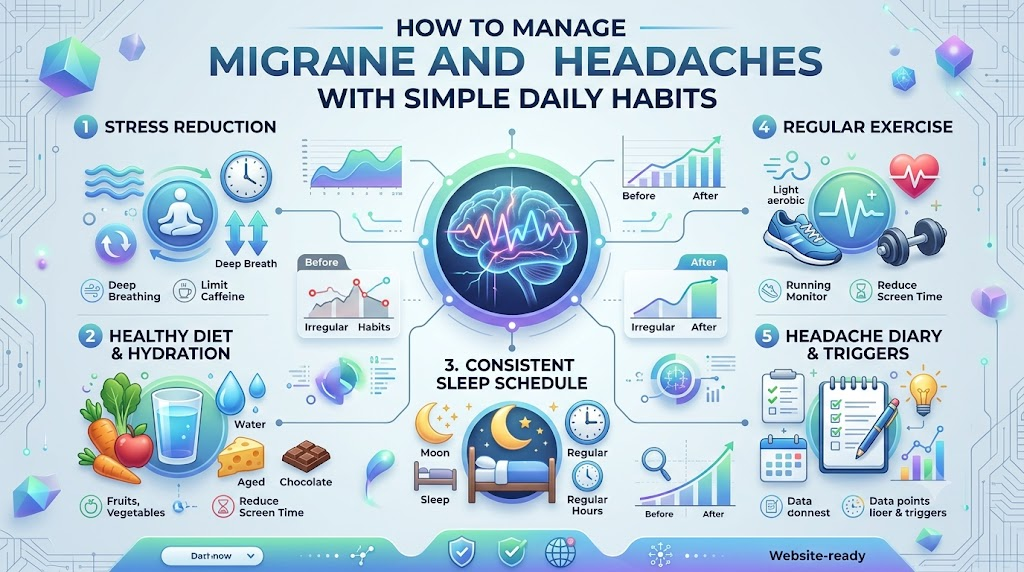
Daily Habits That May Help Prevent Migraines
Healthy daily habits may help some people manage headaches. They cannot prevent every migraine attack. Small, steady changes are often easier to keep up.
Try these habits as part of your daily routine:
- Keep regular sleep times: Go to bed and wake up at similar times.
- Eat regular meals: Try not to skip meals.
- Drink enough water: Keep water available during the day.
- Stay active: Choose movement that suits your ability and health.
- Manage stress: Try calm breathing, quiet breaks, or gentle relaxation.
- Track possible triggers: Note what happens before a headache starts.
- Keep caffeine steady: Avoid sudden changes in how much caffeine you use.
- Follow your care plan: Use treatments as advised by your clinician.
You do not need to change everything at once. Start with one or two habits that feel manageable. Ask your doctor for advice if you are unsure which changes suit you.
Daily Habits That May Help Manage Headaches
| Habit | How It May Help | Simple Tip |
|---|---|---|
| Regular sleep | Supports a steady sleep routine | Keep similar sleep and wake times |
| Regular meals | Helps prevent hunger-related symptoms | Avoid skipping meals |
| Water intake | Helps prevent dehydration | Drink water throughout the day |
| Stress care | May reduce stress-related triggers | Try calm breathing or quiet breaks |
| Headache diary | Helps reveal possible patterns | Record symptoms and possible triggers |
How to Keep a Headache Diary
A headache diary can help you notice patterns over time. It can also help your clinician understand what you experience. A diary does not prove what causes your headaches.
Record these details when a headache occurs:
- When the headache starts and ends
- Where the pain occurs
- How strong the pain feels
- Any nausea, light sensitivity, or other symptoms
- Your sleep and meal patterns
- Possible triggers, such as stress or bright light
- Medicines used and how they seemed to help
- Menstrual timing, when relevant
Keep the diary simple so it is easy to use. A few clear notes can be more useful than long entries. Bring your notes to a medical visit.
Your clinician can review the pattern with your health history. They may ask more questions or suggest an exam. The diary is helpful, but it cannot replace medical care.
When Should You See a Doctor?
Talk to a doctor if headaches happen often or keep getting worse. You should also seek advice if pain changes from your usual pattern. Headaches that affect work, sleep, or daily life deserve attention.
Book a medical visit if migraine attacks are hard to manage. Also ask for help if you often need pain relief medicine. A clinician can review your symptoms and discuss safe treatment options.
During your visit, the doctor may ask about your pain and health history. They may ask about your sleep, medicines, and family history. Some people need tests, depending on their symptoms and exam.
Seek care if a headache begins after a new medicine. Also ask for advice if headaches start after a head injury. Your doctor can help decide what needs checking.
Headache Warning Signs That Need Urgent Care
Some headaches may signal a serious health problem. Seek emergency care for a sudden, extremely severe headache. Do not wait to see if home remedies help.
Get emergency help if a headache occurs with:
- New weakness or numbness
- Trouble speaking or understanding speech
- Confusion, fainting, or seizures
- Sudden vision loss or double vision
- A severe headache with fever and a stiff neck
- A headache after a serious head injury
A new or unusual headache during pregnancy also needs urgent medical assessment. The same applies soon after childbirth. Contact a health professional promptly for advice.
Do not assume these warning signs are caused by migraine. Sudden changes in movement, speech, or sight need urgent review. Fast care may be vital in serious cases.
Common Headache Types and Their Features
| Headache Type | Common Features | Helpful Next Step |
|---|---|---|
| Tension headache | Pressure or tightness around the head | Track patterns and seek advice if frequent |
| Migraine | Throbbing pain, nausea, or light sensitivity | Discuss symptoms and treatment options |
| Cluster headache | Severe pain around one eye | Seek medical assessment |
| Medication-overuse headache | Headaches linked to frequent medicine use | Review medicine use with a clinician |
These features are general clues, not a way to diagnose a condition. A health professional can help identify the likely cause. Seek urgent care for severe or unusual symptoms.
Frequently Asked Questions
1. What is the difference between a migraine and a headache?
A headache is pain in or around the head. Migraine is a headache disorder that may also cause nausea and light sensitivity.
2. What are the common signs of a migraine?
Common signs include throbbing pain, nausea, and sensitivity to light or sound. Some people also have visual changes or tingling.
3. How can I ease a headache at home?
Try resting in a quiet room and drinking water. Regular meals and fewer bright lights may also help.
4. What may trigger migraine attacks?
Possible triggers include poor sleep, stress, skipped meals, and dehydration. Triggers vary, so tracking symptoms may help reveal patterns.
5. Can poor sleep cause headaches?
Yes, poor sleep or changes in sleep time may trigger headaches. A steady sleep routine may help some people.
6. Can drinking water help with headaches?
Water may help if dehydration contributes to the pain. However, it will not treat every type of headache.
7. When should I ask a doctor about frequent headaches?
Seek advice when headaches happen often, worsen, or affect daily life. Ask for help if you need pain relief medicine often.
8. Can using pain relief medicines too often cause headaches?
Yes, frequent use of some headache medicines can lead to medication-overuse headaches. Ask a doctor or pharmacist about safe use.
9. How can a headache diary help?
A diary can help you track pain, sleep, meals, and possible triggers. Share these notes with your clinician during a visit.
10. Which headache symptoms need emergency care?
Seek emergency care for sudden, severe pain, new weakness, speech trouble, or sudden vision loss. Severe headache with fever and a stiff neck also needs urgent care.
Conclusion
Learning how to manage migraine and headaches starts with knowing your symptoms. Regular sleep, steady meals, water, and stress care may help some people. A headache diary can also reveal patterns worth discussing with a doctor.
Seek medical advice for frequent or worsening pain. Get emergency help for sudden, severe, or unusual symptoms. For further health guidance, Mydoctorsnow.com may help you explore care options, but it cannot replace a medical exam.
Leave a Reply