Introduction
Caring for a child’s health is one of the most rewarding—and sometimes overwhelming—responsibilities a parent or caregiver faces. From the very first days of infancy through the dynamic years of childhood and the transformation of adolescence, a child’s body and mind undergo rapid, continuous change. Because children are not simply “small adults,” their medical care requires a specialized approach tailored to every stage of physical, emotional, and cognitive growth.Navigating healthcare resources can feel complex. Platforms like Mydoctorsnow serve as educational starting points to help parents learn about preventive care, explore general health topics, and prepare informed questions for their child’s dedicated healthcare team.
What Is Pediatric Healthcare?
Pediatric healthcare is the branch of medicine dedicated to the physical, mental, emotional, and social well-being of infants, children, and young adults (typically from birth through age 18 or 21, depending on regional healthcare frameworks).
┌─────────────────────────────────────────────────────────────────┐
│                 CORE COMPONENTS OF PEDIATRIC CARE               │
├─────────────────────────────────────────────────────────────────┤
│ • PREVENTIVE MEDICINE     (Vaccinations, routine screenings)    │
│ • GROWTH & DEVELOPMENT    (Tracking physical & cognitive progress)│
│ • ACUTE ILLNESS CARE      (Managing fevers, infections, injuries)│
│ • CHRONIC DISEASE CARE    (Managing asthma, allergies, diabetes)│
│ • NUTRITIONAL GUIDANCE    (Promoting healthy dietary habits)    │
│ • MENTAL & EMOTIONAL CARE (Behavioral, social, & stress support) │
│ • PARENT & FAMILY ADVICE  (Safety, sleep, & parenting guidance)  │
└─────────────────────────────────────────────────────────────────┘
How Pediatric Care Differs from Adult Medicine
Children undergo distinct physiological changes at every phase of life. Their metabolic rates, immune responses, organ maturity, and psychological needs differ significantly from those of adults.
- Evolving Physiology: Pediatric providers are specially trained to recognize subtle signs of illness in bodies that are still growing and maturing.
- Developmental Context: Symptoms like fatigue, irritability, or appetite changes carry different clinical meanings in a 6-month-old infant, a 6-year-old child, and a 16-year-old adolescent.
- Family-Centered Approach: Pediatric care inherently involves the whole family. Healthcare decisions, habit building, and safety planning are made collaboratively between the clinician, the parent or guardian, and the child as they mature.
Why Are Regular Pediatric Checkups Important?
Routine well-child checkups serve as the proactive foundation of child health management. Rather than waiting for a child to become sick, scheduled checkups establish a health baseline and allow clinicians to catch subtle issues before they become complex problems.
                  ┌──────────────────────────────────────────┐
                  │   Primary Goals of Well-Child Visits     │
                  └─────────────────────┬────────────────────┘
                                        │
      ┌──────────────────┬──────────────┴───────────────┬──────────────────┐
      ▼                  ▼                              ▼                  ▼
┌───────────┐    ┌──────────────┐              ┌───────────────┐    ┌──────────────┐
│ Early     │    │ Immunization │              │ Development & │    │ Open Parent- │
│ Detection │    │ Protection   │              │ Growth Checks │    │ Doctor Focus │
└───────────┘    └──────────────┘              └───────────────┘    └──────────────┘
- Preventive Protection: Ensures children receive age-appropriate immunizations to shield them against preventable, serious infectious diseases.
- Early Intervention: Identifies potential vision, hearing, speech, or motor delays early, when therapeutic interventions are often most effective.
- Long-Term Health Tracking: Uses standardized growth curves (height, weight, head circumference, and body mass index) to confirm steady, healthy development.
- Parental Support and Reassurance: Gives caregivers a dedicated, non-judgmental space to discuss nutrition, sleeping patterns, behavioral shifts, and school progress.
What Happens During a Well-Child Visit?
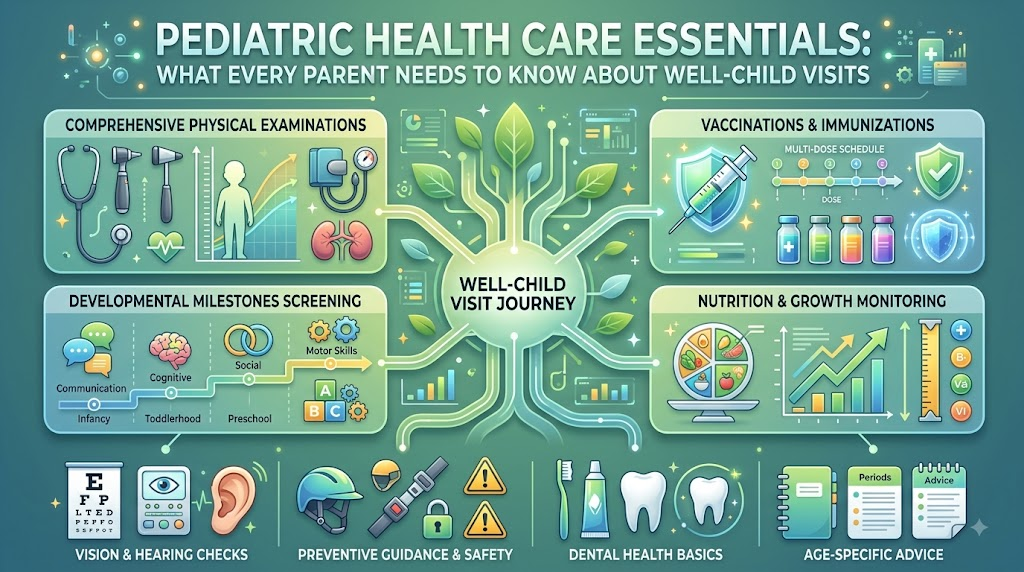
A routine well-child checkup is a structured, comprehensive exam divided into several distinct components.
┌────────────────────────────────────────────────────────────────────────┐
│                      STRUCTURE OF A WELL-CHILD VISIT                   │
├────────────────────────────────────────────────────────────────────────┤
│ 1. Growth Measurements (Height/Length, Weight, Head Circumference, BMI) │
│ 2. Complete Physical Examination (Eyes, Ears, Heart, Lungs, Abdomen)   │
│ 3. Developmental & Behavioral Review (Milestones, Speech, Social Skill) │
│ 4. Immunization Assessment & Update (Age-appropriate vaccinations)     │
│ 5. Guidance & Parent Consultation (Safety, Sleep, Feeding, Behavior)   │
└────────────────────────────────────────────────────────────────────────┘
1. Growth Check
The care team measures physical dimensions and plots them on age- and sex-standardized growth charts.
- Infants and Toddlers: Length, weight, and head circumference (which tracks brain growth).
- Older Children & Teens: Height, weight, and Body Mass Index (BMI).
- Focus on Trends: Pediatricians evaluate the overall pattern of growth over time rather than just a single number on a scale.
2. Complete Physical Examination
The clinician examines the child from head to toe to assess systemic health:
- Vital Signs: Checking pulse, respiration rate, and blood pressure (typically starting around age 3).
- Head, Eyes, and Ears: Inspecting the eardrums, testing pupil responses, and evaluating dental eruption or jaw alignment.
- Chest and Heart: Listening to heart rhythms (checking for murmurs) and breath sounds.
- Abdomen and Musculoskeletal System: Palpating internal organs, inspecting posture, spine alignment (screening for scoliosis in older children), and gait.
3. Developmental Review
The provider observes and asks about age-appropriate skills across key areas: motor coordination, language, problem-solving, and social-emotional behavior.
4. Immunization Review
Vaccination history is cross-referenced with national or regional health guidelines to keep immunizations up to date.
5. Parent Consultation
This dedicated conversation covers nutrition, sleep hygiene, screen time, home safety, and any specific questions raised by caregivers.
Child Growth vs. Child Development
While the terms “growth” and “development” are often paired together, they refer to two distinct aspects of a child’s progress.
┌─────────────────────────────────────────────────────────────────────────┐
│                    GROWTH VS. DEVELOPMENT: KEY DIFFERENCES              │
├───────────────────┬─────────────────────────────────────────────────────┤
│ Feature           │ Primary Definition & Focus                          │
├───────────────────┼─────────────────────────────────────────────────────┤
│ Child Growth      │ Quantitative physical changes in size, weight, and  │
│                   │ height over time. Measured in centimeters/kilograms.│
├───────────────────┼─────────────────────────────────────────────────────┤
│ Child Development │ Qualitative acquisition of skills, behaviors, and   │
│                   │ functional abilities (e.g., walking, talking, coding│
│                   │ emotions, problem-solving).                         │
└───────────────────┴─────────────────────────────────────────────────────┘
Healthcare providers monitor both aspects continuously, recognizing that a child’s physical body and functional skills mature in tandem.
Understanding Developmental Screening
Developmental screening is a brief, formal check that uses standardized tools to see if a child is learning basic skills when expected, or if they might need extra support.
[ Routine Developmental Observation ] ──> [ Periodic Formal Screening Tests ]
                                                      │
                                                      ▼
[ On-Track Progress ]  ◄───────────────────  [ Clinical Evaluation ]
                                                      │
                                                      ▼
                                       [ Targeted Early Intervention ]
Screening Principles:
- Standard Recommendations: The AAP recommends formal, universal developmental screening for all children at specific checkup ages—typically at 9, 18, and 30 months—with specific screening for Autism Spectrum Disorder (ASD) at 18 and 24 months.
- Screening vs. Diagnosis: A screening test does not provide a formal diagnosis. Instead, it highlights areas where a child might benefit from a more detailed evaluation by a specialist (such as a speech-language pathologist, occupational therapist, or developmental pediatrician).
- Milestone Ranges: Children acquire skills within flexible time windows. Missing a single milestone on an exact date does not automatically mean a child has a developmental condition. Caregivers are encouraged to discuss progress openly with their child’s clinician.
Childhood Immunizations: Protecting Long-Term Health
Vaccinations are among the most thoroughly researched preventive tools in modern medicine. They protect children against serious, potentially life-threatening infectious diseases by helping the immune system safely build natural defenses.
┌─────────────────────────────────────────────────────────────────────────┐
│                   KEY ROLES OF CHILDHOOD VACCINATIONS                   │
├───────────────────┬─────────────────────────────────────────────────────┤
│ Objective         │ Health Benefit                                      │
├───────────────────┼─────────────────────────────────────────────────────┤
│ Individual Protection│ Prevents severe disease, hospitalization, & long-  │
│                   │ term complications from infections.                │
├───────────────────┼─────────────────────────────────────────────────────┤
│ Community Immunity│ Helps protect vulnerable infants, elderly individuals,│
│ ("Herd Protection")│ and immunocompromised children who cannot be vaccinated│
├───────────────────┼─────────────────────────────────────────────────────┤
│ Disease Control   │ Reduces or eliminates infectious diseases across the│
│                   │ broader population over time.                      │
└───────────────────┴─────────────────────────────────────────────────────┘
Following Official Guidelines
Immunization schedules are designed by public health authorities (such as the CDC, WHO, and local ministries of health) to shield children when their immune systems are most vulnerable.
- Follow Regional Schedules: Parents should follow the official vaccine schedule established by their country’s health authorities.
- Catch-Up Vaccines: If a child misses a scheduled dose, pediatricians can create a safe “catch-up” schedule to bring them up to date without starting the series over.
- Special Circumstances: Travel abroad, chronic medical conditions, or compromised immunity may require adjustments to standard immunization timing.
Pediatric Nutrition and Healthy Habits
Healthy eating habits built during childhood lay the foundation for lifelong physical health, bone development, and cognitive function.
                  ┌──────────────────────────────────────────┐
                  │      Pillars of Child Nutrition          │
                  └─────────────────────┬────────────────────┘
                                        │
      ┌──────────────────┬──────────────┴───────────────┬──────────────────┐
      ▼                  ▼                              ▼                  ▼
┌───────────┐    ┌──────────────┐              ┌───────────────┐    ┌──────────────┐
│ Whole     │    │ Colorful     │              │ Healthy       │    │ Adequate     │
│ Grains &  │    │ Fruits &     │              │ Proteins &    │    │ Water        │
│ Fiber     │    │ Vegetables   │              │ Dairy/Calcium │    │ Hydration    │
└───────────┘    └──────────────┘              └───────────────┘    └──────────────┘
Nutritional Guidelines Across Age Groups:
- Infants (0–12 Months): Breast milk or iron-fortified infant formula provides complete nutrition for the first six months. Solid foods are gradually introduced around six months, focusing on single-ingredient, iron-rich foods.
- Toddlers & Young Children: Focus on balanced plates featuring colorful fruits, vegetables, whole grains, and healthy protein sources (such as fish, poultry, beans, and eggs). Limit pre-packaged foods high in sodium and added sugars.
- Healthy Hydration: Plain water and milk (or unsweetened fortified plant alternatives) should be the primary beverages. Avoid sugary sodas, fruit juices with added sugar, and energy drinks.
- Positive Food Relationships: Avoid restrictive dieting unless prescribed by a medical professional. Encourage children to listen to their natural hunger and fullness cues.
Unique Healthcare Needs Across Age Groups
As children grow, their healthcare focus shifts to match their physical capabilities and social environments.
Infancy & Toddlerhood           School-Age Years                Adolescence
┌──────────────────┐           ┌──────────────────┐           ┌──────────────────┐
│ Primary Focus:   │──────────>│ Primary Focus:   │──────────>│ Primary Focus:   │
│ Safe sleep, basic│           │ School progress, │           │ Puberty, mental  │
│ nutrition, rapid │           │ physical agility,│           │ health, autonomy,│
│ milestone checks │           │ vision & hearing │           │ risk prevention  │
└──────────────────┘           └──────────────────┘           └──────────────────┘
Infant & Toddler Health (Birth to 3 Years)
Focuses on frequent physical exams, tracking motor milestones (sitting, walking), establishing healthy sleep habits, monitoring feeding patterns, baby-proofing homes, and providing primary vaccinations.
School-Age Health (4 to 11 Years)
Concentrates on physical activity, social adaptation in school environments, screen time management, screening for vision and hearing issues, establishing morning/bedtime routines, and supporting academic growth.
Adolescent Health (12 to 18+ Years)
Covers pubertal physical changes, independent health habits, nutritional needs during growth spurts, emotional stress management, risk-prevention education, and private, confidential health discussions between teens and clinicians when appropriate.
Supporting Child Mental and Emotional Health
Childhood wellness includes emotional and psychological health just as much as physical fitness. Children can experience stress, anxiety, mood changes, and behavioral difficulties that warrant compassionate attention and professional care.
[ Healthy Emotional Baseline ]
              │
              ▼
[ Noticeable Behavioral Shifts (Anxiety, Withdrawal, Sadness) ]
              │
              ▼
[ Open Communication & Family Support ]
              │
              ▼
[ Consultation with Pediatrician or Behavioral Health Specialist ]
Signs That May Warrant Medical Discussion:
- Persistent Mood Shifts: Unexplained sadness, irritability, or tearfulness lasting two weeks or longer.
- Behavioral Changes: Sudden withdrawal from friends, family, or previously enjoyed activities.
- Academic Changes: Sudden drops in school performance, loss of concentration, or refusal to attend school.
- Physical Symptoms of Stress: Frequent unexplained headaches, stomachaches, or changes in eating or sleeping habits.
Pediatricians can offer initial guidance, evaluate underlying causes, and provide referrals to licensed child psychologists or counselors when needed.
Encouraging Sleep and Physical Activity
Restful sleep and regular movement are essential for a child’s healthy growth, brain development, and emotional balance.
┌─────────────────────────────────────────────────────────────────────────┐
│                    SLEEP & ACTIVITY RECOMMENDATIONS                     │
├───────────────────┬─────────────────────────────────────────────────────┤
│ Category          │ Best Practice Guidelines                            │
├───────────────────┼─────────────────────────────────────────────────────┤
│ Bedtime Habits    │ Maintain a consistent, calming bedtime routine      │
│                   │ (reading, warm bath, quiet time).                   │
├───────────────────┼─────────────────────────────────────────────────────┤
│ Digital Hygiene   │ Turn off screens (TVs, tablets, phones) at least 1  │
│                   │ hour before bedtime; keep devices out of bedrooms.  │
├───────────────────┼─────────────────────────────────────────────────────┤
│ Daily Movement    │ Encourage age-appropriate active play, outdoor time, │
│                   │ and organized sports daily.                         │
└───────────────────┴─────────────────────────────────────────────────────┘
Vision and Hearing Screening in Children
Clear vision and sharp hearing are essential for learning, language development, and safety. Because children often adapt to gradual visual or hearing changes without complaining, routine screening is vital.
                  ┌──────────────────────────────────────────┐
                  │    Vision & Hearing Screening Impact     │
                  └─────────────────────┬────────────────────┘
                                        │
      ┌──────────────────┬──────────────┴───────────────┬──────────────────┐
      ▼                  ▼                              ▼                  ▼
┌───────────┐    ┌──────────────┐              ┌───────────────┐    ┌──────────────┐
│ Early     │    │ Speech &     │              │ School &      │    │ Social       │
│ Amblyopia │    │ Language     │              │ Classroom     │    │ Interaction  │
│ Detection │    │ Development  │              │ Success       │    │ Support      │
└───────────┘    └──────────────┘              └───────────────┘    └──────────────┘
- Newborn Screening: Most infants undergo hearing checks shortly after birth before leaving the hospital.
- Routine Vision & Hearing Checks: Pediatricians check eye alignment and response in infants, moving to formal chart testing and audiometry screening during preschool and school-age visits.
- When to Seek Evaluation: Contact your provider early if your child squints, holds books unusually close, turns their head to hear, or shows delays in speech development.
Pediatric Dental Health Essentials
Oral health plays a direct role in overall health. Preventing tooth decay (cavities) early protects primary (“baby”) teeth, which hold space for healthy permanent teeth and support proper chewing and speech.
┌─────────────────────────────────────────────────────────────────────────┐
│                     ORAL HEALTH RECOMMENDATIONS                         │
├───────────────────┬─────────────────────────────────────────────────────┤
│ Stage             │ Recommended Care Practice                           │
├───────────────────┼─────────────────────────────────────────────────────┤
│ Infants (Pre-teeth)│ Gently wipe gums with a soft, clean, damp cloth   │
│                   │ after feedings.                                     │
├───────────────────┼─────────────────────────────────────────────────────┤
│ First Tooth       │ Brush twice daily using a soft-bristled brush and a │
│                   │ tiny smear of fluoride toothpaste.                 │
├───────────────────┼─────────────────────────────────────────────────────┤
│ First Dental Visit│ Schedule around the child's first birthday or within │
│                   │ 6 months of their first tooth appearing.            │
├───────────────────┼─────────────────────────────────────────────────────┤
│ Children 3+ Years │ Use a pea-sized amount of fluoride toothpaste;      │
│                   │ supervise brushing until skills are established.    │
└───────────────────┴─────────────────────────────────────────────────────┘
Managing Common Childhood Illnesses
Common illnesses are a natural part of growing up as a child’s immune system matures. Knowing what to expect helps parents manage mild symptoms at home while knowing when to seek professional care.
┌─────────────────────────────────────────────────────────────────────────┐
│                    COMMON CHILDHOOD ILLNESS OVERVIEW                    │
├───────────────────┬─────────────────────────────────────────────────────┤
│ Condition         │ Key Points & Care Focus                             │
├───────────────────┼─────────────────────────────────────────────────────┤
│ Fever             │ A natural body response to infection. Focus on the  │
│                   │ child's activity level and fluid intake.            │
├───────────────────┼─────────────────────────────────────────────────────┤
│ Upper Respiratory │ Viral infections causing runny nose, cough, and mild│
│ (Coughs & Colds)  │ fever. Encourage rest, hydration, and saline drops. │
├───────────────────┼─────────────────────────────────────────────────────┤
│ Ear Discomfort    │ Common in young children. Requires medical evaluation│
│                   │ to check for middle ear fluid or infection.         │
├───────────────────┼─────────────────────────────────────────────────────┤
│ Stomach Bugs      │ Viral gastroenteritis causing vomiting or diarrhea. │
│                   │ Focus on gentle, frequent hydration to avoid fluid loss│
└───────────────────┴─────────────────────────────────────────────────────┘
Safety Reminder: Never administer over-the-counter medications, fever reducers, or cough mixtures to infants or young children without consulting your pediatrician for correct, age- and weight-appropriate guidance.
Child Safety and Injury Prevention
Preventive healthcare includes keeping children safe in their home, travel, and play environments.
                  ┌──────────────────────────────────────────┐
                  │    Core Injury Prevention Priorities     │
                  └─────────────────────┬────────────────────┘
                                        │
      ┌──────────────────┬──────────────┴───────────────┬──────────────────┐
      ▼                  ▼                              ▼                  ▼
┌───────────┐    ┌──────────────┐              ┌───────────────┐    ┌──────────────┐
│ Safe Sleep│    │ Car Seat     │              │ Water & Pool  │    │ Home Safe-   │
│ Environment│   │ Safety Rules │              │ Supervision   │    │ Ty & Poisons │
└───────────┘    └──────────────┘              └───────────────┘    └──────────────┘
- Safe Sleep (Infants): Follow the ABCs of safe sleep: Place infants to sleep Alone, on their Back, in a bare Crib or bassinet with a firm mattress. Avoid soft bedding, pillows, bumper pads, and stuffed toys.
- Car Passenger Safety: Use age- and size-appropriate rear-facing car seats, forward-facing seats, and booster seats installed according to current safety regulations.
- Poison & Chemical Safety: Store cleaning products, medications, laundry pods, and chemicals in locked cabinets out of reach of children. Keep local poison control emergency numbers accessible.
- Water Safety: Maintain continuous, touch-distance adult supervision whenever children are in or near water, including bathtubs, home pools, lakes, and oceans.
When Should Parents Contact a Pediatrician?
Parents do not need to wait for a routine checkup if they are worried about their child’s health, growth, or behavior. Contact your pediatric provider if you notice any of the following concerns:
┌────────────────────────────────────────────────────────────────────────┐
│                   REASONS TO CONTACT YOUR PEDIATRICIAN                 │
├────────────────────────────────────────────────────────────────────────┤
│ • Persistent, high, or recurrent fevers                                │
│ • Poor feeding, persistent vomiting, or refusal to drink fluids        │
│ • Notable delays in speech, movement, or social engagement             │
│ • Unexplained, persistent weight loss or sudden changes in growth      │
│ • Recurring ear pain, sore throat, or chronic cough                    │
│ • Significant, lasting behavioral or emotional changes                 │
│ • Unclear skin rashes accompanied by fever or systemic symptoms         │
└────────────────────────────────────────────────────────────────────────┘
Pediatric Emergency Warning Signs
Certain severe symptoms require immediate, urgent medical care. If your child shows any of these warning signs, seek emergency medical care (such as visiting an emergency department or calling emergency services) right away.
┌─────────────────────────────────────────────────────────────────────────┐
│                      EMERGENCY WARNING SIGNS                            │
├─────────────────────────────────────────────────────────────────────────┤
│ 🚨 Severe difficulty breathing (grunting, rib retraction, flaring nostrils)│
│ 🚨 Pale, blue, or gray skin, lips, or tongue                            │
│ 🚨 Loss of consciousness, unresponsiveness, or extreme lethargy         │
│ 🚨 Seizures or sudden severe neurological symptoms                      │
│ 🚨 Signs of severe dehydration (no wet diapers in 8+ hours, no tears)   │
│ 🚨 Ingestion of toxic chemicals, button batteries, or unknown drugs     │
│ 🚨 Major physical trauma, deep wounds, or suspected bone fractures      │
│ 🚨 Stiff neck accompanied by high fever and sudden confusion            │
└─────────────────────────────────────────────────────────────────────────┘
How to Choose the Right Pediatric Healthcare Provider
Finding a trustworthy, accessible pediatric healthcare provider is an important decision for your family.
┌────────────────────────────────────────────────────────────────────────┐
│               PEDIATRIC PROVIDER SELECTION CHECKLIST                   │
├────────────────────────────────────────────────────────────────────────┤
│  1. Professional Credentials: Board certification in pediatrics         │
│  2. Practice Environment: Clean, child-friendly, welcoming office      │
│  3. Location & Access: Convenient location with reasonable hours        │
│  4. Urgent & After-Hours Care: Clear guidelines for after-hours calls  │
│  5. Communication Style: Attentive, respectful, and clear answers       │
│  6. Comprehensive Services: On-site screenings, vaccines, lab access    │
│  7. Specialist Network: Established referral paths to pediatric centers │
└────────────────────────────────────────────────────────────────────────┘
Preparing for a Pediatric Visit
A little preparation helps you get the most out of your child’s medical appointments.
                  ┌──────────────────────────────────────────┐
                  │      Steps to Prepare for a Visit        │
                  └─────────────────────┬────────────────────┘
                                        │
      ┌──────────────────┬──────────────┴───────────────┬──────────────────┐
      ▼                  ▼                              ▼                  ▼
┌───────────┐    ┌──────────────┐              ┌───────────────┐    ┌──────────────┐
│ Write Down│    │ Bring Records│              │ List Current  │    │ Prepare Comfort│
│ Questions │    │ & Vaccine Card│             │ Medications   │    │ Items for Child│
└───────────┘    └──────────────┘              └───────────────┘    └──────────────┘
- Write Questions Down: Jot down your top questions or symptoms ahead of time so you don’t forget them during the visit.
- Bring Records: Keep an up-to-date copy of your child’s immunization record, allergy history, and any reports from specialists or schools.
- Comfort Items: Bring a favorite toy, blanket, or book to help reassure young children during waiting times.
Summary Checklist of Pediatric Care Essentials
Use this quick guide to track your child’s routine healthcare needs:
| Care Area | Key Focus Practices |
| Growth Checks | Regular measurement of length/height, weight, head circumference, and BMI. |
| Development | Monitoring movement, speech, learning, and social-emotional milestones. |
| Immunizations | Keeping up with age-appropriate vaccines according to local schedules. |
| Nutrition | Providing balanced meals, encouraging water intake, and building healthy habits. |
| Mental Health | Supporting emotional well-being, mood stability, and healthy social connections. |
| Sleep & Exercise | Maintaining consistent sleep schedules and encouraging active daily play. |
| Dental & Vision | Starting early oral care, scheduling dental visits, and completing vision checks. |
| Safety & Home | Practice safe sleep, use proper car seats, and store medicines securely out of reach. |
Myths vs. Medical Facts in Pediatric Health
┌─────────────────────────────────────────────────────────────────────────┐
│                            MYTHS VS. MEDICAL FACTS                      │
├───────────────────────────────────────────┬─────────────────────────────┤
│ MYTH                                      │ MEDICAL FACT                │
├───────────────────────────────────────────┼─────────────────────────────┤
│ "Children only need a doctor when sick."  │ "Well-child visits focus on │
│                                           │  prevention and growth."    │
├───────────────────────────────────────────┼─────────────────────────────┤
│ "Missing one milestone means a disorder." │ "Developmental ranges vary; │
│                                           │  trends matter more."       │
├───────────────────────────────────────────┼─────────────────────────────┤
│ "Vaccines are only for infants."          │ "Immunization schedules     │
│                                           │  continue through teens."   │
├───────────────────────────────────────────┼─────────────────────────────┤
│ "Children don't experience real stress."  │ "Children can experience    │
│                                           │  anxiety and mood shifts."  │
├───────────────────────────────────────────┼─────────────────────────────┤
│ "Online search replaces a pediatrician."  │ "Online info cannot replace │
│                                           │  personalized clinical care."│
└───────────────────────────────────────────┴─────────────────────────────┘
Common Mistakes Parents Should Avoid
- Skipping Routine Checkups: Missing well-child visits when a child appears healthy, which skips key developmental and preventive checks.
- Ignoring Subtle Milestone Delays: Waiting too long to raise speech or motor concerns with a pediatrician.
- Delaying Recommended Vaccinations: Putting off vaccines without discussing safe schedules with a qualified provider.
- Self-Prescribing Medications: Giving adult medications or unverified dosages to infants and young children without medical clearance.
- Neglecting Early Dental Care: Delaying a child’s first dental visit until permanent teeth appear.
How Mydoctorsnow Can Support Your Family
Finding clear, trustworthy healthcare information is an important step in supporting your family’s health journey. Mydoctorsnow.com offers accessible educational materials designed to help parents:
- Understand Pediatric Essentials: Learn about developmental milestones, preventive care, and well-child visits.
- Prepare for Appointments: Access helpful question checklists to organize your visits with healthcare providers.
- Explore Health Topics: Read practical, evidence-based articles on child nutrition, safety, and wellness.
Frequently Asked Questions (FAQs)
1.What does pediatric healthcare include?
Pediatric healthcare includes preventive checkups, growth and milestone monitoring, immunizations, nutritional counseling, acute illness management, mental health support, and safety guidance for children from birth through adolescence.
2.Why are regular pediatric checkups important?
Routine checkups allow doctors to track growth, evaluate development, administer protective vaccines, catch potential issues early, and give parents a space to ask questions.
3.What happens during a well-child visit?
A well-child visit includes physical measurements (height, weight, head size), a complete physical exam, developmental checks, immunization reviews, and guidance on sleep, safety, and nutrition.
4.How is child growth monitored?
Growth is tracked by measuring length or height, weight, and head circumference (for infants), which are plotted on standardized growth charts to observe healthy trends over time.
5.What is developmental screening?
Developmental screening uses brief, standardized tools to check if a child is reaching expected motor, speech, cognitive, and social milestones for their age group.
6.When should children receive developmental screening?
The AAP recommends formal developmental screening at 9, 18, and 30 months, with specific autism screening at 18 and 24 months, alongside ongoing observation at every visit.
7.Why are childhood vaccinations important?
Vaccinations safely train a child’s immune system to protect against serious, contagious diseases, keeping individual children healthy and protecting the broader community.
8.What should parents know about pediatric nutrition?
Focus on balanced plates with whole foods, colorful fruits and vegetables, lean proteins, and water for hydration, while avoiding restrictive diets unless prescribed by a doctor.
9.How important is sleep for children?
Restful sleep is vital for brain development, physical growth, immune function, and emotional balance. Consistent bedtime routines help encourage good sleep hygiene.
10.When should children have dental checkups?
Children should visit a dentist around their first birthday or within six months of their first tooth erupting, followed by regular checkups recommended by their dentist.
11.Why are vision and hearing screenings important?
Unidentified vision or hearing issues can affect speech development, learning, and social interaction. Early screening helps identify problems when they are easiest to treat.
12.What mental health changes should parents watch for?
Watch for lasting changes in mood, sudden academic drops, withdrawal from friends, unexplained physical symptoms like headaches, or notable shifts in sleep or appetite.
13.When should I contact a pediatrician?
Contact your pediatrician for persistent fevers, feeding problems, breathing issues, developmental concerns, unusual rashes, or any symptom that worries you.
14.What symptoms require emergency medical care for a child?
Seek immediate emergency care for severe breathing difficulty, blue or pale skin, unresponsiveness, seizures, severe dehydration, or major physical injury.
15.How do I choose the right pediatric healthcare provider?
Look for board-certified pediatricians with accessible office hours, supportive communication styles, clear emergency contact options, and a child-friendly clinic environment.
Final Conclusion
Pediatric healthcare is a continuous journey that supports your child’s growth, development, and long-term health. By keeping up with routine well-child visits, following recommended immunization schedules, providing balanced nutrition, encouraging safe play, and staying attentive to emotional well-being, you help build a strong foundation for your child’s future.
Leave a Reply