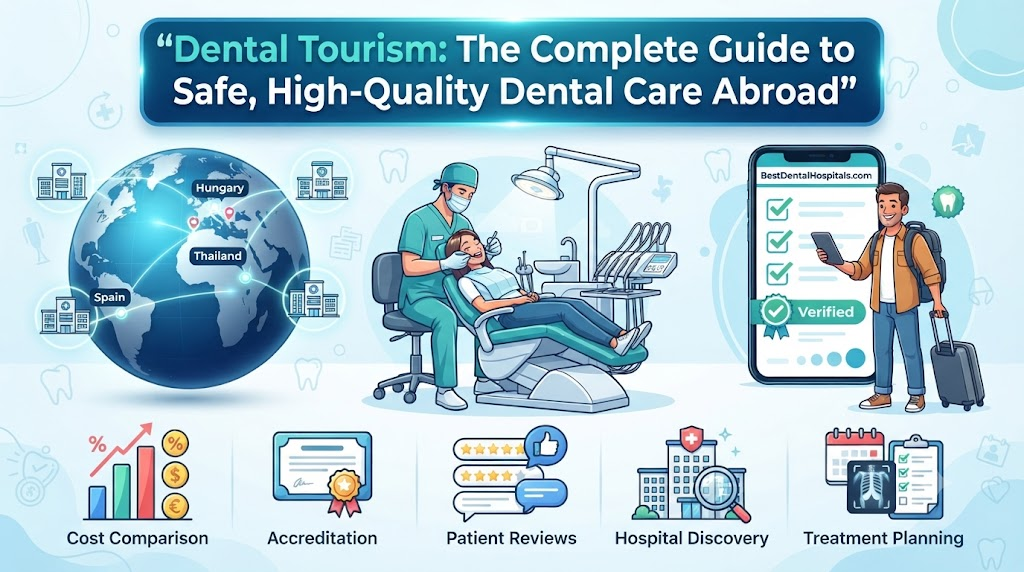
In recent years, cross-border healthcare has evolved from a niche alternative into a global movement. High domestic Dental tourism expenses, long waiting periods for specialized procedures, and gaps in insurance coverage have led millions of patients from the United States, Canada, the United Kingdom, Europe, and Australia to seek dental treatment abroad.This resource provides a clinical, transparent, and practical breakdown of international dental travel. Whether you require a single implant, complex full-mouth rehabilitation, or cosmetic restorations, this guide outlines how to evaluate providers, balance costs against quality, and safeguard your oral health throughout your travel journey.
What is Dental Tourism?
Dental tourism refers to the practice of traveling outside one’s home country or local region to receive preventive, restorative, cosmetic, or surgical dental care. This sector forms a major part of global medical travel, supported by dedicated international patient departments in hospitals, multilingual clinical teams, and integrated travel support services.
Scope of Dental Travel
Patients travel abroad for a broad spectrum of dental procedures, which generally fall into four categories:
- Routine Maintenance & General Care: Cleanings, fillings, root canal therapy, and simple extractions.
- Cosmetic Dentistry: Porcelain veneers, composite bonding, professional whitening, and smile design.
- Restorative & Surgical Dentistry: Single or multiple dental implants, bone grafting, sinus lifts, and crown/bridge restorations.
- Complex Rehabilitation: Full-mouth reconstruction, All-on-4 / All-on-6 fixed prostheses, and maxillofacial surgeries.
+-------------------------------------------------------------------------------+
|                           DENTAL TOURISM SPECTRUM                             |
+-------------------------------------------------------------------------------+
| Routine / General   | Cosmetic Dentistry  | Restorative / Implant | Full-Mouth |
| - Cleanings         | - Veneers           | - Single Implants     | - All-on-4 |
| - Root Canals       | - Smile Design      | - Bone Grafting       | - All-on-6 |
+-------------------------------------------------------------------------------+
Advantages vs. Limitations
While international treatment offers notable advantages, it also presents distinct limitations that require careful consideration before booking care.
Key Advantages
- Significant Cost Savings: Lower operating overhead, labor costs, and living expenses in host countries allow clinics to offer treatment at reduced rates without compromising clinical quality.
- Advanced Clinical Infrastructure: Leading international dental centers often feature modern 3D Cone Beam Computed Tomography (CBCT), CAD/CAM digital impression scanners, in-house milling laboratories, and surgical lasers.
- Specialist Access: Patients can consult with board-certified prosthodontists, periodontists, and oral surgeons within a single facility.
- Combined Travel: Patients have the opportunity to combine necessary healthcare procedures with personal travel or recuperation in a new destination.
Critical Limitations
- Follow-up Logistics: Managing post-surgical adjustments or unexpected complications once back in your home country can be challenging.
- Compressed Timelines: Complex surgical interventions require structured healing intervals. Attempting to rush clinical protocols to fit tight flight schedules increases the risk of complications.
- Regulatory Variances: Quality standards, licensing checks, and mal-practice protections vary by country.
Why Do People Seek Dental Treatment Abroad?
The decision to seek dental treatment abroad is driven by several economic, systemic, and clinical factors:
High Costs in Home Countries
In countries like the United States, Canada, the United Kingdom, and Australia, complex restorative procedures—such as implant-supported bridges or full-mouth rehab—can require significant out-of-pocket spending. Standard dental insurance plans often cap annual benefits at levels well below the cost of major surgical care.
Lack of Comprehensive Insurance Coverage
Basic dental plans frequently class major restorative work, advanced surgical placement, and cosmetic porcelain veneers as elective procedures. As a result, patients are left responsible for the full cost of these treatments.
Long Wait Times for Specialist Appointments
In public healthcare systems like the UK’s NHS or Canada’s provincial systems, waiting times for specialized oral surgery or complex restorative consultations can extend for months. International private hospitals can typically schedule treatments within weeks.
Access to Specialized Facilities
Leading dental destinations have built high-capacity, specialized facilities catering specifically to international patients. These centers offer complete care under one roof, including preliminary imaging, surgical placement, in-house laboratory milling, and custom shade fitting.
                          WHY PATIENTS TRAVEL ABROAD
                                      |
         +----------------------------+----------------------------+
         |                            |                            |
   High Domestic Costs        Long Wait Times             Lack of Coverage
  (50-70% savings abroad)   (Immediate scheduling)    (Elective/Implant gaps)
How to Choose the Best Dental Hospital
Selecting an international healthcare provider requires evaluating clinical credentials, safety protocols, and operational transparency. Finding the best dental hospitals involves inspecting several core areas:
1. Dentist Qualifications and Credentials
Ensure that the attending dentists hold formal postgraduate certifications in their respective specialties (e.g., Prosthodontics, Periodontics, Oral and Maxillofacial Surgery). Verify their memberships in recognized international bodies, such as the International Congress of Oral Implantologists (ICOI) or the European Association for Osseointegration (EAO).
2. Hospital Experience and Volume
Inquire about the clinic’s experience with your specific procedure. High-volume centers that regularly handle complex implantology and full-mouth rehabilitations generally possess refined clinical protocols and well-practiced surgical teams.
3. International Accreditations
Look for independent third-party certifications. Relevant accreditations include:
- Joint Commission International (JCI): The gold standard for global healthcare facility safety and clinical quality.
- ISO 9001 Certification: Demonstrates adherence to standardized quality management systems.
- TEMOS (Trust Effective Medicine Out of State): Validates specialized services and support protocols for international patients.
4. Infection Control and Sterilization Protocols
Verify that the facility adheres to strict infection control measures. These should include autoclaving instruments, using disposable surgical drapes, operating designated sterile surgical suites, and following international cross-contamination prevention standards (such as US CDC or European CE guidelines).
5. Diagnostic and Treatment Technology
A modern center should be equipped with up-to-date diagnostic tools, including:
- 3D CBCT (Cone Beam Computed Tomography): Essential for evaluating bone density, nerve pathways, and sinus positions prior to implant surgery.
- Intraoral Digital Scanners: Replaces manual impressions with precise 3D optical maps.
- CAD/CAM Dental Milling Systems: Enables precise, in-house fabrication of crowns, bridges, and surgical guides.
                  CRITICAL HOSPITAL SELECTION CHECKLIST
  [ ] Board-certified specialists (Prosthodontist / Oral Surgeon)
  [ ] Third-party accreditation (JCI, ISO, TEMOS)
  [ ] On-site 3D CBCT imaging and digital intraoral scanners
  [ ] Tier-1 implant systems with manufacturer traceability
  [ ] Documented sterilization protocols (Autoclave / Class B)
  [ ] Transparent, itemized pricing without hidden fees
  [ ] Clear written warranty and revision policy
6. Implant Systems and Material Traceability
Confirm that the clinic uses established, research-backed implant systems (e.g., Straumann, Nobel Biocare, Astra Tech, Zimmer Biomet). The hospital should provide official manufacturer serial numbers and authentic passports for all components placed.
7. Emergency Support and Revision Protocols
Inquire about the hospital’s contingency plans for managing unexpected complications during or immediately following treatment. Review their written warranty terms to understand what covers potential material failures or clinical adjustments.
Best Countries for Dental Tourism
Evaluating the best countries for dental tourism requires assessing geographic convenience, regulatory frameworks, clinical specializations, and typical treatment costs. No single country is universally “best”; suitability depends on your specific treatment needs, travel distance, and budget.
                      GLOBAL DENTAL TOURISM HUB MAP

   [ North America ]           [ Europe ]                   [ Asia ]
       Mexico                  Turkey                       India
       Colombia                Hungary                      Thailand
                               Spain / Poland / Croatia     Malaysia
Country Comparison Matrix
The table below outlines key features across major international dental destinations based on market availability, clinical reputation, and common travel routes:
| Country | Popular Treatments | Cost Considerations | Specialist Availability | Travel Convenience | Key Considerations |
| Mexico | Implants, All-on-4, Crowns, Veneers | 50%–70% lower than US/Canada | High in border towns & tourist centers | Excellent for North American travelers | Ideal for US/Canadian patients; high drive-over accessibility in border regions. |
| Turkey | Cosmetic Dentistry, Veneers, All-on-4, Implants | 60%–75% lower than UK/US | High in major cities (Istanbul, Antalya) | Excellent for European & UK travelers | High-capacity facilities; ensure careful verification of conservative crown vs. veneer preparations. |
| Hungary | Complex Restorative Care, Implants, Full Rehab | 50%–65% lower than Western Europe | Very high; established European dental hub | Short flights within Europe | Strong academic traditions; rigorous European Union regulatory standards. |
| Thailand | Implants, Full-Mouth Rehab, Cosmetic Dentistry | 50%–65% lower than Australia/US | High in Bangkok & Phuket (JCI accredited facilities) | Excellent for Asia-Pacific & Australian travelers | Modern hospital infrastructure; highly trained multilingual clinical teams. |
| India | Implants, All-on-4/6, Maxillofacial Surgery, Restorative | 65%–80% lower than US/UK | High; world-class oral surgeons in major metros | Moderate-to-long travel distance | Significant cost efficiency; highly experienced English-speaking specialists. |
| Spain | Implants, Periodontics, General Restorative | 30%–50% lower than UK/Northern Europe | High throughout major metropolitan hubs | Very convenient within Europe | Strictly regulated under European Union healthcare guidelines. |
| Colombia | Cosmetic Dentistry, Smile Makeovers, Implants | 50%–70% lower than US | High in major hubs (Medellín, Bogotá) | Convenient flight access from the US | Rapidly growing hub for cosmetic transformations and digital smile design. |
| Poland | Implants, Restorative Dentistry, Crowns | 45%–60% lower than UK/Germany | High; modern regional dental clinics | Short flight travel from Europe/UK | High standard of clinical care backed by EU safety protocols. |
Dental Implants Abroad
Getting dental implants abroad is one of the most common reasons for medical travel. A dental implant is a biocompatible titanium or zirconia post surgically anchored into the jawbone, functioning as an artificial tooth root to support a crown, bridge, or full fixed denture.
                           ANATOMY OF A DENTAL IMPLANT

                              [ Porcelain Crown ]
                                       ||
                              [ Abutment Screw ]
                                       ||
                            [ Titanium Implant Post ]
                                       ||
                            =======================  <-- Gum Line
                            /\/\/\/\/\/\/\/\/\/\/\/  <-- Jawbone Integration
The Clinical Implant Timeline
Implant treatment requires planned physiological healing. Patients should understand that durable implant placement generally requires a multi-phase approach over several months:
                          TYPICAL IMPLANT TIMELINE

  PHASE 1: Initial Visit (3-7 Days)
  - 3D CBCT Scan & Clinical Evaluation
  - Tooth Extraction & Bone Grafting (if required)
  - Implant Fixture Surgical Placement
  - Placement of Temporary Crown/Bridge
            │
            ▼
  HEALING PERIOD (3 to 6 Months)
  - Osseointegration: Bone fuses with implant surface at home
            │
            ▼
  PHASE 2: Final Restoration (5-10 Days)
  - Abutment Placement
  - Final Digital Impression / Optical Scanning
  - Fabrication and Permanent Crown/Bridge Fitting
- Phase 1: Diagnostic Assessment & Surgical Placement (3–7 Days)
- 3D CBCT scanning to evaluate jawbone structure and nerve position.
- Extraction of compromised teeth and necessary bone grafting or sinus elevation.
- Precision placement of the titanium implant post into the jawbone.
- Placement of a protective healing cap or temporary restoration.
- Osseointegration Period (3–6 Months)
- The patient returns home while the bone fuses with the implant surface (osseointegration).
- Temporary restorations maintain aesthetics and basic function during this healing window.
- Phase 2: Final Prosthetic Restoration (5–10 Days)
- Uncovering the implant and securing the permanent abutment connector.
- Taking intraoral digital impressions to craft the final porcelain or zirconia crown.
- Custom color-matching, structural fitting, and occlusal adjustments for long-term comfort.
Note: Immediate-load implants (“same-day teeth”) are an option in specific anatomical conditions, but adequate initial bone density is strictly required.
Dental Implant Cost Comparison
Conducting a practical dental implant cost comparison requires understanding the full scope of components that make up a final quote. Advertised baseline prices often list only the implant post, excluding essential restorative components.
                      COMPLETE IMPLANT COST BREAKDOWN

    +---------------------------------------------------------------+
    |  Surgical Placement Fee (Implant Titanium Post)              |
    +---------------------------------------------------------------+
    |  Abutment Connection (Custom or Stock Titanium/Zirconia)      |
    +---------------------------------------------------------------+
    |  Final Crown Restoration (Porcelain-Fused-to-Metal/Zirconia)  |
    +---------------------------------------------------------------+
    |  Diagnostic Imaging (3D CBCT / Panoramic X-Rays)              |
    +---------------------------------------------------------------+
    |  Surgical Preparation (Bone Grafting / Sinus Lift - if needed)|
    +---------------------------------------------------------------+
Regional Cost Ranges
The estimates below represent average ranges for a single complete implant unit (Implant Post + Abutment + Permanent Crown). Final costs vary based on clinical complexity, bone grafting requirements, brand selection, and location:
| Country / Region | Single Implant (Complete Unit) | All-on-4 System (Per Arch) | Typical Inclusions | Potential Exclusions |
| United States / UK | $3,000 – $5,000 / £2,000 – £3,500 | $15,000 – $30,000 / £12,000 – £22,000 | Consultation, standard restoration | 3D CBCT, extraction, complex bone grafts |
| Mexico | $800 – $1,500 | $6,000 – $10,000 | Implant post, abutment, standard crown | Bone grafting, sinus lift, premium zirconia upgrades |
| Turkey | $500 – $1,200 | $4,500 – $8,500 | Implant, abutment, temporary teeth, local transfers | Advanced bone grafting, custom surgical guides |
| Hungary | $800 – $1,600 | $6,500 – $11,000 | Consultation, surgical placement, final crown | CBCT imaging, extractions, overnight stays |
| Thailand | $900 – $1,800 | $7,000 – $12,000 | Diagnostics, premium implant systems, crown | Extensive bone grafting, general anesthesia |
| India | $400 – $900 | $3,500 – $6,500 | Complete restoration kit, surgical placement | Travel expenses, complex sinus elevation |
Disclaimer: Figures are general estimates based on international clinical survey data. Actual costs depend on your specific medical evaluation, chosen component brands, structural complications, and currency exchange rates.
How to Compare Dental Implant Quotes
When assessing estimates from international clinics, look beyond the baseline price and request an itemized breakdown.
Essential Line Items to Request
Make sure your quote clearly details costs for the following areas:
                   ITEMIZED QUOTE CHECKLIST
  [ ] Comprehensive diagnostic CBCT 3D Scan & Clinical Exam
  [ ] Extraction fees (simple vs. surgical)
  [ ] Bone graft material & resorbable membrane (if required)
  [ ] Sinus elevation / lift (lateral or internal, if required)
  [ ] Titanium implant fixture (with brand name specified)
  [ ] Abutment (standard stock vs. custom milled zirconia/titanium)
  [ ] Immediate temporary restoration (for healing phase)
  [ ] Final prosthetic crown (Monolithic Zirconia / E-Max / PFM)
  [ ] Anesthesia/sedation fees
  [ ] Prescription post-op medications and surgical kits
                          THE "HIDDEN COST" TRAP

  Advertised Headline Rate:  $499  (Post ONLY)
  + Diagnostic CBCT Scan:    $150
  + Custom Abutment:         $250
  + Final Zirconia Crown:    $400
  + Bone Grafting Material:  $300
  -----------------------------------------
  TRUE TOTAL COST:          $1,599 per unit
Always clarify if the quoted price covers the entire treatment process or only the initial surgical visit.
Best Dental Implant Hospitals
Evaluating the best dental implant hospitals means looking past promotional claims and reviewing objective performance indicators. Top-tier implant centers generally share several core features:
                 EVALUATION MATRIX FOR IMPLANT CENTERS

   CLINICAL EXPERTISE          INFRASTRUCTURE           SAFETY STANDARDS
  -------------------        ------------------        ------------------
  - Dedicated Oral           - In-house 3D CBCT        - Sterile Operating
    Surgeons/Prosthodontists   Diagnostics               Suites
  - High Volume Success      - Integrated CAD/CAM      - Hospital-Grade
    Rates                      Milling Lab               Autoclaves
  - ICOI / EAO Fellowships   - Recognized Implant      - Written Revision
                               Brands                    Policies
Core Hospital Metrics
- Specialist Integration: Implants should be placed by experienced Oral & Maxillofacial Surgeons or Periodontists, and fitted by certified Prosthodontists.
- Traceable Brands: Use of world-recognized implant platforms (such as Straumann, Nobel Biocare, Dentsply Sirona, BioHorizons, or Megagen) that provide global support and easily sourceable replacement parts.
- On-Site CAD/CAM Laboratories: Dedicated in-house dental laboratories allow lab technicians, prosthodontists, and patients to collaborate directly on shade matching and precise prosthetic fitting.
- Transparent Revision Policies: Clear written commitments detailing how adjustments, remakes, or rare healing failures are handled financially and operationally.
All-on-4 Dental Implants Abroad
For patients experiencing extensive tooth loss or advanced periodontal disease, All-on-4 dental implants abroad offer a streamlined alternative to replacing individual teeth one by one.
                        ALL-ON-4 SURGICAL ARCH DESIGN

                     [ Full Arch Fixed Prosthetic Bridge ]
                     ===================================
                       /       |           |       \
                      /        |           |        \
            [Angled Rear]  [Straight]  [Straight]  [Angled Rear]
               Implant      Implant     Implant       Implant
             (30-45 deg)                            (30-45 deg)
            -----------------------------------------------------
                                JAWBONE
How the All-on-4 Technique Works
Developed by Dr. Paulo Malo in partnership with Nobel Biocare, the All-on-4 method uses four strategically placed implants to support a complete, fixed arch bridge:
- Two Anterior Implants: Placed vertically in the front of the jaw, where bone density is naturally higher.
- Two Posterior Implants: Placed at an angle (up to 45 degrees) in the back of the jaw. Tilting the implants maximizes support in available bone and often avoids the need for sinus bone grafting.
Benefits vs. Limitations
Key Benefits
- Eliminates the need for removable dentures, providing a stable, fixed tooth replacement.
- Often avoids complex, costly bone grafting procedures.
- Allows for immediate provisional fitting (“Teeth-in-a-Day”) in qualified candidates.
- Restores natural chewing function and facial aesthetic structure.
Key Limitations
- Requires precise surgical execution; incorrect angles can compromise prosthetic stability.
- Cleaning underneath the fixed bridge demands meticulous oral hygiene routines (such as water flossing and specialized interdental brushes).
- If one implant fails to integrate, the entire prosthetic arch may require temporary removal and surgical modification.
Full Mouth Dental Implants Abroad
The term full mouth dental implants abroad covers a range of complex restorative options for patients who have lost most or all of their teeth. Treatment plans are customized based on jawbone health, facial structure, and patient preferences:
                     FULL MOUTH REHABILITATION OPTIONS
                                     |
         +---------------------------+---------------------------+
         |                                                       |
  Fixed Arch Options                                   Removable Implant Options
  - All-on-4 System (4 implants per arch)              - Overdentures (2 to 4 implants)
  - All-on-6 / All-on-8 (6-8 implants per arch)        - Locator Retained Snap-on Bridges
  - Individual Segmented Bridges                       - Bar-Retained Removable Options
Full-Mouth Restoration Approaches
- Fixed All-on-6 / All-on-8 Systems: Utilizes 6 to 8 implants per arch to distribute biting forces across a broader area. Recommended for patients with sufficient bone volume seeking maximum stability.
- Implant-Supported Overdentures (Snap-On Dentures): Uses 2 to 4 implants per arch fitted with locator attachments. The acrylic denture snaps securely over the implants, offering better stability than traditional dentures while remaining removable for easy cleaning.
- Segmented Fixed Bridges: Uses multiple independent implant-supported bridges across the arch. This approach yields exceptional aesthetic results, but requires high bone density and higher component counts.
Cosmetic Dentistry Abroad
Patients seeking treatment at best cosmetic dentistry hospitals are usually looking to improve smile aesthetics through conservative, durable procedures.
                      COSMETIC DENTISTRY OPTIONS

       PORCELAIN VENEERS                 FULL PORCELAIN CROWNS
  ---------------------------         ---------------------------
  - Ultra-thin ceramic shells         - Full 360-degree tooth coverage
  - Minimal front enamel reduction    - Substantial enamel reduction required
  - Preserves underlying tooth        - Recommended for severely damaged
    structure                           or structural teeth
  - Ideal for gaps/minor stains       - Used for major alignment issues
Core Cosmetic Treatments
- Porcelain Veneers: Thin ceramic shells bonded to the front surface of teeth to correct minor gaps, slight misalignments, or persistent discoloration. They require minimal surface enamel reduction.
- Zirconia / E-Max Crowns: Full-coverage restorations used when teeth have sustained structural damage, large fillings, or root canal therapy.
- Smile Makeovers: Comprehensive treatment plans combining digital smile design, gum contouring, whitening, and ceramic restorations.
Preserving Natural Tooth Structure
A critical consideration in cosmetic dental travel is ensuring conservative treatment. Patients should avoid aggressive, unnecessary reduction of healthy natural teeth (“crown preparations”) when non-invasive alternatives or thin porcelain veneers can achieve the desired aesthetic result. Always discuss treatment plans in detail before consenting to enamel removal.
Dental Treatment Abroad: Complete Process
A successful international dental treatment abroad journey requires careful organization across every phase:
                    THE 11-STEP DENTAL TRAVEL WORKFLOW

  PRE-TRAVEL
  [Step 1] Identify dental needs & obtain local baseline X-Rays / Diagnostic Records
  [Step 2] Contact shortlisted international hospitals & submit digital records
  [Step 3] Receive preliminary virtual consultation & compare itemized plans
  [Step 4] Verify dentist credentials, accreditation, and implant brand options

  TRAVEL & TREATMENT
  [Step 5] Finalize travel logistics (flights, visas, medical travel insurance)
  [Step 6] Arrive for in-person 3D CBCT scan, diagnostic confirmation & consent
  [Step 7] Surgical Phase (Implants placed / teeth prepared / temporaries fitted)
  [Step 8] Healing interval at hotel / initial post-op recovery checks

  RESTORATION & AFTERCARE
  [Step 9] Second Visit (or final prosthetic fitting in immediate-load cases)
  [Step 10] Bite calibration, occlusal adjustment & final aesthetic approval
  [Step 11] Discharge with records, warranty passports & home aftercare plan
Risks of Dental Tourism
While traveling abroad for care offers clear benefits, patients must also evaluate and prepare for potential risks:
                         RISK MITIGATION MATRIX

  POTENTIAL RISK                  PREVENTION / MITIGATION STRATEGY
  ------------------              ----------------------------------
  Biological Failure              Ensure proper healing time; do not force
  (Implant Non-Integration)       "immediate load" if bone density is low.

  Communication Barriers          Work with clinics offering dedicated,
                                  fluent international patient coordinators.

  Inflexible Timelines            Build buffer days into your travel itinerary
                                  to accommodate extra adjustments.

  Follow-up Care Gaps             Secure a local dentist comfortable handling
                                  routine care for your chosen implant brand.
Risk Factors to Consider
- Biological Non-Integration: Implants fail to integrate with the jawbone in approximately 2% to 5% of cases worldwide. Factors such as smoking, uncontrolled diabetes, or inadequate bone density increase this risk.
- Time Pressure Complications: Attempting to compress multi-step surgical procedures into a short vacation can compromise healing protocols.
- Regulatory & Legal Differences: Medical malpractice laws and patient protection frameworks differ by country, making legal remedies more complex if disputes arise.
- Post-Operative Follow-Up: Finding a local dentist willing to service or adjust specific foreign implant brands can sometimes require extra coordination.
Aftercare After Dental Treatment Abroad
Proper long-term care is crucial for the success and durability of your dental restorations.
                           AFTERCARE PROTOCOLS

    IMMEDIATE PHASE (Days 1–14)        LONG-TERM MAINTENANCE (Lifetime)
  ---------------------------------   ---------------------------------
  - Prescribed antibiotics/rinses     - Daily water flossing & brushing
  - Soft food diet (avoid pressure)   - Soft-nightguard usage (if grinding)
  - No heavy physical exertion        - Semi-annual hygiene cleanings
  - Avoid smoking/alcohol             - Annual radiographic monitoring
Post-Treatment Best Practices
- Obtain Complete Treatment Records: Request digital copies of your pre- and post-op 3D CBCT scans, treatment summaries, surgical notes, and implant passport certificates before leaving the clinic.
- Follow Medication Schedules: Take all prescribed antibiotics, anti-inflammatory medications, and specialized oral rinses exactly as directed.
- Maintain Dietary Restrictions: Stick to soft foods during the initial healing period to avoid applying excessive force to integrating implants or temporary crowns.
- Coordinate Home Care: Identify a local dentist in your home country who is comfortable conducting routine hygiene cleanings and monitoring your restorations long-term.
Dental Tourism Travel Checklist
Use this practical checklist to stay organized when preparing for your dental travel:
                      PATIENT TRAVEL DOCUMENTATION

  MEDICAL & DENTAL RECORDS              TRAVEL & LOGISTICS
  [ ] Recent panoramic X-rays/CBCT      [ ] Passport (6+ months validity)
  [ ] Written dental history            [ ] Required medical entry visas
  [ ] List of current medications       [ ] Flight tickets & hotel bookings
  [ ] Physician clearance (if needed)   [ ] Medical travel insurance policy

  TREATMENT CLEARANCE                   FINANCIAL PREPARATION
  [ ] Signed itemized quote             [ ] Primary credit/debit card
  [ ] Confirmed clinical schedule       [ ] Backup payment method
  [ ] Clinic emergency contact details  [ ] Local currency for initial expenses
Dental Tourism Cost Checklist
When planning your total budget, account for all associated travel and clinical expenses using this simple framework:
$$\text{Total Travel Cost} = \text{Clinical Treatment} + \text{Diagnostics} + \text{Flights} + \text{Accommodation} + \text{Daily Expenses} + \text{Contingency Fund}$$
                      COMPLETE BUDGET CALCULATOR

  [ ] Base Dental Treatment Fee:    $_____________
  [ ] Diagnostic CBCT / X-Rays:     $_____________
  [ ] Medications & Post-Op Kit:    $_____________
  [ ] Roundtrip Flights:            $_____________
  [ ] Hotel / Accommodation:        $_____________
  [ ] Local Transfers / Meals:      $_____________
  [ ] Medical Travel Insurance:     $_____________
  [ ] Emergency Contingency (15%):  $_____________
  ------------------------------------------------
  ESTIMATED GRAND TOTAL:            $_____________
Dental Tourism: Price vs Quality
The key to a successful experience is striking the right balance between cost savings and clinical quality. Selecting a clinic based solely on the lowest advertised price can lead to unexpected risks.
                   BALANCING PRICE AND QUALITY

      LOWEST PRICE FOCUS                   HIGH QUALITY FOCUS
  ---------------------------          ---------------------------
  - Unbranded/generic implants         - Tier-1 global implant brands
  - Rushed treatment timelines         - Proper, phased healing periods
  - Vague, bundled pricing             - Itemized, transparent quotes
  - Minimal aftercare support          - Clear warranties & follow-up
Key Considerations
- High-Quality Materials Have Base Costs: Tier-1 implant systems, precision-milled monolithic zirconia, and custom E-Max ceramics have inherent material costs. Quotes well below standard market rates may indicate the use of unbranded components or unverified laboratories.
- Specialist Experience Matters: Complex surgeries require years of specialized postgraduate training. Prioritize surgeon credentials and experience over low prices.
- Invest in Diagnostic Precision: Adequate pre-operative 3D imaging, digital surgical guides, and comprehensive treatment planning are essential for long-term clinical success.
Summary Comparison Matrix
Use this evaluation checklist to systematically compare candidate hospitals during your research:
| Evaluation Factor | What to Inspect | Why It Matters | Status |
| Dentist Qualifications | Specialist certifications, ICOI/EAO memberships | Verifies advanced training in complex procedures. | [ ] |
| Hospital Accreditation | Third-party certifications (JCI, ISO 9001, TEMOS) | Confirms adherence to international safety and quality standards. | [ ] |
| Diagnostic Technology | In-house 3D CBCT imaging, digital scanners | Essential for precise surgical planning and nerve safety. | [ ] |
| Component Quality | Recognized implant platforms with serial passports | Ensures long-term component availability and replacement options. | [ ] |
| Price Transparency | Itemized quotes detailing surgical, prosthetic, and imaging fees | Prevents unexpected costs during treatment. | [ ] |
| Patient Reviews | Verified long-term patient feedback | Provides insight into clinical outcomes and patient care standards. | [ ] |
| Aftercare Policy | Written warranty terms and post-op protocols | Clarifies support policies in the event adjustments are needed. | [ ] |
How to Identify a Trustworthy Dental Provider
Distinguishing between reliable international medical centers and promotional clinics is critical for your safety.
                          PROVIDER TRUST SIGNAL MATRIX

  GREEN LIGHTS (Trustworthy Signals)         RED FLAGS (Warning Signals)
  ----------------------------------         ----------------------------
  [+] Detailed 3D CBCT diagnostic plan       [-] Guarantees 100% treatment success
  [+] Verifiable specialist credentials      [-] Pressures immediate booking/deposits
  [+] Explicit component brand names         [-] Refuses itemized cost breakdowns
  [+] Clear, written revision terms          [-] Lacks 3D CBCT pre-op imaging
  [+] Focuses on tooth preservation          [-] Recommends filing down healthy teeth
Dental Tourism for Different Patient Needs
Treatment approaches vary significantly based on your specific dental conditions and goals:
                   CLINICAL PATHWAYS BY PATIENT NEED

   SINGLE MISSING TOOTH              MULTIPLE MISSING TEETH
   --------------------              ----------------------
   - 1 Implant Post                  - Segmented Implant Bridges
   - 1 Custom Abutment               - Strategic Implant Placement
   - 1 Single Crown                  - Preserves Surrounding Bone

   FULL ARCH LOSS                    COSMETIC TRANSFORMATIONS
   ------------------                ------------------------
   - All-on-4 / All-on-6 Systems     - Porcelain Thin Veneers
   - Full Fixed Arch Bridge          - Digital Smile Design
   - Reconstructs Occlusal Height    - Conservative Tooth Preparation
Common Mistakes to Avoid
To help ensure a smooth, successful experience, avoid these common pitfalls:
- 1. Choosing Solely on Advertised Base Rates: Selecting a clinic based only on cheap headline rates without accounting for component fees, diagnostic imaging, or travel expenses.
- 2. Rushing Clinical Healing Windows: Forcing multi-stage implant procedures into a single short trip instead of allowing necessary bone integration time.
- 3. Accepting Vague Quotes: Consenting to treatment plans that lack specific implant brand names, material specifications, or procedural details.
- 4. Skipping Diagnostic 3D Imaging: Undergoing implant placement using only 2D panoramic X-rays, which do not show detailed bone depth or nerve locations.
- 5. Overlooking Aftercare Planning: Failing to establish a plan for post-treatment care or check-ups with a dentist in your home country.
Expert Tips for Dental Tourists
Follow these practical guidelines when planning your international treatment:
- Obtain Baseline Local Records: Get a recent 2D panoramic X-ray or 3D scan and a preliminary assessment from a local dentist before starting your international search.
- Consult Multiple Providers: Share your diagnostic files with two or three accredited international facilities to compare treatment approaches and itemized quotes.
- Verify Component Traceability: Confirm that your clinic uses established implant platforms and provides official manufacturer certificates with serial numbers.
- Plan Flexible Travel Dates: Add buffer days to your trip itinerary to accommodate extra adjustments or recovery time.
- Maintain Realistic Expectations: Focus on achieving a healthy, stable, and natural-looking result rather than an artificially uniform “perfect” appearance.
- Keep All Medical Records: Retain digital copies of all surgical notes, X-rays, invoices, and material passports for your personal medical files.
Frequently Asked Questions (FAQs)
1. What is dental tourism?
Dental tourism is the practice of traveling to another country or region to receive dental care—such as implants, crowns, veneers, or full-mouth restorations—often to access lower costs, shorter waiting times, or specialized care.
2. Is getting dental treatment abroad safe?
Yes, provided you choose an accredited hospital with qualified specialists, strict sterilization protocols, and established diagnostic tools (such as 3D CBCT scanning). Safety depends on thorough research rather than location alone.
3. How much can I save by traveling abroad for dental care?
Patients typically save between 50% and 70% on major restorative procedures compared to pricing in the US, UK, Canada, or Australia, even after factoring in travel expenses.
4. Why are dental procedures less expensive in top dental tourism countries?
Lower costs are primarily driven by reduced operating overhead, lower labor costs, less expensive real estate, and favorable exchange rates—not lower clinical standards.
5. What are the best countries for dental tourism?
Popular destinations include Mexico (for North Americans), Turkey, Hungary, Poland, and Spain (for Europeans), and Thailand, Malaysia, and India (for Asia-Pacific and global travelers). The best choice depends on your specific needs, travel distance, and budget.
6. How long do I need to stay abroad for dental implants?
Implant treatment usually requires two separate visits. Phase 1 (surgical placement) takes 3 to 7 days. After a 3 to 6 month healing period for osseointegration, Phase 2 (permanent crown fitting) takes 5 to 10 days.
7. What is the difference between All-on-4 and traditional dental implants?
Traditional implants replace individual teeth one-by-one with single posts. All-on-4 uses four strategically angled implants to support a complete fixed arch bridge, often eliminating the need for extensive bone grafting.
8. What should a comprehensive dental implant quote include?
An itemized quote should list the 3D CBCT scan, surgical placement fee, titanium post, abutment, provisional restoration, final permanent crown, bone grafting (if needed), medications, and local transfer services.
9. What happens if I experience complications after returning home?
Reputable clinics offer written warranties covering material components and remakes. For minor immediate issues, you can consult a local dentist or coordinate with your treating hospital’s international support team.
10. Can I get immediate-load (“same-day”) dental implants abroad?
Immediate-load implants are possible if your jawbone meets specific bone density and primary stability criteria. Your surgeon will confirm suitability using a 3D CBCT scan.
11. Are international dental clinics accredited?
Leading international dental centers hold certifications from recognized bodies such as Joint Commission International (JCI), ISO 9001, or TEMOS, confirming adherence to global safety protocols.
12. Will the dental clinic team speak English?
Major international dental centers employ dedicated, multilingual international patient teams and fluent, English-speaking dentists to ensure clear communication.
13. What diagnostic imaging is required before getting implants abroad?
A 3D Cone Beam Computed Tomography (CBCT) scan is essential. It provides detailed cross-sectional views of bone volume, density, and surrounding nerve structures necessary for safe implant placement.
14. What is an implant passport, and why do I need it?
An implant passport is an official document from the manufacturer listing the exact brand, model, diameter, and batch serial numbers of your implants. It ensures any dentist worldwide can source compatible components if adjustments are ever needed.
15. Are porcelain veneers abroad safe for my teeth?
Porcelain veneers are safe when performed conservatively by experienced prosthodontists. Ensure your provider prioritizes minimal enamel reduction rather than aggressively filing down healthy teeth.
Conclusion
Dental tourism offers a practical, highly effective way for patients to access top-tier restorative and cosmetic care at manageable costs. However, achieving a successful outcome requires focusing on clinical quality, patient safety, and detailed preparation rather than chasing the lowest advertised price.By thoroughly evaluating dentist credentials, selecting accredited facilities, understanding the clinical stages of your treatment, and securing clear aftercare protocols, you can plan your care abroad with confidence.
Leave a Reply