Introduction
Your health is your most valuable asset, and the physician you choose to oversee it is one of the most important partners you will ever have. Whether you are seeking a routine check-up, managing a chronic condition, or needing specialized attention, the right doctor can make all the difference in your long-term wellness. A strong relationship with a healthcare provider isn’t just about visiting a clinic; it’s about having a trusted advocate who understands your unique medical history, listens to your concerns, and works alongside you to achieve your health goals.
However, the process of finding a new provider can often feel overwhelming. With countless clinics, varying specialties, and complex insurance networks, it is easy to feel lost in the search. Making an informed choice ensures that you receive high-quality, personalized, and efficient care, which ultimately leads to better health outcomes and a more positive patient experience.
In this comprehensive guide, we will walk you through the essential steps to navigate the healthcare system effectively, understand provider credentials, and evaluate which practice best fits your life. If you are ready to begin your journey toward better health, you can explore resources and find professional guidance at MyDoctorsNow to help you connect with the right care. Let’s explore how you can find a physician who truly puts your health and well-being first.
Quick Answer
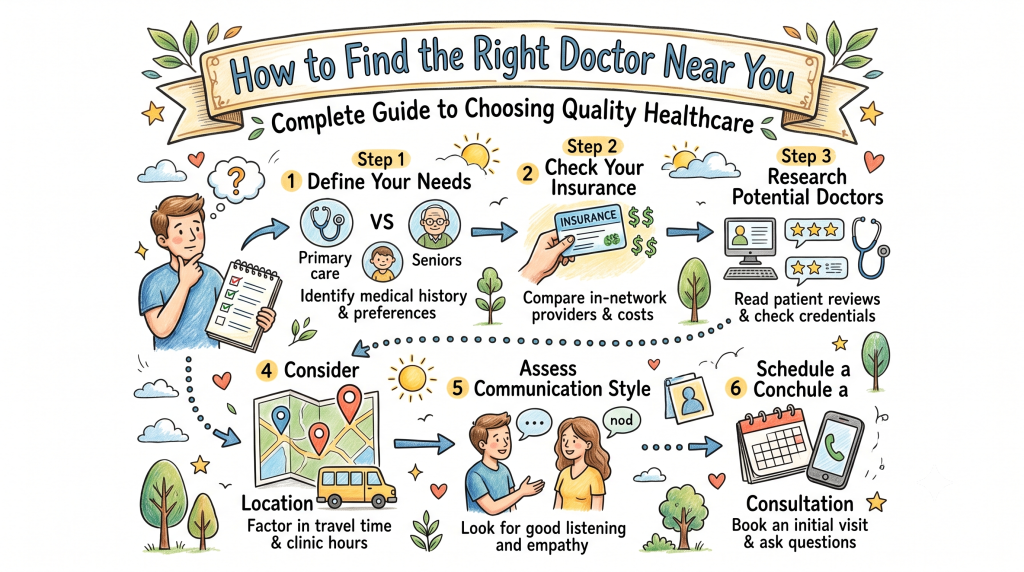
To find the right doctor, start by verifying your insurance provider’s list of in-network doctors to ensure financial coverage. Next, consider your specific needs: a primary care physician (PCP) for general health or a specialist for targeted care. Use reputable online directories to research their board certifications, years of experience, and clinical focuses. Finally, evaluate their communication style and office accessibility through patient feedback and an initial consultation. Choosing a doctor who combines high clinical standards with clear, empathetic communication is the most effective way to ensure long-term healthcare success.
Why Choosing the Right Doctor Matters
Impact on Long-Term Health
Consistent, high-quality care is the foundation of preventive medicine. A doctor who knows your long-term health history is much better equipped to identify subtle changes in your well-being, allowing for earlier intervention and more effective management of chronic conditions.
Better Diagnosis and Treatment
Not all providers approach medical issues the same way. Finding a doctor whose diagnostic philosophy aligns with your health goals ensures you receive treatments that are not only medically sound but also tailored to your personal preferences and lifestyle.
Improved Patient Experience
Healthcare is a vulnerable experience. Finding a provider who values your time, explains complex medical terms in simple language, and makes you feel heard can significantly reduce the anxiety often associated with medical appointments.
Continuity of Care
Life is unpredictable, and health issues rarely occur on a convenient schedule. Having a primary doctor who coordinates your care, maintains your records, and communicates with other specialists ensures that no part of your medical history is overlooked.
Building Trust With Healthcare Providers
Trust is the most critical element of the doctor-patient relationship. When you trust your doctor, you are more likely to be honest about your symptoms, adhere to treatment plans, and openly discuss your fears, all of which are essential for true healing.
Understanding Different Types of Doctors
Primary Care Physicians
These are the “gatekeepers” of your health. A Primary Care Physician (PCP) manages your overall health, performs routine screenings, treats minor illnesses, and coordinates care if you need to see a specialist.
Family Medicine Doctors
Family medicine practitioners are trained to care for patients of all ages, from newborns to the elderly. They are excellent choices for families who want a single point of contact for every member’s health needs.
Internal Medicine Specialists
Internists specialize in the prevention, diagnosis, and treatment of adult diseases. They often have deep expertise in managing complex, chronic conditions like diabetes, hypertension, or heart disease.
Pediatricians
Pediatricians are dedicated to the physical, emotional, and social health of children from birth through young adulthood. They are experts in developmental milestones and the unique medical challenges faced by growing children.
Obstetricians and Gynecologists
OB-GYNs focus on the female reproductive system. They provide care during pregnancy and childbirth and manage general reproductive health concerns, including hormonal balance and cancer screenings.
Surgeons
Surgeons specialize in performing operative procedures to repair injuries, remove diseased tissue, or correct physical deformities. You usually visit a surgeon after a referral from a primary care doctor.
Specialty Care Providers
Beyond general practice, specialists like cardiologists, dermatologists, and endocrinologists focus exclusively on specific organ systems or disease processes, providing highly targeted care for complex issues.
When Should You Search for a New Doctor?
Moving to a New Area
Relocation is the most common reason to seek a new provider. Even if you are perfectly healthy, establishing a relationship with a local doctor now prevents a scramble when an urgent health need eventually arises.
Changes in Health Conditions
If you have recently been diagnosed with a chronic illness or if your existing condition has become more complex, you may need a doctor with more specialized training or a practice better equipped to manage ongoing treatments.
Insurance Network Changes
Insurance plans change frequently. If your current doctor is no longer in your network, finding an in-network provider is necessary to avoid significant out-of-pocket costs and ensure your care continues uninterrupted.
Need for Specialized Care
Sometimes, your health needs evolve in a way that requires a new focus. For example, if you are entering a new life stage or developing a specific symptom, you might need a provider with a different clinical background.
Seeking a Second Opinion
If you feel your current doctor is not addressing your concerns, or if you are facing a major diagnosis, seeking a second opinion is a standard and healthy part of managing your medical care.
Factors to Consider When Choosing a Doctor
Qualifications and Credentials
Always check that your doctor is board-certified. Board certification indicates that a physician has completed the necessary training and passed rigorous exams in their specialty, ensuring they meet high clinical standards.
Experience and Expertise
Consider how long the doctor has been practicing and how frequently they treat patients with your specific condition. A doctor who deals with your concern daily will have a much deeper well of experience to draw from.
Communication Style
Does the doctor look you in the eye when they speak? Do they ask questions about your lifestyle? A doctor who uses jargon you don’t understand or rushes through your concerns may not be the right fit.
Hospital Affiliations
Where does the doctor have privileges? A doctor affiliated with a top-tier hospital generally has access to superior diagnostic equipment, modern laboratory facilities, and a wider network of specialist consultants.
Office Location and Accessibility
If a doctor’s office is difficult to reach or has limited parking, you may be less likely to attend regular checkups. Choose a location that fits naturally into your daily routine.
Appointment Availability
Ask about the typical wait time for a standard appointment and if the office offers evening or weekend hours. Accessibility is a key component of a good patient experience.
Telemedicine Services
In the modern era, telehealth is a major asset. A doctor who offers virtual consultations can save you time, reduce your exposure to germs in waiting rooms, and provide quicker access for minor concerns.
Comparison Table: Primary Care Doctor vs Specialist
| Feature | Primary Care Doctor | Medical Specialist |
| Scope of Care | Broad, whole-body health | Focused, organ-specific |
| Typical Focus | Preventive and chronic management | Complex diagnostics and procedures |
| Consultation | Ongoing, regular visits | Often episode-based or focused |
| Goal | General well-being | Specific condition resolution |
| Referrals | Usually provides referrals | Often requires a referral to see |
Comparison Table: Factors to Evaluate When Choosing a Doctor
| Factor | Why It Matters | What to Look For |
| Insurance | Costs and coverage | Verify current in-network status |
| Experience | Quality of care | Years in practice, board certification |
| Communication | Patient comfort | Clear answers, active listening |
| Convenience | Appointment access | Online scheduling, office hours |
| Technology | Efficiency | Electronic records, telehealth access |
How to Research Doctors Effectively
Reviewing Credentials
Most state medical boards maintain online databases where you can check if a doctor has a clean record, valid certification, and any history of disciplinary actions. This is your first step in building a trust-based search.
Evaluating Professional Experience
Look at the doctor’s biography. Does their academic background and training align with your health needs? Many hospital websites provide detailed profiles that outline their specific areas of research and clinical interest.
Understanding Areas of Specialization
A doctor may be board-certified in “Internal Medicine” but also have a clinical sub-interest in “Diabetes Care.” If you have diabetes, prioritize the doctor who lists that as a core focus of their practice.
Reading Patient Feedback
While online reviews should be taken with a grain of salt, they can reveal patterns. If multiple patients mention long wait times or rude staff, those are likely real issues you will face as well.
Checking Hospital Affiliations
A doctor’s affiliation tells you about their reputation among peers. Top hospitals have strict requirements for their staff; if a doctor is on their team, it is usually a strong indicator of clinical competence.
Questions to Ask Before Choosing a Doctor
What Experience Do You Have With My Condition?
Don’t be afraid to be direct. Ask how many patients with your diagnosis the doctor sees annually. The more experience they have, the more refined their treatment strategies will be.
What Treatment Approaches Do You Recommend?
Every doctor has a different philosophy. Some are more conservative, preferring lifestyle changes first, while others may be quicker to prescribe medication or suggest interventions. Choose one whose approach matches your own.
How Are Emergencies Handled?
If you have a crisis, who do you call? Knowing the office’s protocol—whether you speak to an on-call nurse, the doctor directly, or are directed to a specific urgent care—is vital.
What Are the Appointment Policies?
Ask about the office’s “no-show” policy and the ease of rescheduling. You want a practice that is firm about policies but flexible enough to accommodate the realities of life.
Are Telehealth Services Available?
Inquire if they offer virtual visits for routine follow-ups. This is a game-changer for people with busy work schedules or those who find traveling to a physical office difficult.
Finding Specialists Near You
Cardiology Specialists
If you have concerns about your heart, look for cardiologists who are board-certified and have access to advanced diagnostic imaging like echocardiograms and stress tests.
Orthopedic Specialists
For bone and joint issues, choose orthopedists who are affiliated with sports medicine clinics or major orthopedic hospitals, as they are often at the cutting edge of joint replacement technology.
Dermatologists
Look for dermatologists who focus on medical skin concerns, such as skin cancer screenings, in addition to cosmetic services. Their training in diagnostic skin exams is crucial for your long-term health.
Eye Care Specialists
Ophthalmologists are MDs who can perform surgery and treat complex eye diseases. Ensure they have the technology for things like retinal imaging and glaucoma management.
Women’s Health Specialists
When choosing an OB-GYN, prioritize providers who listen to your specific health history and offer comprehensive care that goes beyond basic reproductive screenings to include total well-being.
Gastroenterology Experts
Gastroenterologists handle everything from digestive health to liver disease. Look for specialists who offer in-office diagnostic procedures like endoscopies and colonoscopies.
Other Specialty Providers
From endocrinologists for hormone health to neurologists for brain and nerve function, always prioritize providers who spend the majority of their clinical time treating your specific medical concern.
The Role of Technology in Finding Doctors
Online Doctor Directories
Modern directories are powerful tools that allow you to filter by insurance, location, language, and gender. They are often the best starting point for a broad search.
Telemedicine Platforms
Many telemedicine apps now allow you to “test drive” a doctor. Booking a one-time virtual consultation for a minor issue is a great way to see if you like the provider’s communication style.
Digital Appointment Scheduling
If an office requires you to call and stay on hold for 20 minutes just to book, they may be less organized than a practice that offers 24/7 online booking.
Electronic Health Records
A doctor who uses a modern patient portal where you can securely message them and view your labs is likely better at coordinating care than a doctor who relies on paper files.
Virtual Consultations
These are not just for emergencies. They are perfect for discussing long-term health goals, reviewing test results, or asking follow-up questions about a new medication.
Understanding Insurance and Healthcare Costs
Insurance Network Participation
“In-network” is the magic word in healthcare costs. Before booking, call your insurance provider directly and ask: “Is [Doctor Name] an in-network provider for my specific plan?”
Out-of-Pocket Costs
Understand what your deductible and copayments are. Some specialists charge more for procedures than others; don’t be afraid to ask the office staff for an estimate of costs for a standard visit.
Specialist Referral Requirements
Many HMO plans require your PCP to submit a formal referral before insurance will cover a specialist visit. Ensure you know these requirements to avoid surprise bills.
Telehealth Coverage
Most insurance companies now cover virtual visits, but the cost share can vary. Check your benefits summary to see if a telehealth visit is cheaper than an in-office appointment.
Financial Planning for Healthcare
If you know you will need ongoing care, look into a Health Savings Account (HSA). Using pre-tax dollars for your medical expenses is one of the smartest ways to manage long-term healthcare costs.
Signs You Have Found the Right Doctor
Clear Communication
You leave the office feeling that you understand your diagnosis, your treatment options, and the reasoning behind them. You have no lingering questions about “what’s next.”
Comfortable Patient Experience
The staff is respectful, the office is clean, and the environment feels safe. You feel like a person, not a number, and your concerns are treated with genuine empathy.
Timely Responses
If you send a message through the portal or leave a question with the nurse, you get a response in a reasonable timeframe. This shows they value your peace of mind.
Comprehensive Care
Your doctor looks at the “big picture.” They ask about your sleep, your stress levels, your diet, and your family history, rather than just treating a single symptom and rushing you out the door.
Personalized Treatment Plans
They don’t just hand you a pre-printed brochure. They explain how the treatment plan fits into your life and are open to adjusting it if it isn’t working for you.
Common Mistakes to Avoid
Choosing Based Only on Location
A doctor who is five minutes away is useless if they don’t listen to you or are not board-certified. Prioritize quality and fit over proximity.
Ignoring Credentials
A friendly bedside manner is important, but clinical competence is non-negotiable. Always verify that they have the training to handle your specific medical needs.
Overlooking Communication Style
If you are a person who likes to be involved in decisions, but your doctor wants to be the sole decision-maker, you will be frustrated. Pick someone who aligns with your preferred interaction style.
Not Verifying Insurance Coverage
Never assume a doctor is in your network just because they are in the building. Networks change, and confirming in advance is the only way to protect your finances.
Delaying Necessary Care
Do not wait for the “perfect” doctor to address a serious symptom. If you have an urgent need, get care now, and keep looking for your long-term partner as you heal.
How to Build a Strong Doctor-Patient Relationship
Open Communication
Be honest about your lifestyle, including diet, exercise, and any habits. Your doctor cannot treat you effectively if they do not have the full picture.
Sharing Medical History
Keep a digital or physical folder with all your recent labs, surgical notes, and medication lists. Bringing this to your first appointment is a massive help to your new doctor.
Following Treatment Plans
If you disagree with a treatment, say so. It is much better to have an open conversation about why you aren’t following a plan than to simply stop taking medication without telling your doctor.
Asking Questions
There is no such thing as a “stupid” question regarding your health. If you are confused, ask for clarification. If you are worried, voice it. That is what they are there for.
Scheduling Regular Checkups
Don’t just go when you are sick. Regular wellness visits are the best way to maintain the relationship and keep your doctor up-to-date on your health status.
Future of Healthcare Provider Selection
AI-Assisted Provider Matching
We are entering an era where AI will analyze your specific symptoms, your insurance, and thousands of patient reviews to suggest the best possible doctor for you in seconds.
Personalized Healthcare Networks
The future is “concierge-style” care for everyone. Digital platforms will create a cohesive network where your PCP and all your specialists share one unified, secure record of your health.
Telehealth Expansion
Expect virtual visits to become even more sophisticated, with wearable devices streaming your heart rate and glucose levels directly to your doctor during the consultation.
Digital Patient Engagement
Patient portals will evolve from static message boards into active health dashboards where you can participate in clinical trials or track long-term health metrics alongside your care team.
Future Trends in Medical Access
Access to care is becoming more democratized. With the rise of virtual-first care networks, you will soon have access to top-tier specialists regardless of where you live.
Key Takeaways
- Finding the right doctor is a partnership, not just a one-time service visit.
- Always prioritize board certification as the baseline for clinical competence.
- Verify your insurance coverage before every single appointment to avoid surprises.
- Communication style matters—pick a doctor who speaks your language and listens.
- Use online directories to filter by specialty, insurance, and gender preferences.
- Don’t hesitate to seek a second opinion for major diagnoses or treatments.
- Treat your medical history as a living document; keep it organized and ready.
- Telehealth is a legitimate and effective tool for many routine consultations.
- Transparency regarding your lifestyle is necessary for the best health outcomes.
- Relationships take time—invest in your doctor-patient bond early to reap the long-term rewards.
FAQ Section
1.How do I check if a doctor is board-certified?
You can visit the website of the American Board of Medical Specialties or the specific board related to their specialty. These databases are updated regularly and are the most reliable way to verify a provider’s status.
2.Can I change my doctor if I am not happy?
Absolutely. You are under no obligation to stay with a doctor who doesn’t meet your needs. You can request your medical records and seek a provider who is a better fit at any time.
3.What is the difference between a PCP and a specialist?
A PCP manages your general health, wellness, and preventive screenings. A specialist focuses on one organ system or disease process. You usually need your PCP to coordinate care with a specialist.
4.Do I need a referral to see a specialist?
It depends on your insurance. HMO plans usually require a formal referral from your PCP, while PPO plans often allow you to book a specialist directly. Always check your plan’s requirements.
5.Are online reviews of doctors accurate?
Reviews can offer insights into the office culture, wait times, and bedside manner. However, they are subjective. Look for patterns in reviews rather than focusing on a single negative or positive experience.
6.What should I bring to my first appointment?
Bring your ID, insurance card, a detailed list of all current medications, any recent medical records or lab results, and a list of questions you want to ask the doctor.
7.Is telemedicine as good as an in-person visit?
For many things—medication management, follow-ups, and discussions—yes. If the doctor needs to perform a physical exam, an in-person visit is usually necessary, but telehealth is excellent for access and efficiency.
8.What if my doctor is not in my insurance network?
If you see an out-of-network provider, you will likely have to pay the full cost of the visit upfront and may not be reimbursed. Always call the office and your insurance to confirm coverage.
9.How do I prepare for a second opinion?
Request your medical records from your first doctor and bring them to the new specialist. Be prepared to explain exactly why you are seeking a second opinion and what specific questions you want answered.
10.How can I make my doctor visit more productive?
Write down your top three concerns before you go. Be prepared to explain how long you have had your symptoms and what you have tried to do to treat them yourself so far.
Conclusion
Finding the right doctor is an investment in your future. By taking the time to research credentials, evaluate communication styles, and verify your insurance coverage, you position yourself to receive the highest level of care possible. Remember that healthcare is a two-way street; your proactive participation in your own health journey is just as important as the clinical expertise of your physician.
Do not be afraid to be selective, ask tough questions, and advocate for your own well-being. A great doctor is not just a provider of medical services but a trusted collaborator who helps you navigate life’s health challenges. If you are ready to take the next step in your health journey, MyDoctorsNow.com can help you connect with professional, high-quality care that fits your life. Your best health starts with the right partner.
Leave a Reply