Introduction
In the blink of an eye, life can change. A sudden accident, an unexpected illness, or a severe medical symptom can turn an ordinary day into a critical situation that demands immediate, expert medical attention. During these moments, every second counts, and the quality of the care you receive can make the difference between a long recovery and a life-saving outcome.
Emergency care services are the backbone of our healthcare system. They provide a vital safety net, ensuring that no matter the time of day, specialized teams are ready to stabilize, diagnose, and treat patients in their most vulnerable hours. However, not all emergency departments are equipped with the same resources, specialized staff, or advanced technology. Choosing a hospital that excels in emergency medicine is one of the most proactive decisions you can make for your family’s safety.
In this guide, we will explore what makes an emergency department exceptional, the difference between various levels of care, and how to navigate the system when an emergency strikes. For those looking for resources to better understand their health options and local care quality, you can find valuable insights at MyDoctorsNow to help you stay informed and prepared. Let’s dive into how you can identify and access the best emergency care available.
Quick Answer
The best hospitals for emergency care services are characterized by their 24/7 availability, advanced trauma center capabilities, and multidisciplinary teams of board-certified emergency physicians and critical care specialists. These hospitals invest in high-end diagnostic technology, such as rapid-response CT and MRI imaging, and maintain sophisticated emergency surgery suites. A top-tier emergency hospital is defined by its ability to triage patients efficiently, provide immediate life-saving interventions for conditions like heart attacks and strokes, and seamlessly integrate with intensive care units for ongoing patient stabilization.
Understanding Emergency Care Services
What Is Emergency Care?
Emergency care refers to the medical attention provided for conditions that are sudden, severe, and potentially life-threatening. It is designed to stabilize patients and prevent further harm.
How Emergency Departments Operate
Emergency departments (EDs) function on a triage system. This means patients are seen based on the severity of their condition rather than the order of their arrival.
Difference Between Emergency Care and Urgent Care
Emergency care is for life-threatening issues like heart attacks or severe trauma. Urgent care is for non-life-threatening illnesses, such as minor cuts, flu symptoms, or sprains.
Importance of Rapid Medical Response
In critical situations like strokes or cardiac events, rapid response is essential to restore blood flow or stabilize organs, significantly improving the patient’s long-term prognosis.
Role of Emergency Medicine Specialists
Emergency physicians are trained to be “jacks of all trades,” capable of handling a wide variety of medical crises until a specialist or a permanent treatment plan takes over.
Common Medical Emergencies Treated
Heart Attacks
Emergency rooms are equipped to clear blocked arteries and stabilize the heart rhythm within minutes of arrival to prevent permanent muscle damage.
Strokes
Time is brain. Top emergency hospitals have stroke protocols that utilize rapid imaging and clot-busting medications to minimize long-term neurological impact.
Severe Injuries
Whether from a car accident or a fall, hospitals treat complex fractures, lacerations, and internal injuries that require immediate surgical or stabilization intervention.
Major Accidents
Multi-system trauma from high-impact accidents requires the coordinated effort of surgical, orthopedic, and neurological emergency teams.
Breathing Difficulties
From severe asthma attacks to allergic reactions closing the airway, emergency teams use oxygen, ventilators, and nebulizers to restore breathing immediately.
Severe Allergic Reactions
Anaphylaxis requires an immediate injection of epinephrine and continuous monitoring to ensure the patient’s airway remains open.
Poisoning and Overdose Cases
Emergency toxicologists or physicians utilize specialized antidotes and support systems to manage the ingestion of harmful substances.
Sudden Loss of Consciousness
When a patient collapses, emergency teams work to determine if the cause is neurological, cardiac, or metabolic, initiating life-saving measures immediately.
Why Specialized Emergency Hospitals Matter
Faster Diagnosis and Treatment
Specialized hospitals have dedicated diagnostic equipment located directly within the emergency department, cutting down the time it takes to identify a problem.
Access to Advanced Technology
From bedside ultrasound to real-time blood analysis, advanced technology allows for quicker decisions that save precious time.
Experienced Emergency Physicians
Doctors in top-tier facilities handle high volumes of complex cases, meaning they have the practiced skill to stay calm and effective under extreme pressure.
Multidisciplinary Care Teams
A heart attack might require a cardiologist, while a trauma requires a surgeon. Top hospitals integrate these specialists directly into the emergency process.
Improved Patient Outcomes
Studies consistently show that hospitals with high-volume emergency departments and specialized trauma centers have lower mortality rates for critical conditions.
Around-the-Clock Medical Support
True emergency care never sleeps. Top hospitals maintain fully staffed teams of physicians, nurses, and technicians at all hours, every day of the year.
What Makes a Hospital a Leader in Emergency Care?
24/7 Emergency Department
A leader in care ensures that every service—from radiology to surgery—is available at all times, not just during normal business hours.
Trauma Center Capabilities
Trauma centers are ranked by levels (I, II, III). A Level I trauma center is the highest level, offering total care for every aspect of injury.
Intensive Care Units (ICUs)
A seamless transition from the ER to a specialized ICU is crucial for patients who remain critical after initial stabilization.
Emergency Surgery Services
Top hospitals have surgical suites designated for emergency use, meaning they are ready at a moment’s notice for life-saving procedures.
Advanced Imaging Facilities
High-speed CT scans, MRIs, and portable X-ray machines ensure that doctors have a clear picture of internal injuries without needing to move the patient far.
Specialized Critical Care Teams
Some hospitals have “Rapid Response Teams” that can be summoned to the ER immediately to provide specialized interventions for complex heart or lung issues.
Ambulance and Rapid Response Systems
Leading hospitals operate their own advanced ambulance fleets, which begin the treatment process before the patient even reaches the hospital doors.
Comparison Table: Emergency Room vs Urgent Care Center
| Feature | Emergency Room (ER) | Urgent Care Center |
| Typical Use | Life-threatening emergencies | Non-life-threatening illness |
| Availability | 24/7/365 | Varies (mostly daytime/evening) |
| Staffing | Emergency physicians, surgeons | General practitioners, NPs |
| Capabilities | Advanced imaging, surgery, ICU | Basic labs, X-rays |
| Wait Times | Depends on triage severity | Usually faster (first-come) |
Comparison Table: Features of Standard Hospitals vs Advanced Emergency Care Hospitals
| Feature | Standard Hospital ER | Advanced Emergency Hospital |
| Trauma Level | Basic stabilization | Level I or II Trauma Center |
| Specialist Access | On-call (delayed) | In-house (immediate) |
| Imaging | Standard CT/X-ray | Advanced MRI/Catheterization |
| Surgical Suite | Scheduled access | Dedicated emergency suites |
| Patient Flow | Traditional wait | Digital, AI-driven triage |
Advanced Technologies Used in Emergency Hospitals
Digital Triage Systems
Modern hospitals use software to track patient vitals and identify patients at risk of declining before they even see a doctor.
AI-Assisted Diagnostic Tools
Artificial intelligence can now analyze chest X-rays or CT scans in seconds to flag abnormalities like hemorrhages or fractures for the radiologist to review.
Advanced CT and MRI Imaging
Modern “fast-scan” machines provide high-resolution images in seconds, which is life-saving when checking for internal bleeding or brain injury.
Telemedicine in Emergency Care
Remote specialists can “beam in” to assist local doctors with complex diagnoses, essentially bringing the expertise of a city hospital to a smaller local center.
Real-Time Patient Monitoring
Wearable or bedside sensors alert nurses and doctors immediately if a patient’s oxygen or heart rate drops, even from a central station.
Electronic Health Record Integration
Integrated systems ensure that a patient’s medical history—including allergies and medications—is available to emergency doctors immediately upon arrival.
Signs You Should Seek Emergency Medical Care
Chest Pain
If you experience heavy pressure, sharp pain, or discomfort in the chest, especially if it radiates to the arm, jaw, or back, call for help immediately.
Stroke Symptoms
Remember the acronym FAST: Facial drooping, Arm weakness, Speech difficulty, Time to call emergency services.
Severe Breathing Problems
If a person is gasping for air, turning blue, or cannot speak in full sentences, this is an immediate medical emergency.
Major Trauma
Any accident involving a significant fall, motor vehicle impact, or deep penetrating wound requires emergency trauma evaluation.
Uncontrolled Bleeding
Bleeding that does not stop with firm, continuous pressure requires professional intervention and potentially stitches or surgery.
Sudden Vision Changes
Sudden loss of vision, severe eye pain, or double vision can indicate a stroke or a critical ocular injury.
Severe Burns
Burns that are large, deep, or located on the face, hands, or joints require emergency specialized burn care.
Loss of Consciousness
Any unexplained loss of consciousness, even if brief, needs urgent neurological evaluation to rule out brain trauma or cardiac events.
The Emergency Care Process
Arrival and Registration
Upon arrival, basic identification and insurance information are gathered, though this is secondary to your immediate health needs.
Triage Assessment
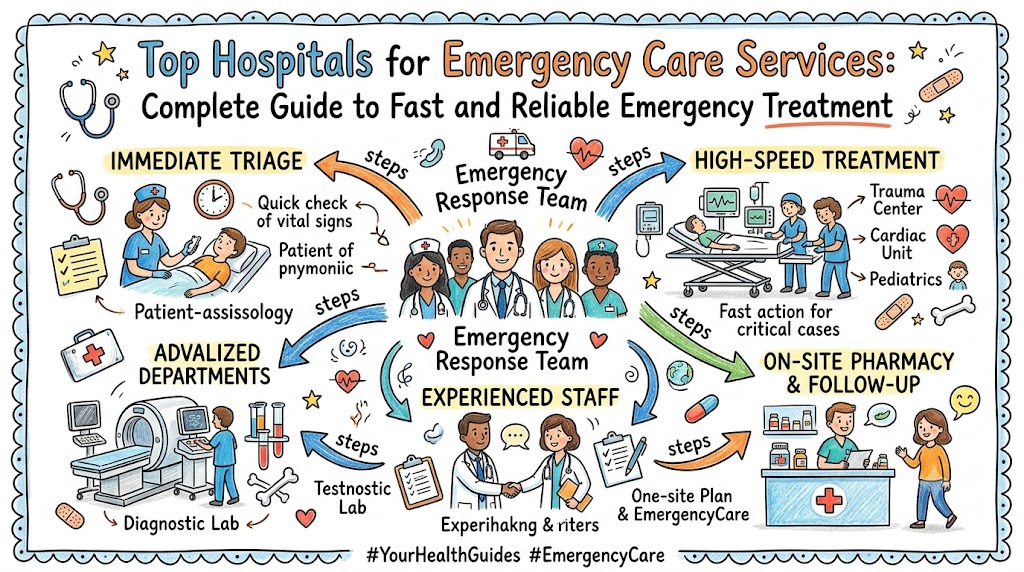
A nurse evaluates your condition based on vital signs and symptoms to determine how quickly you need to be seen relative to other patients.
Diagnostic Testing
Once in a room, you may undergo blood tests, X-rays, or other scans to help doctors understand the problem.
Treatment Planning
The physician will discuss the findings with you and initiate treatment, which may include medications, splinting, or surgical intervention.
Specialist Consultations
If the condition is complex, the ER physician will coordinate with in-house specialists such as cardiologists or surgeons.
Observation and Follow-Up
After the emergency is stabilized, the hospital will determine if you need to be admitted to a ward or if you can be discharged safely with home-care instructions.
Trauma and Critical Care Services
Trauma Centers
These hospitals meet specific standards for the care of severely injured patients and have specialized resources, such as 24-hour availability of surgeons.
Emergency Surgery
Top emergency hospitals keep surgical teams on-site at all times, meaning a patient can be moved from the ER to the operating table in minutes.
Critical Care Units
Once a patient is stabilized in the ER, they are often moved to an ICU where they can be monitored at a higher intensity than a general hospital ward.
Burn Care Services
Specialized hospitals have dedicated burn units with temperature control and fluid management expertise to treat severe skin trauma.
Neurological Emergencies
Specialized teams treat traumatic brain injuries and spinal cord trauma using rapid decompression techniques and advanced monitoring.
Cardiac Emergency Care
This includes catheterization labs for immediate stent placement in patients suffering from heart attacks.
How Hospitals Handle Major Emergencies
Disaster Preparedness
Hospitals conduct regular drills to practice how to handle surges in patient volume, ensuring resources are mobilized efficiently.
Mass Casualty Response
In the event of a large-scale incident, hospitals have protocols to expand their capacity by turning general wards into overflow emergency areas.
Emergency Coordination Teams
These teams oversee logistics, ensuring there are enough beds, staff, and blood supplies to manage a crisis.
Communication Systems
Redundant communication lines are kept open to ensure the hospital can coordinate with fire, police, and other regional hospitals.
Resource Management
Hospitals manage supplies like medications and oxygen, ensuring they never run out during high-demand events.
Patient Safety in Emergency Departments
Infection Prevention
Hospitals adhere to strict protocols, including hand hygiene and the isolation of patients with contagious illnesses, to keep everyone safe.
Medication Safety
Emergency rooms use double-check systems for high-risk medications to prevent dosage errors during high-pressure situations.
Monitoring and Observation
Patients in the ER are constantly observed; even a small change in vital signs triggers an immediate alarm for the staff.
Quality Improvement Programs
Top hospitals review every case to identify how their response could have been faster or safer, ensuring continuous improvement.
Family Communication
Safety includes communication; hospitals ensure that family members are updated as frequently as possible to reduce anxiety and prevent misunderstandings.
How to Choose the Right Emergency Care Hospital
Location and Accessibility
In an emergency, proximity is king. Know which hospitals are nearest to your home and office and which ones have the best transport routes.
Availability of Specialists
Check if your preferred hospital has 24/7 access to the specialists most relevant to your family’s medical history (e.g., pediatric or cardiology experts).
Technology and Equipment
A hospital’s website often highlights its trauma level and the types of advanced imaging (like MRI or PET scans) it has on-site.
Trauma Care Capabilities
If you have high-risk members in your family, prioritize hospitals that are designated as Level I or II trauma centers.
Critical Care Infrastructure
Ensure the hospital has a robust ICU, as this is where you will be moved if your emergency requires a multi-day stay.
Questions Patients Should Consider
- “What is the trauma level of this hospital?”
- “Are there 24/7 on-call surgeons and cardiologists?”
- “How long is the typical wait for a critical-condition patient?”
- “Does this hospital participate in my insurance network?”
Cost and Financial Considerations
Emergency Consultation Costs
The initial examination fee covers the physician’s time and the assessment of your condition.
Diagnostic Testing Expenses
X-rays, lab work, and imaging add to the total cost of an ER visit, reflecting the advanced tech used for your diagnosis.
Hospital Admission Charges
If your condition requires an overnight stay, you will incur costs for room, nursing care, and additional monitoring.
Critical Care Costs
These are higher than standard ward costs due to the increased staffing ratios and the specialized equipment used in the ICU.
Insurance Considerations
Under most national laws, emergency care is considered a covered benefit, but your deductible and co-pay will vary by insurance plan.
Financial Planning Tips
Keep copies of all your records, know your insurance benefits, and don’t hesitate to ask the hospital’s billing department about payment plans.
Recovery and Follow-Up After Emergency Care
Discharge Planning
Before you leave, you should receive a clear list of medications, symptoms to watch for, and specific follow-up appointments.
Medication Management
Ensure you understand how and when to take new prescriptions and how they interact with any medications you were already taking.
Follow-Up Appointments
Emergency care is often just the “bridge.” You will usually need to see your primary doctor or a specialist within a few days to track your progress.
Rehabilitation Services
For major injuries or strokes, recovery may involve physical, occupational, or speech therapy that starts after the emergency phase.
Long-Term Health Monitoring
If your emergency was heart-related or neurological, you may need periodic testing to ensure the condition does not recur.
Future of Emergency Medicine
AI in Emergency Diagnosis
Expect future ERs to use even faster diagnostic tools that can read an entire patient history and scan images simultaneously.
Smart Emergency Departments
Future rooms will be “smart,” adjusting lighting for comfort and using sensors to automatically record vitals without waking the patient.
Advanced Telemedicine Services
More hospitals will use telemedicine to let top-tier specialists consult on cases from anywhere in the world in real-time.
Predictive Healthcare Technologies
Hospitals are working on models that predict a patient’s risk of returning to the ER, allowing for better preventative care after discharge.
Future Innovations in Emergency Care
Look for innovations in blood-substitute therapies, wearable emergency monitors, and portable surgical robotic systems that can be used in the field.
Key Takeaways
- Triage is the foundation of emergency care; the sickest patients are seen first.
- “Emergency” vs. “Urgent Care” is a vital distinction to learn for non-critical issues.
- Level I trauma centers offer the highest level of care for severe injuries.
- Fast imaging (CT, MRI) is a hallmark of a top-tier emergency department.
- Always be prepared with a list of your medications and allergies.
- Proximity is a major factor in choosing a hospital for emergencies.
- Emergency care is often a bridge to ongoing specialty care.
- Modern medicine utilizes AI to help doctors make safer, faster decisions.
- Follow-up appointments are essential for recovery and preventing relapse.
- Keep your health insurance information and identification easily accessible.
- Never hesitate to call emergency services if you are in doubt about a symptom.
FAQ Section
1.When should I go to an ER vs. an urgent care?
Go to an ER for life-threatening issues (chest pain, stroke symptoms, major trauma). Go to urgent care for minor issues (colds, small cuts, sprains).
2.Do I need to bring my medical records to the ER?
If you have them, bring them! However, electronic record systems are becoming common, allowing doctors to access your history electronically.
3.What is the purpose of Triage?
Triage organizes patients so those with the most critical, life-threatening needs are stabilized first, even if others arrived earlier.
4.Will I always see a doctor immediately?
Not if your condition is non-critical. Because of triage, minor issues may wait longer when many serious patients are in the department.
5.Are all hospitals equipped to handle major trauma?
No. Only designated Trauma Centers have the specialized staff and surgical equipment required for major life-threatening trauma.
6.What should I do if I am alone during a medical emergency?
Call emergency services immediately. Unlock your door if possible, and leave your medical history on a table near the entrance for first responders.
7.How are emergency costs billed?
Emergency care is billed based on the physician’s assessment, the diagnostic tests ordered, and the level of monitoring required.
8.Can I choose which hospital the ambulance takes me to?
In a critical life-saving situation, paramedics will take you to the closest appropriate hospital. If you are stable, you can sometimes request a destination.
9.Does insurance cover emergency room visits?
Most insurance plans are required to cover emergency services; however, your specific deductible and co-pay will vary by your policy terms.
10.What if I cannot communicate in the ER?
Emergency teams are trained to assess patients through physical signs, rapid testing, and the review of any identification or records you may have with you.
Conclusion
Medical emergencies are, by definition, unpredictable and overwhelming. However, understanding how emergency care works and knowing the capabilities of the hospitals in your area can provide a vital sense of security. The difference between a general hospital and an advanced emergency care center lies in the integration of specialized staff, the availability of 24/7 advanced technology, and a culture of safety that prioritizes speed and precision.
By choosing a facility with robust trauma capabilities and strong critical care infrastructure, you ensure that you or your loved ones are in the best possible hands when it matters most. Remember that the ER is a place of stabilization—it is the vital starting point for life-saving treatment, but your health journey continues through the follow-up care and long-term monitoring you receive afterward.
Leave a Reply