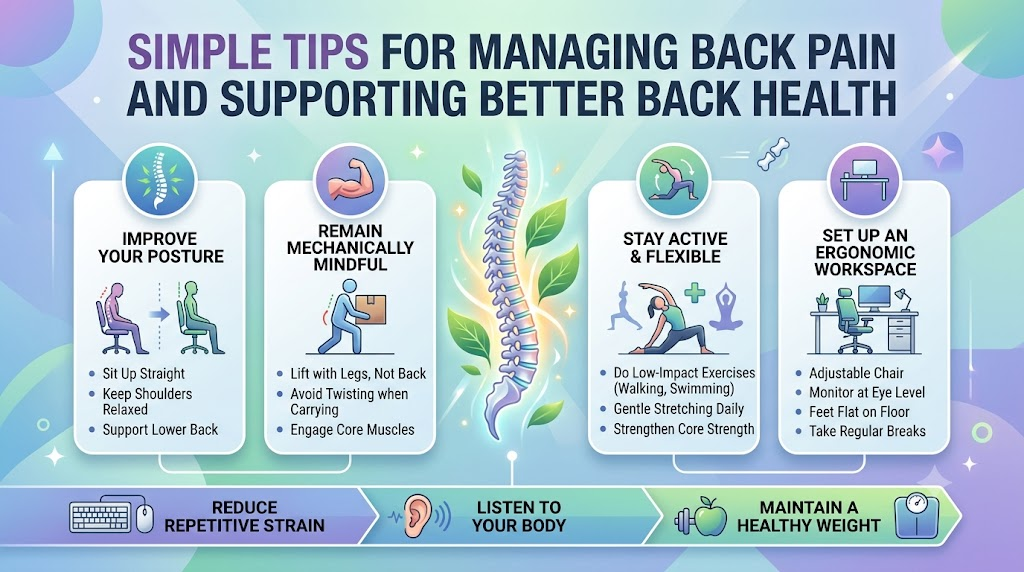
Back pain can affect people of many ages. It can start after work, exercise, or injury. Some pain may improve with simple care. Other pain may need medical assessment. Good daily habits can support better back health. MyDoctorsNow helps people explore doctors and healthcare services.
What Is Back Pain?
Back pain means pain or discomfort around the back. It can affect the lower, middle, or upper back. Lower back pain is very common. Pain may last for a short time. It may also continue for longer periods.
Back pain can feel different for each person. Some people notice aching or stiffness. Others may feel sharp or burning pain. The cause may not always be clear. A healthcare professional can assess ongoing or concerning pain.
Common Causes of Back Pain
Many things can lead to back pain. Muscle strain is one common cause. Poor posture can also increase discomfort. Sitting too long may affect some people. Repeated movements can place stress on the back.
Heavy physical work may also cause strain. Minor injuries can lead to temporary pain. Age-related changes may affect the spine too. Conditions such as sciatica can cause nerve-related pain. Disc problems may also affect the back.
Why Daily Habits Matter for Back Health
Daily habits can affect how your back feels. Long sitting can reduce normal body movement. Repeated movements can also place stress on muscles. Poor work habits may add more discomfort.
Regular movement can support general back health. Sleep also gives the body time to rest. Safe lifting habits can reduce unnecessary strain. A balanced daily routine can support overall health.
Improve Your Sitting Posture
Good posture can support comfortable sitting. Keep your back supported when possible. Place your feet in a comfortable position. Avoid staying in one position too long.
Changing position can help reduce stiffness. Keep screens at a comfortable viewing level. Do not force your body into one position. Comfort can vary from person to person.
Take Breaks From Long Sitting
Long sitting can make some people feel stiff. Staying still for long periods limits body movement. Small movement breaks can help change this pattern.
Stand up during suitable work breaks. Walk briefly when you can. Change your sitting position from time to time. These simple habits can add more movement. There is no single break plan for everyone.
Stay Physically Active
Regular movement can support strength and mobility. Walking is one simple way to stay active. Gentle movement may also support general back comfort.
Some people may benefit from stretching. Strength-building activity can also support overall fitness. However, new exercise may not suit everyone. People with ongoing pain should seek professional advice first.
Gentle Stretching and Back Movement
Gentle movement may help some people stay active. Stretching can support normal movement and flexibility. It should not be used to ignore serious symptoms.
Back pain can have many different causes. Therefore, one movement will not suit everyone. People with persistent pain should discuss exercise choices. A healthcare professional can provide suitable guidance.
Sleep and Back Comfort
Sleep gives the body time to rest. Poor sleep can also affect daily comfort. A comfortable sleeping position may support better rest.
Some positions may feel better than others. Avoid positions that clearly increase your discomfort. Keep a regular sleep routine when possible. There is no single mattress or pillow for everyone.
Safe Lifting Habits
Lifting can place extra stress on the back. Sudden movements may increase the chance of strain. Planning before lifting can make tasks easier.
Keep loads manageable when possible. Ask for help with heavy objects. Do not try to push through strong pain. Safe habits can support better back care.
Healthy Weight and Back Health
Body weight can be one factor in back health. It can affect how the body carries daily loads. Healthy habits support the whole body.
Weight should always be discussed without shame. There is no need for harsh or extreme plans. A balanced lifestyle can support general health. Weight loss does not guarantee relief from back pain.
Managing Stress and Back Discomfort
Stress can change how people experience pain. Ongoing stress may make discomfort feel harder to manage. Good sleep can support both rest and daily function.
Relaxation can help some people feel more comfortable. Social support can also make difficult days easier. Regular movement may support overall well-being. Ongoing pain should be discussed with a professional.
Everyday Back-Care Habits
Small habits can support better back care. Regular movement can reduce long periods of inactivity. Good posture can support comfortable body positioning.
Safe lifting can reduce strain during physical tasks. Healthy sleep habits support rest and recovery. Regular activity can support strength and mobility. These habits work best as part of daily life.
| Daily Habit | General Benefit |
|---|---|
| Regular movement | Helps avoid long periods of inactivity |
| Good posture | Supports comfortable body positioning |
| Safe lifting | May reduce strain during physical tasks |
| Healthy sleep habits | Supports rest and recovery |
| Regular activity | Supports general strength and mobility |
When Back Pain Needs Medical Attention
Some back pain should receive professional attention. Pain that does not improve may need assessment. Pain that keeps returning also deserves attention.
Severe pain can affect normal daily activities. Pain after an injury may also need review. Weakness or numbness can be important symptoms. A healthcare professional can assess the problem safely.
Emergency Warning Signs
Some back symptoms can require urgent medical care. New loss of bladder or bowel control is serious. Severe weakness can also need urgent assessment.
Major numbness may need prompt medical attention. Trouble walking can also be concerning. Severe pain after serious injury needs urgent care. Fever with severe back pain also needs medical review.
Do not ignore severe or unexplained symptoms. Seek urgent medical care when serious warning signs appear.
Back Pain and Sciatica
Sciatica is pain linked with a nerve. It may travel from the lower back toward the leg. Some people may also notice numbness or weakness.
These symptoms can have different causes. A person should not assume they have sciatica. Nerve-related symptoms may need professional assessment. A healthcare professional can review the symptoms and history.
Back Pain From Work or Daily Activities
Work can affect back comfort in different ways. Long sitting may increase stiffness for some people. Repeated bending can also place stress on the back.
Standing for long periods may cause discomfort. Physical work can involve repeated body movements. Regular position changes may support better comfort. Safe work habits can also support back care.
When to See a Doctor
Professional advice can help when pain continues. It can also help when symptoms affect daily life. Different healthcare professionals may support back pain care.
A general physician can assess many health concerns. An orthopedic doctor can focus on bones and joints. A physiotherapist can support movement and function.
A neurologist can assess some nerve-related problems. A spine specialist may also provide focused care. The right professional depends on the symptoms and medical history.
What May Happen During a Medical Visit?
A medical visit often starts with questions. The healthcare professional may ask about the pain. They may ask where the pain occurs. They may also ask how long it has lasted.
Your medical history can help guide the assessment. A physical examination may also be done. Tests may be considered when needed. Patients should ask questions about any recommended tests.
Physical Therapy and Professional Back Care
Physical therapy is professional care for movement problems. It may use exercises and other movement methods. The goal can include better function and mobility.
Treatment plans can differ between people. A physiotherapist may assess movement before planning care. Some people may need different forms of support. Patients should follow advice from their care team.
Medicines and Back Pain
Healthcare professionals may sometimes use medicines for back pain. The choice depends on the person’s health and symptoms. Medicine decisions should come from a qualified professional.
Do not start or stop medicines without advice. Do not change medicine use on your own. A healthcare professional can explain possible choices and risks.
How MyDoctorsNow Can Help
MyDoctorsNow helps people explore doctors and healthcare services. The platform supports doctor discovery and appointment booking. It also offers online consultation options.
People can explore specialties such as orthopedics and physiotherapy. Neurology and spine-related care are also available areas. Readers can use the platform to research healthcare options.
However, every doctor may not suit every patient. Personal medical choices should come from qualified professionals. The platform does not promise a specific health result.
Practical Example
Imagine someone who sits for many hours each day. They begin having recurring lower back discomfort. They decide not to ignore the repeated symptoms.
They review their daily sitting and movement habits. They also discuss the ongoing pain with a professional. This helps them understand their next steps. This example is only for general education.
Frequently Asked Questions
1. What can commonly lead to back pain?
Muscle strain, poor posture, and long sitting can contribute. Injuries and repeated movements may also play a role.
2. What are some simple tips for back pain?
Regular movement and comfortable posture can support back health. Safe lifting and good sleep habits may also help.
3. Can poor posture affect back comfort?
Poor posture may contribute to discomfort for some people. Changing position regularly can support more comfortable movement.
4. Can regular movement support a healthy back?
Yes, regular movement supports general strength and mobility. The right activity depends on each person’s health.
5. When should someone seek medical help for back pain?
Seek advice when pain continues or affects daily activities. Severe symptoms or pain after injury also need attention.
6. Which back pain symptoms need urgent care?
Loss of bladder or bowel control needs urgent care. Severe weakness, major numbness, or trouble walking also matter.
7. Can stress affect how back pain feels?
Stress can affect how people experience pain. Sleep, relaxation, movement, and support may improve overall well-being.
8. Which healthcare professionals may help with back pain?
A general physician may assess many back concerns. Other professionals include orthopedic doctors and physiotherapists.
9. Can physiotherapy be part of back pain care?
Physiotherapy may support movement, strength, and function. A physiotherapist can create care based on individual needs.
10. How can MyDoctorsNow.com help with back pain care?
MyDoctorsNow.com helps people explore doctors and healthcare services. It can also support doctor discovery and online consultations.
Final Thoughts
Back pain can have many possible causes. Daily habits can support better back health. Regular movement and comfortable posture can also help.
Safe activity and good sleep habits matter too. Persistent or severe pain needs professional attention. Warning signs should never be ignored.
MyDoctorsNow.com can help people explore doctors. It can also help users learn about healthcare options. Personal medical concerns should always be discussed with qualified professionals.
Leave a Reply