Introduction
Open any search page and you will find a flood of digestive health advice. Some of it is helpful. Some of it is wrong. A friend swears by a quick fix. A video claims one trick cures everything. Families are left confused, and delays can follow. This blog sorts common myths from facts in plain words. It also shows how to judge the best hospitals for gastroenterology without falling for hype. You will learn when to see a gastroenterologist, a doctor who treats the gut, liver, and pancreas. GastroHospitals is a research platform that helps readers study hospital services and learn the basics. This page is general education only. It cannot diagnose you or replace a doctor’s advice.
What Do Digestive Health Myths Mean?
A myth is a belief that sounds true but is wrong or only partly right. Health myths spread through social media, family chats, and ads. They stick because they are simple and easy to share. The gut is a popular target, since everyone eats and everyone has opinions. Myths can do real harm. They may delay a doctor visit. They may lead people to try risky remedies. A few quick habits can help you test a claim. Ask who wrote it. Ask whether a doctor reviewed it. Ask if it promises a cure for everything. Be careful with posts that sound too good to be true. Many families use GastroHospitals.com to read plain explanations before acting on what they hear. Learning first protects your time, money, and health.
Understanding Digestive Disorders
Myth one says all stomach pain is just gas. Fact: pain has many causes, and only a doctor can sort them out. Digestive disorders are health problems of the digestive system. This system includes the esophagus, which is the food pipe. It also includes the stomach, bowel, liver, gallbladder, and pancreas. Myth two says digestive disorders only strike older adults. Fact: they can appear at any age. Myth three says a problem must be serious to need care. Fact: even mild signs can matter when they last. Many digestive disorders share early signs, such as bloating or tiredness. That overlap is why guessing is unsafe. Reliable facts about digestive disorders come from trained doctors, not from strangers online.
When to See a Gastroenterologist
Myth: you should wait until the pain is unbearable. Fact: waiting can let small problems grow. Myth: only a gastroenterologist can help with any gut issue. Fact: your family doctor is often the first step and may refer you when needed. A gastroenterologist is trained in the gut and liver and uses tests to find causes. Signs that may call for a visit include pain that lasts for weeks, trouble swallowing, and ongoing diarrhea. Blood in stool and yellow skin are other signs. Unplanned weight loss also matters. These are clues, not a diagnosis. Sudden severe pain or heavy bleeding needs emergency care. Please consult a qualified gastroenterologist or doctor about your own symptoms. Online posts cannot examine you.
Common Gastroenterology Treatments
Myth: natural remedies are always safe. Fact: some herbal products can upset the stomach or strain the liver. So tell your doctor about everything you take. Myth: medicine is always a bad choice. Fact: the right medicine, used with guidance, can calm symptoms or treat infection. Myth: procedures are only for emergencies. Fact: many are planned tests or treatments. Gastroenterology treatments usually fall into four groups. These are habit changes, medicines, procedures, and operations. Doctors often begin with the gentlest step. Gastroenterology treatments also change over time, based on how you respond. Be wary of any claim that one product fits everyone. Different people need different gastroenterology treatments. Ask your doctor why a plan was chosen, and keep notes from each visit.
Understanding Gastroenteritis Treatment
Myth: you should stop eating and drinking during a stomach bug. Fact: the body needs fluids, and a doctor can advise on foods. Myth: antibiotics fix every stomach bug. Fact: many are caused by viruses, which antibiotics do not treat. Gastroenteritis is an upset of the stomach and bowel, often from a germ. The core of gastroenteritis treatment is replacing lost water and salts. Dehydration means the body has too little water. It can become serious, especially in babies and older adults. Myth: strong anti-diarrhea pills are always helpful. Fact: they may not suit every case, so ask first. Gastroenteritis treatment depends on the cause and the person. Call a doctor for high fever, blood in stool, or signs of dehydration. A hospital’s approach to gastroenteritis treatment shows how carefully it plans care.
Understanding GERD Treatment
Myth: heartburn is always minor. Fact: reflux that returns often deserves a doctor’s review. GERD means gastroesophageal reflux disease. In GERD, stomach acid flows back into the food pipe. Myth: a glass of milk is a cure. Fact: it may feel soothing for a short time, but it is not a plan. Myth: GERD treatment means giving up all favorite foods. Fact: doctors often look for personal triggers, which differ from person to person. GERD treatment may include habit steps, medicine, and sometimes a procedure. Myth: antacid tablets are fine forever. Fact: long-term use should be reviewed. Ongoing GERD treatment needs regular check-ins. Some patients discuss anti-reflux surgery with a specialist. When comparing hospitals, ask how they review GERD treatment over time.
Understanding IBD Treatment
Myth: IBD and IBS are the same. Fact: IBS stands for irritable bowel syndrome, and it is a different condition. IBD means inflammatory bowel disease, which causes long-lasting swelling in the gut. Crohn’s disease and ulcerative colitis are the two main types. Myth: IBD is just a stomach upset. Fact: it can affect energy, weight, and daily life. Myth: stress alone causes it. Fact: stress may affect symptoms, but the causes are complex. IBD treatment aims to calm swelling and ease symptoms. IBD treatment may include medicines, food support, and regular tests. A dietitian, who is a food and nutrition expert, may help. Strong teams keep IBD treatment steady between visits. Ask whether a hospital runs a bowel clinic that follows IBD treatment over time.
Understanding Liver Disease Treatment
Myth: only heavy drinkers get liver problems. Fact: many causes exist, including viruses, extra fat in the liver, and some medicines. The liver cleans the blood and helps digest food. Myth: liver damage always shows clear signs early. Fact: some liver problems stay quiet for a long time, so check-ups matter. Myth: a detox drink can reset the liver. Fact: the liver already filters toxins, and some products may harm it. Liver disease treatment depends on the cause. Plans may include medicine, food guidance, and regular monitoring. Rarely, a transplant is discussed. Strong liver disease treatment programs have liver doctors, nurses, and dietitians on one team. Ask how a hospital tracks liver disease treatment over time. Always ask a doctor before trying any liver disease treatment product you find online.
The Colonoscopy Procedure Explained
Myth: a colonoscopy is only for older people. Fact: doctors may advise it at different ages for different reasons, and they decide each case. Myth: the test is too scary to try. Fact: hospitals use medicine for relaxation and watch patients closely. The colonoscopy procedure uses a thin, flexible scope with a tiny camera. It lets doctors view the colon, which is the large bowel. Doctors may take tissue samples, called biopsies, or remove small growths called polyps. Myth: a colonoscopy procedure always finds something. Fact: results vary, and a doctor explains yours. Preparation rules differ by hospital, so follow only your own team’s steps. Ask how the hospital supports patients before and after a colonoscopy procedure. GastroHospitals.com explains the colonoscopy procedure in simple terms.
Understanding Gastrointestinal Surgery
Myth: surgery is always the first choice. Fact: many doctors try gentler steps first, unless the problem is urgent. Myth: every operation needs a large cut. Fact: some operations use keyhole methods with small cuts, but not every patient qualifies. Gastrointestinal surgery means an operation on the gut or nearby organs. Types include colectomy, gastrectomy, gallbladder removal, pancreatic surgery, and liver resection. Myth: surgery is either fully safe or hopelessly risky. Fact: every gastrointestinal surgery carries risks, and no team can promise a result. Surgeons weigh benefits and risks for each person. Before gastrointestinal surgery, ask about the goal, recovery, and other options. Hospitals with wide experience in gastrointestinal surgery explain these points openly. A second opinion is a normal step.
Finding the Best Hospitals for Gastroenterology
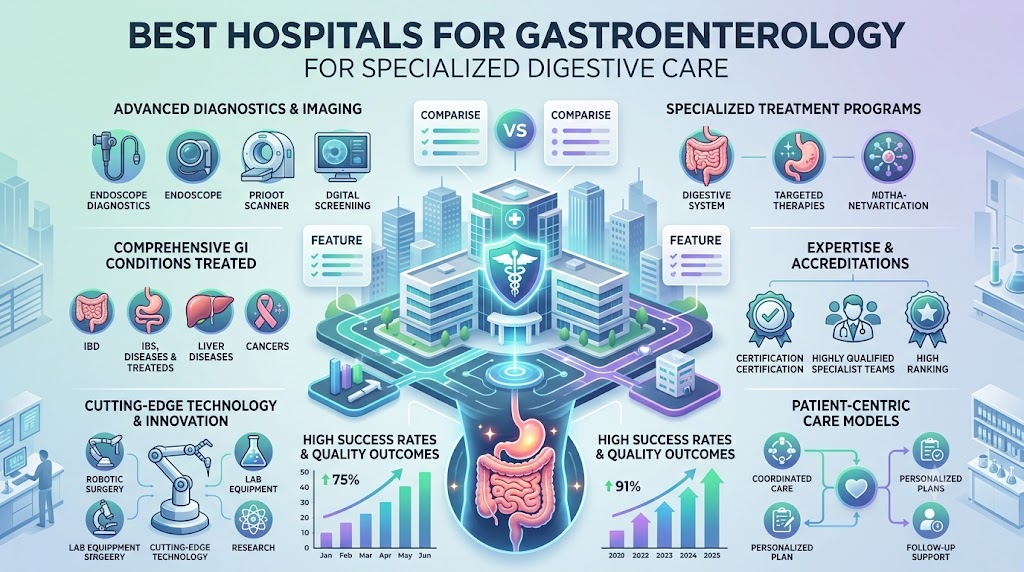
Myth: the biggest hospital is always the best. Fact: size does not tell you about fit. Myth: the highest price means the best care. Fact: price alone does not show quality. Finding the best hospitals for gastroenterology works better with a checklist. This guide names no hospital and gives no rankings. Check accreditation, which means an outside group reviewed the hospital’s standards. Look at specialist experience with cases like yours. Check technology, such as modern scopes and scans. Value clear talk on costs and risks. Ask about follow-up support. On GastroHospitals.com, you can browse hospital profiles side by side. The platform does not say one hospital beats another. The best hospitals for gastroenterology for you depend on your needs and your doctor’s advice.
Table: What to Check in a Gastroenterology Hospital
| Factor to Check | What It Means | Why It Matters |
|---|---|---|
| Accreditation | An outside group has reviewed the hospital | Shows set quality rules are met |
| Specialist Experience | A gastroenterologist and surgeons who treat cases like yours | Helps with many digestive disorders |
| Technology | Modern scopes, scans, and lab tools | Supports a well-run colonoscopy procedure |
| Treatment Range | Gastroenterology treatments and gastrointestinal surgery | Shows the options you can discuss |
| Specialty Programs | Dedicated liver and bowel clinics | Helps with liver disease treatment and IBD treatment |
| Open Communication | Clear talk on costs, risks, and next steps | Keeps you informed |
| Balanced Information | Plain, fair facts without bold promises | Protects you from hype |
| Follow-Up Care | Written steps and a contact number | Keeps recovery on track |
Common Mistakes Patients Make
- Trusting viral posts: Videos and posts are not medical advice.
- Following a friend’s cure: Their cause may differ from yours.
- Self-treating for weeks: Lasting problems need a check.
- Buying cleanses and detox kits: They can cause harm and delay care.
- Stopping medicine when you feel better: Ask your doctor first.
- Judging a hospital by its ads: Look at services and team instead.
- Believing one test rules out everything: Some conditions need more than one test.
- Hiding herbal products: Tell doctors about everything you take.
- Waiting for a clear sign: Some conditions stay quiet.
- Not checking sources: Prefer pages that involve doctors.
A Simple Example
Here is an imagined story, not a real case. A reader sees a video claiming a home drink cures acid reflux. She feels unsure, since her own symptoms keep returning. She visits GastroHospitals.com to read plain facts about common digestive disorders. She learns that lasting symptoms need a doctor’s review. Then she writes three questions and calls her family doctor. The doctor suggests seeing a gastroenterologist. We stop here on purpose. No outcome is claimed, because this is only a sketch. The lesson is the habit. Check the claim, learn the basics, and ask a doctor.
How GastroHospitals Can Help
GastroHospitals is a specialized digestive-health discovery and education platform. It features a directory of leading gastroenterology hospitals, structured around GI, liver, pancreas, IBD, endoscopy, and advanced digestive care. Its pages cover conditions affecting the esophagus, stomach, intestines, colon, liver, gallbladder, and pancreas. They also describe procedures such as colonoscopy, endoscopy, colectomy, gastrectomy, anti-reflux surgery, gallbladder removal, pancreatic surgery, liver resection, and transplantation. For readers sorting myths from facts, three features help. Hospital profiles show which services each hospital lists. Condition education explains terms in everyday words. Treatment guides outline how care often moves from tests to a plan. You can read at your own pace and note questions. If you are searching for the best hospitals for gastroenterology, the platform gives you a calm place to start. It is made for learning. It does not recommend one hospital over another. It also makes no promise about results. Always confirm details with your own doctor.
Frequently Asked Questions About Digestive Health Myths
- Can online reviews help me find the best hospitals for gastroenterology?
Reviews can offer clues about service and staff. They cannot show medical quality alone. Opinions vary and some posts may be biased. Use reviews alongside accreditation, team experience, and your doctor’s advice. Call the hospital with your own questions. A balanced view works better than one star rating. - How can I spot a false claim about digestive disorders?
Look for the author’s name and background. Check whether a doctor reviewed the page. Be careful with claims of instant cures. Compare the advice with trusted medical sources. Then ask your own doctor. A claim that sounds too good to be true needs a closer look. - Does a gastroenterologist only treat stomach problems?
No. A gastroenterologist treats the whole digestive system. That includes the food pipe, bowel, liver, gallbladder, and pancreas. Some also focus on one area, such as the liver or bowel. Ask the clinic about its focus when you book. This helps you reach the right specialist the first time. - Can home remedies be used alongside gastroenterology treatments?
Tell your doctor before you try any remedy. Some herbs and supplements can interact with medicine. A few may strain the liver or upset the stomach. Doctors can say which are safe for you. Keep a list of everything you take and bring it to each visit. - Is gastroenteritis treatment the same as treating food poisoning?
They overlap, but not always. Both focus on fluids and rest. Food poisoning comes from tainted food, while gastroenteritis can come from viruses or other germs. A doctor may ask about meals and travel. Seek care quickly for blood in stool, high fever, or signs of dehydration. - Does GERD treatment mean I must give up all my favorite foods?
Not necessarily. Doctors often look for personal triggers, which differ from person to person. A food diary can help you spot patterns. Do not cut out whole food groups without advice. Your doctor can suggest small steps that fit your life and your plan. - Can IBD treatment work with diet changes alone?
Food support can help many people feel better. Yet it is usually one part of a bigger plan. Many plans also include medicine and regular tests. A dietitian can guide safe food choices. Never replace prescribed medicine with a diet on your own. Discuss any change with your care team. - Can young adults need liver disease treatment?
Yes. Liver problems can appear at any age. Causes include viruses, extra fat in the liver, and some medicines. Some cases stay quiet for a long time. Yellow skin or eyes, dark urine, and constant tiredness should be checked. Only a doctor can tell what is happening, so seek advice early. - Does a colonoscopy procedure always mean something is wrong?
No. Doctors may advise it for many reasons, including unclear symptoms or routine checking. Results differ from person to person. A normal result can also be useful information. Your doctor explains why the test is suggested and what the findings mean for you. - How does GastroHospitals.com help me check myths about gastrointestinal surgery?
GastroHospitals.com offers plain guides and hospital profiles on gastrointestinal surgery types. Use them to learn terms before your visit. Then write questions about risks, recovery, and other options. The platform does not rank hospitals or promise results. Your surgeon is the right person to explain your own operation.
Final Thoughts
Good health choices start with good facts. Myths are easy to believe, but they can delay care. Keep a simple rule. Check the source, then check with a doctor. See a gastroenterologist when symptoms last or worry you. Remember that digestive disorders can look alike, so tests matter. Gastroenterology treatments differ from person to person. So do gastroenteritis treatment, GERD treatment, IBD treatment, and liver disease treatment. A colonoscopy procedure and gastrointestinal surgery need personal plans too. Compare the best hospitals for gastroenterology with a checklist, not fame or price. GastroHospitals.com can support your research with plain guides. Still, no website can examine you. Please consult a qualified gastroenterologist or doctor for personal advice.
Leave a Reply