Introduction
Water plays an important role in everyday health. The body needs fluid to work well. Staying hydrated is part of healthy living. It supports many basic body functions each day. Hydration needs can also change between people. Weather, activity, age, and health can affect them. Simple habits can make drinking fluids easier. MyDoctorsNow helps people explore health information and doctor care.
What Does Staying Hydrated Mean?
Staying hydrated means having enough fluid in your body. Water is the main fluid used by the body. Other drinks and foods also provide some fluid.
Your body loses fluid every day. You lose water through urine, sweat, and breathing. You may lose more fluid during heat or exercise. Illness can also increase fluid loss.
There is no single fluid need for everyone. Age, activity, weather, and health can change needs. So, healthy hydration should fit the person’s situation.
Why Is Hydration Important for Health?
Water helps the body perform many basic jobs. It helps control body temperature. It also supports normal digestion and blood flow.
Fluids help the body remove waste through urine. Water also supports normal joint movement. Good hydration can support comfort during daily activities.
Hydration is also important during physical activity. Sweating causes the body to lose fluid. Replacing lost fluids can support normal body function.
Hydration is only one part of good health. Healthy food, sleep, movement, and regular care matter too.
Simple Signs of Dehydration
Dehydration means the body has lost more fluid than it replaces. Thirst is one common sign. A dry mouth can also happen.
Other possible signs include dark urine and tiredness. Some people may also feel dizzy or develop headaches. These signs can have many causes.
One symptom does not prove dehydration. Ongoing or severe symptoms need proper medical advice. Pay attention when several symptoms happen together.
How Much Water Does the Body Need?
Water needs can differ from person to person. There is no single amount that fits everyone. Your daily needs can change for many reasons.
Age can affect fluid needs. Activity level can also change them. Hot weather may increase fluid loss through sweating.
Pregnancy and illness can affect hydration needs too. Diet and some health conditions may also matter. A healthcare professional can provide personal guidance when needed.
The goal is not to follow extreme water trends. Instead, build simple and steady hydration habits.
Easy Ways to Drink More Water
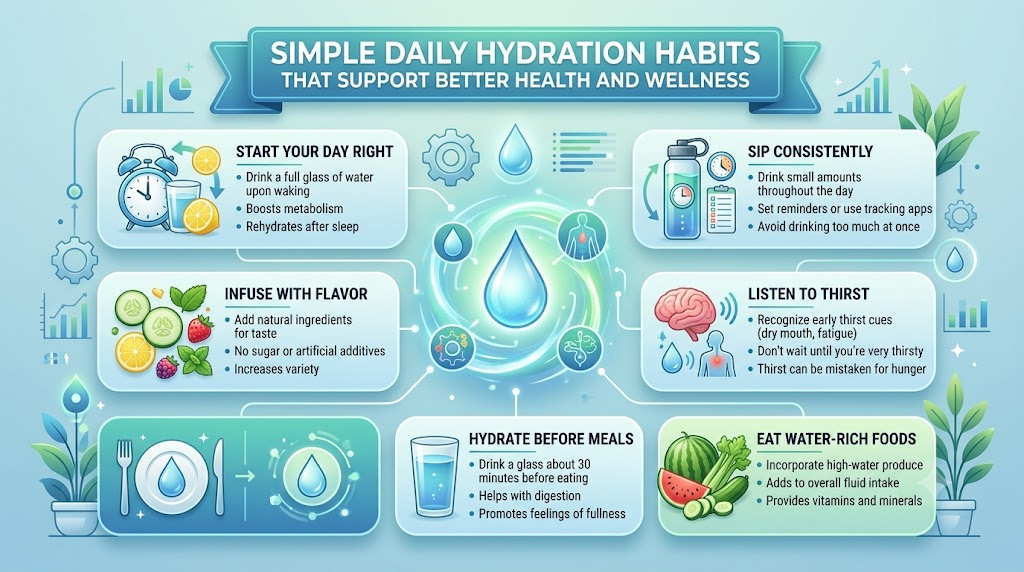
Small habits can make staying hydrated easier. Keep water nearby during your normal day. A bottle can make drinking more convenient.
Drink water with meals when it feels comfortable. You can also drink after physical activity. Simple reminders may help during busy days.
Choose water more often when you can. This can reduce sugary drink intake. Drinking when thirsty can also support regular hydration.
Do not make hydration feel like a difficult task. Simple daily habits are often easier to maintain.
Hydration During Hot Weather
Hot weather can increase fluid loss. The body uses sweat to help control temperature. More sweating means more fluid leaves the body.
Outdoor work and exercise can increase this loss. So, pay more attention to fluids during hot days. Keep safe drinking water available when practical.
Severe weakness, confusion, or fainting can be serious. These symptoms need urgent medical attention. Do not ignore severe signs of fluid loss.
Hydration During Exercise
Exercise can increase fluid loss through sweat. The amount of sweat differs between people. Exercise time and intensity can also affect fluid needs.
Temperature and activity type also matter. Simple hydration habits can support normal body function. Drinking before and after activity may be useful.
Long or intense exercise can create greater fluid needs. A healthcare professional can help with personal guidance when needed.
Hydration During Illness
Some illnesses can cause extra fluid loss. Fever may increase sweating. Vomiting and diarrhea can also cause fluid loss.
Replacing lost fluids can be important during illness. However, severe symptoms may need professional care. Ongoing vomiting or diarrhea should not be ignored.
People with certain health conditions need special guidance. Fluid needs may differ for these people. Ask a healthcare professional when unsure.
Healthy Drinks and Hydration
Water is a simple choice for daily hydration. It does not add sugar or extra calories. This makes it useful for many people.
Other drinks can also provide fluid. Unsweetened drinks may be another practical choice. Drink choices can depend on personal needs and habits.
Sugary drinks can add extra sugar and calories. They may be better as occasional choices. Reading drink labels can help people make informed choices.
Water-Rich Foods
Some foods contain a large amount of water. Fruits and vegetables are common examples. Soups can also provide fluid.
Yogurt contains water as well. These foods can support overall fluid intake. They also provide other useful nutrients.
However, food should not replace all drinking fluids. Daily fluid needs still vary between people. A balanced diet can support healthy hydration habits.
Hydration at Work and School
Busy days can make people forget about water. Keeping a bottle nearby can help. Drinking during regular breaks can build a routine.
Students can drink with meals and breaks. Workers can keep water near their desk. Simple reminders can also help during busy tasks.
The goal is to make hydration easy. Small habits can become part of a normal day.
Hydration During Travel
Travel can change normal daily routines. People may forget fluids during long trips. Carrying safe drinking water can make hydration easier.
Drinking with meals can also help. Regular breaks can provide chances to drink. Travel plans should also consider access to safe fluids.
People with special health needs may need extra guidance. A doctor can help when fluid needs are affected by health conditions.
Hydration for Children
Children need enough fluid for normal body functions. Their needs can change with age and activity. Hot weather can also increase fluid loss.
Parents may notice thirst or a dry mouth. Tiredness can also occur with low fluid intake. However, these signs can have other causes.
Children with concerning symptoms need proper medical advice. This is especially important during illness. A healthcare professional can guide parents when needed.
Hydration for Older Adults
Older adults may need extra attention to hydration. Thirst can change with age. Some health conditions can also affect fluid needs.
Certain medicines may also affect fluid balance. This makes personal medical guidance important for some people. Older adults should follow advice from their healthcare team.
Simple routines can help. Keeping fluids nearby can make drinking easier. Regular meals and daily habits can also support hydration.
What Are Electrolytes?
Electrolytes are minerals that help the body work. Sodium and potassium are common examples. They help support fluid balance and other body functions.
The body can lose electrolytes through heavy sweating. Vomiting and diarrhea can also cause losses. Long periods of intense activity may matter too.
Electrolyte drinks are not needed by everyone. Their use depends on the person’s situation. A healthcare professional can provide advice when needed.
Hydration and a Healthy Lifestyle
Hydration works best with other healthy habits. A balanced diet supports overall wellness. Regular physical activity also supports good health.
Healthy sleep is important too. Good hygiene can support everyday wellness. Stress management can also help people care for themselves.
Regular health checks are useful for many people. Hydration is one part of preventive health. It should not replace other healthy habits.
Common Hydration Mistakes
Some simple habits can make hydration harder. People may forget water during busy days. They may also wait until they feel very thirsty.
Too many sugary drinks can add extra sugar. Ignoring fluid loss during heat can also be risky. Extreme water-drinking trends should be avoided.
Ongoing symptoms should not be ignored. Some health conditions affect fluid balance. When symptoms continue, professional advice may be useful.
One Simple Hydration Comparison Table
| Habit | Simple Approach | Why It Helps |
|---|---|---|
| Water nearby | Keep a bottle close | Makes drinking easier |
| Meals | Drink with meals | Builds a simple routine |
| Exercise | Plan fluids around activity | Helps replace fluid loss |
| Hot weather | Pay more attention to fluids | Heat can increase sweating |
When Should Someone Talk to a Doctor?
Professional advice can help when symptoms continue. Ongoing dizziness should not be ignored. Repeated signs of dehydration also need attention.
Persistent vomiting or diarrhea can cause fluid loss. Unusual weakness may also need medical review. Confusion or fainting needs urgent medical attention.
Some health conditions can change fluid needs. Kidney, heart, and liver problems may need special guidance. People with these conditions should ask their healthcare team.
How MyDoctorsNow.com Can Help
MyDoctorsNow.com helps people explore healthcare information and doctor services. The platform can support people looking for doctors and consultations. It can also help people learn about common health topics.
Online consultation may suit some health concerns. However, it does not replace emergency care. Some symptoms also need an in-person examination.
MyDoctorsNow.com can be a useful starting point. Patients should choose care based on their personal health needs.
Practical Example
Imagine a person with a busy workday. They often forget to drink water while working. They can keep a bottle near their desk.
They can also drink during regular breaks. Drinking with meals can build another simple habit. These small changes can make hydration easier.
The goal is not to drink extreme amounts. The goal is to create simple daily habits.
SEO, AEO, GEO, LLMO, AISEO, and E-E-A-T
Helpful health content should answer common questions clearly. It should also use simple and accurate language. This helps readers understand health topics more easily.
Clear definitions can also help search systems. Question-based sections make answers easier to find. Careful wording also supports trust in health content.
This article explains how to stay hydrated and healthy. It covers daily habits, warning signs, and special situations. It also explains when professional advice may help.
Frequently Asked Questions About Staying Hydrated and Healthy
1. Why is staying hydrated important?
Water supports many basic body functions. It helps with temperature control, digestion, and fluid balance.
2. How can someone stay hydrated every day?
Keep water nearby and drink with meals. Regular daily habits can make hydration easier.
3. What are common signs of dehydration?
Thirst, dry mouth, dark urine, and tiredness can occur. Dizziness and headaches may also happen.
4. Is water the best drink for daily hydration?
Water is a simple choice for daily hydration. Other drinks can also provide fluid.
5. Can food help with hydration?
Yes, some foods contain plenty of water. Fruits, vegetables, soups, and yogurt are examples.
6. Do people need more fluids during hot weather?
Hot weather can increase sweating and fluid loss. People may need to pay more attention to fluids.
7. How can exercise affect hydration needs?
Exercise can increase fluid loss through sweat. Activity time, heat, and sweating can affect needs.
8. Should children drink water regularly?
Children need enough fluids for normal body functions. Their needs vary with age, activity, weather, and health.
9. What are electrolytes and why do they matter?
Electrolytes are minerals used by the body. Sodium and potassium help support fluid balance and other functions.
10. When should someone talk to a doctor about dehydration?
Talk to a doctor when symptoms continue or worsen. Confusion, fainting, or severe weakness needs urgent care.
Final Thoughts
Staying hydrated is a simple part of healthy living. Water supports many important body functions. Small daily habits can make hydration easier.
Fluid needs can differ from person to person. Weather, activity, age, illness, and health can matter. Avoid extreme water habits and listen to your body.
Seek professional advice when symptoms are concerning. People with certain health conditions may need special guidance. MyDoctorsNow.com can help people explore doctors and healthcare options for their needs.
Leave a Reply