Introduction
Navigating the Indian legal system can feel overwhelming. Whether you are an individual dealing with a property dispute, a family resolving a matrimonial matter, an entrepreneur founding a startup, or a business managing corporate compliance, understanding your legal rights and options is essential. The legal landscape in India is vast, encompassing civil, criminal, corporate, family, and cyber laws. Without clear guidance, identifying the right steps to take—or knowing which legal professional to consult—can be intimidating.This comprehensive guide outlines the fundamental steps to understanding your legal needs, evaluating legal specializations, preparing for consultations, and discovering qualified advocates across India. Platforms like WakilSahab serve as structured legal discovery and information directories, helping individuals and businesses connect with legal professionals tailored to their specific requirements.
Understanding the Indian Legal System & Practice Specializations
The legal system in India is governed by statutory laws, judicial precedents, and constitutional frameworks. Legal issues generally fall into distinct practice areas, each requiring specialized expertise. Choosing an advocate with experience in the specific domain of your matter ensures that your case is handled effectively.
Key Legal Practice Areas in India
- Civil Law: Deals with disputes between individuals, organizations, or entities over rights, contracts, property, and obligations.
- Criminal Law: Covers offenses against the state or society, including assault, fraud, theft, and white-collar crimes.
- Family Law: Handles domestic matters such as divorce, child custody, alimony, maintenance, and inheritance disputes.
- Property Law: Focuses on land disputes, title verification, property partition, tenancy agreements, and real estate transactions.
- Corporate & Commercial Law: Governs business formation, contract drafting, regulatory compliance, intellectual property, and employment law.
- Cyber Crime Law: Addresses digital offenses including online financial fraud, identity theft, data breaches, and cyber harassment.
+-----------------------------------------------------------------------------------+
|                            INDIAN LEGAL PRACTICE AREAS                            |
+---------------------+-----------------------------------+-------------------------+
| Practice Area       | Common Matters Included           | Typical Objective       |
+---------------------+-----------------------------------+-------------------------+
| Civil Law           | Property, Contracts, Recovery     | Rights Enforcement      |
| Criminal Law        | FIR, Bail, Criminal Trials        | Defense / Prosecution   |
| Family Law          | Divorce, Custody, Maintenance     | Personal Dispute Relief |
| Corporate Law       | Contracts, Compliance, IP         | Business Protection     |
| Cyber Crime Law     | Online Fraud, Data Theft, Hacking | Digital Crime Remedy    |
+---------------------+-----------------------------------+-------------------------+
Why Professional Legal Guidance Matters
Attempting to resolve complex legal disputes without professional guidance can lead to missed procedural deadlines, inadequate documentation, and compromised rights. While general legal research offers useful context, every legal matter involves unique factual nuances.
When Legal Guidance Becomes Essential
- Protecting Statutory Rights: Ensuring that your rights under Indian legislation are upheld during court proceedings or negotiations.
- Drafting and Reviewing Agreements: Preventing future litigation by creating legally enforceable contracts, sale deeds, or settlement terms.
- Navigating Court Procedures: Complying with specific rules of civil procedure, criminal procedure, and evidence rules laid down by Indian courts.
- Mitigating Risks: Identifying potential legal liabilities before entering into business transactions or signing legal undertakings.
Types of Legal Professionals in India
Understanding the roles of different legal professionals helps you identify the appropriate advocate for your matter. In India, legal practice is governed by the Advocates Act, 1961, under the regulatory oversight of the Bar Council of India.
Table 1: Legal Practice Areas and Professional Scope
| Practice Area | Common Matters Handled | Suitable For |
| Criminal Lawyer | FIR registration, Bail applications, Criminal trials, Anticipatory bail, Cyber offences | Individuals facing criminal allegations or victims seeking criminal prosecution |
| Divorce & Family Lawyer | Mutual consent divorce, Contested divorce, Child custody, Maintenance, Domestic violence matters | Individuals and families resolving matrimonial or domestic disputes |
| Property Lawyer | Title search reports, Property partition, Land disputes, Sale deed drafting, Builder-buyer disputes | Buyers, sellers, property owners, heirs, and real estate investors |
| Corporate Lawyer | Startup incorporation, Shareholder agreements, Intellectual property registration, Contract drafting | Entrepreneurs, startups, SMEs, and corporate entities |
| Cyber Crime Lawyer | Online banking fraud, Identity theft, Unauthorized data access, Cyber stalking | Victims of online fraud and businesses managing cybersecurity breaches |
How to Find and Choose the Right Lawyer in India
Selecting the right advocate requires careful evaluation of several key criteria. Rather than choosing a lawyer solely based on proximity or cost, consider their domain expertise and relevant courtroom experience.
             +-------------------------------------------------+
             |           LAWYER SELECTION CRITERIA             |
             +-------------------------------------------------+
                                      |
         +----------------------------+----------------------------+
         |                            |                            |
         v                            v                            v
+------------------+        +------------------+        +------------------+
| Domain Expertise |        | Court Experience |        | Engagement Terms |
| Specialization   |        | Jurisdiction     |        | Professional Fees|
+------------------+        +------------------+        +------------------+
Key Factors to Evaluate
- Specialization & Experience: Verify that the advocate primarily practices in the legal domain relevant to your case. A criminal lawyer may not be suitable for complex corporate contract negotiation.
- Jurisdiction & Court Experience: Ensure the lawyer regularly appears before the specific court where your matter will be heard—such as District Courts, High Courts, or specialized tribunals (e.g., NCLT, NGT, DRT).
- Communication and Transparency: Choose a legal professional who explains procedural steps clearly, maintains open communication, and sets realistic expectations.
- Fee Structure: Discuss professional fees, consultation charges, and incidental costs upfront to ensure complete clarity before engagement.
Comparison of Legal Service Channels
Modern legal discovery allows individuals to seek legal information and consult advocates through multiple formats.
Table 2: Consultation Channels Comparison
| Factor | Online Consultation | In-Person Consultation | Key Difference |
| Accessibility | Connect from anywhere in India via video or phone | Requires travel to advocate’s office or court chamber | Online consultation eliminates geographical barriers |
| Initial Assessment | Ideal for preliminary advice, document review, and strategy discussion | Best for detailed case strategy, physical file handovers, and signing | Online works well for early evaluation; in-person for formal engagement |
| Preparation Needed | Digital copies (PDF/Scans) of relevant legal documents | Physical hard copies organized chronologically | Digital preparation required for online sessions |
| Convenience | Flexible scheduling, time-saving | Dependent on office hours and court schedules | Digital options offer higher scheduling convenience |
Costs and Consultation Considerations
Legal fees in India are not uniform; they vary based on multiple factors. Understanding these variables helps clients plan effectively.
Factors Influencing Legal Fees
- Lawyer’s Seniority & Reputation: Senior advocates charging higher appearance fees versus junior or mid-level practitioners.
- Complexity of the Matter: Straightforward documentation versus multi-party litigation or complex corporate restructuring.
- Type of Legal Work: One-time legal consultation, document drafting, notice drafting, or ongoing court representation.
- Jurisdiction & Location: Court representation fees in metro cities or High Courts/Supreme Court differ from tier-2 district courts.
Modern Legal Discovery and Online Directories
Historically, finding a lawyer in India relied on word-of-mouth recommendations or visiting court premises directly. Digital technology has streamlined this process through structured legal directories and discovery platforms like WakilSahab.
Benefits of Digital Legal Discovery Platforms
- Categorized Practice Areas: Easily browse professionals categorized under specific fields such as property law, family law, corporate law, or criminal law.
- Location-Based Search: Locate an advocate near your city or specific court jurisdiction.
- Access to General Legal Information: Educate yourself on legal terminology, processes, and documentation requirements before speaking to a lawyer.
- Structured Consultations: Schedule preliminary discussions efficiently with clear communication expectations.
Common Legal Mistakes to Avoid
Navigating legal issues without adequate preparation often leads to preventable errors. Avoiding these common pitfalls protects your legal standing.
+-----------------------------------------------------------------------------------+
|                           COMMON LEGAL MISTAKES TO AVOID                          |
+----------------------------------------------------+------------------------------+
| Mistake                                            | Risk / Consequence           |
+----------------------------------------------------+------------------------------+
| Delaying legal consultation                        | Expiry of limitation period  |
| Signing documents without review                   | Unfavorable contractual terms|
| Relying solely on social media / generic advice    | Misleading or invalid steps  |
| Choosing a lawyer based only on lowest fees        | Inadequate specialization    |
| Concealing relevant facts from your advocate       | Weakened case strategy       |
+----------------------------------------------------+------------------------------+
Table 3: Summary of Legal Mistakes vs. Recommended Practices
| Common Mistake | Potential Impact | Recommended Best Practice |
| Missing Statutory Deadlines | Cases may be dismissed under Limitation laws | Consult a lawyer promptly upon cause of action |
| Incomplete Documentation | Delayed court proceedings and evidentiary issues | Maintain organized, chronological file records |
| Publicly Sharing Case Details | Can compromise confidentiality or weaken legal stance | Discuss details strictly with your legal representative |
| Hiding Material Facts | Adverse inference in court and failed defense strategies | Disclose all facts—favorable or unfavorable—to your lawyer |
Expert Tips for Preparing for a Legal Consultation
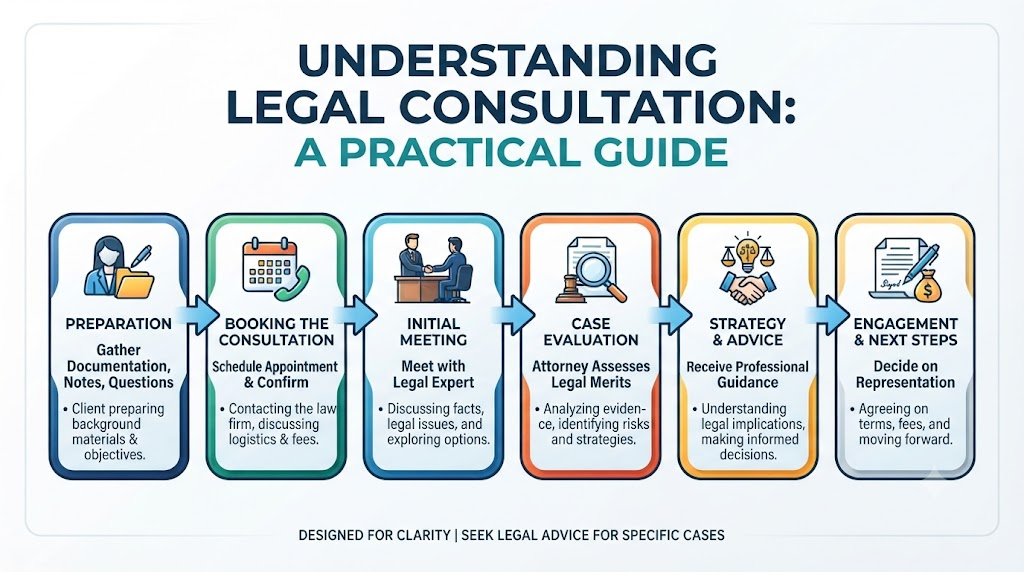
To maximize the value of your legal consultation, thorough preparation is essential.
Actionable Preparation Steps
- Prepare a Written Timeline: Write down a chronological summary of events, including relevant dates, actions, and key individuals involved.
- Organize Documents: Gather relevant contracts, emails, legal notices, financial records, or police complaints into a single organized file or PDF folder.
- List Specific Questions: Prepare clear questions regarding procedural steps, estimated timelines, potential outcomes, and fee structures.
- Maintain Complete Honesty: Full disclosure allows your advocate to assess your legal position accurately and formulate an effective strategy.
- Understand the Scope: Clarify what services are included in the consultation or representation fee (e.g., notice drafting, court appearances, negotiations).
Best Practices for Managing Your Legal Matters
Adopting disciplined best practices ensures smoother interactions with the legal system and your chosen professional.
- Verify Professional Experience: Check the legal practitioner’s background, area of specialization, and primary court of practice.
- Keep Written Records: Maintain copies of all signed documents, notices sent/received, and formal communications.
- Respect Court Procedures: Follow the advice of your advocate regarding court etiquette, submission deadlines, and appearance requirements.
- Consider Alternate Dispute Resolution (ADR): Explore mediation, arbitration, or conciliation when appropriate to save time and reduce litigation costs.
- Seek Second Opinions When Necessary: For major corporate transactions or complex litigation, getting a second professional opinion can validate your strategy.
The Future of Legal Discovery in India
The Indian legal ecosystem is undergoing significant digital modernization. From e-filing systems in High Courts and virtual court hearings to legal technology directories, technology is making justice and legal information more transparent and accessible. Structured legal directories empower citizens by demystifying legal specializations, enabling location-based lawyer discovery, and providing educational legal content.
Platforms like WakilSahab lead this evolution by serving as central information hubs where individuals, startups, and enterprises can discover appropriate legal professionals across India.
Why Choose WakilSahab for Legal Discovery?
WakilSahab is designed as a user-friendly legal discovery and legal information platform in India. Whether you need a corporate lawyer in a major business hub, a divorce lawyer, a property advocate for title verification, or a cyber crime lawyer, WakilSahab simplifies the search process.
Platform Highlights
- Comprehensive Advocate Directory: Explore lawyer profiles categorized by practice areas and geographic locations across India.
- Educational Legal Resources: Access easy-to-understand legal articles, procedural guides, and informative content.
- Streamlined Discovery: Connect with advocates offering online consultations or in-person legal services tailored to your needs.
- Transparent Information Hub: Empowers individuals and businesses to make informed decisions before engaging legal counsel.
Legal Disclaimer
This article is published strictly for general educational and informational purposes. It does not constitute formal legal advice, does not establish an advocate-client relationship, and should not be relied upon as a substitute for personalized legal consultation with a qualified legal professional registered with the Bar Council of India. Legal outcomes depend on individual facts and applicable laws.
Frequently Asked Questions (FAQs)
1. How do I find a lawyer near me in India?
You can search through structured legal discovery directories like WakilSahab, which categorize lawyers by city, state, court practice, and specialization area. This allows you to locate professionals close to your jurisdiction.
2. What is the difference between a lawyer and an advocate in India?
In India, a person with a law degree is a lawyer. An advocate is a lawyer who has enrolled with a State Bar Council and passed the All India Bar Examination (AIBE), granting them the right to represent clients in court.
3. How does online lawyer consultation work?
Online legal consultation allows you to discuss your matter with an advocate via video, phone, or digital messaging. You share relevant digital documents beforehand so the advocate can evaluate your matter and provide general guidance.
4. When should I consult a criminal lawyer near me?
You should consult a criminal lawyer immediately if an FIR has been lodged against you, if you face potential arrest, if you need anticipatory or regular bail, or if you are a victim of a criminal offense seeking legal prosecution.
5. What does a property lawyer do during a land or home purchase?
A property lawyer conducts title search reports, verifies property ownership records, checks for encumbrances, drafts sale agreements, and ensures that the property transaction complies with local state land laws.
6. What is the process for mutual consent divorce in India?
Mutual consent divorce involves both spouses jointly filing a petition under relevant personal laws, declaring that they have lived separately for the required statutory period and mutually agree to dissolve the marriage amicably.
7. How do I select the right corporate lawyer for my startup?
Look for a corporate lawyer with experience in startup business formation, co-founder agreements, corporate compliance, intellectual property protection, and investment deal drafting tailored to your industry.
8. What should I do if I fall victim to an online financial fraud?
Report the incident immediately on the National Cyber Crime Reporting Portal (cybercrime.gov.in), inform your bank to freeze transactions, and consult a cyber crime lawyer to pursue legal remedies.
9. How vary legal consultation fees across India?
Legal consultation fees vary widely based on the lawyer’s experience, city, complexity of the issue, and consultation duration. Upfront discussions regarding professional fees help avoid misunderstandings.
10. Can I get free legal advice online in India?
Many educational platforms and government schemes (such as Tele-Law under the Ministry of Law and Justice) offer preliminary legal information. However, complex matters usually require formal legal representation.
11. What documents should I prepare before meeting a lawyer?
Bring all relevant physical and digital records, including contracts, legal notices, government IDs, communications (emails/letters), financial statements, and a written timeline of events related to your matter.
12. Is legal information on the internet the same as legal advice?
No. Generic online legal information provides background awareness. Personalized legal advice applies statutory provisions and case law directly to your specific facts and requires a qualified advocate.
13. What is an FIR and how is it filed?
A First Information Report (FIR) is a written document prepared by the police upon receiving information about a cognizable offense. It sets the criminal justice process and police investigation in motion.
14. What is title verification in real estate transactions?
Title verification is a legal audit of property documents covering 13 to 30 years to confirm that the seller holds clear, marketable ownership without pending litigation, mortgages, or legal disputes.
15. Can I seek a second opinion from another advocate?
Yes. Seeking a second legal opinion is common practice in complex corporate transactions, high-stakes civil litigation, or serious criminal matters to validate legal strategy.
Conclusion
Understanding your legal rights, statutory obligations, and options is the first step toward resolving any legal matter effectively in India. Whether dealing with personal family disputes, property title verifications, corporate contracts, or criminal allegations, securing professional legal assistance ensures your interests are protected under the law.Choosing the right advocate requires assessing practice area specialization, court experience, and clear fee structures. Online legal discovery directories like WakilSahab bridge the gap between citizens and legal professionals, offering a transparent, searchable platform to find advocates and explore legal resources. Equipped with proper documentation and clear expectations, you can confidently navigate the Indian legal system.
Leave a Reply