Introduction
Managing cash flow effectively remains one of the greatest operational hurdles for growing enterprises and mid-market companies. When finance teams rely heavily on manual spreadsheet tracking, paper-based billing, and fragmented payment collection portals, administrative bottlenecks inevitably stall business momentum. Delayed invoicing directly prolongs payment cycles, heightens bad debt exposure, and drains productive hours that accounting teams could otherwise dedicate to strategic financial planning. In this comprehensive guide, you will learn how modern invoice and PayManagerPro management platforms eliminate administrative overhead, enforce multi-tier compliance, accelerate cash collections, and transform enterprise accounting operations.
What is Invoice and Payment Management Software?
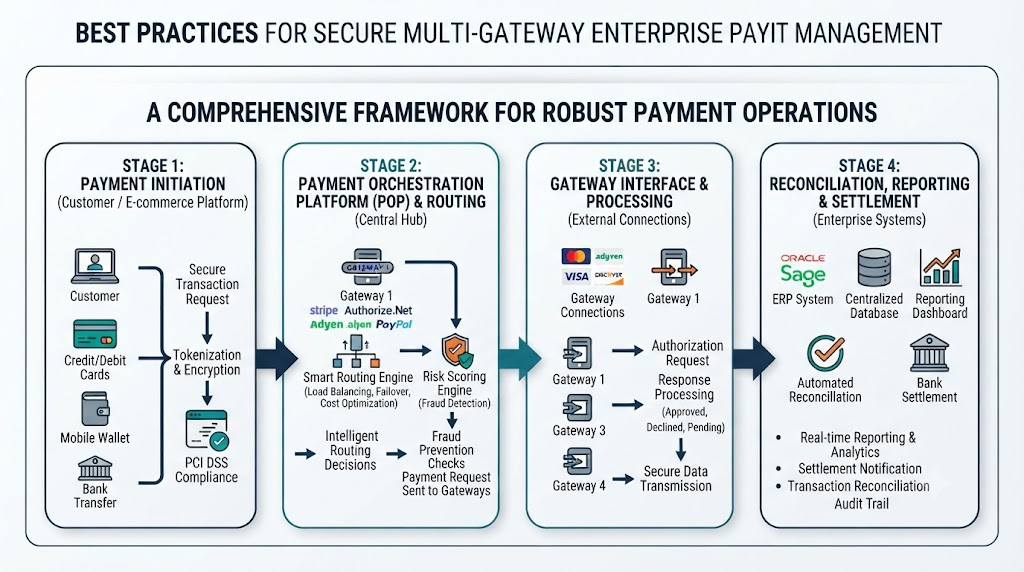
Invoice and payment management software is a centralized digital solution designed to create, send, track, collect, and reconcile business invoices automatically. Instead of forcing accounts receivable (AR) professionals to switch between disconnected billing applications, payment gateway portals, and core accounting software, a unified management platform consolidates these critical workflows into a single cloud dashboard.
Core Architecture and Workflow
[ Invoice Generation ] ──> [ Smart Link Distribution ] ──> [ Multi-Gateway Collection ]
                                                                       │
[ Financial Reporting ] <── [ Auto-Reconciliation ] <── [ Settlement Matching ]
- Invoice Generation: The platform generates compliant digital invoices—incorporating dynamic line items, customer details, and applicable tax structures—directly from order management systems or native user inputs.
- Distribution & Collection: The software automatically generates secure payment links and dispatches them via integrated communication channels like email, SMS, and WhatsApp.
- Multi-Gateway Ingestion: Customers select their preferred payment channel (UPI, cards, net banking, corporate wallets), and funds are processed through integrated payment gateways.
- Automated Reconciliation: The system matches incoming payment notifications directly with pending open invoices, marking ledger records as paid in real time and syncing updates with underlying Enterprise Resource Planning (ERP) databases.
By unifying these vital touchpoints, organizations drastically reduce manual data entry, streamline customer payment journeys, and maintain complete financial control over their accounts receivable pipeline.
Why Modern Businesses Need Automated Payment Management
In today’s fast-paced business environment, relying on legacy billing methods introduces structural risks that hinder long-term growth. Embracing automated payment management provides immediate, transformative advantages across five critical operational areas:
- Accelerated Cash Flow: Automated workflows eliminate delayed invoice dispatching and simplify customer checkout paths, helping businesses secure payments significantly faster and reduce Days Sales Outstanding (DSO).
- 360-Degree Payment Visibility: Finance leaders gain real-time insight into paid, pending, partial, and overdue invoices through centralized live dashboards, eliminating blind spots in financial forecasting.
- Reduction of Manual Operations: Automating repetitive routines—such as generating PDF invoices, matching bank line items, and drafting collection emails—frees accounting staff from low-value clerical work.
- Frictionless Customer Experience: Providing multi-channel digital invoices alongside one-click payment links enables clients to settle obligations effortlessly from any device, lowering drop-off rates and strengthening commercial relationships.
- Enhanced Audit and Compliance Rigor: Automated systems generate immutable digital audit trails, enforce standardized tax calculations, and simplify quarterly reporting for regulatory authorities like the Income Tax Department and Ministry of Corporate Affairs (MCA).
Key Features of PayManagerPro
PayManagerPro provides a comprehensive, enterprise-ready platform engineered to streamline complex payment workflows and optimize the entire accounts receivable ecosystem.
+-------------------------------------------------------------------------+
|                         PAYMANAGERPRO ENGINE                            |
+------------------------------------+------------------------------------+
|  • GST-Compliant Invoicing         |  • Multi-Gateway Consolidation     |
|  • Smart Payment Links             |  • Automated Auto-Reconciliation   |
|  • Maker-Checker Approval Workflows|  • Comprehensive API Suite         |
+------------------------------------+------------------------------------+
- Dynamic GST Invoicing: Generate legally compliant tax invoices complete with automated State-level and Central-level tax splitting, customizable invoice numbering sequences, and structured line-item discounts.
- Sequential Invoice Numbering: Maintain strict compliance with accounting standards using customizable, non-repeating automated document numbering rules.
- Smart Payment Link Management: Create dynamic or static payment links that allow clients to pay partial balances or full invoice amounts through flexible digital channels.
- Unified Collection Dashboard: Access real-time intelligence on total revenue collected, outstanding receivables, platform transaction rates, and gateway settlement cycles in a single interface.
- Multi-Gateway Payment Integration: Seamlessly connect multiple payment processing platforms into one central dashboard to optimize routing and ensure high transaction success rates.
- Real-Time Financial Reporting: Produce instant customized reports on ageing receivables, customer ledger balances, payment channel performance, and tax summary liabilities.
- Automated Payment Reconciliation: Automatically match incoming payment gateway settlement reports against open receivables to minimize manual journal entries.
- Robust Enterprise APIs: Connect core enterprise ERPs, CRMs, and custom software architectures to PayManagerPro using developer-friendly REST APIs.
- Multi-Tier Approval Workflows: Enforce operational security using Maker-Checker governance structures to validate invoice generation, credits, and manual status overrides.
- Detailed Audit Logs: Track every invoice creation, editing, payment attempt, and reconciliation event with time-stamped digital audit logs.
GST Invoice Software in India
Navigating the complexities of Indian tax regulation demands absolute accuracy in tax categorization, calculation, and document structuring. Modern GST invoice software India solutions ensure that business operations remain aligned with guidelines issued by the GST Council and Central Board of Indirect Taxes and Customs (CBIC).
Essential GST Tax Components
- CGST (Central Goods and Services Tax): Collected by the Central Government on intra-state transactions.
- SGST (State Goods and Services Tax): Collected by the State Government on intra-state transactions.
- IGST (Integrated Goods and Services Tax): Levied on inter-state commercial transactions and international imports.
PayManagerPro dynamically evaluates customer tax identifiers (GSTIN) and location data to determine correct tax application rules automatically. The system validates HSN/SAC codes, enforces standardized mandatory invoice layouts, and generates structured data outputs designed for seamless upload into tax return portals. By replacing error-prone manual tax calculations with automated compliance logic, enterprises protect themselves against penalties, mismatched input tax credits (ITC), and audit failures.
Payment Link Management Platform
A flexible payment link management platform changes how businesses collect receivables by transforming rigid invoicing into modern, click-to-pay experiences.
1. Create Invoice ──> 2. Auto-Generate Link ──> 3. Dispatch via WhatsApp/Email ──> 4. Customer One-Click Pay
Advanced Link Features
- Multi-Channel Link Distribution: Deliver payment links instantly through embedded direct emails, automated SMS updates, and instant messaging channels like WhatsApp.
- Flexible Payment Schemes: Configure links to accept partial deposits, milestone payments, or exact full invoice balances depending on contract terms.
- Configurable Expiry Dates: Set custom link expiration windows to protect pricing agreements and motivate prompt client settlements.
- Real-Time Status Tracking: Monitor when a payment link is delivered, opened, attempted, or successfully cleared by the client.
Automated Payment Collection Management
An integrated payment collection management software infrastructure eliminates payment friction by offering diverse digital payment methods directly on digital invoices. Modern corporate clients expect flexibility when clearing business obligations.
+-----------------------------------------------------------------+
|                       PAYMENT COLLECTION METHODS                 |
+-------------------+--------------------+------------------------+
|  Unified Payments |  Credit & Debit    |  Corporate Net Banking |
|  Interface (UPI)  |  Cards             |  & Digital Wallets     |
+-------------------+--------------------+------------------------+
By connecting with established clearing networks governed by regulatory bodies like the Reserve Bank of India (RBI) and the National Payments Corporation of India (NPCI), PayManagerPro ensures high collection speeds, robust encryption, and minimal transaction drop-offs across all client preferred payment channels.
Invoice Payment Tracking Software
Gaining real-time control over pending revenues requires dependable invoice payment tracking software. Tracking receivables manually using static offline spreadsheets frequently results in delayed follow-ups and uncollected revenue.
Key Tracking Features
- Real-Time Balance Monitoring: View overall outstanding balances, categorizing invoices as unpaid, partially paid, or under dispute.
- Collection Ageing Analytics: Group unpaid receivables into structured ageing buckets (e.g., 1-30 days, 31-60 days, 61-90 days, and 90+ days) to evaluate portfolio risk.
- Automated Overdue Reminders: Schedule customizable, courteous payment reminder notifications sent across communication channels at predetermined intervals before and after invoice due dates.
- Customer Balance Statements: Automatically generate comprehensive customer ledger statements to provide clients with a clear, transparent view of open invoices and payment histories.
Automated Payment Reconciliation Software
Manual ledger reconciliation is notoriously slow, resource-intensive, and susceptible to human oversight. Deploying automated payment reconciliation software eliminates the need to manually match bank deposits against individual accounting ledger entries.
[ Gateway Settlement File ] ──\
                               ==> [ Automated Matching Engine ] ==> [ Reconciled Ledger ]
[ Open Receivables Record ] ──/
Reconciliation Workflow Mechanics
- Data Ingestion: PayManagerPro retrieves structured settlement files and payment success notifications directly from connected payment gateways and banking feeds.
- Automated Matching: The reconciliation engine matches transaction references, invoice IDs, customer details, and net settlement amounts against open receivables.
- Exception Management: Unmatched records, chargeback disputes, or partial settlements are routed to a dedicated management queue for review.
- Audit Trail Generation: Every reconciled transaction is sealed with an immutable timestamp, ensuring strict alignment with professional accounting standards and enterprise internal control rules.
Accounts Receivable Automation Software
Implementing dedicated accounts receivable automation software allows modern enterprise accounting teams to transition from reactive administrative tasks to strategic financial management.
+--------------------------------------------------------------------+
|                    ACCOUNTS RECEIVABLE AUTOMATION                  |
+------------------+------------------+------------------+-----------+
| 1. Auto Invoice  | 2. Automated     | 3. Smart Payment | 4. Auto   |
|    Creation      |    Reminders     |    Collection    |    Ledger |
+------------------+------------------+------------------+-----------+
- Automated Invoice Generation: Automatically trigger recurring invoices or convert signed sales agreements into finalized tax invoices without manual data entry.
- Intelligent Customer Reminders: Enforce polite, scheduled payment follow-ups tailored to specific client payment behaviors and contract agreements.
- Centralized Collections: Capture incoming funds across varied payment channels, linking settlements to target customer account records automatically.
- Seamless Accounting Sync: Update underlying general ledgers, sub-ledgers, and customer balance books instantly, eliminating manual end-of-month adjustments.
Invoice-to-Cash Automation Platform
The invoice to cash automation software framework encompasses the entire lifecycle of an enterprise commercial billing transaction. Unifying these stages into a single workflow eliminates process delays and manual handoffs.
  [1. Invoice] ────────> [2. Payment Link] ────────> [3. Collection]
                                                             │
  [6. Financial Reports] <── [5. Reconciliation] <── [4. Settlement]
- Invoice Creation: Clean, tax-compliant invoice generation with accurate billing detail inputs.
- Smart Link Creation: Instant generation of secure, trackable, and configurable payment links.
- Multi-Channel Collection: Frictionless collection through dynamic payment gateways and UPI channels.
- Settlement Processing: Direct deposit clearing from payment networks into central business accounts.
- Auto-Reconciliation: Instant matching of incoming funds to pending invoice line items.
- Financial Reporting: Immediate updates across corporate financial reporting tools and balance sheets.
Enterprise Payment Management Platform
Enterprise organizations with complex operating structures demand an enterprise payment management platform capable of supporting multi-entity hierarchies and strict operational controls.
- Multi-Branch Operations: Centralize receivables management across dozens of regional branches, legal entities, or business units from a single administrative master interface.
- Granular Role-Based Permissions: Restrict user access based on job roles, ensuring team members only access data relevant to their specific permissions.
- Maker-Checker Governance: Mandate a two-step approval process where one staff member creates or edits an invoice or credit memo, and a designated manager reviews and approves it.
- Enterprise API Integration: Connect core business tools, proprietary web software, and custom legacy databases using enterprise-grade REST APIs.
- Consolidated Business Intelligence: View global financial health, cross-branch collection metrics, and overall liquidity positions through executive dashboards.
Security & Compliance Framework
Financial platforms must meet strict corporate governance standards, regulatory rules, and data security policies. PayManagerPro incorporates enterprise-grade protection mechanisms across every functional layer:
+--------------------------------------------------------------------+
|                   SECURITY & COMPLIANCE ARCHITECTURE               |
+-------------------+-----------------------+------------------------+
| Advanced Access   | Encrypted API         | Complete Audit         |
| Controls (RBAC)   | Gateways              | Logging Tracks         |
+-------------------+-----------------------+------------------------+
- Data Protection Protocols: Enterprise end-to-end encryption standards protect sensitive transaction data during transit and at rest.
- Detailed System Audit Logs: Record and log every transaction update, system login, data export, and workflow approval for auditing requirements.
- Strict Role-Based Access Control: Protect confidential company records by defining fine-grained user permission tiers.
- Secure REST API Connections: Safeguard data exchanges between internal systems using secure token-based authentication.
- Tax Compliance Verification: Keep tax templates up to date with official mandates issued by regulatory bodies, ensuring clean record-keeping for regulatory filings.
Seamless Integration Capabilities
PayManagerPro integrates smoothly into existing IT ecosystems, connecting payment gateways, core ERPs, customer management software, and accounting platforms into a single operational hub.
               +--------------------------------------+
               |          PAYMANAGERPRO HUB           |
               +------------------+-------------------+
                                  |
   +--------------------+---------+---------+--------------------+
   |                    |                   |                    |
[ Payment Gateways ]  [ ERP Systems ]  [ CRM Software ]  [ Accounting Software ]
  • Razorpay           • Enterprise      • Salesforce       • Tally / Zoho Books
  • Cashfree             ERPs            • HubSpot          • QuickBooks
  • Paytm
- Payment Gateway Connectors: Native integrations with leading merchant platforms, including Razorpay, Cashfree, and Paytm, deliver high processing reliability.
- ERP System Connections: Bi-directional sync mechanisms mirror billing and collection updates across corporate enterprise platforms.
- CRM Integrations: Empower sales and customer support teams by embedding real-time invoice status and payment link creation directly into CRM platforms like Salesforce and HubSpot.
- Accounting Software Sync: Automatically export validated billing records, receipt vouchers, and tax summaries directly into external accounting packages like Tally, Zoho Books, and QuickBooks.
Industries Served by PayManagerPro
PayManagerPro adapts seamlessly to distinct operational workflows across diverse business sectors:
+-------------------------------------------------------------------------+
|                          INDUSTRIES SERVED                              |
+-------------------+--------------------+--------------------------------+
|  Manufacturing    |  Healthcare        |  Education                     |
|  Logistics        |  Retail & Commerce |  SaaS Platforms                |
|  Agencies         |  Financial Services|  Professional Consulting       |
+-------------------+--------------------+--------------------------------+
- Manufacturing: Manage complex billing terms, multi-tranche order payments, and distributed branch collections.
- Healthcare: Streamline patient billing, private insurer claims management, and hospital service collections.
- Education: Automate recurring tuition fee schedule distribution, installment payment links, and parent receipt portals.
- Logistics: Accelerate proof-of-delivery billing, freight invoice clearing, and driver collection accounting.
- Retail & E-Commerce: Reconcile high-volume, multi-gateway transactions quickly and reliably.
- SaaS & Subscription Services: Manage subscription billing, track customer recurring receipts, and minimize churn from failed transactions.
- Agencies & Services: Simplify retainer invoicing, track milestone project billing, and automate collection reminders.
- Financial Services: Track loan processing fees, advisory collections, and installment payments using automated channels.
- Professional Consulting: Convert tracked billable hours into itemized tax invoices with integrated direct payment links.
Manual Process vs PayManagerPro Comparison
| Operational Area | Manual Legacy Process | PayManagerPro Automated Platform |
| Invoice Creation | Slow, manual entry using spreadsheets or word processors; prone to formatting errors. | Automated, template-driven generation with pre-validated tax logic and customized layout fields. |
| Payment Collections | Requires static bank transfers or offline checks with no direct link to billing documents. | Integrated multi-gateway payment links delivered via Email, SMS, and WhatsApp. |
| Payment Reconciliation | Time-consuming line-by-line matching of bank statements against open sales ledgers. | Automated matching engine that pairs settlement reports with open invoices instantly. |
| Financial Reporting | Static, outdated end-of-month reporting assembled manually from multiple sources. | Real-time interactive dashboards offering immediate visibility into cash flow and ageing metrics. |
| Error & Risk Profile | High rate of human data entry errors, tax miscalculations, and missing audit logs. | Automated tax calculations, strict system controls, and immutable timestamped audit logs. |
| Processing Speed | Significant delay between issuing invoices and receiving customer payments. | Instant digital invoice dispatch, faster checkout options, and reduced Days Sales Outstanding (DSO). |
Key Business Benefits
Adopting an automated accounts receivable ecosystem delivers significant operational advantages for financial leaders:
                  +--------------------------------+
                  |     BUSINESS BENEFITS HUB      |
                  +---------------+----------------+
                                  |
     +------------------+---------+---------+------------------+
     |                  |                   |                  |
[ Accelerated ]  [ Reduced Ops ]     [ Zero Manual ]    [ Enhanced ]
  Cash Flow        Costs               Errors             Customer Experience
- Accelerated Cash Flow: Digital payment links and scheduled payment reminders significantly compress the billing-to-settlement timeline.
- Lower Operational Costs: Minimizing repetitive data entry allows finance departments to process higher transaction volumes without growing administrative headcount.
- Dramatically Reduced Error Rates: Standardized data entry, automated tax routines, and automated matching safeguard ledger accuracy.
- Actionable Real-Time Intelligence: Live analytics dashboards give CFOs accurate visibility into expected cash inflows and customer payment trends.
- Frictionless Client Interactions: Clean invoice presentation and convenient one-click payment links deliver a smooth, professional client experience.
Implementation Best Practices
To maximize the benefits of accounts receivable automation, finance teams should follow these industry best practices during setup:
- Standardize Master Ledger Data: Audit and clean client master files, tax numbers, and contact details before migrating records to the platform.
- Configure Clear Approval Workflows: Establish distinct Maker-Checker authorization tiers for issuing credit notes, modifying invoice details, or manually updating payment statuses.
- Automate Scheduled Follow-Up Routines: Configure courteous, multi-stage payment reminder triggers aligned with specific contract payment terms (e.g., 5 days before due date, on due date, 7 days post due date).
- Offer Diverse Payment Channels: Enable multiple collection options—including UPI, credit cards, and net banking—to lower checkout friction for clients.
- Conduct Regular Audit Checks: Periodically review unapplied credits, exception queues, and gateway logs to maintain peak operational accuracy.
Common Invoicing & Collection Mistakes to Avoid
Businesses frequently encounter preventable operational drag by falling into legacy collection habits:
- Relying on Manual Spreadsheet Tracking: Excel sheets lack real-time synchronization, version control, and automated follow-up capabilities, creating operational blind spots.
- Failing to Send Systematic Reminders: Inconsistent follow-up schedules directly contribute to extended collection cycles and higher bad debt rates.
- Issuing Duplicate or Discrepant Invoices: Manual invoice generation risks duplicate document numbers, pricing mismatches, and delayed payments due to customer disputes.
- Miscalculating Tax Line Items: Manual tax entry often leads to incorrect CGST/SGST/IGST applications, causing tax compliance headaches and input tax credit rejections.
- Delaying Bank Reconciliation Workflows: Postponing reconciliation until month-end obscures your true cash position and complicates exception resolution.
- Neglecting Centralized Reporting Controls: Without a single reporting dashboard, finance leaders struggle to track DSO trends and accurately project working capital needs.
The Future of Digital Payment Management
The accounts receivable domain continues to evolve rapidly, driven by advances in financial technology, open banking, and regulatory shifts:
[ AI Matching Engines ] ──────> [ Embedded Banking APIs ] ──────> [ Continuous Compliance ]
- AI-Driven Reconciliation Engines: Machine learning models will automatically handle complex reconciliation scenarios—such as partial payments, bundled settlements, and multi-currency conversions—with minimal manual intervention.
- Embedded Banking Infrastructures: Direct API integrations between enterprise ERPs and banking institutions will enable instant settlement verification and real-time ledger updates.
- Continuous Real-Time Tax Compliance: Dynamic integration with tax authority portals will automate invoice validation, tax reporting, and compliance verification in real time.
- Predictive Collection Analytics: Machine learning models will analyze past payment patterns to predict potential delays, enabling proactive risk mitigation strategies.
Frequently Asked Questions
1.What is accounts receivable automation software?
Accounts receivable automation software is an enterprise solution designed to digitize and streamline the entire invoice-to-cash lifecycle. It automates invoice creation, tax calculations, link distribution, payment collection, client follow-ups, and ledger reconciliation. By eliminating manual data entry, it helps businesses accelerate cash flow, reduce administrative overhead, and maintain accurate financial records.
2.How does PayManagerPro improve enterprise cash flow?
PayManagerPro accelerates cash flow by dispatching digital invoices instantly alongside integrated, one-click payment links via Email, SMS, and WhatsApp. Coupled with automated multi-stage payment reminders, it prompts clients to clear invoices faster, drastically cutting Days Sales Outstanding (DSO) and reducing outstanding overdue balances.
3.Can PayManagerPro handle GST compliance in India?
Yes. PayManagerPro is engineered to satisfy Indian GST mandates. The software automatically applies CGST, SGST, and IGST based on counterparty location details, validates HSN/SAC codes, applies non-repeating sequential invoice numbering, and exports structured tax summaries ready for seamless tax return filing.
4.What payment methods can customers use via PayManagerPro?
Through PayManagerPro’s multi-gateway aggregation architecture, your customers can pay using a wide variety of channels, including UPI (Google Pay, PhonePe, Paytm), Credit and Debit Cards, Net Banking across major commercial banks, and Corporate Digital Wallets.
5.How does automated payment reconciliation work?
The system ingests digital settlement reports directly from integrated payment gateways and banking feeds. Its automated matching engine compares incoming reference codes, settlement amounts, and client details against open invoices in your system, marking matching records as paid instantly without manual intervention.
6.Is PayManagerPro suitable for multi-branch organizations?
Yes. PayManagerPro supports multi-branch and multi-entity operational structures. Administrators can manage several branches or subsidiaries from a centralized master interface while defining branch-specific user roles, approval rules, and segregated collection dashboards.
7.What is Maker-Checker authorization in PayManagerPro?
Maker-Checker governance is an internal security mechanism where one user (the Maker) creates or edits an invoice, credit memo, or transaction record, and a separate supervisor (the Checker) must review and approve it before it becomes finalized. This protocol minimizes human error, prevents fraud, and maintains strict operational compliance.
8.Can PayManagerPro integrate with existing ERPs or accounting software?
Yes. PayManagerPro features developer-friendly REST APIs and native connectors that integrate smoothly with popular accounting packages, core ERP platforms, and custom enterprise applications like Tally, Zoho Books, QuickBooks, and leading CRMs.
9.How do dynamic payment links work?
Dynamic payment links are custom, secure URLs generated automatically for specific invoices. They carry precise invoice details, balance amounts, and customer IDs directly to the checkout screen. Once the customer completes payment through the link, the system automatically updates the invoice status to paid in real time.
10.How does PayManagerPro keep corporate financial data secure?
PayManagerPro protects platform data using end-to-end encryption standards, tokenized API authentication protocols, granular Role-Based Access Controls (RBAC), and detailed system audit logs that track every invoice modification, payment attempt, and user sign-in event.
Conclusion
Modernizing accounts receivable workflows is essential for maintaining strong liquidity, operational efficiency, and scalable financial growth. Relying on fragmented spreadsheets, manual billing routines, and delayed reconciliation processes drains valuable resources and exposes businesses to cash flow bottlenecks and compliance risks.Deploying dedicated accounts receivable automation software like PayManagerPro transforms financial operations into a streamlined, automated revenue engine.
Leave a Reply