Introduction
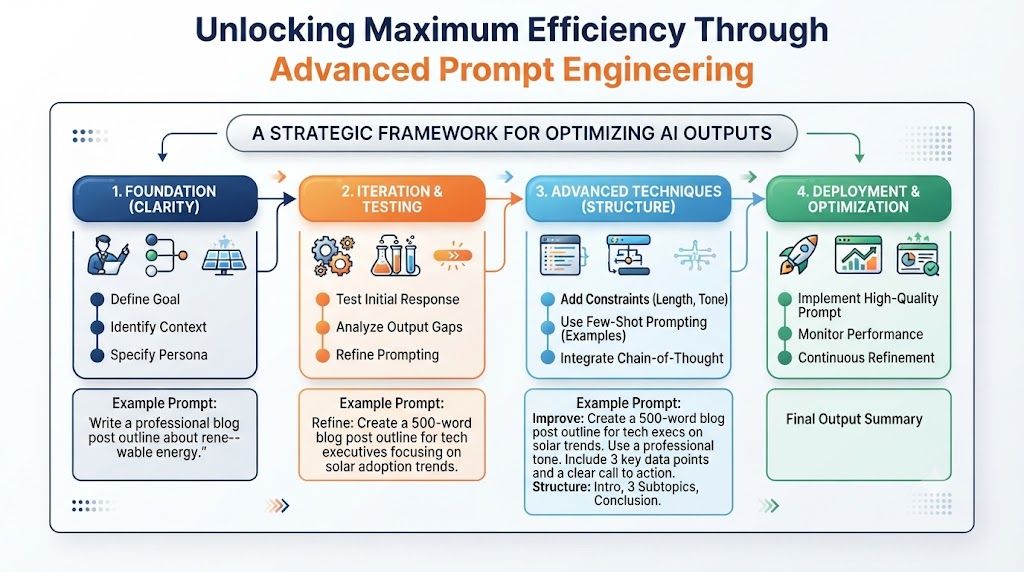
Artificial intelligence has transformed how we work, create, and solve problems. However, the quality of your AI output relies directly on the inputs you provide. As individuals and teams integrate generative models into their daily operations, managing effective Promptosia has become a critical operational challenge. In this guide, you will learn the core principles of effective prompt design, how to structure a centralized library, methods for testing and analyzing prompt performance, and strategies for versioning your workflows. We will also explore how modern platforms simplify prompt organization, enabling you to build scalable, high-performing AI workflows across your entire organization.
What is an AI Prompt Management Tool?
Definition
An AI prompt management tool is a software system designed to store, organize, analyze, test, and version text prompts used with artificial intelligence models. Rather than relying on unstructured text documents or fragmented chat sessions, a prompt management platform treats prompts as structured software assets.
       +-------------------------------------------------------+
       |             AI Prompt Management Platform             |
       +-------------------------------------------------------+
                                   |
         +-------------------------+-------------------------+
         |                         |                         |
         v                         v                         v
+-----------------+       +-----------------+       +-----------------+
|   Organization  |       |   Optimization  |       | Version Control |
|  Tags, Folders, |       | Testing, Quality|       | History, Diff   |
|   Searchability |       |  Scoring, Analysis      |  Comparisons    |
+-----------------+       +-----------------+       +-----------------+
Why Prompt Management Matters
When AI adoption scales within an organization, managing inputs becomes as important as managing code. Without organization, team members waste hours rewriting prompts that others have already perfected. An organized system eliminates redundant effort, maintains brand voice across AI-generated content, and ensures that critical instructions remain accessible to everyone on the team.
Common Prompt Challenges
Teams working without structured prompt management systems regularly encounter several persistent obstacles:
- Prompt Sprawl: Prompts are scattered across email threads, sticky notes, internal documents, and code repositories.
- Inconsistent Quality: Varied phrasing leads to unpredictable, low-quality model outputs.
- Lack of Versioning: Modifying an existing prompt can accidentally break a proven workflow with no easy way to revert changes.
- Knowledge Silos: High-performing prompts crafted by one team member are rarely shared effectively across the organization.
Benefits of Organized Prompt Libraries
Establishing a centralized AI prompt library transforms prompt design from an ad-hoc trial into a repeatable, high-yield system. Storing prompts in a unified hub provides immediate benefits:
- Accelerated production cycles through quick retrieval of proven assets.
- Enhanced output quality and compliance across all departments.
- Simplified onboarding for new team members who gain instant access to approved instructions.
- Clear visibility into which prompt variations yield the highest output performance.
Understanding Prompt Engineering
What Prompt Engineering Is
Prompt engineering is the practice of structuring, refining, and designing text inputs to guide generative AI models toward precise, high-quality outputs. It bridges human intent and machine execution, combining technical precision, domain knowledge, and clear instruction design.
Prompt Components
A robust prompt consists of several distinct structural elements that guide the AI model’s response. According to OpenAI Documentation, providing clear contextual frameworks drastically reduces model hallucination and task failure.
+-----------------------------------------------------------------------+
|                            PROMPT ANATOMY                             |
+-----------------------------------------------------------------------+
|  ROLE        | You are a Senior Content Strategist.                  |
|  CONTEXT     | We are launching a new enterprise SaaS tool.           |
|  INSTRUCTION | Draft a 3-paragraph product launch announcement email. |
|  VARIABLES   | Product Name: {{product_name}}, Target: {{target_audience}} |
|  CONSTRAINTS | Keep tone professional; limit response under 200 words.|
|  FORMAT      | Output plain text with a clear subject line heading.   |
+-----------------------------------------------------------------------+
- Context: Background information that establishes the setting, domain, or background rules for the request.
- Instructions: The core task or action the AI must perform (e.g., summarize, translate, code, analyze).
- Variables: Dynamic placeholders (e.g.,
{{product_name}}or{{customer_query}}) that allow a single prompt layout to handle multiple use cases. - Output Formatting: Explicit guidelines defining how the response should look, such as Markdown tables, JSON schemas, or bulleted lists.
- Constraints: Clear boundaries detailing what the model must not do, such as length limits, prohibited words, or tone restrictions.
Using a comprehensive prompt engineering platform helps creators structure these individual components systematically, ensuring that prompts remain modular, clear, and easy to maintain.
Building an Organized AI Prompt Library
Categories and Tags
Systematic organization begins with a clear taxonomy. Grouping prompts into parent categories (e.g., Marketing, Engineering, Customer Support) provides immediate structural clarity. Tagging prompts with specific metadata (e.g., gpt-4, summarization, external-facing) allows team members to quickly locate assets across multiple dimensions.
Variables and Dynamic Fields
Static prompts are limited in utility. Modern prompt architecture relies on standard dynamic variables. By incorporating variable slots like {{user_input}} or {{target_language}}, a single well-crafted prompt template can serve hundreds of unique tasks without requiring structural changes.
Search and Collections
As your workspace expands to hundreds of prompt assets, traditional document search often falls short. A specialized AI prompt organizer features semantic search, filtering options, and custom collections. Creators can build curated groups of prompts designed for specific campaigns, software releases, or internal routines.
       +--------------------------------------------------------+
       |               ORGANIZED PROMPT HIERARCHY               |
       +--------------------------------------------------------+
                                   |
          +------------------------+------------------------+
          |                                                 |
          v                                                 v
+-------------------+                             +-------------------+
| Category: Copy    |                             | Category: Code    |
+-------------------+                             +-------------------+
          |                                                 |
   +------+------+                                   +------+------+
   |             |                                   |             |
   v             v                                   v             v
+------+     +-------+                             +------+     +-------+
| Tags |     | Tags  |                             | Tags |     | Tags  |
| Email|     | AdCopy|                             | Python|    | Refactor|
+------+     +-------+                             +------+     +-------+
Prompt Reusability
Prompt reusability is the benchmark of an efficient AI workflow. Rather than authoring a fresh request every time a task arises, team members retrieve standard templates from the team library. This standardized approach guarantees output consistency while saving valuable time across departments.
AI Prompt Optimization
Improving Prompt Clarity
Ambiguity is the leading cause of poor AI outputs. Optimizing a prompt requires replacing vague phrases with direct instructions. For example, replacing “Write a short piece about project management” with “Write a 300-word overview of agile project management methodologies focusing on sprint planning” yields significantly better results.
Output Consistency and Role Definition
Assigning a dedicated role or persona to the AI model helps establish tone, perspective, and output style. Establishing roles—such as “Act as a senior cybersecurity analyst”—focuses the model’s response toward domain-specific language and reasoning.
Context Enhancement and Reducing Ambiguity
Providing detailed background context prevents the model from making incorrect assumptions. Incorporating specific constraints, examples, and formatting instructions guides the AI toward accurate responses on the first attempt. Using an integrated AI prompt optimizer streamlines this process by automatically identifying missing parameters and suggesting refinements to strengthen instruction clarity.
Before Optimization:
“Review this code and tell me if it’s good.”
After Optimization:
“Act as a Senior Python Developer. Review the attached code snippet for efficiency, security vulnerabilities, and adherence to PEP 8 guidelines. Provide feedback formatted as a bulleted list categorized by Severity (High, Medium, Low).”
AI Prompt Analysis
Structural Evaluation and Goal Identification
Analyzing a prompt before deployment helps ensure long-term stability and performance. Effective analysis inspects the prompt layout to verify that instructions, context, and variable markers are positioned for optimal processing by LLM tokenizers.
Variable Detection and Output Expectations
An automated AI prompt analyzer identifies embedded variables, verifies system instructions, and evaluates potential edge cases before execution. By inspecting dynamic fields prior to running production tasks, teams reduce execution errors and ensure consistent variables across automated workflows.
+-----------------------------------------------------------------+
|                  PROMPT ANALYSIS SCORED METRICS                 |
+-----------------------------------------------------------------+
| Clarity Check         | [████████████████████] 95% - Excellent   |
| Variable Mapping      | [████████████████░░░░] 80% - Validated   |
| Context Richness      | [██████████████░░░░░░] 70% - Good        |
| Constraint Strictness | [████████████████████] 100% - Precise    |
+-----------------------------------------------------------------+
Safety and Compliance Considerations
Prompt analysis also plays a vital role in data security and risk management. Evaluating prompts for proprietary data leaks, accidental exposure of personal information, or unsafe instruction patterns ensures that team outputs meet enterprise security and compliance standards.
Prompt Quality Checking
Quality Dimensions
Evaluating prompt readiness requires analyzing specific operational dimensions. According to guidance on instruction tuning from Google AI Documentation, structured prompts perform with significantly higher accuracy when evaluated against defined benchmarks:
- Clarity: Instructions must be direct, specific, and easy for the model to parse.
- Context: Essential background information must be provided without unnecessary details.
- Structure: Headers, delimiters, and variables must be ordered logically.
- Reusability: The prompt layout should support dynamic inputs using template variables.
- Safety: The content must follow data handling best practices and internal policies.
Scoring Systems and Automated Auditing
Using a built-in prompt quality checker allows teams to evaluate prompt health before publishing assets to a shared repository. Automated scoring systems score prompts against proven quality metrics, providing instant feedback and recommendations for optimization.
+--------------------------------------------------------------------+
|                       PROMPT HEALTH SCORECARD                      |
+--------------------------------------------------------------------+
| Overall Score: 88 / 100                                            |
|                                                                    |
| [✓] Role Defined     : "Senior Content Marketing Specialist"       |
| [✓] Clear Formatting : Requested Markdown Output                   |
| [!] Missing Variable : Placeholders detected without definitions    |
| [✓] Safety Rules     : No sensitive keys or direct PII found       |
+--------------------------------------------------------------------+
Version Control for AI Prompts
Why Version History Matters
Prompts are code. When prompt design evolves, tracking every iteration, update, and modification is essential. Small adjustments to phrasing or system instructions can noticeably change how an AI model responds.
v1.0 (Initial Draft) -------> v1.1 (Added Role) -------> v2.0 (Optimized Schema)
[Basic instructions]          [Set persona constraints]  [Structured JSON output]
Tracking Experiments and Managing Rollbacks
A specialized prompt version control tool keeps a detailed audit log of every revision. If an updated prompt underperforms, team members can review visual diffs, compare changes against previous runs, and instantly roll back to a known stable version.
Testing AI Prompts
Comparing Outputs Across Models
Generative models respond differently to identical instructions. Testing a prompt across multiple engines—such as GPT-4, Claude 3.5, or Gemini—reveals variations in tone, formatting adherence, and technical depth.
                         +-----------------------+
                         |     Target Prompt     |
                         +-----------------------+
                                     |
         +---------------------------+---------------------------+
         |                           |                           |
         v                           v                           v
+-----------------+         +-----------------+         +-----------------+
|     Model A     |         |     Model B     |         |     Model C     |
| (e.g., GPT-4o)  |         | (e.g., Claude)  |         | (e.g., Gemini)  |
+-----------------+         +-----------------+         +-----------------+
         |                           |                           |
         +---------------------------+---------------------------+
                                     |
                                     v
                         +-----------------------+
                         | Output Comparison     |
                         | Side-by-Side Analysis |
                         +-----------------------+
A/B Prompt Testing and Side-by-Side Evaluation
Executing systematic A/B tests helps teams select the most effective prompt structure. Utilizing an AI prompt testing tool enables side-by-side output comparisons, helping team members evaluate execution times, token usage, and quality before deploying prompts to production.
Reusable AI Prompt Templates
Creating structured, reusable AI prompt templates across essential business functions helps standardize team outputs while cutting creation time in half:
+-----------------------------------------------------------------------+
|                    REUSABLE TEMPLATE FRAMEWORK                        |
+-----------------------------------------------------------------------+
| Core Goal: Product Feature Summary                                    |
| Template Structural Pattern:                                         |
|                                                                       |
| "Act as a {{role}}. Analyze the following feature details:            |
| {{feature_notes}}. Write a {{length}} summary emphasizing benefits    |
| for {{target_audience}}. Output as bullet points using Markdown."     |
+-----------------------------------------------------------------------+
Applied Domain Examples
- Marketing: Generating campaign emails, blog outlines, social posts, and ad copy variants based on specific product input variables.
- Coding: Automated code reviews, unit test generation, documentation drafting, and refactoring scripts.
- Customer Support: Generating standard help center responses, ticket categorization templates, and empathetic escalation drafts.
- Research and Education: Processing lengthy academic papers, structuring lesson plans, generating quizzes, and summarizing research trends.
- Business Operations: Summarizing meeting transcripts, generating project charters, drafting executive briefings, and writing operational reports.
How Different Roles Benefit from Prompt Management
Writers and Content Creators
Content teams use structured prompt management to store audience personas, style guides, and output frameworks, keeping brand voice consistent across every piece of generated content.
Developers and AI Professionals
Engineering teams treat prompts like source code. Storing prompts in centralized hubs simplifies testing dynamic fields, managing edge cases, and integrating tested prompts into applications via APIs.
Marketers and Agencies
Agencies managing multiple client accounts rely on organized prompt libraries to store client-specific tones, brand rules, and campaign workflows in isolated workspaces.
Researchers, Educators, and Students
Academic and research teams organize queries to summarize studies, analyze datasets, refine literature reviews, and format citations systematically.
Enterprise Businesses and Support Teams
Businesses improve team productivity by giving employees access to approved, enterprise-grade prompts that meet internal compliance and security standards.
Best Practices for AI Prompt Management
To maximize the impact of your AI workflows, adopt these standard practices for your team prompt library:
+--------------------------------------------------------------------+
|                 PROMPT MANAGEMENT BEST PRACTICES                   |
+--------------------------------------------------------------------+
| 1. Centralize Storage  --> Save prompts in one accessible location. |
| 2. Standardize Names   --> Use clear, descriptive titles.          |
| 3. Add Dynamic Fields  --> Use variables for flexible inputs.      |
| 4. Test Regularly      --> Audit performance across LLM models.    |
| 5. Version Iterations  --> Track changes and retain stable backups. |
+--------------------------------------------------------------------+
- Save High-Performing Prompts Immediately: Archive successful queries right away so team members can reuse proven prompt structures.
- Use Standardized Naming Conventions: Give prompts descriptive titles that clearly indicate their purpose (e.g.,
[Marketing] - SaaS Email Sequence - Launch v2). - Incorporate Flexible Variables: Structure templates using dynamic parameters rather than hardcoded text inputs.
- Document Expected Inputs and Outputs: Provide clear notes explaining what data the user should enter and what output format to expect.
- Audit Prompt Health Periodically: Run prompt libraries through a Prompt Analyzer to catch outdated context or broken variables.
Common Prompt Engineering Mistakes
Avoiding typical prompt design pitfalls helps prevent poor responses, high token overhead, and inconsistent outputs:
+--------------------------+------------------------------------------+
| COMMON MISTAKE           | EFFECTIVE SOLUTION                       |
+--------------------------+------------------------------------------+
| Vague Task Definitions   | Add explicit, step-by-step instructions. |
| Overly Dense Paragraphs  | Use Markdown tags, headers, and lists.   |
| Missing Output Formats   | Specify desired schemas (JSON, tables).  |
| Unversioned Updates      | Track changes using version control.     |
| Hardcoded Input Fields   | Replace fixed text with dynamic variables|
+--------------------------+------------------------------------------+
- Writing Ambiguous Directives: Telling the AI to “make it sound good” produces unpredictable results. Specify exact tone guidelines and target audiences instead.
- Omitting Output Format Constraints: Leaving structure open-ended often leads to unstructured text blocks. Request explicit formats like JSON, tables, or bulleted lists.
- Neglecting Variable Boundaries: Creating variables without clear delimiters makes it harder for the model to distinguish inputs from primary instructions.
- Skipping Side-by-Side Model Audits: Assuming a prompt optimized for one model will work identically on another engine leads to performance drops. Always run multi-model comparisons.
Comparing Manual Storage vs. Specialized Platforms
Relying on informal storage methods like text documents or chat logs creates operational bottlenecks. Using a specialized platform like Promptosia streamlines prompt organization and workflow efficiency across teams.
| Feature / Capability | Manual Storage (Docs/Notes) | Promptosia Platform |
| Organization & Hierarchy | Basic folder structures | Deep categorization, tags, and custom collections |
| Searchability | Exact-match text search | Semantic search, tag filtering, and metadata indexing |
| Version Control | Manual file copying | Visual diff tracking, iteration history, and easy rollbacks |
| Quality Analysis | Manual review | Automated quality scoring and structural analysis via Prompt Analyzer |
| Optimization Tools | Manual rewriting | AI-assisted optimization via Prompt Optimizer |
| Testing Environment | Copy-pasting into multiple models | Integrated side-by-side testing via Prompt Testing |
| Community & Sharing | Emailing files or copy-pasting | Public sharing, curated hubs, and team collaboration |
The Future of Prompt Management
As generative AI models continue to evolve, managing prompt assets systematically becomes essential for technical teams and creative professionals alike.
       +------------------------------------------------------+
       |          EVOLUTION OF PROMPT ASSET MANAGEMENT        |
       +------------------------------------------------------+
                                  |
   +------------------------------+------------------------------+
   |                              |                              |
   v                              v                              v
+--------------------+  +--------------------+  +--------------------+
| Manual Snippets    |  | Shared Libraries   |  | Automated Systems  |
| Personal notes and |  | Team hubs with     |  | Enterprise systems |
| ad-hoc text files. |  | tag categorization.|  | with API syncing.  |
+--------------------+  +--------------------+  +--------------------+
Future developments point toward automated prompt refactoring, dynamic model-based optimization, and deeper enterprise integration. According to research documentation on system integration from Microsoft Learn AI Hub, maintaining versioned, audited instruction systems is becoming a core requirement for enterprise AI governance. Storing prompt assets in centralized, accessible hubs ensures that teams can easily adapt to new foundation models as technology continues to advance.
Modern Solutions for Managing Prompt Assets
Organizing effective prompt workflows requires modern, purpose-built tools. Promptosia provides a comprehensive environment designed to help individuals and teams manage, refine, and deploy their AI prompt assets efficiently.
                       +-----------------------+
                       |   Promptosia Platform |
                       +-----------------------+
                                   |
         +-------------------------+-------------------------+
         |                         |                         |
         v                         v                         v
+-----------------+       +-----------------+       +-----------------+
|   Prompt Hub    |       | Refinement Hub  |       | Community Hub   |
| Prompt Library, |       | Optimizer,      |       | Passports,      |
| Version History |       | Testing, Visual |       | Duels, Public   |
| & Search        |       | Comparisons     |       | Library Sharing |
+-----------------+       +-----------------+       +-----------------+
Centralized Prompt Management
Organize your prompts in a unified workspace using the Prompt Library. Categorize assets, apply custom tags, and set dynamic variables to keep your team’s prompts organized and easily accessible.
Automated Refinement and Testing
Improve prompt effectiveness using the platform’s AI-assisted Prompt Optimizer to polish instructions, clear up ambiguity, and enforce target outputs. Evaluate and refine your assets with the integrated Prompt Analyzer, and compare multi-model performances side-by-side using Prompt Testing.
Collaboration and Quality Control
Track prompt revisions effortlessly over time using full Version History. Share proven prompt sets across teams, evaluate community variations with Prompt Duels, and verify asset ownership and usage history through Prompt Passports.
Frequently Asked Questions (FAQ)
1.What is an AI prompt management tool?
An AI prompt management tool is a software application that allows creators, developers, and teams to store, organize, edit, test, and version their AI text prompts in a central hub. Instead of relying on scattered text documents or chat histories, it treats prompts as structured digital assets. This approach helps teams improve output quality, maintain consistent brand voice, and make proven prompts easily accessible across the entire organization.
2.Why should I use a dedicated prompt management system instead of text documents?
Text documents lack essential features like dynamic variable handling, visual version control, automated quality scoring, and side-by-side model testing. Using a dedicated platform helps teams locate saved prompts instantly through semantic search and categories, track revisions over time, optimize prompt structures, and prevent accidental loss of effective prompts as team workflows scale.
3.How does prompt optimization improve AI outputs?
Prompt optimization refines written instructions by removing vague wording, adding necessary context, assigning explicit roles, and defining exact output structures. Standardizing instructions helps AI models interpret intent accurately, reducing errors and saving time spent rewriting underperforming prompts.
4.What is prompt version control and why is it important?
Prompt version control logs changes made to a prompt over time, tracking edits, author updates, and execution history. It allows team members to compare revisions side-by-side and quickly revert to previous versions if an edit breaks performance. This creates a safe environment for experimenting with new prompt designs.
5.How does an AI prompt analyzer work?
An AI prompt analyzer evaluates written instructions against established prompt engineering rules. It checks key elements like clarity, variable positioning, structural formatting, safety parameters, and goal definition, providing a quality score along with concrete suggestions to improve prompt performance.
6.Can teams collaborate on shared prompt libraries?
Yes, modern prompt platforms allow teams to create shared workspaces, set user permissions, categorize prompts by department, and share curated collections. Centralizing prompts helps teams maintain consistent output quality and onboard new members quickly using pre-approved prompt templates.
7.What are dynamic prompt variables and how are they used?
Dynamic prompt variables are dynamic placeholders (such as {{company_name}} or {{target_audience}}) built into a prompt template. They allow users to insert different inputs into a single master prompt, generating tailored AI outputs without editing the core instructions every time.
8.How does multi-model prompt testing work?
Multi-model prompt testing runs a single prompt across different language models (such as GPT-4, Claude, or Gemini) simultaneously. This allows creators to compare outputs side-by-side, analyzing speed, token usage, tone, and instruction adherence to choose the best model for their specific workflow.
9.What are Prompt Passports and Prompt Duels?
Prompt Passports act as digital records that log a prompt’s creation details, revision history, author credentials, and performance metrics. Prompt Duels let creators run two prompt variants side-by-side in community evaluations, helping identify which phrasing yields better outputs based on user votes and automated scores.
10.Who benefits most from using Promptosia?
Promptosia is built for writers, marketing teams, software engineers, researchers, customer support teams, agencies, and enterprise businesses. Anyone who uses generative AI regularly can use the platform to organize prompt collections, refine instructions, and build repeatable, high-performing AI workflows.
Conclusion
Managing prompts effectively is key to getting the most out of generative AI. Treating prompts as valuable digital assets rather than temporary queries transforms one-off interactions into structured, repeatable workflows.Establishing a centralized prompt library with proper categorization, version tracking, and systematic testing helps teams improve output quality, save time, and collaborate efficiently. Utilizing modern platforms like Promptosia streamlines prompt engineering, enabling creators and businesses to optimize, organize, and scale their AI assets effectively.
Leave a Reply