Introduction
Women’s health includes much more than reproductive health. It also covers heart health, strong bones, good sleep, nutrition, and emotional well-being. Understanding women’s health essentials can help women make informed choices throughout life.
Health needs may change during the teen years, adulthood, pregnancy, and menopause. Regular checkups can help find some health problems early. Healthy habits can also support daily energy and long-term health.
Reliable health information can help women prepare for appointments and ask better questions. Visit Mydoctorsnow to explore health information and learn about common health topics. This article covers women’s health checkups, menstrual health, pregnancy planning, menopause, screening tests, and warning signs. A qualified healthcare professional can help each person decide what care they need.
What Does Women’s Health Include?
Women’s health covers physical, reproductive, sexual, and mental well-being throughout life. Each person has different needs, risks, and health goals.
Important areas include:
- General health: Checkups, vaccinations, and care for long-term conditions.
- Menstrual health: Understanding periods and noticing unusual changes.
- Reproductive health: Learning about fertility, contraception, and sexual health.
- Pregnancy care: Supporting health before, during, and after pregnancy.
- Breast and cervical health: Knowing which checks and screenings may be needed.
- Heart and bone health: Protecting the heart and keeping bones strong.
- Hormonal health: Understanding changes during puberty, pregnancy, and menopause.
- Mental health: Caring for mood, stress, sleep, and emotional needs.
- Healthy ageing: Preventing disease and managing health changes over time.
Age is only one part of health planning. Family history, daily habits, past test results, and existing conditions also matter. Personal choices and reproductive goals can affect the care a clinician recommends.
The Importance of Regular Health Checkups
Regular health checkups help people review their health and discuss possible risks. They also offer a chance to ask questions before problems become harder to manage.
A checkup may include blood pressure checks and a review of medical history. A clinician may also discuss medicines, allergies, family history, and vaccines. Blood sugar and cholesterol tests may be useful for some people.
Preventive visits can also cover sleep, food, movement, and emotional well-being. Depending on age and risk, a clinician may discuss breast or cervical cancer screening. Mental health screening may also be appropriate.
Not everyone needs the same tests at every visit. The right plan depends on personal health, age, previous results, and local guidance. Ask which checks are due and when to return.
Understanding Menstrual and Reproductive Health
Menstrual health means understanding periods and noticing changes that may need care. Period length, flow, and discomfort can vary between people.
Tracking periods can help show patterns over time. Note the start date, how long bleeding lasts, and any pain. Also record changes that affect work, school, sleep, or daily life.
Mild cramps may improve with warmth, rest, or gentle movement. Ask a healthcare professional which options are safe for you. Severe pain should not be dismissed as a normal part of having periods.
Very heavy bleeding, repeated missed periods, or major cycle changes may need assessment. Stress, hormonal changes, and some health conditions can affect periods. Seek advice if changes continue or cause concern.
Reproductive health also includes contraception, fertility, and sexual health. A healthcare professional can explain birth control choices and their possible effects. Testing for sexually transmitted infections may be advised based on exposure and risk.
Women who have fertility concerns can ask about possible causes and next steps. Early advice may help them understand their options. Care should respect each person’s choices and needs.
Pregnancy Planning, Prenatal Care, and Postpartum Health
Women planning a pregnancy may benefit from a health review beforehand. Early advice can help them prepare for pregnancy and review existing health needs.
Before pregnancy, discuss current conditions and all medicines with a healthcare professional. Ask whether folic acid or other supplements are recommended. Do not stop prescribed medicine without medical guidance.
During pregnancy, prenatal visits help monitor the health of the pregnant person and baby. The care team may discuss food, movement, vaccines, and tests. Avoid alcohol and tobacco during pregnancy.
After birth, care continues beyond the delivery itself. Recovery may involve bleeding, pain, feeding concerns, blood pressure, and sleep. Emotional health also matters during this time.
Seek urgent medical care for heavy bleeding, chest pain, or trouble breathing. A severe headache with vision changes also needs urgent assessment. Thoughts of self-harm require immediate help and support.
Nutrition and Physical Activity for Better Health
Balanced food and regular movement support health at every stage of life. Small, steady habits are often easier to maintain than strict plans.
Eat a Balanced Diet
A varied diet gives the body energy and key nutrients. Try to include:
- Vegetables and fruits in different colours.
- Whole grains, such as oats and brown rice.
- Protein foods, such as beans, lentils, eggs, fish, or other suitable choices.
- Calcium-rich foods, such as dairy foods or suitable alternatives.
- Healthy fats from foods such as nuts, seeds, and plant oils.
- Enough fluids throughout the day.
Iron is important for making healthy red blood cells. People with heavy periods may have a higher risk of low iron. A clinician can assess possible deficiency before recommending treatment or supplements.
Avoid extreme diets and unnecessary food rules. No single food can prevent every disease. Choose foods that suit your needs, culture, budget, and health.
Stay Physically Active
Regular movement supports heart health, strength, mood, sleep, and bone health. Walking, cycling, swimming, and strength exercises are useful options for many people.
Choose activities that match your fitness, health, and abilities. Start gently if you have been inactive for a long time. People who are pregnant, recovering from illness, or managing a long-term condition should ask what activity is safe.
Movement does not need to happen all at once. Short walks and active breaks can fit into a busy day. The best routine is one you can follow safely.
Hormonal Changes and Menopause
Hormone levels change during puberty, menstrual cycles, pregnancy, and menopause. These changes can affect the body, sleep, mood, and periods.
Menopause is the stage when menstrual periods stop permanently. The transition before it may bring changes that last for some time. Common symptoms include:
- Hot flashes and night sweats.
- Trouble sleeping.
- Vaginal dryness or discomfort.
- Mood changes.
- Changes in menstrual patterns.
- Concerns about bone strength.
Symptoms differ from person to person. Some women have mild changes, while others need help with daily tasks. A clinician can explain treatment choices and their risks.
Bone health becomes an important topic as people age. Regular movement, suitable food, and avoiding tobacco can support bone health. Ask whether a bone health check is right for you.
Any bleeding after menopause should be assessed by a healthcare professional. Do not assume that it is simply part of ageing. Hormone treatment and supplements are not right for everyone.
Mental Health and Emotional Well-Being
Mental health is a key part of overall health. Stress, relationships, work, illness, pregnancy, and major life changes can affect mood.
Helpful daily steps may include:
- Keeping a regular sleep routine.
- Staying connected with trusted people.
- Making time for hobbies and rest.
- Taking breaks during stressful periods.
- Seeking help for ongoing anxiety or low mood.
- Discussing emotional changes after childbirth with a clinician.
Feeling upset for a long time is not a personal failure. Support from a healthcare professional or counsellor may help. Ask for help when distress affects sleep, work, relationships, or daily life.
If you may harm yourself or cannot stay safe, seek immediate emergency or crisis support. Tell a trusted person if you need help reaching care. You deserve support without judgment.
Important Screening Tests and Preventive Care
Screening tests look for certain health problems before symptoms appear. The right tests depend on age, health history, family history, and personal risk.
Screening does not provide a final diagnosis. An unusual result does not always mean a person has cancer or another serious illness. More tests may be needed to understand the result.
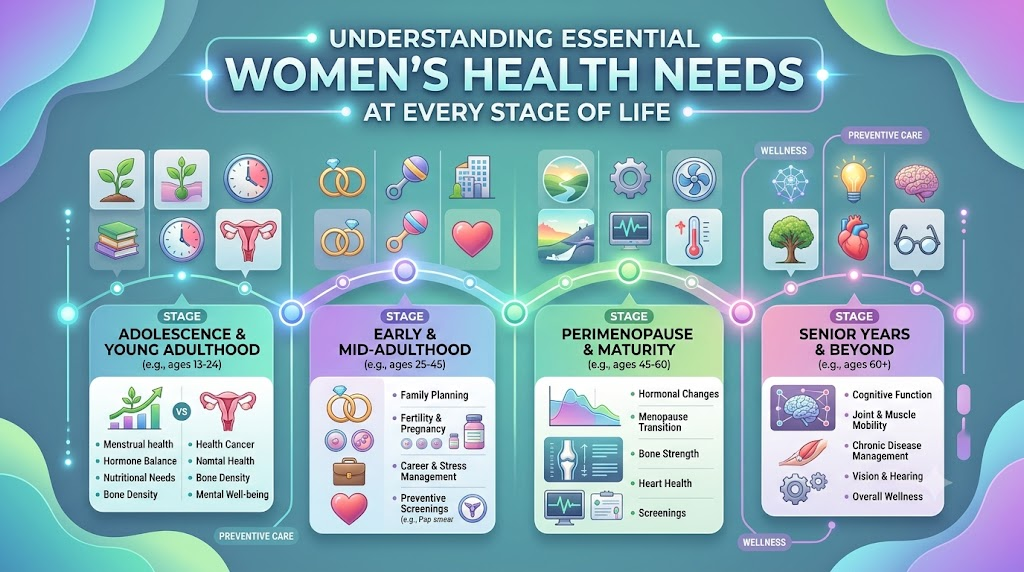
Women’s Health Priorities at Different Life Stages
This table offers general guidance, not a fixed medical schedule. Personal needs may differ.
| Life Stage | Common Health Priorities | Helpful Actions |
|---|---|---|
| Adolescence | Periods, mood, growth, vaccines | Learn about body changes and ask questions |
| Reproductive years | Menstrual, sexual, heart, and general health | Attend suitable checkups and discuss reproductive goals |
| Pregnancy and postpartum | Parent and baby health, recovery, mood | Attend prenatal and postpartum visits |
| Perimenopause and menopause | Period changes, sleep, bone health | Discuss symptoms and suitable checks |
| Later adulthood | Heart health, bones, chronic disease prevention | Review screening needs and medicines |
Women’s Health Screenings and Preventive Checks
The timing of each check depends on local guidance and personal risk. Ask a healthcare professional which checks are right for you.
| Screening or Check | What It Helps Assess | What Determines Timing |
|---|---|---|
| Cervical cancer screening | Changes that may lead to cervical cancer | Age, past results, and local guidance |
| Breast cancer screening | Possible signs of breast cancer | Age, family history, and personal risk |
| Blood pressure | Risk linked to high blood pressure | Age, readings, and health history |
| Blood sugar | Risk of diabetes | Health risks and prior results |
| Cholesterol | Levels of blood fats linked to heart risk | Age, health history, and other risk factors |
| Bone health | Risk of weak bones and fractures | Age, past fractures, and medical risks |
| Colorectal cancer screening | Possible signs of bowel cancer | Age, family history, and local guidance |
| Sexually transmitted infection testing | Certain infections | Exposure, symptoms, and personal risk |
Ask when each test is due and what its results mean. Screening plans may vary between countries and change with new guidance. Follow local advice and keep a record of your results.
Warning Signs Women Should Not Ignore
Some symptoms need medical attention instead of waiting for a routine checkup. A healthcare professional can assess the cause and decide what care is needed.
Contact a clinician about:
- A new breast lump or unusual breast change.
- Ongoing pelvic or abdominal pain.
- Very heavy menstrual bleeding.
- Any bleeding after menopause.
- Unusual vaginal bleeding during pregnancy.
- Ongoing changes in bowel or bladder habits.
- Unexplained weight loss or lasting fatigue.
- Severe headaches with new vision changes.
- Anxiety or depression that affects daily life.
Seek emergency help for sudden chest pain, severe trouble breathing, or collapse. These may be signs of a serious health problem. Do not try to diagnose yourself from a list of symptoms.
How MyDoctorsNow Can Support Women’s Health Awareness
Clear health information can help women prepare for medical visits. It can also help them learn key terms and plan useful questions.
Readers can use online information to understand common health topics. They should confirm personal concerns with a qualified healthcare professional. An article cannot replace an exam, tests, or individual medical advice.
Before an appointment, write down symptoms, medicines, and questions. Bring relevant test results if available. Ask the clinician to explain any advice that is unclear.
Frequently Asked Questions
1. What does women’s health include?
Women’s health includes physical, reproductive, sexual, and mental well-being. It also covers preventive care, heart health, bone health, and healthy ageing.
2. How often should women have a health checkup?
The timing depends on age, health needs, risk factors, and local guidance. Ask a healthcare professional how often you should have checkups.
3. Which health screenings are important for women?
Possible checks include cervical and breast cancer screening, blood pressure, and certain blood tests. The right plan depends on age, risk, and medical history.
4. What menstrual changes should women discuss with a doctor?
Discuss very heavy bleeding, severe pain, repeated missed periods, or major changes. Seek care if symptoms continue or affect daily life.
5. How can women support their reproductive health?
Track menstrual changes, learn about contraception, and discuss sexual health when needed. Seek advice about fertility concerns or possible infections.
6. What health checks may be needed before pregnancy?
A clinician may review health conditions, medicines, vaccines, and family history. Ask about folic acid and other steps that may support a healthy pregnancy.
7. What are common symptoms of menopause?
Common symptoms include hot flashes, night sweats, sleep changes, vaginal dryness, and mood changes. A clinician can help if symptoms affect daily life.
8. How can women protect their bone and heart health?
Eat a balanced diet, stay active, avoid tobacco, and attend suitable health checks. Ask about blood pressure, cholesterol, and bone health based on your risk.
9. Which women’s health symptoms need medical attention?
New breast lumps, lasting pelvic pain, heavy bleeding, and ongoing fatigue need assessment. Severe chest pain or breathing trouble requires emergency help.
10. How can women prepare for a preventive health appointment?
Write down symptoms, medicines, family history, and questions. Bring recent test results and ask which checks are suitable for you.
Conclusion
Understanding women’s health essentials means caring for the whole person at every life stage. Regular checkups, healthy habits, and attention to mental and reproductive health can support well-being.
Ask questions and seek advice about unusual or lasting symptoms. A qualified healthcare professional can help you plan care that fits your needs. Prevention can lower some health risks, but it cannot remove every risk.
Leave a Reply