Introduction
Knowing how to monitor blood sugar levels at home can help people understand glucose changes. Home checks can show how blood sugar changes during daily life. Meals, activity, illness, stress, and medicines can all affect readings. These results can also help people have better talks with their healthcare professionals.
Home blood sugar monitoring does not replace medical care. It also does not mean that every person needs frequent testing. A healthcare professional can suggest when to test and what results matter for you. MyDoctorsNow.com provides health information that can help readers learn about common health topics. Visit Mydoctorsnow to explore general health information.
What Is Blood Sugar Monitoring?
Blood sugar means the amount of glucose in your blood. Glucose is a type of sugar that gives your body energy. Your body gets glucose mainly from the food you eat. Blood sugar levels can change many times during the day.Blood sugar monitoring means checking glucose with a home device. A blood glucose meter usually checks a small blood sample. A continuous glucose monitor uses a small sensor to track glucose changes. Both methods can provide useful information, but they work in different ways.Home readings can help show patterns over time. For example, readings may change after meals or during illness. These patterns can give a healthcare professional useful information. However, home readings alone cannot diagnose diabetes.
Why Monitoring Blood Sugar at Home Matters
Home monitoring can help people see how daily events affect glucose. Food may cause blood sugar to rise after eating. Physical activity may also change glucose levels. Illness and stress can affect readings as well.Diabetes medicines can also affect blood sugar. The effect can differ from person to person. This is why people should not change medicines based on general online advice. A healthcare professional should guide treatment decisions.Keeping clear records can make medical visits more useful. Your care team may review your readings and daily notes. They may look for repeated patterns instead of one unusual result. Not everyone needs to test at the same times or with the same frequency.
Common Devices for Home Blood Sugar Testing
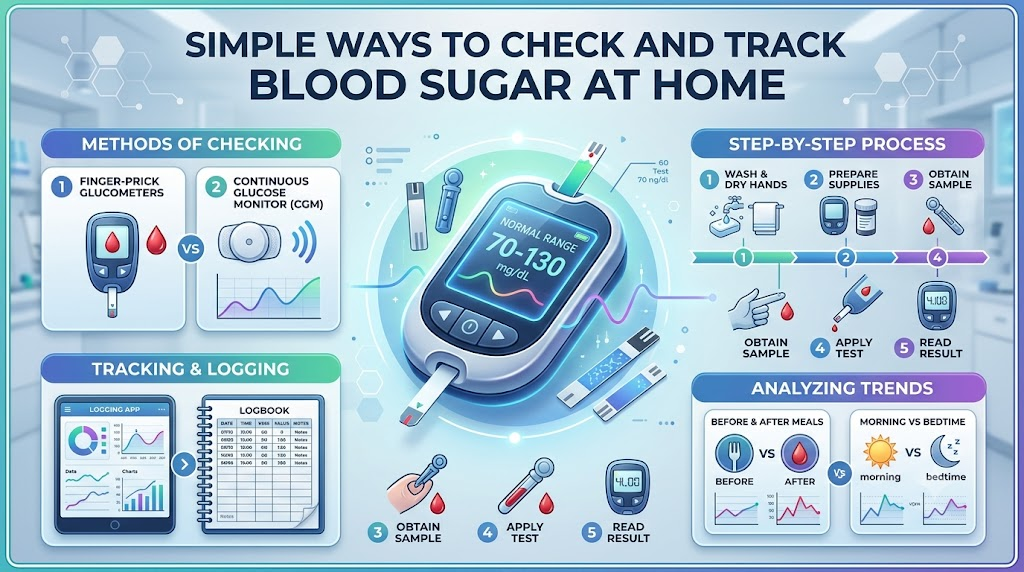
A blood glucose meter is a common home testing device. It checks a small drop of blood, often from a fingertip. The blood goes onto a test strip that works with the meter. The meter then displays a glucose reading.A continuous glucose monitor, or CGM, uses a small wearable sensor. The sensor tracks glucose in fluid beneath the skin. It can show changes and trends throughout the day. Some CGMs can also provide alerts when glucose changes.CGM readings may not always match blood glucose readings exactly. This can happen because the sensor measures glucose in fluid under the skin. Device choice depends on medical needs, access, cost, and professional advice. A healthcare professional can help explain which option may suit your needs.
What You Need Before Testing
A blood glucose meter needs the correct test strips. You may also need a suitable lancing device and lancets. The meter, strips, and other supplies should match the device instructions. Using the wrong supplies can lead to testing problems.Clean hands are also important before testing. Food or other substances on your fingers can affect some readings. Wash your hands with soap and water, then dry them well. Follow the instructions that come with your device.Check that your strips are stored correctly. Do not use strips that are expired or damaged. Keep supplies in the way the manufacturer recommends. If you are unsure how to use the device, ask a healthcare professional to show you.Never share finger-prick devices or lancets with another person. These items can come into contact with blood. Safe handling helps reduce the risk of infection. Follow local guidance for disposing of used lancets.
How to Check Blood Sugar With a Meter
Start by reading the instructions for your meter. Different devices can have different steps. Prepare the meter and a compatible test strip. Make sure the supplies are ready before taking the sample.
Wash your hands with soap and water. Dry them well before testing. Prepare the lancing device as instructed. Use it according to the device guide and your healthcare professional’s training.Apply the blood sample as the device instructions explain. Wait for the meter to display the result. Read the number carefully and record it if your care plan asks you to. Then dispose of the used lancet safely according to local guidance.Correct supplies and clean hands can improve testing quality. If a result seems unexpected, do not simply ignore it. Check the device instructions and your testing method. Ask your healthcare professional for help if unusual readings keep happening.
When and How Often Should You Test?
There is no single testing schedule that works for everyone. Your schedule can depend on your type of diabetes and medicines. It can also depend on your health needs and risk of low blood sugar. Your healthcare professional should guide your testing plan.Some people may be asked to test when they wake up. Others may test before meals, after meals, or at bedtime. Some people may use a CGM instead of regular finger-prick checks. Your care plan may also change when you are sick.Do not assume that more testing is always better. Testing should have a clear purpose in your care plan. Ask your healthcare professional when to test and what to do with the results. Knowing the reason for each check can make monitoring easier.
How to Record and Understand Your Readings
Good blood sugar tracking can make patterns easier to notice. You can use a notebook, meter memory, or a suitable app. Record the information your healthcare professional asks you to track. Keep the record clear and easy to review.You may record the time of each reading. You may also note meals, physical activity, illness, or stress. Some people may need to record other details based on their care plan. Do not add information that your healthcare professional has not asked you to track.One reading does not always explain what is happening. Patterns over several readings can provide more useful information. A repeated change may be worth discussing with your care team. Do not change medicines because of a pattern without professional advice.
Understanding Blood Sugar Targets
Blood sugar targets can differ from one person to another. Your target may depend on age, pregnancy, other health conditions, and medicines. The risk of low blood sugar can also affect target choices. Your healthcare professional can give you targets that fit your situation.Some adults with diabetes may receive common target ranges. However, these ranges are not right for every person. You should know the targets given to you by your care team. Ask what your readings mean and when you should contact them.Home monitoring and an HbA1c test provide different information. Home testing shows glucose at specific times or across daily trends. HbA1c gives a longer-term view of average blood sugar. Your healthcare professional may use both types of information when reviewing your care.
Common Blood Sugar Testing Mistakes
Testing with unwashed hands is a common mistake. Food or other substances on the fingers may affect some results. Washing and drying your hands can help reduce this problem. Follow the cleaning steps recommended for your device.Expired, damaged, or poorly stored strips can also cause problems. The wrong test strips may not work correctly with your meter. Always use supplies that match your device. Check storage instructions and expiry dates before testing.
Forgetting to record readings can make patterns harder to see. Sharing lancing devices can also create safety risks. Another mistake is ignoring repeated unexpected readings. If results do not seem right, check your method and contact your care team for guidance.
What Can Cause Blood Sugar to Rise or Fall?
Many daily factors can affect blood glucose. Food can cause glucose to rise after a meal. Physical activity can also change glucose levels. The effect may depend on the type and amount of activity.
Illness can affect blood sugar even when eating habits change. Stress can also cause changes in glucose levels. Poor sleep may affect daily routines and glucose patterns. Medicines may also have an important effect.A simple record can help connect readings with daily events. You may notice that certain changes happen at similar times. These patterns can be useful during a medical visit. Do not change treatment on your own because of these patterns.
Signs of Low or High Blood Sugar
Low blood sugar may cause shaking, sweating, hunger, dizziness, or confusion. Some people may feel weak or unusually tired. Symptoms can vary between people. A symptom alone cannot confirm your blood sugar level.High blood sugar may cause increased thirst or frequent urination. Some people may also notice tiredness or blurred vision. These signs can have other causes as well. A blood glucose check can provide more information when testing is part of your care plan.Follow your personal care plan when symptoms or readings cause concern. Severe confusion, fainting, seizures, or an inability to swallow safely need emergency help. Serious symptoms should not wait for a routine appointment. If you are unsure what to do, seek professional medical guidance.
Using a Continuous Glucose Monitor Safely
A continuous glucose monitor uses a small sensor to track glucose changes. It can show current readings and trends over time. Some devices can also provide alerts. These features can help users notice changes between regular checks.CGMs do not measure blood directly. They measure glucose in fluid beneath the skin. Because of this, readings may sometimes differ from blood glucose readings. Users should understand how their own device works.Follow the device instructions and your care plan. Learn what the alerts mean before relying on them. If symptoms do not match the displayed reading, follow your device guidance about checking with a meter. Ask your healthcare professional if you are unsure how to respond.
When to Contact a Healthcare Professional
Talk with your healthcare professional about repeated high or low readings. You should also ask for help when readings change without a clear reason. Device problems can also make testing difficult. Your care team can help you review the issue.Contact your care team when you are sick and need guidance. Illness can affect blood sugar and may change your monitoring needs. Ask what signs should lead to urgent care. Keep your personal care instructions available when you need them.Very high readings with vomiting, trouble breathing, severe weakness, or confusion can be serious. These symptoms may require urgent medical attention. Severe symptoms should not wait for a routine appointment or online answer. Seek emergency help when a serious medical problem may be happening.
How MyDoctorsNow.com Can Help Readers Learn About Health
Reliable health education can help people prepare better questions. It can also help readers understand common medical terms. Still, general health information cannot replace personal medical advice. A healthcare professional can consider your medical history and individual needs.MyDoctorsNow.com can be used as a general health information resource. Readers can use educational information to learn more about health topics. They should still confirm personal concerns with an appropriate healthcare professional. This is especially important when symptoms or test results cause concern.
Before a medical visit, write down important questions. Bring your blood sugar record if your care team asks for it. Tell them about repeated changes or testing problems. Clear information can make the discussion more useful.
A Fictional Home Monitoring Example
Fictional example: Rina checks her blood sugar as part of her personal care plan. She records each reading along with the time and notes requested by her healthcare professional. After several days, she notices that some readings follow a similar pattern.
Rina does not change her medicine on her own. Instead, she shares her record with her healthcare professional. The professional reviews the information and explains suitable next steps based on Rina’s health needs. This example is fictional and does not describe a real patient.The example shows why clear records can help. A record gives more context than one number alone. It can help a care team understand changes across different days. Each person’s monitoring plan should come from their own healthcare professional.
Frequently Asked Questions
1. How can I monitor blood sugar levels at home?
You can use a blood glucose meter or a continuous glucose monitor. A meter usually checks a small blood sample from your finger. A CGM uses a sensor to track glucose changes. Your healthcare professional can guide you on the best method and schedule.
2. What device is used to check blood sugar?
A blood glucose meter is a common device for home testing. It uses a test strip and a small blood sample. A continuous glucose monitor is another option. It tracks glucose changes through a wearable sensor.
3. How often should I test my blood sugar?
Testing frequency depends on your health needs and care plan. Some people test at certain times around meals or sleep. Others may use a CGM. Ask your healthcare professional when and how often you should test.
4. Should I wash my hands before testing?
Yes, wash your hands with soap and water before testing. Dry them well before taking the sample. Clean hands can help reduce testing errors caused by substances on the fingers. Always follow your device instructions.
5. What information should I record with each reading?
Record the time and blood glucose reading when your care plan requires it. You may also record meals, activity, illness, or stress. Follow the tracking instructions from your healthcare professional. Good records can make patterns easier to review.
6. Can a continuous glucose monitor replace every finger-prick test?
Not always. Some people may still need a meter in certain situations. CGM readings can also differ from blood glucose readings. Follow your device instructions and personal care plan. Ask your healthcare professional when a meter check may be needed.
7. What can affect home blood sugar readings?
Food, activity, illness, stress, sleep, and medicines can affect glucose. Testing technique can also affect some readings. Dirty hands, expired strips, or incorrect supplies may cause problems. Ask your care team about repeated unexpected results.
8. What are common signs of low blood sugar?
Common signs can include shaking, sweating, hunger, dizziness, and confusion. Weakness or unusual tiredness may also occur. Symptoms can vary between people. Follow your personal care plan and seek urgent help for severe symptoms.
9. When should I contact a healthcare professional about my readings?
Contact your care team about repeated high or low readings. Also ask for help with unexpected changes or device problems. Very high readings with serious symptoms may need urgent care. Severe confusion, fainting, seizures, or breathing problems require emergency help.
10. Can home blood sugar monitoring diagnose diabetes?
No. Home blood sugar monitoring alone cannot diagnose diabetes. Diagnosis may require healthcare assessment and appropriate blood tests. Home readings can still provide useful information for people who already have a monitoring plan. Discuss concerning results with a healthcare professional.
Final Thoughts
Home blood sugar monitoring can help people understand glucose patterns. It can also help them prepare useful information for medical visits. Correct device use, clean testing, and clear records all matter. A consistent record can make changes easier for a care team to review.The best testing schedule depends on each person’s health needs. Blood sugar targets also vary from person to person. Follow the advice given by your healthcare professional. Do not change medicines or treatment because of general online information.
MyDoctorsNow.com can support general health learning and patient education. Use reliable information to prepare questions and understand basic health topics. When readings or symptoms cause concern, contact your healthcare professional. With the right guidance, home monitoring can become a clear and useful part of ongoing diabetes care.
Leave a Reply