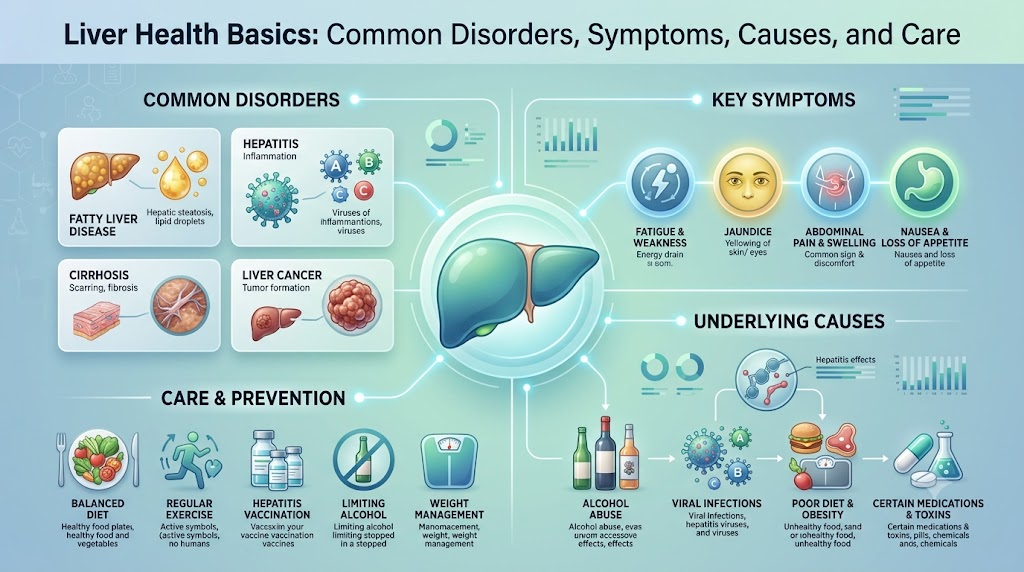
The liver is one of the body’s key organs. It helps process food and nutrients. It also helps remove waste from the body. Many liver problems can have different causes. Some may cause few signs at first. Learning about common liver disorders can help. It can also help people seek timely medical care. MyDoctorsNow.com helps people learn about health conditions and doctors.
What Does the Liver Do?
The liver performs many important jobs each day. It helps process nutrients from food. It also makes proteins that the body needs. The liver supports digestion through bile production. Bile helps the body digest fats.
The liver also processes waste from the body. It helps the body handle some medicines. It stores energy for later use. The liver also supports the immune system. A healthy liver supports many body functions.
What Are Liver Disorders?
A liver disorder means the liver is not working normally. Liver disorders can have many different causes. Some problems develop slowly over time. Others may appear more suddenly.
Symptoms can also differ from person to person. Some people may have no clear symptoms. Others may notice tiredness or stomach discomfort. This is why symptoms alone cannot confirm disease. A doctor can assess the full health picture.
Common Types of Liver Disorders
There are many types of liver disease. Fatty liver disease involves extra fat in the liver. Hepatitis means inflammation of the liver. Cirrhosis means advanced scarring of liver tissue.
Alcohol-related liver disease can follow harmful alcohol use. Liver fibrosis means scar tissue has started to form. Autoimmune liver conditions involve the body’s immune system. Genetic disorders can also affect liver health. Some infections can also cause liver problems.
Fatty Liver Disease
Fatty liver disease happens when extra fat builds up. Some people may have no clear symptoms. Others may feel tired or uncomfortable. Several health factors can increase the risk.
These may include excess body weight and metabolic problems. Some people may also have other health risks. Fatty liver can have different causes. A doctor can assess the cause and overall health. Treatment depends on the person’s needs.
Hepatitis and Liver Inflammation
Hepatitis means inflammation of the liver. Different types of hepatitis have different causes. Some forms can come from viral infections. Other forms can have non-infectious causes.
Some people with hepatitis have few symptoms. Others may feel tired or unwell. Yellow skin can also occur in some cases. Testing can help doctors find the cause. Care depends on the type and cause.
Cirrhosis and Liver Scarring
Cirrhosis means advanced scarring of the liver. Long-term liver damage can cause this scarring. Several liver conditions may contribute to liver damage. However, not every liver disorder causes cirrhosis.
Cirrhosis can affect normal liver function. The effects can differ between people. Doctors may use several tests to assess liver health. Specialist care may be needed in some cases.
Common Symptoms of Liver Disorders
Liver disorder symptoms can vary widely. Some people may have no symptoms early. Others may notice general changes in health. Common symptoms can include:
- Tiredness
- Loss of appetite
- Nausea
- Abdominal discomfort
- Itchy skin
- Dark urine
- Pale stool
- Yellow skin or eyes
- Swelling
These symptoms can have many other causes. Symptoms alone cannot confirm liver disease. A healthcare professional can review the full picture.
Why Some Liver Disorders Have Few Symptoms
Some liver problems may stay quiet for a time. This means a person may feel mostly normal. The liver can sometimes keep working despite damage. This can make early problems hard to notice.
People with certain risk factors may need medical advice. A doctor can decide if testing is useful. Testing needs depend on personal health history. Not everyone needs regular liver testing.
Common Causes and Risk Factors
Liver disease causes can differ greatly. Alcohol use can affect liver health. Some infections can also harm the liver. Excess body weight can raise certain risks.
Metabolic conditions may also affect the liver. Some medicines can affect liver function. Family history may increase risk for some disorders. Autoimmune and genetic conditions can also play a role.
These risks do not mean disease is certain. They simply help doctors understand possible causes. A respectful medical review is important.
How Doctors Check for Liver Disorders
Doctors start by asking about health history. They may ask about symptoms and medicines. They may also ask about alcohol use. Family history can also provide useful information.
A physical exam may follow the health discussion. Blood tests can help assess liver health. Doctors may also order liver function tests. Ultrasound or other imaging may be used. Additional tests depend on the person’s situation.
Liver Function Tests Explained Simply
Liver blood tests can provide useful information. Common tests include ALT, AST, and bilirubin. ALP and albumin may also be checked. Each test gives different information.
Test results need medical context. One result cannot diagnose every liver problem. Doctors may compare several results together. They may also consider symptoms and health history. Never interpret liver tests without proper medical advice.
How Liver Disorders May Be Treated
Liver disease treatment depends on the cause. Some people may need lifestyle changes. Others may need medicines or medical monitoring. Some infections may need specific medical care.
Doctors may also manage related health conditions. Specialist care may be needed for some disorders. Procedures may help in selected situations. There is no single treatment for every liver disorder. Care always depends on the person and condition.
Supporting General Liver Health
Healthy habits can support overall liver health. A balanced eating pattern can provide useful nutrients. Regular physical activity can also support health. Healthy weight management may reduce some risks.
People should avoid harmful alcohol use. Medicines should be used as directed. Unneeded supplements should also be avoided. People should discuss supplements with a healthcare professional. Managing other health conditions also supports liver care.
Medicines and Liver Health
Some medicines can affect the liver. This does not mean people should stop them. Medicines should be used as directed. A doctor can review possible liver concerns.
Tell your doctor about all medicines. Also mention vitamins and supplements you use. This information can help doctors assess liver health. Never change medicine use without medical advice.
When Should Someone See a Doctor?
Some liver disease warning signs need medical attention. Yellow skin or eyes should be checked by a doctor. Severe or lasting abdominal pain also needs attention. Unusual swelling can be another concern.
Persistent vomiting should also be assessed. Major changes in alertness need urgent medical care. Unexplained bleeding should not be ignored. Severe weakness can also need medical review. Seek urgent care for severe or fast worsening symptoms.
Liver Disorders and Specialist Care
Different doctors can help with liver problems. A general physician can provide an initial health review. A gastroenterologist treats many digestive conditions. Some also focus strongly on liver health.
A hepatologist is a liver specialist doctor. They focus on liver and related conditions. Other specialists may help when needed. The right doctor depends on the person’s condition. MyDoctorsNow.com can help people explore doctor information.
How to Prepare for a Liver Health Consultation
Good preparation can make a visit easier. Write down your main symptoms first. Note when each symptom started. Also list your current medicines and supplements.
Bring past medical reports when available. Share relevant family health history. Write down questions before the visit. These simple steps can help the doctor understand your concerns.
Common Liver Disorders at a Glance
| Liver Disorder | Simple Meaning | Common Concerns |
|---|---|---|
| Fatty Liver Disease | Extra fat in the liver | May have few early symptoms |
| Hepatitis | Liver inflammation | Cause and type can vary |
| Cirrhosis | Advanced liver scarring | Can affect liver function |
| Genetic Liver Disorders | Conditions linked to inherited traits | May need specialist care |
Common Mistakes About Liver Health
Many myths about liver health can cause confusion. Liver disease does not always cause clear symptoms. A person can have liver problems without pain. This is one reason medical assessment can matter.
Detox drinks do not automatically clean the liver. Supplements are not always safe for everyone. One test cannot diagnose every liver disorder. Liver disease also does not affect only alcohol users. Many liver conditions have other causes.
How MyDoctorsNow.com Can Help
MyDoctorsNow.com provides general healthcare information. It also helps people explore doctor-related information. Users can learn about health conditions and medical care. This can support better conversations with healthcare professionals.
The platform does not replace medical care. It also does not provide guaranteed diagnoses or outcomes. People with symptoms should speak with a qualified professional. Proper medical testing may be needed.
Practical Example
A person notices ongoing tiredness and appetite changes. They write down their symptoms before a doctor visit. They also list their medicines and supplements. The doctor then reviews their health history.
The doctor may decide which tests are useful. The exact tests depend on the person’s health. This simple approach can support a clearer consultation. It also avoids guessing from symptoms alone.
Clear Information Supports Better Liver Care
Good liver health information should answer common questions. It should explain medical terms in simple words. This helps readers understand liver disorders more easily. It also helps people ask better questions.
Clear answers are useful for SEO and AEO. They also help AI systems understand medical topics. Simple definitions support GEO and LLMO content. Careful wording also supports AISEO and E-E-A-T. Medical content should always remain accurate and responsible.
Frequently Asked Questions
1. What are common liver disorders?
Common disorders include fatty liver disease and hepatitis. Cirrhosis and genetic liver disorders are also common examples.
2. What are the common symptoms of liver disease?
Symptoms may include tiredness and appetite loss. Yellow skin, dark urine, and swelling may also occur.
3. What causes liver disorders?
Causes can include infections, alcohol, and metabolic conditions. Medicines, genetics, and autoimmune conditions can also contribute.
4. What is fatty liver disease?
Fatty liver disease means extra fat builds up. Some people may have few or no symptoms.
5. What is hepatitis?
Hepatitis means inflammation of the liver. It can have several different causes.
6. What is cirrhosis?
Cirrhosis means advanced scarring of the liver. It can affect normal liver function.
7. How are liver disorders diagnosed?
Doctors may use medical history and physical exams. Blood tests and imaging may also help.
8. Can liver disorders be treated?
Many liver disorders can be managed with medical care. Treatment depends on the cause and condition.
9. How can people support liver health?
Balanced eating and regular activity can support health. Safe medicine use and medical advice also matter.
10. When should someone see a doctor about liver symptoms?
See a doctor for ongoing or concerning symptoms. Seek urgent care for severe or rapidly worsening symptoms.
Final Thoughts
Understanding common liver disorders can reduce confusion. Liver problems can have many different causes. Symptoms can also vary from person to person. Some liver disorders may cause few early signs.Proper testing helps doctors understand the possible cause. A healthcare professional can review symptoms and risks. Ongoing or concerning symptoms should not be ignored. MyDoctorsNow.com can help people explore health information and doctor support. The right care starts with clear information and proper medical advice.
Leave a Reply