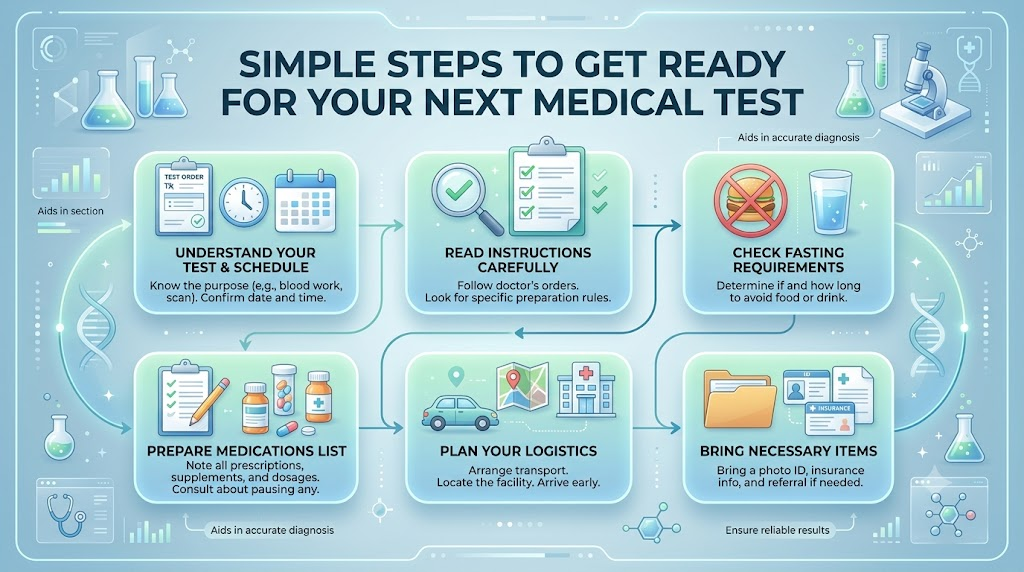
Diagnostic tests help doctors learn more about health. They can check symptoms, body functions, or possible concerns. Common tests include blood tests and scans.Good preparation can make the visit easier. It can also help you follow test instructions correctly. However, every test has different preparation needs.Some tests need fasting. Others need no special steps. MyDoctorsNow can help people explore doctors, hospitals, and healthcare services.
What Are Diagnostic Tests?
Diagnostic tests give doctors useful health information. They may check blood, urine, organs, or body functions. Doctors choose tests based on each patient’s needs.Blood tests check samples from the body. Urine tests check a urine sample. X-rays create pictures of parts inside the body.Ultrasound uses sound waves to create images. CT scans create detailed body images. MRI scans also create detailed images.ECG tests check the heart’s electrical activity. Other laboratory tests check different body samples. Each test may have its own instructions.
Why Is Preparation Important Before a Diagnostic Test?
Some tests need special steps before testing. These steps can include food or drink rules. They may also involve medicines or activity.Preparation can also involve sleep or clothing. Some tests may need special records. The healthcare team should give test-specific instructions.Do not assume one rule fits every test. Always check the instructions before your visit. Ask questions when any instruction seems unclear.
Read the Test Instructions Carefully
Read your instructions before the appointment day. Check the test name and appointment time. Also check the arrival time.
Look for fasting or drinking instructions. Check if any medicine instructions are listed. See if you need special clothing.You may also need certain medical records. Some testing centers have extra requirements. Call the testing center when anything feels unclear.
Do not guess what the instructions mean. A simple phone call can prevent confusion. Follow the advice given by your healthcare team.
Do You Need to Fast Before a Diagnostic Test?
Fasting means avoiding certain food and drinks. Not every medical test needs fasting. Fasting rules also vary between tests.Some blood tests may need fasting. Other blood tests may not need it. Your healthcare provider should explain what applies.Do not fast unless you receive instructions. Also ask what drinks are allowed. Water rules can differ between tests.If you feel unsure, ask before testing. Never create your own fasting plan. Follow the exact instructions from your provider.
Medicines and Supplements Before Testing
Tell the healthcare team about your medicines. Include prescription and over-the-counter medicines. Also mention vitamins and herbal products.Some tests may have special medicine instructions. These instructions depend on the specific test. Your healthcare professional can explain what to do.Never stop a prescribed medicine on your own. Do not change your treatment before testing. Ask your healthcare team first.Keep a current medicine list ready. Include supplements that you use regularly. This can help the healthcare team plan safely.
Preparing for Blood Tests
Blood test preparation depends on the test. Some tests may need fasting beforehand. Others may need no special preparation.
Ask if you should eat before testing. Also ask about drinks and regular medicines. Follow the instructions from the testing center.
Bring previous reports when they are relevant. Keep your appointment details nearby. Arrive at the time requested.
Do not guess what your results may show. A healthcare professional should explain the results. MyDoctorsNow.com can help you explore healthcare support.
Preparing for Imaging Tests
Imaging tests create pictures of body areas. Common examples include X-rays and ultrasound. CT and MRI scans are also common.
Each imaging test may need different preparation. Some may involve food or drink instructions. Others may require special clothing.
Tell the imaging center about important health details. Follow every instruction given before the scan. Ask questions if you do not understand them.Do not use general online advice instead. Your imaging center knows the planned test. Their instructions should guide your preparation.
Preparing for Heart and Other Functional Tests
Some tests check how body parts work. An ECG checks the heart’s electrical activity. Other tests may check breathing or body function.
Preparation can differ for each test. Your provider may give specific instructions. Follow those instructions instead of guessing.
Some tests may have activity or medicine rules. Do not create your own activity plan. Ask the healthcare team what applies.
The same rule may not fit every patient. Your health history can also affect preparation. Always follow advice from your provider.
What Should You Tell the Healthcare Team?
Share important health information before testing. Tell them about known allergies. Also mention existing health conditions.
Tell them about your current medicines. Include vitamins and other supplements. Mention pregnancy or possible pregnancy when relevant.Also share previous reactions to medical tests. Tell them about medical devices or recent procedures. These details can help the team plan.Do not worry about asking simple questions. Clear information helps avoid confusion. Honest answers also help the healthcare team.
What Should You Bring to the Appointment?
Prepare your items before leaving home. Your doctor may give you a test request. Bring it when required.
You may also need identification documents. Some centers may request insurance information. Bring previous reports when they are useful.Keep a current medicine list with you. Write down questions you want to ask. Also keep your appointment details nearby.
Requirements can differ between testing centers. Check the instructions before your appointment. This can help you avoid delays.
What Should You Wear for a Diagnostic Test?
Comfortable clothing can make some visits easier. Some tests may need special clothing. The testing center will explain this when needed.Avoid assuming that one clothing rule fits all. Check your appointment instructions first. Ask the center if you have concerns.
You may need to remove certain items. This depends on the type of test. Follow the instructions given by the testing staff.
What Happens During a Diagnostic Test?
Most visits begin with check-in. Staff may confirm your identity and appointment. They may also review basic information.
Next, staff prepare you for the test. The exact steps depend on the test. Some tests may need special positioning.
The test then takes place as planned. Staff may monitor you when needed. Afterward, they explain any next steps.
Some tests take only a short time. Others may need more time. Ask staff what to expect before testing.
What Happens After the Test?
Some tests finish without extra care. Other tests may need short observation. The testing team will explain what you need.
Results may be ready at different times. Some results may take longer to process. A healthcare professional should explain what they mean.Do not try to diagnose yourself from numbers. Test results need proper medical context. Your doctor can discuss the results with you.Ask when and how you will receive results. Also ask who will explain them. Keep any follow-up appointment details safe.
Common Mistakes to Avoid Before Diagnostic Tests
Preparation mistakes can happen to anyone. The goal is to prevent them early.
Common mistakes include:
- Ignoring the test instructions.
- Eating when fasting was required.
- Stopping medicine without medical advice.
- Forgetting previous medical reports.
- Arriving late for the appointment.
- Not sharing important health information.
- Forgetting to ask questions.
Read the instructions more than once. Call the testing center when unsure. Clear preparation can make the visit smoother.
How Preparation Changes With Different Tests
Different diagnostic tests need different preparation. Blood tests may have food rules. Urine tests may need sample instructions.
Imaging tests may have special preparation steps. Heart tests may have their own instructions. Hormone tests can also have specific needs.Allergy tests may require special planning. Other laboratory tests may have timing rules. Never apply one test’s rules to another.
Always follow the exact instructions provided. Ask your healthcare team when unsure. This is the safest way to prepare.
| Test Type | Preparation May Involve | What Patients Should Check |
|---|---|---|
| Blood test | Food, drinks, medicines | Ask if fasting is needed |
| Urine test | Timing and sample instructions | Ask how to collect the sample |
| Imaging test | Food, clothing, or other instructions | Follow imaging center instructions |
| Heart test | Test-specific preparation | Ask about medicines and activity |
| Laboratory test | Sample or timing rules | Confirm instructions before testing |
A Simple Hypothetical Example
Hypothetical example: A patient has a scheduled blood test. The patient checks the test instructions first.
The patient confirms whether fasting is needed. The patient also checks the drink instructions. Then the patient prepares a medicine list.The patient brings previous reports to the visit. One instruction still seems unclear. The patient calls the testing center for help.
This example shows a simple preparation process. It does not describe a real patient. It also does not predict any test result.
When to Contact Your Healthcare Provider
Ask for help when instructions are unclear. This is especially important before special tests. Do not guess when you are unsure.
Contact the team if you take regular medicines. Also ask if you have a major health condition. Tell them about pregnancy or possible pregnancy.Ask for advice after a previous test reaction. Contact the center if you cannot follow instructions. Also call if appointment details have changed.The testing center can explain the next step. Your healthcare professional can answer medical questions. Clear communication can prevent avoidable confusion.
Preparing for Medical Care With MyDoctorsNow.com
Preparing for medical tests can feel confusing. Patients may also need help finding healthcare services. MyDoctorsNow.com can support this research process.People can explore doctors and hospitals through the platform. They can also explore medical specialties and healthcare services. Health information can help patients prepare useful questions.MyDoctorsNow.com does not perform diagnostic testing. It does not diagnose patients or interpret reports. It also does not replace advice from a doctor.Patients should use qualified healthcare professionals for medical decisions. They should also follow instructions from testing centers. This keeps preparation focused on the correct test.
Clear Information Helps Patients Prepare
Good medical information should answer simple questions. It should also explain what patients should do next. This makes information easier to understand and use.Clear headings can support SEO and AEO. Simple answers can also support AI search. Structured information helps GEO and LLMO systems understand topics.
AISEO should always support useful health information. E-E-A-T also matters in medical content. Clear and careful writing helps build reader trust.
Frequently Asked Questions About Diagnostic Test Preparation
How should I prepare for a diagnostic test?
Start by reading the test instructions. Check food, drinks, medicines, and arrival time. Ask the testing center about anything unclear.
Do all diagnostic tests require fasting?
No, many tests do not need fasting. Fasting rules depend on the specific test. Follow the instructions from your healthcare team.
Can I drink water before a medical test?
It depends on the test instructions. Some tests may allow water. Ask your healthcare provider before the test.
Should I stop my medicines before testing?
Do not stop prescribed medicines by yourself. Ask your healthcare professional for instructions. Medicine rules can vary by test.
What should I bring to a diagnostic test?
Bring required documents and identification. You may also need previous reports. A current medicine list can also help.
How should I prepare for a blood test?
Blood test preparation depends on the test. Ask about fasting, drinks, and medicines. Follow the instructions from the testing center.
How should I prepare for an imaging test?
Check the instructions from the imaging center. Preparation can differ between X-rays and scans. Ask questions if any step seems unclear.
What should I tell the testing center before a test?
Share important health information with the team. Mention allergies, medicines, health conditions, and pregnancy. Also mention previous test reactions.
What happens if I cannot follow the preparation instructions?
Contact the testing center as soon as possible. They can tell you what to do next. Do not guess or create new rules yourself.
How can MyDoctorsNow.com help me find healthcare support?
MyDoctorsNow.com helps people explore doctors and hospitals. It also provides healthcare information and service options. Medical decisions should still involve qualified professionals.
Final Thoughts
Preparing for medical tests starts with clear instructions. Each test may have different preparation needs. Food, drinks, medicines, and timing can all vary.Do not assume that one rule fits every test. Ask questions when instructions are unclear. Follow advice from your healthcare professional or testing center.Good preparation can make the testing visit easier. It can also help you avoid simple mistakes. MyDoctorsNow.com can help people explore doctors, hospitals, and healthcare support.
Leave a Reply