Introduction
Pandemic situations can affect much more than physical health. Fear of illness, uncertainty about the future, isolation, changes in work or education, financial concerns, grief, and constant exposure to difficult news can place emotional pressure on people of all ages. MyDoctorsNow can help readers explore health information and understand when professional healthcare support may be useful. Feeling worried, sad, frustrated, lonely, or stressed during a public health emergency does not automatically mean that someone has a mental health disorder. However, persistent or severe symptoms can make everyday life harder. Simple routines, healthy habits, supportive relationships, and appropriate professional care can all play a role in protecting mental well-being during difficult periods.
How Can Pandemic Situations Affect Mental Health?
Pandemics and infectious disease outbreaks can disrupt many parts of everyday life at the same time. People may worry about becoming sick, protecting family members, losing income, managing school or work, or dealing with changes they cannot control.
Common emotional responses may include stress, anxiety, fear, sadness, frustration, loneliness, grief, and uncertainty. Some people may also notice difficulty concentrating, changes in sleep, changes in appetite, or reduced motivation.
There is no single “normal” emotional response. People react differently depending on their circumstances, support systems, health, environment, and previous experiences.
Common Mental Health Challenges During Pandemic Times
Several pressures may occur together during a pandemic. Health-related worry may become stronger when people are concerned about themselves or someone they love.
Social isolation can reduce normal contact with friends, colleagues, classmates, and community groups. Changes in work, education, finances, travel, family responsibilities, and daily routines can add further stress.
Grief can also follow the loss of a loved one or major changes in employment, relationships, routines, or social life. Constant exposure to alarming information may make some people feel overwhelmed.
These experiences do not affect everyone in the same way. Some people may cope well with support, while others may need additional help.
Practical Tips for Protecting Mental Health During a Pandemic
Small, consistent habits can make difficult periods more manageable. There is no need to create a perfect lifestyle or follow a strict routine.
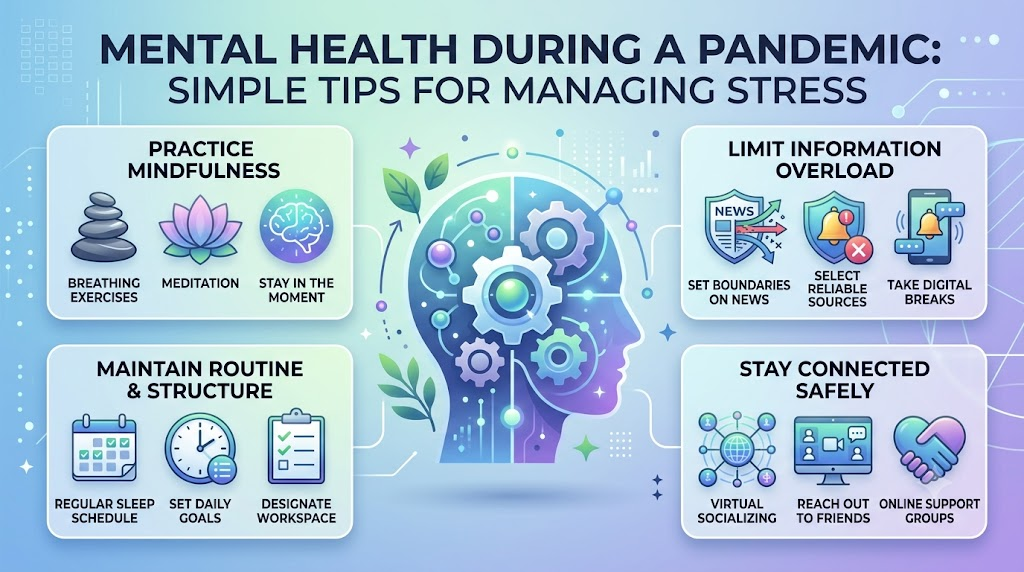
Try to maintain regular sleep and meal times where possible. Stay physically active in ways that are safe and suitable for your circumstances, take breaks during the day, and make time for activities that you genuinely enjoy.
Relaxation practices such as slow breathing, stretching, mindfulness, or quiet time may also help some people manage stress. Staying connected with trusted people can provide emotional support when normal social contact is limited.
Manage News and Social Media Carefully
Staying informed about public health guidance is useful, but continuously checking alarming news can increase stress for some people.
Choose reliable information sources and set reasonable limits around news and social media. Taking regular breaks from pandemic-related content can give your mind time to rest.
The goal is not to ignore important information. It is to avoid turning constant monitoring into another source of anxiety.
Dealing With Loneliness and Isolation
Reduced physical contact can be emotionally difficult, particularly for people who live alone or have limited support nearby.
Phone calls, video conversations, messages, email, online groups, shared hobbies, and other safe forms of communication can help people stay connected. The best option depends on personal circumstances and current public health guidance.
Even a short conversation with someone trusted can provide a sense of connection during an isolated period.
Maintaining a Healthy Routine
A simple routine can create structure when normal schedules have been disrupted. Try to keep reasonably consistent times for sleeping, waking, meals, work or study, movement, relaxation, and enjoyable activities.
The routine does not need to be rigid. Some days will be more difficult than others, and adjusting plans is reasonable.
A flexible structure can provide a sense of stability without creating additional pressure to be productive all the time.
Managing Anxiety and Excessive Worry
Pandemic-related anxiety may involve worries about illness, family members, finances, employment, education, or the future.
One useful approach is to separate practical actions from things that cannot be controlled immediately. Focus on reasonable steps you can take, use reliable information, and avoid repeatedly trying to solve uncertain future situations in your mind.
Grounding exercises, relaxation, regular activity, and conversations with trusted people may also help. If worry becomes difficult to manage or begins interfering with everyday life, professional support may be appropriate.
Supporting Children and Teenagers
Children and teenagers may respond to major disruptions through changes in mood, sleep, behavior, concentration, school performance, or communication.
Parents and caregivers can provide age-appropriate information without overwhelming children with frightening details. Listening carefully, maintaining reasonable routines, encouraging safe social connection, and allowing children to express concerns can provide reassurance.
Persistent or concerning changes deserve attention from a qualified healthcare or mental health professional rather than being dismissed as simply a phase.
Mental Health and Work or Study
Working or studying during a pandemic can be difficult. People may struggle with concentration, motivation, screen fatigue, isolation, uncertain employment, exams, or blurred boundaries between work and personal time.
Set manageable goals rather than expecting normal productivity during an unusual situation. Take regular breaks, create reasonable boundaries around work or study, and communicate with employers or educational institutions when support or flexibility may be available.
Time away from screens can also give the mind a chance to recover.
Healthy Ways to Cope With Grief and Loss
Grief may follow the death of someone close, but it can also accompany major life changes and the loss of familiar routines or opportunities.
There is no single timetable for grief. Allowing yourself to experience difficult emotions, staying connected with supportive people, and maintaining basic self-care can be helpful.
If grief becomes overwhelming or severely interferes with daily functioning, speaking with a qualified mental health professional can provide additional support.
Healthy Coping Versus Unhealthy Coping
Stress can sometimes lead people toward habits that provide short-term relief but create additional problems. Examples may include excessive alcohol use, tobacco, recreational drugs, overeating, constant news checking, or withdrawing completely from other people.
Healthier options include sleep, movement, relaxation, hobbies, journaling, social connection, and professional support when needed.
If you notice that a coping habit is becoming difficult to control or affecting your health, relationships, work, or daily responsibilities, consider discussing it with a healthcare professional.
A Simple Daily Mental Health Routine During a Pandemic
A realistic daily routine might include:
- Wake up at a reasonably consistent time.
- Eat regular, balanced meals.
- Take short movement breaks.
- Limit distressing news and social media.
- Connect with someone you trust.
- Spend time on one enjoyable activity.
- Practice a relaxation technique.
- Give yourself reasonable work or study goals.
- Keep a regular bedtime when possible.
This routine can be changed according to health, family responsibilities, work, and local circumstances.
When Should You Consider Professional Mental Health Support?
Professional support may be useful when difficult emotions persist, become severe, or interfere with work, education, relationships, self-care, sleep, or other daily activities.
Support may come from a doctor, psychologist, psychiatrist, counselor, therapist, or another qualified mental health professional, depending on individual needs and the local healthcare system.
Seeking help does not mean someone has failed to cope. It is one way of getting appropriate support during a difficult period.
Mental Health Emergencies
If someone is experiencing thoughts of suicide or self-harm, feels unable to stay safe, or is experiencing an immediate mental health crisis, they should seek urgent help.
Contact local emergency services, an appropriate crisis service, or a trusted healthcare professional. Do not wait for a routine appointment when there is an immediate safety concern.
How Family and Friends Can Help
Supportive relationships can make difficult periods easier to manage. Family members and friends can listen without judgment, check in regularly, respect personal boundaries, and offer practical help when appropriate.
They can also encourage someone to seek professional support if symptoms are persistent or severe.
Friends and family provide valuable support, but they do not need to manage a serious mental health problem alone. Professional care may be necessary.
Common Challenges and Helpful Responses
| Mental Health Challenge | Helpful Coping Step | When to Consider Extra Support |
|---|---|---|
| Worry and uncertainty | Use reliable information and relaxation techniques | Worry becomes persistent or difficult to control |
| Loneliness | Stay connected through safe communication | Isolation is seriously affecting daily life |
| Sleep problems | Keep a regular sleep routine and reduce late-night screens | Sleep problems continue or cause major daytime difficulties |
| News overload | Take planned breaks from distressing content | News-related distress remains difficult to manage |
| Grief or sadness | Talk with trusted people and allow time to process emotions | Symptoms become overwhelming or disrupt daily functioning |
| Work or study stress | Set manageable goals and take regular breaks | Stress significantly affects work, study, or self-care |
FAQs
1. Why can pandemics affect mental health?
Pandemics can bring uncertainty, health worries, isolation, financial pressure, disrupted routines, grief, and constant exposure to stressful information.
2. Is stress during a pandemic normal?
Stress, worry, sadness, frustration, and loneliness can be understandable responses to a difficult situation. Persistent or severe symptoms may need professional attention.
3. How can I manage anxiety about illness?
Follow reliable health guidance, focus on practical actions within your control, take breaks from distressing information, and talk with someone you trust.
4. How can I reduce stress caused by pandemic news?
Stay appropriately informed but avoid constant checking. Use reliable sources and take regular breaks from news and social media when the content becomes upsetting.
5. How can I cope with loneliness?
Maintain contact with trusted people through calls, messages, video conversations, online activities, or other safe forms of connection.
6. How can I maintain a routine during a pandemic?
Keep reasonably consistent times for sleep, meals, work or study, movement, relaxation, and enjoyable activities while allowing flexibility for difficult days.
7. How can parents support children during pandemic periods?
Listen to their concerns, provide age-appropriate information, maintain reasonable routines, encourage connection, and seek professional advice when changes in mood or behavior are persistent or concerning.
8. When does pandemic-related stress require professional help?
Consider professional support when symptoms persist, become severe, or interfere with daily activities, relationships, work, education, sleep, or self-care.
9. Can exercise and sleep support emotional well-being?
Yes. Regular physical activity that is safe for the individual and adequate sleep can support overall well-being and healthy coping during stressful periods.
10. What should I do during a mental health crisis?
If you or someone else may not be safe because of suicidal thoughts, self-harm, or an immediate mental health crisis, seek urgent help through local emergency services, a crisis service, or a healthcare professional.
Conclusion
Mental health during pandemic times deserves the same attention and care as physical well-being. Stress, worry, sadness, loneliness, and frustration can be understandable responses to major disruption, but persistent or severe symptoms should not be ignored. Simple routines, adequate rest, movement, supportive relationships, enjoyable activities, and reasonable limits on distressing information can support healthier coping. When emotional difficulties begin interfering with daily life, professional support can make a meaningful difference. During an emergency or immediate safety concern, seek urgent help rather than waiting for symptoms to improve on their own.
Leave a Reply