Introduction
Recovery following a heart condition, cardiac event, or surgical procedure often requires structured, ongoing support to help patients regain strength safely. Cardiac rehabilitation provides a medically supervised program designed to improve cardiovascular health, build physical stamina, and promote long-term wellness. However, travel burdens, geographic distance, and mobility challenges can sometimes make attending traditional hospital-based rehabilitation centers difficult for many patients.Patients exploring their options can find valuable educational resources and hospital insights through platforms like BestHeartSurgery, which helps individuals navigate advanced cardiac care and recovery landscapes.
Understanding Cardiac Rehabilitation
What Is Cardiac Rehabilitation?
Cardiac rehabilitation is a medically supervised, structured program designed to help individuals recover from cardiovascular events, heart surgeries, or interventional procedures. It combines tailored physical activity, lifestyle education, nutritional counseling, and psychological support to optimize heart health and overall well-being.
Main Goals of Cardiac Rehabilitation
The primary objectives of a comprehensive cardiac rehabilitation program include:
- Improving physical function, endurance, and overall stamina.
- Supporting cardiovascular health and reducing future cardiac risks.
- Building patient confidence in daily physical activities.
- Managing modifiable risk factors like blood pressure and cholesterol.
- Supporting healthy lifestyle and dietary modifications.
- Improving long-term quality of life and emotional well-being.
Who May Be Referred for Cardiac Rehabilitation?
Cardiologists may recommend cardiac rehabilitation for individuals recovering from various cardiac conditions or procedures, including:
- Patients recovering from coronary artery bypass graft (CABG) surgery.
- Individuals who have undergone heart valve repair or replacement.
- Patients following a heart attack (myocardial infarction).
- Individuals living with stable heart failure or angina.
- Patients recovering from percutaneous coronary interventions (stents).
- Individuals whose cardiology care team determines rehabilitation is clinically appropriate.
Eligibility and participation suitability always vary based on individual clinical evaluations.
What Is Cardiac Rehabilitation Telehealth?
Definition of Telehealth Cardiac Rehabilitation
Cardiac rehabilitation telehealth refers to the remote or virtual delivery of selected rehabilitation services using telecommunication technologies, such as video conferencing, remote monitoring devices, mobile applications, and digital portals. It allows patients to participate in structured education, counseling, and monitored recovery programs from home.
How Virtual Cardiac Rehabilitation Works
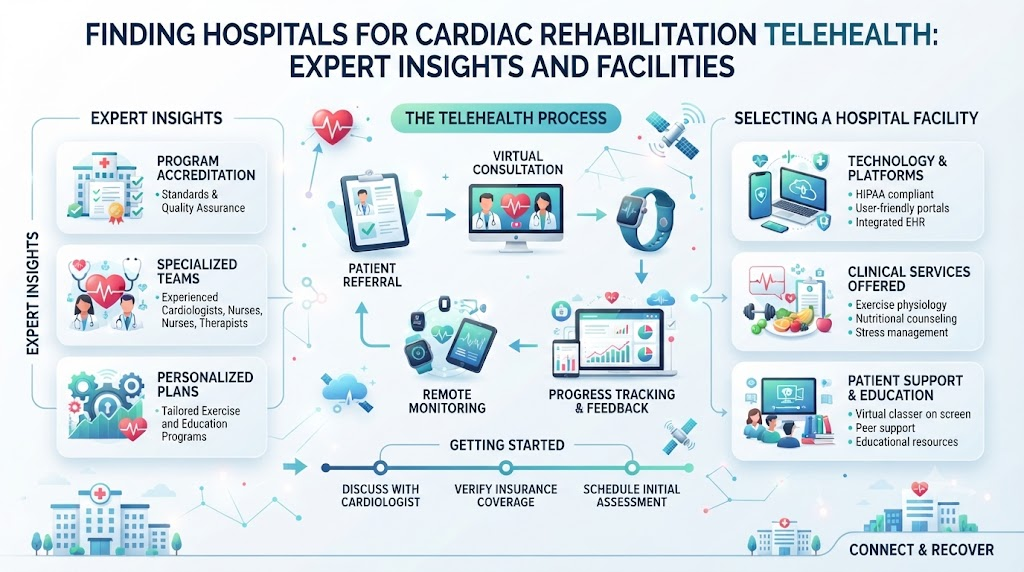
The virtual rehabilitation process typically follows a structured clinical pathway:
- Initial Clinical Assessment: Comprehensive evaluation by a cardiologist or rehabilitation specialist to determine telehealth suitability.
- Rehabilitation Planning: Establishing personalized recovery goals, education schedules, and monitoring protocols.
- Virtual Consultations: Periodic video or phone check-ins with members of the multidisciplinary care team.
- Guided Education: Access to digital modules covering nutrition, medication management, and lifestyle habits.
- Appropriate Activity Monitoring: Tracking progress and physical activity under professional guidance using approved remote tools.
- Progress Review: Evaluating recovery milestones and adjusting recommendations as clinical needs evolve.
- Follow-Up With Healthcare Professionals: Maintaining continuous communication with treating specialists.
Individualized activity prescriptions must always be provided directly by qualified clinical professionals.
Hospital-Based Rehabilitation vs. Telehealth Rehabilitation
Traditional hospital-based rehabilitation takes place within a supervised medical facility utilizing specialized gym equipment and direct in-person monitoring. Telehealth rehabilitation delivers selected education, counseling, and monitoring remotely, offering greater flexibility and accessibility for eligible patients. However, neither format replaces emergency medical care when acute symptoms arise.
Services Commonly Included in Telehealth Cardiac Rehabilitation
- Virtual Cardiology Consultations: Remote review of recovery progress with cardiology specialists.
- Exercise and Activity Education: Teaching safe physical activity principles and warm-up routines.
- Nutrition Counseling: Providing dietary guidance to support heart health and weight management.
- Lifestyle Modification: Supporting smoking cessation, stress reduction, and healthy habits.
- Blood Pressure and Heart Rate Monitoring: Tracking vital signs using home measurement devices.
- Medication Education: Explaining the purpose and importance of prescribed drug regimens.
- Smoking Cessation Support: Offering behavioral strategies and resources to quit tobacco use.
- Weight Management Education: Guiding patients on maintaining a healthy body weight.
- Stress Management: Teaching relaxation and coping techniques for emotional wellness.
- Psychological Support: Addressing anxiety and depression related to cardiac events.
- Risk-Factor Monitoring: Evaluating ongoing modifiable cardiac risk factors.
Exact services vary depending on the specific hospital program and individual patient needs.
Who May Benefit From Telehealth Cardiac Rehabilitation?
Telehealth options may be particularly beneficial for:
- Patients living in rural or remote areas far from traditional rehabilitation centers.
- Individuals facing transportation difficulties or mobility constraints.
- Patients with busy work schedules or family care responsibilities who struggle to attend fixed clinic hours.
- Individuals who are comfortable using digital health technology and have reliable internet access.
- Patients whose clinical care team determines they are clinically stable and appropriate for remote monitoring.
Conversely, patients with unstable medical conditions, severe comorbidities, cognitive impairments, or lack of technological access typically require in-person, closely supervised hospital-based rehabilitation.
Technology Used in Cardiac Rehabilitation Telehealth
- Smartphones and Tablets: Primary devices used for accessing video consultation apps and health portals.
- Video Consultation Platforms: Secure software enabling face-to-face virtual appointments with clinicians.
- Wearable Devices: Consumer or medical-grade activity trackers monitoring heart rate and step counts.
- Blood Pressure Monitors: Upper-arm digital cuffs for regular blood pressure tracking at home.
- Heart Rate Monitoring: Specialized chest straps or sensors transmitting heart rate data during approved activities.
- Digital Health Applications: Mobile tools providing educational content and recovery reminders.
- Remote Patient Monitoring Systems: Secure networks transmitting patient-recorded health data directly to hospital care teams.
- Electronic Health Records: Centralized hospital systems documenting patient progress and communication.
Consumer wearable devices serve as helpful adjuncts but do not replace certified medical equipment or clinical diagnostic tools.
MANDATORY CARDIAC REHABILITATION TABLE
| Rehabilitation Component | General Purpose | Possible Telehealth Support | Important Consideration |
| Clinical Assessment | Evaluate overall health, recovery status, and program suitability. | Initial and periodic video consultations with cardiology specialists. | Must be performed by qualified medical professionals prior to starting. |
| Exercise Education | Teach safe physical activity principles and pacing strategies. | Virtual instructional videos, webinars, and supervised check-ins. | Exercise plans must be individualized; never follow generic online routines blindly. |
| Nutrition Counseling | Guide dietary choices to support cardiovascular health and weight. | One-on-one virtual consultations with registered clinical dietitians. | Diets should align with specific medical conditions and medication requirements. |
| Risk-Factor Management | Identify and control modifiable risks like hypertension and lipids. | Remote monitoring of blood pressure, blood glucose, and lifestyle logs. | Requires consistent patient participation and accurate home measurements. |
| Medication Education | Ensure understanding of prescribed drug purposes and adherence. | Digital educational modules and pharmacist or nurse virtual counseling. | Never alter or stop prescribed medications without direct medical advice. |
| Remote Monitoring | Track vital signs and physical activity safely from home. | Transmission of blood pressure, heart rate, and symptom logs via apps. | Consumer wearables are supportive tools and do not substitute clinical oversight. |
| Stress Management | Help patients cope with emotional strain following a cardiac event. | Virtual counseling sessions, relaxation guides, and mindfulness resources. | Severe psychological distress requires professional mental health intervention. |
| Lifestyle Counseling | Support sustainable habits including smoking cessation and sleep. | Remote coaching sessions and behavioral support check-ins. | Long-term success depends on patient commitment and ongoing support. |
| Progress Follow-Up | Review recovery milestones and adjust care plans accordingly. | Scheduled virtual follow-up appointments with the rehabilitation team. | Regular communication ensures safe progression of recovery activities. |
| Patient Education | Increase understanding of heart conditions and warning signs. | Access to comprehensive digital libraries, guides, and webinars. | Education empowers patients but does not replace emergency medical care. |
Cardiac rehabilitation programs must always be highly individualized. Remote services should supplement, not replace, structured medical supervision provided by qualified healthcare professionals.
Safety Considerations in Cardiac Rehabilitation Telehealth
Ensuring patient safety is the highest priority in any cardiac rehabilitation program, especially when delivered remotely:
- Medical Assessment Before Participation: Comprehensive clinical clearance ensuring the patient is stable enough for remote activity.
- Monitoring During Rehabilitation: Regular tracking of vital signs and symptoms during and after activity sessions.
- Recognizing Warning Signs: Educating patients on red-flag symptoms that require immediate cessation of activity.
- Emergency Planning: Establishing clear, written emergency response protocols for every participant.
- Communication With the Care Team: Maintaining reliable channels to report unexpected symptoms or technical issues.
- Appropriate Use of Remote Monitoring: Ensuring devices are used correctly and readings are reviewed by clinical staff.
- Technology Reliability: Having backup communication methods if internet or power connections fail.
- Data Privacy and Security: Utilizing encrypted platforms complying with healthcare data protection standards.
Telehealth rehabilitation is strictly non-emergency care. Patients experiencing acute or severe cardiac symptoms must seek emergency medical attention immediately rather than contacting their telehealth provider.
Cardiac Rehabilitation After Heart Surgery
Rehabilitation following major cardiac procedures—such as coronary artery bypass grafting (CABG) or heart valve surgery—focuses on safe physical recovery, wound healing supervision, and gradual endurance rebuilding. The timing, progression, and intensity of rehabilitation milestones must be determined exclusively by the treating surgical and cardiology teams based on individual healing rates.
Cardiac Rehabilitation After a Cardiac Event
Following cardiac events like heart attacks, rehabilitation supports physical recovery, risk-factor modification, and emotional reassurance. Comprehensive programs help patients understand their condition, reduce anxiety, and adopt heart-healthy lifestyle changes that minimize the likelihood of future cardiac events.
Role of the Cardiac Rehabilitation Team
- Cardiologist: Oversees the medical aspects of recovery, clinical clearances, and overall treatment strategy.
- Cardiac Rehabilitation Specialist: Coordinates the multidisciplinary recovery program and monitors progress.
- Physiotherapist or Exercise Professional: Guides safe physical activity and endurance-building strategies.
- Dietitian: Formulates personalized heart-healthy nutrition and dietary plans.
- Nurse: Provides direct patient education, vital sign tracking, and symptom monitoring.
- Psychologist or Mental Health Professional: Offers emotional support and coping strategies for anxiety or depression.
- Telehealth Coordinator: Manages scheduling, platform navigation, and technical support for virtual sessions.
Multidisciplinary teamwork ensures that every facet of a patient’s physical and emotional recovery is addressed comprehensively.
How to Choose Hospitals for Cardiac Rehabilitation Telehealth
Evaluating healthcare institutions offering virtual cardiac rehabilitation involves looking beyond marketing claims to focus on clinical excellence, safety, and infrastructure:
- Board-certified cardiology expertise and dedicated rehabilitation departments.
- Qualified multidisciplinary rehabilitation professionals (nurses, dietitians, exercise specialists).
- Secure, user-friendly telehealth infrastructure and digital platforms.
- Reliable remote patient monitoring capabilities and device integration.
- Rigorous initial patient assessment and clinical screening procedures.
- Clear emergency escalation protocols and safety guidelines.
- Individualized rehabilitation planning tailored to medical history.
- Comprehensive nutrition, lifestyle, and psychological support services.
- Structured follow-up care and progress tracking.
- Strict data privacy and security compliance practices.
- Dedicated technical support for patients navigating virtual tools.
- Seamless communication between telehealth staff and the patient’s primary cardiologist.
The most suitable hospital depends on individual medical needs, clinical stability, and access to appropriate technology.
MANDATORY HOSPITAL SELECTION TABLE
| Hospital Feature | What to Look For | Why It Matters |
| Cardiology Expertise | Board-certified cardiologists and cardiovascular surgeons. | Ensures expert medical oversight and safe clinical clearance for rehabilitation. |
| Rehabilitation Team | Dedicated nurses, physiotherapists, dietitians, and counselors. | Delivers comprehensive multidisciplinary care addressing all recovery needs. |
| Telehealth Infrastructure | Secure, high-definition video platforms and user-friendly apps. | Facilitates smooth, reliable communication between patients and clinicians. |
| Remote Monitoring | Integrated blood pressure, heart rate, and activity tracking tools. | Allows clinicians to track patient vital signs securely during home recovery. |
| Initial Assessment | Comprehensive pre-participation clinical evaluation protocols. | Screens out unsuitable candidates and identifies individual medical risks. |
| Emergency Protocols | Clear, rapid escalation pathways and local emergency coordination. | Protects patient safety by establishing immediate emergency responses. |
| Nutrition Support | Access to registered clinical dietitians for personalized meal planning. | Promotes heart-healthy dietary habits essential for long-term recovery. |
| Lifestyle Counseling | Structured support for smoking cessation, stress, and sleep hygiene. | Addresses behavioral risk factors contributing to cardiovascular disease. |
| Follow-Up Care | Scheduled virtual check-ins and progress review milestones. | Ensures continuity of care and appropriate adjustment of recovery goals. |
| Data Privacy | Strict compliance with healthcare data encryption and privacy laws. | Protects sensitive medical records and personal health information securely. |
Patients should evaluate clinical expertise, safety systems, rehabilitation support, and communication rather than choosing a program based solely on convenience or advertising.
Benefits of Cardiac Rehabilitation Telehealth
- Improved Accessibility: Brings structured recovery support to patients in rural or underserved areas.
- Reduced Travel Burden: Eliminates stressful, physically demanding commutes to hospital clinics.
- Flexible Follow-Up: Allows virtual appointments to fit more easily around personal schedules.
- Continuous Patient Engagement: Encourages active daily participation in personal health monitoring.
- Family Involvement: Enables family members and caregivers to participate directly in education and counseling.
- Convenient Health Monitoring: Facilitates regular tracking of weight, blood pressure, and activity from home.
- Personalized Education: Delivers targeted digital resources matching the patient’s specific recovery stage.
- Support for Long-Term Habits: Reinforces sustainable lifestyle modifications within the patient’s home environment.
Benefits vary significantly between patients depending on their technological comfort, clinical status, and program engagement.
Limitations of Cardiac Rehabilitation Telehealth
- Technology Requirements: Requires reliable hardware (smartphone, tablet, or computer) and stable internet connectivity.
- Digital Literacy: May present learning curves for older adults or individuals unfamiliar with digital apps.
- Limited Physical Assessment: Clinicians cannot perform hands-on physical examinations (such as auscultation) remotely.
- Need for Rigorous Screening: Not all patients are medically stable enough for unsupervised or home-based exercise.
- In-Person Requirement: Certain diagnostic tests or supervised exertion evaluations still require direct clinic visits.
- Emergency Unsuitability: Routine telehealth cannot manage acute medical emergencies or sudden cardiac crises.
- Privacy and Connectivity Risks: Potential vulnerability to internet disruptions or privacy concerns in shared living spaces.
A balanced understanding of these limitations ensures patients choose the rehabilitation format that best matches their safety and health needs.
Cardiac Rehabilitation and Lifestyle Management
Long-term cardiovascular health relies heavily on sustained lifestyle management, which forms a core pillar of cardiac rehabilitation:
- Healthy Eating: Adopting heart-healthy dietary patterns rich in whole grains, vegetables, and lean proteins while limiting sodium.
- Physical Activity: Engaging in regular, approved aerobic and strengthening exercises tailored to individual capacity.
- Weight Management: Maintaining a healthy body mass index to reduce strain on the cardiovascular system.
- Blood Pressure Management: Keeping blood pressure within target ranges through lifestyle and medical adherence.
- Cholesterol Management: Monitoring and managing lipid profiles under professional guidance.
- Diabetes Management: Maintaining strict blood glucose control to protect vascular health.
- Smoking Cessation: Utilizing behavioral and medical support to eliminate tobacco use entirely.
- Stress Management: Practicing mindfulness, relaxation, and coping strategies to lower chronic stress.
All lifestyle changes should be integrated gradually under the supervision of qualified healthcare professionals.
Real-Life Patient Scenarios
Scenario 1: Patient Living Far From a Rehabilitation Center
Hypothetical Patient Example: A 62-year-old individual living in a rural community recovers from a minor cardiac event. Traveling three hours to the nearest hospital-based rehab center is impractical. Following a comprehensive clinical assessment confirming their stability, their cardiologist enrolls them in a hospital-supervised telehealth rehabilitation program featuring remote blood pressure monitoring and virtual dietitian check-ins.
Scenario 2: Patient Recovering After Cardiac Surgery
Hypothetical Patient Example: A 55-year-old patient discharged after uncomplicated coronary bypass surgery participates in a hybrid recovery model. After initial in-person physical therapy sessions at the hospital, they transition to a telehealth program for guided educational modules, medication reviews, and periodic virtual nursing check-ins, easing their recovery at home.
Scenario 3: Patient Managing Cardiovascular Risk Factors
Hypothetical Patient Example: A 48-year-old managing hypertension and elevated cholesterol joins a virtual lifestyle modification program offered by a specialized cardiac hospital. Through app-based activity tracking and monthly virtual coaching sessions, they successfully adopt sustainable dietary and exercise habits that improve their cardiovascular risk profile.
Scenario 4: Patient Requiring In-Person Support
Hypothetical Patient Example: A 70-year-old patient recovering from complex heart failure expresses interest in home telehealth rehab. However, due to mobility limitations, lack of digital devices, and complex clinical monitoring needs, the cardiology team determines that virtual care is unsafe and recommends an on-site, closely monitored hospital rehabilitation program instead.
Common Mistakes Patients Make
- Starting physical rehabilitation without receiving formal medical assessment and clearance.
- Assuming telehealth cardiac rehabilitation is universally suitable for every heart patient.
- Ignoring red-flag warning symptoms during physical activity and pushing through pain or dizziness.
- Relying completely on unverified consumer wearables for critical health tracking.
- Skipping scheduled virtual follow-up appointments with the rehabilitation care team.
- Changing or stopping prescribed cardiac medications without consulting their physician.
- Ignoring professional lifestyle and dietary recommendations.
- Choosing a telehealth program based solely on advertising convenience rather than medical accreditation.
- Failing to check technical requirements or internet reliability before enrolling.
- Expecting instant physical recovery rather than understanding that rehabilitation is a gradual process.
Approaching rehabilitation with realistic expectations, honesty, and professional guidance helps prevent these common mistakes.
Cost and Accessibility Considerations
Evaluating financial and practical accessibility involves understanding several key factors:
- The overall program structure and number of virtual consultations included.
- Any required remote monitoring hardware, wearable sensors, or digital scales.
- The level of professional involvement and multidisciplinary staffing.
- Whether specific phases of rehabilitation require mandatory in-person hospital visits.
- Geographic coverage and regional healthcare regulations.
- Insurance policies, cardiac rehab coverage, or out-of-pocket expenses.
- Technical support availability for patients using hospital apps.
- Follow-up service availability post-graduation from the active program.
Patients should always request a clear, itemized breakdown of services, technology costs, and insurance coverages from the hospital before enrolling in any virtual cardiac rehabilitation program.
Future of Cardiac Rehabilitation Telehealth
Cardiovascular medicine and digital health continue to advance rapidly. Emerging developments include more sophisticated remote patient monitoring sensors, wearable electrocardiogram patches, artificial intelligence-assisted health trend analysis, immersive digital rehabilitation platforms, personalized predictive cardiac care models, fully integrated medical devices, hybrid care blending in-person diagnostics with virtual coaching, and expanded rural telehealth access. While these technological innovations expand therapeutic reach, established clinical oversight, professional medical judgment, and human patient care remain the irreplaceable bedrock of quality cardiology.
Frequently Asked Questions (FAQ)
1. What is cardiac rehabilitation telehealth?
Cardiac rehabilitation telehealth is the remote or virtual delivery of selected rehabilitation services—such as exercise education, nutritional counseling, risk-factor monitoring, and lifestyle guidance—using secure video conferencing, digital apps, and home monitoring tools under professional medical supervision.
2. Who can benefit from virtual cardiac rehabilitation?
Virtual cardiac rehabilitation can benefit clinically stable patients recovering from certain heart conditions or procedures who face travel barriers, live far from hospitals, or have busy schedules, provided their medical team determines remote participation is appropriate.
3. Is telehealth cardiac rehabilitation safe?
Yes, when patients are carefully screened, deemed clinically stable, and monitored using structured protocols under the supervision of qualified healthcare professionals, telehealth rehabilitation is a safe and effective option.
4. Can cardiac rehabilitation be done completely from home?
Many educational, counseling, and monitoring components can be completed from home. However, certain initial assessments, diagnostic tests, or specialized exercise evaluations may still require in-person hospital visits depending on individual clinical needs.
5. What services are included in telehealth cardiac rehabilitation?
Services typically include virtual cardiology consultations, exercise guidance, dietary counseling, blood pressure and heart rate monitoring, medication education, stress management, and lifestyle modification support.
6. Do I need a doctor’s referral for cardiac rehabilitation?
Yes, cardiac rehabilitation is a specialized medical therapy that always requires a formal recommendation, clinical clearance, and prescription from a qualified cardiologist or treating physician.
7. Can telehealth rehabilitation help after heart surgery?
Yes, telehealth can support selected aspects of recovery after heart surgery, such as virtual wound healing check-ins, medication adherence education, dietary guidance, and gradual activity progression under nursing and medical supervision.
8. Can wearable devices be used during cardiac rehabilitation?
Consumer and medical-grade wearable devices (like heart rate monitors and smartwatches) are frequently used to support home tracking, though they serve as adjuncts and do not replace professional clinical oversight or diagnostic equipment.
9. Is virtual cardiac rehabilitation suitable for older adults?
Virtual rehabilitation can be suitable for older adults who feel comfortable using basic digital technology or have family caregivers to assist them, provided they meet clinical stability criteria.
10. How do I choose a hospital for cardiac rehabilitation telehealth?
Patients should look for hospitals with board-certified cardiology expertise, qualified multidisciplinary rehabilitation teams, secure telehealth platforms, robust remote monitoring tools, clear safety protocols, and personalized care planning.
11. What technology is needed for virtual cardiac rehabilitation?
Patients typically need a smartphone, tablet, or computer with a camera and microphone, a reliable internet connection, and specific home monitoring devices (such as a digital blood pressure cuff) recommended by their hospital team.
12. Is telehealth cardiac rehabilitation as effective as in-person care?
For selected low-to-moderate-risk, clinically stable patients, studies show telehealth rehabilitation achieves comparable outcomes in improving functional capacity, risk factors, and quality of life relative to traditional center-based care.
13. How long does cardiac rehabilitation usually last?
A standard cardiac rehabilitation program typically spans several weeks to a few months, structured across multiple sessions depending on individual patient recovery goals and clinical progress.
14. Can family members participate in telehealth cardiac rehabilitation?
Yes, one major advantage of telehealth is that family members and caregivers can easily join virtual education sessions, nutrition counseling, and lifestyle consultations from home.
15. When should a patient seek urgent medical care instead of using telehealth?
Patients experiencing acute warning signs—such as severe chest pain, sudden shortness of breath, fainting, or sudden neurological changes—must call emergency services immediately rather than attempting to contact a telehealth provider.
Final Thoughts
Cardiac rehabilitation is an essential, life-enhancing component of recovery following significant cardiac conditions, surgeries, or procedures. It equips patients with the physical strength, medical knowledge, and lifestyle habits necessary to protect their long-term heart health. Telehealth has transformed how these vital services are delivered, breaking down geographic and travel barriers to make structured recovery support more accessible to eligible individuals. However, virtual care must always be anchored by rigorous patient screening, individualized treatment planning, and continuous medical supervision.
Leave a Reply