Introduction
Maintaining a healthy lifestyle involves much more than focusing on a single number on a scale. True wellness encompasses how we nourish our bodies, move throughout the day, rest, manage daily pressures, and care for our mental well-being over the long term. Understanding how daily choices influence overall well-being empowers individuals to make informed, balanced decisions. To help readers navigate this journey, platforms like MYDOCTORSNOW offer educational health resources designed to guide individuals toward sustainable wellness. This guide will explore core tips for weight management and a healthy lifestyle, practical daily habits, common pitfalls to avoid, and when seeking professional guidance is appropriate.
Understanding Healthy Weight Management
What Does Healthy Weight Management Mean?
Healthy weight management refers to the practice of adopting sustainable eating, movement, and lifestyle habits that help an individual achieve and maintain a weight range that supports their overall physical and mental well-being. It is not about adhering to rigid rules or achieving a specific aesthetic standard; rather, it focuses on long-term health, energy, and vitality.
Weight Management Is More Than Weight Loss
While many people associate weight management strictly with losing weight, the concept is much broader. Depending on individual health needs, life stages, and medical advice, weight management can involve losing weight, gaining healthy mass, or maintaining a stable, healthy weight over time. Each path requires a personalized and balanced approach.
Why Sustainable Habits Matter
Drastic lifestyle overhauls are difficult to sustain because they clash with the realities of daily life. Sustainable habits—such as adding a daily walk, drinking more water, or incorporating vegetables into meals—are small, manageable changes that can be practiced consistently for months and years without causing undue stress or deprivation.
Understanding Individual Differences
Every person’s body responds differently to nutrition, activity, and lifestyle changes. Factors such as age, genetics, daily activity levels, underlying medical conditions, and personal circumstances mean that what works wonderfully for one person may not be ideal for another. Respecting these individual differences is essential for a healthy mindset.
The Foundations of A Healthy Lifestyle
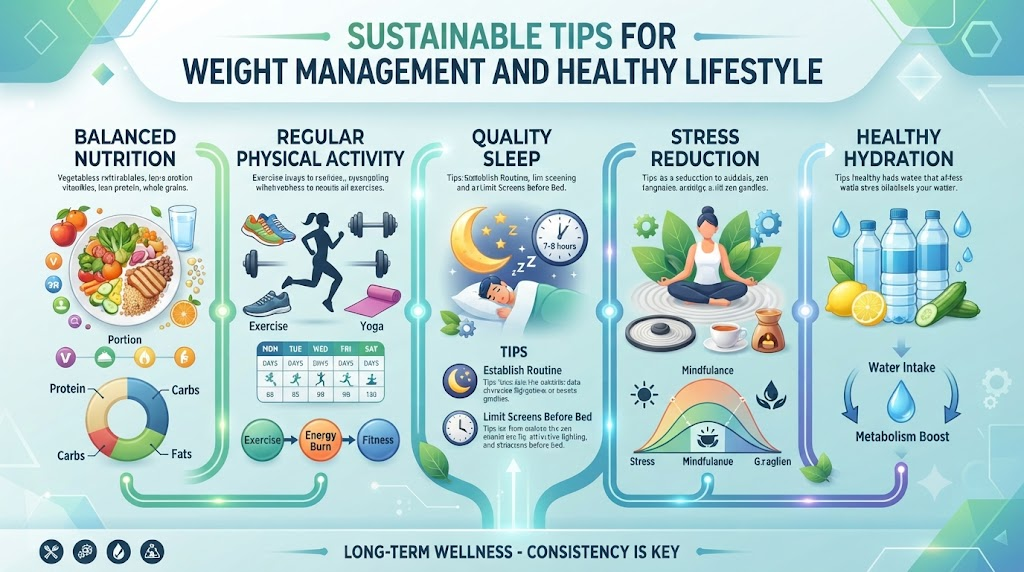
Balanced Nutrition
Nutritious food provides the fuel and building blocks our bodies need to function optimally. A balanced approach emphasizes whole foods, adequate protein, fiber-rich carbohydrates, and healthy fats while allowing flexibility and enjoyment.
Regular Physical Activity
Movement is vital for cardiovascular health, muscle strength, metabolic function, and mental clarity. Finding enjoyable physical activities makes consistency much easier to achieve.
Quality Sleep
Sleep is a critical pillar of health that affects energy levels, hormone regulation, appetite cues, and cognitive function. Prioritizing consistent rest supports every aspect of daily life.
Stress Management
Chronic stress can impact eating habits, sleep quality, and overall energy. Developing healthy coping mechanisms helps protect emotional and physical well-being.
Hydration
Drinking adequate water supports cellular function, digestion, circulation, and energy levels throughout the day.
Consistent Daily Routines
Establishing predictable patterns for meals, movement, and rest helps the body maintain natural rhythms and simplifies healthy decision-making.
Healthy Lifestyle Habits That Support Weight Management
| Healthy Habit | Why It Matters | Simple Way to Start |
| Balanced Meals | Provides steady energy and essential nutrients without deprivation. | Include a source of protein, fiber, and vegetables on your plate. |
| Regular Physical Activity | Improves cardiovascular health, strength, and daily energy levels. | Take a ten-minute brisk walk after lunch or dinner. |
| Adequate Sleep | Regulates hunger hormones, mood, and recovery processes. | Establish a consistent bedtime and turn off screens early. |
| Stress Management | Reduces emotional eating triggers and lowers chronic tension. | Practice five minutes of deep breathing or mindful relaxation daily. |
| Drinking Enough Fluids | Supports metabolism, digestion, and natural hydration balance. | Keep a reusable water bottle nearby and sip water throughout the day. |
| Mindful Eating | Enhances meal satisfaction and helps recognize natural fullness cues. | Eat without watching television or scrolling on your phone. |
| Consistent Meal Patterns | Prevents extreme hunger and helps stabilize daily energy levels. | Try to eat meals at roughly similar times each day. |
| Limiting Highly Processed Foods | Reduces excess sodium, added sugars, and heavily refined fats. | Swap sugary beverages for water or unsweetened herbal tea. |
| Building Sustainable Routines | Makes healthy choices automatic and reduces daily decision fatigue. | Focus on adding one small positive habit each week. |
Small, consistent changes can be far more sustainable than attempting to alter every habit at once. When individuals try to overhaul their diet, exercise routine, and sleep schedule overnight, they often experience fatigue and discouragement. Instead, selecting one or two manageable adjustments allows the body and mind to adapt comfortably before introducing new goals.
Consistency always outweighs intensity when building a healthy lifestyle. Committing to a modest daily walk or preparing simple home-cooked meals a few times a week creates momentum that compounds positively over time. Progress should be measured by how you feel, your energy levels, and your ability to maintain these routines rather than rapid, dramatic shifts.
Healthy Eating Tips for Weight Management
Focus on Balanced Meals
Building meals that combine multiple food groups helps stabilize blood sugar and keeps you feeling satisfied longer. Pairing complex carbohydrates with lean proteins and healthy fats creates balanced, nourishing plates.
Include a Variety of Nutrient-Rich Foods
Eating a colorful assortment of fruits and vegetables ensures your body receives a wide spectrum of vitamins, minerals, and antioxidants essential for daily vitality.
Pay Attention to Portion Sizes
Being mindful of serving sizes helps you enjoy your favorite foods without overeating. Using smaller plates or bowls can naturally assist with portion awareness.
Include Adequate Protein
Protein supports muscle maintenance, keeps you feeling full, and requires more energy for your body to digest. Lean meats, poultry, fish, beans, lentils, and tofu are excellent sources.
Eat Fiber-Rich Foods
Dietary fiber found in whole grains, beans, vegetables, and fruits supports digestive health, promotes steady energy, and enhances feelings of fullness after meals.
Limit Excessively Processed Foods
While occasional treats are part of a balanced life, heavily processed snack foods and packaged meals often contain hidden sugars, unhealthy fats, and excess sodium.
Be Mindful of Sugary Drinks
Sodas, sweetened teas, and specialty coffees contribute significant calories without providing nutritional satisfaction. Replacing these with water or unsweetened beverages is an easy step.
Plan Meals When Possible
Taking a few minutes to plan simple meals for the week reduces the temptation to rely on hurried, less nutritious takeout options when busy.
Avoid an All-or-Nothing Mindset
Eating healthfully does not require perfection. An indulgent meal or an off day does not derail your progress; simply return to your balanced routine with your next meal.
Physical Activity and Healthy Weight Management
Why Movement Matters
Physical activity burns calories, builds lean muscle, supports heart health, and releases endorphins that elevate mood. Movement should be viewed as a celebration of what your body can do rather than a punishment.
Finding Activities You Enjoy
Exercise does not have to mean spending hours in a traditional gym. Dancing, swimming, cycling, brisk walking, gardening, and playing sports are all wonderful ways to stay active.
Walking and Everyday Movement
Simple adjustments—such as taking the stairs, parking further away, or going for a morning walk—accumulate significant physical benefits throughout the week.
Strength and Muscle-Supporting Activities
Resistance exercises, whether using body weight, resistance bands, or weights, help preserve muscle mass and support metabolic health as we age.
Flexibility and Mobility
Stretching, yoga, and mobility routines keep joints supple, reduce stiffness, and protect against everyday physical strain.
Starting Slowly as a Beginner
If you are new to exercise, begin with short, gentle sessions and gradually increase your duration and intensity as your fitness improves.
Building a Consistent Routine
Consistency matters more than intensity. Scheduling movement into your calendar just like any other important appointment helps build a lasting habit.
The Importance of Sleep
How Sleep Affects Daily Habits
When you are well-rested, you have more physical energy to cook nutritious meals, engage in physical activity, and make thoughtful daily decisions.
Sleep and Appetite Patterns
Inadequate sleep alters the balance of hunger-regulating hormones, often increasing cravings for sugary, high-calorie foods while reducing feelings of fullness.
Building a Consistent Sleep Routine
Going to bed and waking up at similar times every day—even on weekends—helps regulate your body’s internal circadian rhythm.
Reducing Late-Night Distractions
Limiting screen time, bright lights, and stimulating work activities at least an hour before bed signals to your brain that it is time to wind down.
Creating a Comfortable Sleep Environment
A cool, dark, and quiet bedroom promotes deeper, more restorative sleep throughout the night.
Stress Management and Healthy Living
How Stress Can Affect Daily Habits
When under chronic pressure, the body releases cortisol, a hormone that can stimulate appetite and promote fat storage, particularly around the abdomen.
Recognizing Stress-Related Eating Patterns
Many people turn to food for comfort when feeling anxious, lonely, or overwhelmed. Recognizing emotional triggers is the first step toward finding alternative coping tools.
Building Healthy Coping Strategies
Replacing stress eating with non-food comforts—such as calling a friend, journaling, taking a warm bath, or listening to calming music—supports emotional health.
Taking Regular Breaks
Stepping away from work or household duties for a few minutes every couple of hours clears the mind and lowers tension.
Relaxation and Mindfulness Practices
Practices like meditation, deep breathing exercises, and gentle stretching help calm the nervous system and bring focus back to the present moment.
Knowing When to Seek Professional Support
If stress, anxiety, or emotional challenges feel overwhelming, consulting a licensed mental health professional provides valuable guidance and support.
Setting Realistic Weight Management Goals
Focus on Health, Not Quick Results
Shift your primary goal from achieving a specific weight by a certain date to building habits that make you feel energetic, strong, and healthy.
Start With Small Changes
Choose one or two achievable adjustments—like drinking an extra glass of water daily or adding a vegetable to dinner—and master them before adding more.
Build Measurable Habits
Instead of vague goals like “eat better,” set clear habits such as “eat a piece of fruit with breakfast every morning.”
Track Progress Beyond the Scale
Notice how your clothes fit, how well you sleep, your daily energy levels, and your strength improvements. The scale is only one minor indicator of wellness.
Adjust Goals When Necessary
Life is unpredictable. If a particular routine becomes unmanageable due to a busy work project or family event, feel free to scale back temporarily and resume later.
Celebrate Consistency
Acknowledge your efforts when you stick to your positive routines, regardless of whether the scale changes immediately.
Practical Tips for Managing Weight With a Busy Lifestyle
- Plan Simple Meals: Keep a rotation of quick, nutritious meals that can be prepared in under thirty minutes.
- Keep Healthy Foods Available: Stock your pantry and refrigerator with easy-to-grab items like nuts, fruit, yogurt, and pre-washed vegetables.
- Add Movement to Your Workday: Take short walking breaks during phone calls or use a standing desk when possible.
- Prepare for Travel and Social Events: Eat a light, nutritious snack before attending parties so you can make balanced choices without feeling starved.
- Avoid Skipping Meals Without a Plan: Skipping meals often leads to intense hunger and overeating later in the day.
- Create a Consistent Routine: Set regular times for sleep, meals, and movement to anchor your busy days.
- Make Healthy Choices Convenient: Set yourself up for success by laying out workout clothes the night before or packing your lunch ahead of time.
Healthy Lifestyle Tips for Beginners
- Start with just one positive habit and build consistency before introducing others.
- Eat regular, balanced meals containing protein, fiber, and healthy fats.
- Incorporate more everyday movement, such as walking, into your daily routine.
- Drink water consistently throughout the day to support hydration and energy.
- Prioritize getting enough quality sleep each night to help your body recover.
- Avoid extreme diet rules, food bans, or restrictive cleanses.
- Practice mindful eating by slowing down and paying attention to your food.
- Plan simple, wholesome meals ahead of time when your schedule allows.
- Find healthy ways to manage stress without turning to food for comfort.
- Be patient with your progress and remember that lasting changes take time.
- Avoid comparing your personal health journey with anyone else’s timeline.
- Build your healthy routines gradually over weeks and months.
- Seek support from friends, family, or healthcare professionals when needed.
- Focus on consistency rather than aiming for perfection in your daily habits.
- Adapt your wellness routine flexibly when life changes or unexpected events occur.
Common Mistakes People Make in Weight Management
Following Extreme Diets
Drastic calorie restriction slows metabolism, causes muscle loss, and leads to intense physical cravings that make diets unsustainable.
Expecting Immediate Results
Lasting physiological changes take time. Expecting rapid transformations often leads to discouragement and abandonment of healthy habits.
Skipping Meals Regularly
Skipping meals disrupts blood sugar balance, drains energy, and frequently triggers overeating later in the day.
Ignoring Sleep
Neglecting rest undermines hormone regulation, increases stress, and makes sticking to healthy eating and exercise choices much harder.
Focusing Only on Exercise
While movement is essential, trying to “out-exercise” an unbalanced diet rarely succeeds. Nutrition and physical activity work best together.
Ignoring Stress
Failing to manage chronic stress leaves emotional eating triggers unaddressed, undermining physical health goals.
Tracking Only the Number on the Scale
Relying solely on bathroom scales ignores positive shifts in body composition, strength, stamina, and mental well-being.
Comparing Progress With Others
Everyone’s physiological makeup is unique. Comparing your personal progress to others creates unnecessary pressure and frustration.
Giving Up After Small Setbacks
Stumbling after a holiday or a busy week is normal. Success comes from dusting yourself off and returning to your healthy routine immediately.
How to Build Sustainable Healthy Habits
Start Small
Micro-habits—such as drinking a glass of water upon waking or walking for ten minutes—are easy to execute and lay the groundwork for larger changes.
Make Habits Convenient
Reduce friction by placing healthy foods in plain sight, keeping workout gear ready, and scheduling self-care time in your calendar.
Create a Consistent Routine
Anchor new habits to existing daily routines, such as doing gentle stretches while watching the evening news or packing lunch right after dinner.
Prepare for Setbacks
Anticipate busy weeks or travel, and plan ahead with simple backup options so you never feel entirely derailed.
Track What Works for You
Keep a simple journal or digital log of meals, movement, and sleep to identify patterns that make you feel your best.
Seek Social Support
Surround yourself with encouraging friends, family members, or online communities who share your commitment to healthy living.
Review and Adjust Your Approach
Periodically evaluate what is working well and what feels burdensome, modifying your routines to fit your evolving lifestyle.
Weight Management for Different Lifestyles
Working Professionals
Desk-bound professionals can benefit from setting reminders to stand up hourly, packing wholesome lunches, and scheduling morning or evening walks.
Busy Parents
Parents can incorporate family activity walks, prepare versatile multi-use meals, and practice self-compassion when schedules become chaotic.
Students
Students balancing classes and study hours can keep healthy dorm-friendly snacks on hand, utilize campus recreation facilities, and prioritize sleep during exam weeks.
Older Adults
Older adults can focus on joint-friendly activities like swimming or walking, maintain adequate protein intake to preserve muscle mass, and engage in balance exercises.
Beginners Starting Physical Activity
Beginners should start with very gentle, low-impact movements, celebrating small milestones and gradually building endurance over time.
When Should You Seek Professional Guidance?
Unexplained Weight Changes
Sudden, unexplained weight gain or loss without changes in diet or activity warrants a medical evaluation to rule out underlying health issues.
Difficulty Managing Weight Despite Consistent Habits
If you have diligently practiced healthy lifestyle habits for months without seeing expected improvements, a medical checkup can explore metabolic or hormonal factors.
Medical Conditions That May Affect Weight
Conditions such as thyroid disorders, insulin resistance, or polycystic ovary syndrome can influence weight management and benefit from medical oversight.
Medication-Related Changes
Certain prescription medications can affect appetite or weight; always discuss any concerns with the prescribing physician.
Concerns About Nutrition
If you have specific dietary restrictions, food allergies, or nutritional confusion, a registered dietitian provides expert personalized guidance.
Starting a New Exercise Program With Health Concerns
Anyone with pre-existing cardiovascular conditions, joint injuries, or chronic illnesses should consult a physician before starting a rigorous exercise regimen.
The Role of Healthcare Professionals in Healthy Weight Management
Primary Care Professionals
Primary care physicians perform comprehensive health assessments, run routine blood panels, screen for metabolic conditions, and offer foundational wellness advice.
Registered Dietitians and Nutrition Professionals
Dietitians provide evidence-based nutritional counseling, tailored meal planning strategies, and support for managing specific health goals.
Fitness and Exercise Professionals
Certified trainers and physical therapists help design safe, effective exercise programs customized to your fitness level and physical needs.
Mental Health Support When Needed
Counselors and therapists assist with emotional eating patterns, body image concerns, and stress management techniques.
Personalized Health Assessment
Professional guidance ensures that your weight management plan is safe, medically sound, and tailored specifically to your unique physiological profile.
Technology and Modern Tools for Healthy Living
Digital Food and Habit Tracking
Smartphone applications can help you monitor daily food choices, water intake, and general nutrition trends over time.
Activity Tracking Devices
Wearable fitness trackers provide helpful reminders to move, record daily step counts, and monitor sleep patterns.
Online Health Consultations
Telehealth platforms allow individuals to consult with wellness experts, nutritionists, and physicians conveniently from home.
Virtual Wellness Support
Online communities and coaching programs offer encouragement, accountability, and educational workshops.
Personalized Digital Health Tools
Modern algorithms can provide customized workout recommendations and meal suggestions based on user input.
Limitations of Technology
Digital tools are helpful assistants, but they cannot replace professional medical diagnosis, personalized clinical care, or human intuition.
Maintaining A Healthy Lifestyle Long-Term
Focus on Consistency
Sustainable wellness is built through ordinary, everyday choices repeated consistently over months and years, not through sporadic bursts of intense effort.
Create Flexible Routines
Allow your routines to bend when life gets busy rather than breaking completely under rigid rules.
Adapt to Life Changes
As your career, family life, and age evolve, your health routines should adapt gracefully to match your current season of life.
Continue Learning About Your Health
Stay curious about nutrition, wellness, and self-care by reading reliable educational resources and medical guidance.
Avoid Returning to Extreme Habits
Once you achieve your wellness goals, resist the temptation to return to restrictive diets or erratic habits; maintain the balanced lifestyle that got you there.
Build A Positive Relationship With Food and Activity
View food as nourishing fuel and movement as a joyful way to honor your body.
Review Your Goals Regularly
Set aside time every few months to celebrate your progress, refresh your habits, and set new gentle intentions for your well-being.
Frequently Asked Questions (FAQ)
1.What is healthy weight management?
Healthy weight management involves adopting sustainable eating, movement, and lifestyle habits that help you achieve and maintain a weight range supporting your overall physical and mental well-being. It focuses on long-term health, energy, and vitality rather than rigid rules or rapid, temporary fixes.
2.What is the best way to start managing my weight?
The best way to start is by selecting one or two small, manageable changes—such as drinking an extra glass of water daily, adding a daily walk, or including a vegetable with dinner. Building consistency with small steps is far more effective and sustainable than trying to change everything overnight.
3.Do I need to follow a strict diet?
No, strict diets that eliminate entire food groups or involve severe calorie restriction are rarely sustainable and can negatively impact your metabolism and relationship with food. A balanced, flexible approach that includes a variety of whole foods is much healthier and easier to maintain long-term.
4.How important is exercise for weight management?
Exercise plays a vital role by supporting cardiovascular health, building lean muscle, boosting metabolism, and enhancing mental well-being. Combining regular physical activity with balanced nutrition creates the strongest foundation for lasting health and weight management.
5.Can I manage my weight without going to a gym?
Yes, absolutely. Physical activity encompasses any movement that gets your body active, such as brisk walking, dancing, gardening, cycling, swimming, or body-weight exercises at home. You do not need a gym membership to lead an active, healthy lifestyle.
6.Does sleep affect weight management?
Quality sleep is crucial because inadequate rest alters hunger-regulating hormones, often increasing cravings for high-calorie foods while lowering daytime energy levels. Prioritizing seven to nine hours of quality sleep each night supports your body’s natural metabolic and recovery processes.
7.How can stress affect healthy lifestyle habits?
Chronic stress triggers the release of hormones that can increase appetite, promote fat storage, and lead to emotional eating or disrupted sleep. Developing healthy stress-management practices—such as mindfulness, deep breathing, and regular relaxation—protects both your mental and physical health.
8.How can I maintain a healthy lifestyle with a busy schedule?
Maintaining a healthy lifestyle with a busy schedule relies on planning and flexibility. Stocking quick, wholesome foods, scheduling short bursts of physical activity, batch-cooking simple meals, and keeping routines streamlined helps you stay on track even during demanding work weeks.
Final Conclusion
Embracing healthy weight management and a long-term healthy lifestyle is a continuous, empowering journey rather than a temporary destination. By moving away from restrictive quick fixes, crash diets, and unrealistic expectations, individuals can build sustainable daily habits that honor their physical and mental well-being. True health is cultivated through balanced nutrition, enjoyable physical activity, restorative sleep, mindful stress management, and consistent routines that fit seamlessly into everyday life.
Leave a Reply