Introduction
Running a business, managing personal wealth, or maintaining cross-border compliance requires precise financial oversight. In an evolving regulatory ecosystem defined by frequent updates to tax codes, Ministry of Corporate Affairs (MCA) mandates, and Goods and Services Tax (GST) rules, managing finances without qualified guidance can lead to costly errors. Whether you are an individual taxpayer filing annual returns, a tech startup structuring equity, an established MSME preparing for a statutory audit, or an NRI managing domestic investments, securing proper financial advice is critical.A certified Chartered Accountant (CA) serves as a strategic partner who ensures regulatory compliance, optimizes tax liabilities, and identifies growth opportunities. Selecting the right financial professional requires evaluating technical expertise, industry focus, and consultation methods. Modern digital platforms now BestCaNow this process, allowing businesses and individuals to connect with verified accounting experts seamlessly.
Why Hiring a Qualified Chartered Accountant Matters
Financial administration involves far more than basic record-keeping. While basic software can log income and expenses, legal compliance and strategic financial planning require specialized expertise. Chartered Accountants undergo years of rigorous professional training, practical articleship, and strict professional regulation. This depth of knowledge enables them to interpret complex legal provisions, maintain compliance with statutory frameworks, and safeguard organizations from regulatory penalties.
Collaborating with a qualified professional ensures that your financial reporting adheres to local and international accounting standards, such as Accounting Standards (AS) and Ind AS. Furthermore, when dealing with tax assessments, legal disputes, or complex corporate restructurings, a licensed CA provides formal representation before statutory authorities. Entrusting financial management to a qualified expert mitigates risks, streamlines cash flow operations, and preserves corporate governance standards.
Core Financial, Tax, and Compliance Services Offered by CAs
Chartered Accountants provide a broad spectrum of services tailored to different stages of personal and business development.
Comprehensive Income Tax Filing and Strategic Planning
Tax management involves both past-year reporting and forward-looking strategic planning. CAs help individual taxpayers, self-employed professionals, and corporate entities compute accurate tax liabilities, claim permissible deductions, and submit annual returns within statutory deadlines. Strategic tax planning legally minimizes tax exposure by leveraging official incentives, capital gain exemptions, and eligible deductions under applicable income tax statutes.
End-to-End GST Registration and Monthly Return Filing
The Goods and Services Tax framework requires meticulous ongoing documentation. CAs evaluate business turnover thresholds to determine registration requirements, assist with GST registration, and manage ongoing filings, including GSTR-1, GSTR-3B, and annual returns. They conduct regular input tax credit (ITC) reconciliations to ensure businesses claim valid credits without triggering audit red flags or interest penalties.
Corporate Governance, MCA Compliance, and ROC Filings
Incorporated entities must adhere to regulatory timelines established by the Ministry of Corporate Affairs. CAs oversee corporate governance requirements, including maintaining statutory registers, drafting board resolutions, filing annual financial statements (AOC-4), and submitting annual returns (MGT-7) to the Registrar of Companies (ROC). Proper corporate compliance prevents director disqualifications and keeps companies in good standing.
Independent Audit and Assurance Services
Audits provide stakeholders, banking partners, and tax authorities with assurance regarding the accuracy of financial statements. Chartered Accountants perform various independent audits:
- Statutory Audits: Verifying financial statements in accordance with corporate laws.
- Tax Audits: Ensuring tax compliance under relevant income tax provisions.
- Internal Audits: Evaluating operational efficiency, internal control mechanisms, and risk management policies.
Tailored Financial Guidance: Use Cases for Startups, MSMEs, and NRIs
Financial requirements vary based on organizational size, industry, and residency status.
Specialized Advisory for Startup Incorporation
Startups encounter unique financial and regulatory considerations during early development stages. Specialized CA services for startups include:
- Entity Selection: Evaluating sole proprietorships, LLPs, and Private Limited structures based on equity distribution plans.
- Regulatory Registrations: Securing PAN, TAN, GST, MSME/Udyam, and DPIIT startup recognitions.
- Cap Table Management: Structuring founders’ equity, Employee Stock Ownership Plans (ESOPs), and convertible notes.
- Valuation Certificates: Issuing formal business valuation reports required for equity financing rounds under regulatory guidelines.
MSME Financial Management and Credit Planning
Micro, Small, and Medium Enterprises (MSMEs) rely on CAs to optimize working capital and access credit. CAs prepare Detailed Project Reports (DPRs), compile audited financial reports for bank loans, and ensure compliance with MSME payment timelines to prevent penalties for delayed payments to suppliers.
Cross-Border NRI Tax Management and FEMA Guidelines
Non-Resident Indians (NRIs) managing income sources across jurisdictions face complex taxation environments. Specialized NRI tax consultants advise on:
- Residential Status Determination: Assessing physical presence under income tax rules to clarify tax obligations.
- Double Taxation Avoidance Agreements (DTAA): Applying tax treaty relief to avoid paying double tax on foreign and domestic earnings.
- Repatriation Services: Processing Form 15CA and Form 15CB certificates required to transfer funds from domestic bank accounts (NRO/NRE) overseas in compliance with Foreign Exchange Management Act (FEMA) rules.
Structural Comparisons: Strategic Business and Tax Models
Selecting business structures, accounting resources, and consultation channels requires comparing available options. The following comparison tables highlight key operational differences.
Comparison 1: Business Structure Analysis
| Features | Sole Proprietorship | Limited Liability Partnership (LLP) | Private Limited Company |
| Legal Status | Unincorporated (Owner & business share legal identity) | Separate legal entity | Separate legal entity |
| Liability | Unlimited personal liability | Limited to partner contributions | Limited to shareholder capital |
| Compliance Load | Minimal (Standard tax filings) | Moderate (ROC & Annual returns) | High (Statutory audit, MCA/ROC filings) |
| Investor Readiness | Very Low (Cannot issue equity) | Low (Venture capital rarely invests) | High (Standard vehicle for equity investment) |
| Cost Considerations | Low initial set-up & minimal ongoing costs | Moderate formation and filing expenses | Higher establishment and recurring compliance costs |
| Best Use Cases | Freelancers, local shop owners, sole consultants | Professional services firms, small partnerships | High-growth startups seeking venture funding |
Comparison 2: Accounting Resource Allocation
| Features | In-House Accountant | Tax Consultant | Chartered Accountant (External Firm) |
| Scope of Work | Daily bookkeeping, invoicing, payroll entry | Basic tax filing, return submission | Complex tax strategy, statutory audits, representation |
| Technical Expertise | Operational transaction entry | Specialized in routine tax filings | Advanced statutory, legal, and financial advisory |
| Statutory Authority | Cannot sign statutory audit reports | Cannot represent as chartered auditor | Authorized to issue statutory audit certificates |
| Cost Structure | Monthly salary, benefits, workplace overhead | Variable per-filing fee model | Monthly retainership or project-based fee |
| Best Use Cases | High-volume daily operational transaction handling | Simple individual tax filings | Comprehensive business compliance and audit needs |
Comparison 3: Consultation Service Delivery Channels
| Features | Online CA Consultation | Traditional In-Person CA Office |
| Accessibility | Instant access regardless of geography | Constrained by local physical geography |
| Turnaround Time | Rapid digital document processing | Manual document exchange and scheduling |
| Cost Efficiency | Lower overhead fees, clear fixed pricing | Often incurs higher overhead retainers |
| Personalized Contact | Video calls, screen sharing, digital messaging | Face-to-face meetings and physical reviews |
| Document Security | Encrypted cloud storage and digital uploads | Physical paper files and manual archives |
| Best Use Cases | Busy professionals, startups, NRIs, remote firms | Complex, legacy enterprise negotiations |
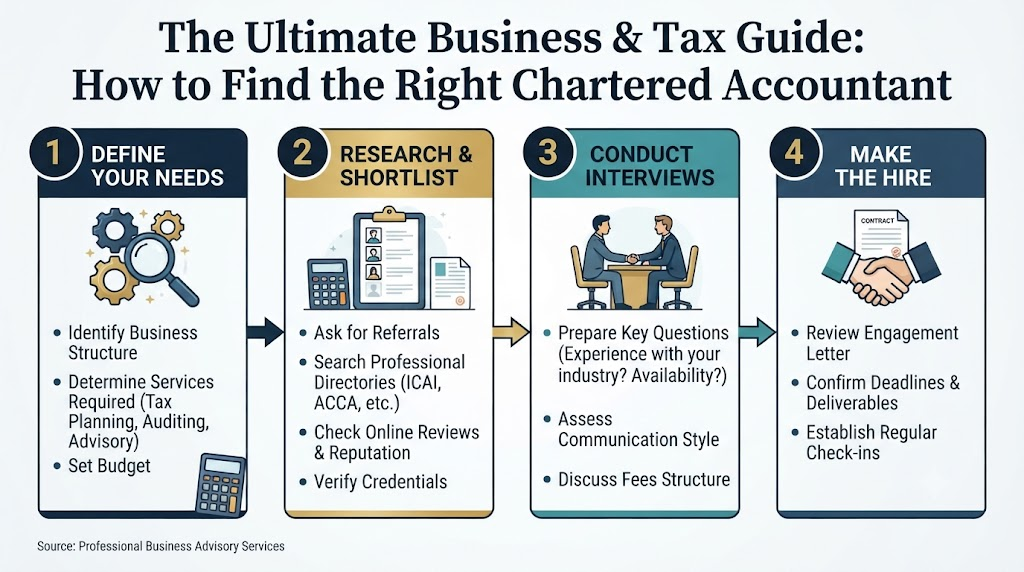
How to Select the Ideal Chartered Accountant for Your Business
Choosing the right financial partner requires systematically evaluating qualifications and alignment with your business goals.
- Verify Official Credentials: Ensure the professional holds an active Certificate of Practice (COP) and a valid membership number from the Institute of Chartered Accountants of India (ICAI).
- Assess Domain Expertise: Confirm the CA has experience in your specific industry—such as e-commerce, real estate, manufacturing, or cross-border trade.
- Evaluate Technology Adoption: Seek CAs who utilize modern cloud accounting software, secure client communication portals, and automated document management systems.
- Clarify Fee Structures: Discuss billing frameworks upfront. Transparent retainers, project-based pricing, or hourly rates prevent unexpected costs later.
- Review Communication Protocols: Confirm the availability of clear communication channels for time-sensitive compliance questions and routine status updates.
Essential Best Practices for Corporate Financial Management
Adopting disciplined financial practices protects organizations from operational disruptions and unexpected tax liabilities.
- Maintain Continuous Bookkeeping: Record financial transactions weekly rather than delaying accounting entries until the end of the financial year.
- Separate Personal and Business Accounts: Maintain dedicated corporate bank accounts to preserve clear audit trails and avoid tax complications.
- Conduct Monthly Tax Reconciliations: Reconcile sales registers, purchase registers, and GST portal data monthly to claim valid input tax credits.
- Build an Audit Trail: Store invoices, receipts, vendor contracts, and bank statements securely in digital formats for at least seven years.
- Monitor Cash Flow Statements: Track monthly cash flow to ensure sufficient liquidity for operating expenses, debt service, and upcoming tax liabilities.
Expert Tips for Streamlining Accounting and Tax Operations
- Automate Routine Invoicing: Deploy cloud accounting systems that generate e-invoices, send automated payment reminders, and sync bank feeds automatically.
- Establish a Compliance Calendar: Maintain a centralized calendar with alert reminders for major statutory deadlines, including advance tax installments, TDS deposits, and GST returns.
- Review Tax Strategy Quarterly: Meet with your CA quarterly—rather than annually—to review financial performance, evaluate advance tax obligations, and optimize deductions.
- Implement Internal Financial Controls: Establish multi-step approval workflows for expenses exceeding set thresholds to reduce operational errors and unauthorized spending.
- Periodically Re-evaluate Entity Structures: As business revenue grows, consult your CA to determine if transitioning from a sole proprietorship to an LLP or Private Limited company offers tax or liability advantages.
Common Tax and Compliance Mistakes to Avoid
Avoiding operational blunders saves businesses significant time and money.
Delaying Tax Filings and Missing Statutory Deadlines
Filing returns past due dates incurs interest penalties, late fees, and potential loss of tax-loss carryforward privileges. Consistently missing statutory filing dates can also damage your credit standing and regulatory compliance score.
- Solution: Set up automated reminders for compliance deadlines and provide financial records to your accountant well before filing cutoffs.
Poor Record-Keeping and Unorganized Bookkeeping
Lacking supporting documentation for business expenses can lead tax authorities to disallow deductions during audits, resulting in higher tax assessments and penalties.
- Solution: Implement cloud-based digital document collection tools so employees upload receipts and vendor bills immediately upon receipt.
Prioritizing Low Fees Over Technical Expertise
Selecting accounting services based solely on cheap pricing often leads to poor advice, missed compliance steps, and lower quality audit coverage.
- Solution: Evaluate CA professionals based on verified experience, industry familiarity, and client feedback rather than selecting the lowest bidder.
The Digital Evolution: Online CA Consultations vs. Traditional Services
Digital transformation has restructured professional financial services. Traditional accounting models required physical visits, paper document submissions, and regional geographic proximity. Modern digital accounting platforms remove these geographical constraints, giving businesses and individuals direct access to specialized financial experts regardless of location.
Online CA consultations utilize secure file-sharing systems, remote digital signatures, and video meeting tools to complete filings efficiently. This digital model lowers travel time, accelerates document processing, and offers clear, fixed fee structures. While traditional local offices remain valuable for complex face-to-face legal proceedings, online consultation platforms offer an accessible, highly efficient alternative for routine return filings, startup setups, and specialized cross-border advisory.
Why Choose BestCaNow for Your Accounting and Taxation Needs
Finding qualified, trustworthy financial experts tailored to your specific requirements can be challenging. BestCaNow simplifies this search by providing an intuitive directory platform connecting individuals, startups, NRIs, and growing enterprises with verified Chartered Accountants and corporate finance professionals.
Whether you need an income tax consultant near me, specialized audit services near me, or an online CA consultation, BestCaNow streamlines client discovery:
- Comprehensive Directory: Filter CA profiles by geographical location, years of experience, direct industry specialization, and supported consultation modes.
- Verified Expertise: Access professional profiles offering services across personal income tax, corporate GST, company incorporation, cross-border NRI taxation, statutory auditing, and business advisory.
- Flexible Consultation Options: Connect with professionals who offer remote digital consultations, in-person meetings, or hybrid engagement models based on your preference.
- Direct Professional Networking: Search through customized profiles to find specialized advisors for startup capital structuring, MSME financing, or complex ROC corporate filings.
BestCaNow helps you make informed choices, connecting you directly with the right financial expertise to keep your financial operations compliant, organized, and optimized.
Frequently Asked Questions (FAQs)
1. What is the difference between an accountant and a Chartered Accountant?
A general accountant handles basic bookkeeping, daily transaction entries, and simple financial summaries. A Chartered Accountant is a qualified professional registered with the ICAI who has completed rigorous technical training and exams. CAs are authorized to perform statutory audits, provide complex tax planning, issue official financial certifications, and represent clients before legal tax authorities.
2. How do I find a verified Chartered Accountant near me?
You can find verified CAs by using professional online directory platforms like BestCaNow. Search profiles based on location, specialized practice areas, industry experience, and client feedback. Always verify that the professional maintains an active Certificate of Practice (COP) issued by the Institute of Chartered Accountants of India.
3. What are the advantages of an online CA consultation?
Online CA consultations save time, eliminate the need to travel to physical offices, and give you access to specialized regional or national experts regardless of location. Digital consultations utilize secure document uploads, video calls, and electronic signatures, accelerating turnaround times for tax filings, startup registrations, and general financial advice.
4. When should a new business or startup hire a CA?
Startups should consult a Chartered Accountant before formal incorporation. Early CA guidance helps founders select the right legal entity, structure shareholder agreements, navigate founder equity setups, secure necessary GST or MSME registrations, and set up tax-compliant accounting systems right from the start.
5. What documents are needed for individual income tax return filing?
Basic documentation includes Form 16 issued by employers, bank statements for all active accounts, Form 26AS, Annual Information Statement (AIS), Taxpayer Information Summary (TIS), investment proofs for tax deductions, and details of capital gains from stocks, mutual funds, or real estate transactions.
6. Is GST registration mandatory for all businesses?
GST registration is mandatory if your annual business turnover exceeds statutory threshold limits (typically ₹40 Lakhs for goods and ₹20 Lakhs for services in most states). Registration is also required regardless of turnover for e-commerce sellers, interstate service providers, and businesses operating under the reverse charge mechanism.
7. What services does an NRI tax consultant provide?
NRI tax consultants help non-residents determine their residential tax status, apply Double Taxation Avoidance Agreement (DTAA) provisions, manage tax on income earned in India, file tax returns, and issue Form 15CA and Form 15CB certifications required to transfer funds out of Indian bank accounts under FEMA guidelines.
8. What is the difference between an internal audit and a statutory audit?
A statutory audit is a legally mandatory independent review of financial statements conducted according to corporate laws to assure regulatory authorities and shareholders of accuracy. An internal audit is an operational review conducted to evaluate internal controls, improve operational efficiency, and identify risk management improvements.
9. How much do Chartered Accountant services cost in India?
CA service fees vary widely depending on the complexity of the work, the professional’s years of experience, business scale, and geographical location. Simple individual tax filings may start at modest fixed rates, while monthly corporate retainers, complex audits, or business valuations involve higher project-based pricing.
10. How can a CA help my business save money legally?
CAs help businesses save money by identifying legal tax deductions, claiming eligible input tax credits under GST, structuring business transactions tax-efficiently, and avoiding costly penalties, interest charges, or legal disputes resulting from missed statutory deadlines or incorrect filings.
11. What is MCA compliance, and why is it important for companies?
MCA compliance involves fulfilling statutory filing obligations mandated by the Ministry of Corporate Affairs for incorporated entities. This includes submitting annual financial reports (AOC-4), annual returns (MGT-7), and maintaining statutory corporate registers. Staying compliant prevents financial penalties, legal prosecution, and director disqualifications.
12. Can a Chartered Accountant assist with business loan applications?
Yes, CAs assist with business loan applications by compiling audited financial statements, preparing Projected Financial Statements, creating Detailed Project Reports (DPRs), and issuing essential financial health ratios required by banks and financial institutions during loan underwriting.
13. What happens if I file my income tax return late?
Filing your income tax return past the statutory deadline incurs late filing fees under Section 234F, incurs interest charges on unpaid tax liabilities under Section 234A, and prevents you from carrying forward certain business or capital losses to offset future tax years.
14. What is the difference between a tax consultant and a CA?
A tax consultant may provide general assistance with basic tax filings and return preparation without requiring a formal professional degree. A Chartered Accountant is a qualified professional legally authorized to perform statutory audits, issue certified financial reports, and handle complex corporate legal disputes.
15. How do I switch my business accounting to a new CA firm?
To switch CAs, request a No Objection Certificate (NOC) from your current CA, retrieve all historical financial ledgers, tax filings, access credentials, and audit workpapers, and hand them over to your new CA firm to ensure a smooth transition without compliance gaps.
Conclusion
Navigating modern taxation, accounting standards, and statutory compliance requires clear financial foresight and technical expertise. From individual income tax filings and startup incorporation to complex statutory audits and cross-border NRI taxation, working with a qualified Chartered Accountant protects your financial health and prevents compliance risks.
Establishing sound bookkeeping habits, conducting routine tax reconciliations, avoiding cheap, unverified options, and choosing qualified advisors ensures your operations remain compliant and positioned for growth. Embracing modern digital consultation tools further makes finding specialized financial advice easier than ever before. Choosing the right financial professional is an investment in stability, compliance, and strategic long-term business success.
Leave a Reply