Introduction
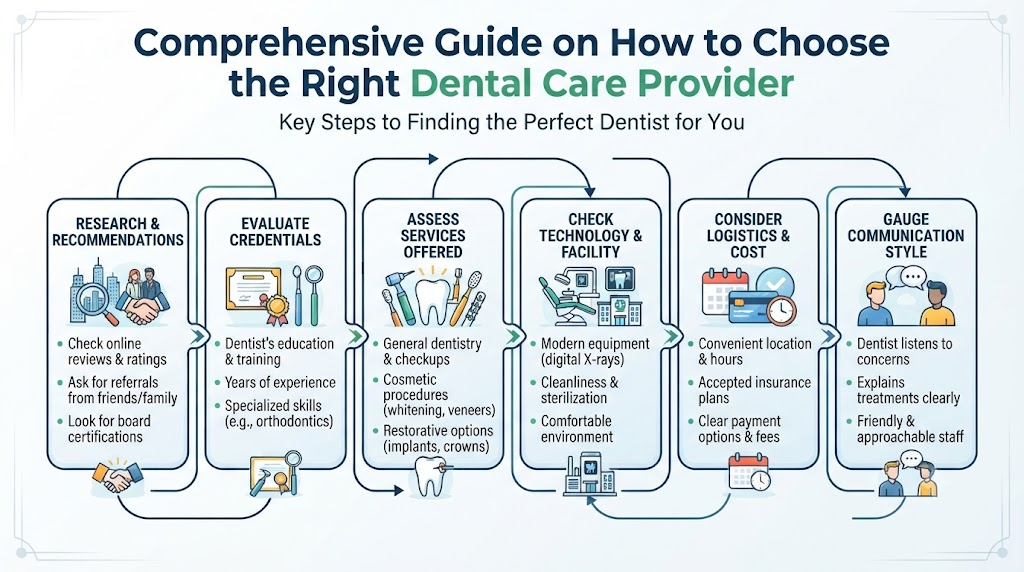
Maintaining a bright, healthy smile requires more than just brushing at home; it involves partnering with a trusted professional who understands your unique oral health needs. Choosing the right dental care provider involves considering qualifications, experience, available services, patient communication, technology, accessibility, and preventive care approaches. This comprehensive educational guide explores the qualities of reliable dental providers, different dental specialties, modern clinic technologies, and practical steps for selecting the right professional. For trusted health information, patient education resources, and guidance, readers can explore MYDOCTORSNOW.
Why Choosing the Right Dental Care Provider Matters
Finding a dental professional who aligns with your health goals profoundly impacts your long-term wellness.
Importance of Preventive Dental Care
Routine checkups and professional cleanings form the foundation of preventive dentistry, stopping plaque buildup before it damages teeth and gums.
Early Diagnosis of Oral Health Problems
Experienced providers can detect early signs of decay, gum disease, or oral structural shifts long before they cause physical pain.
Personalized Treatment Planning
Every smile is unique. A qualified provider tailors treatments to match your specific dental anatomy, medical history, and personal preferences.
Long-Term Oral Health Management
Consistent care over the years preserves natural tooth structure and supports overall systemic health.
Patient Comfort and Trust
A welcoming, compassionate dental team helps alleviate dental anxiety, making routine visits a stress-free experience.
Types of Dental Care Providers
Dental care encompasses a wide variety of specialized fields designed to address specific oral health needs.
- General Dentist: The primary point of contact for routine checkups, cleanings, fillings, and basic restorative procedures.
- Pediatric Dentist: Focuses exclusively on the specialized oral health care of infants, children, and adolescents.
- Orthodontist: Specializes in correcting misaligned teeth and jaws using braces, clear aligners, and retainers.
- Periodontist: Focuses on the prevention, diagnosis, and treatment of gum disease and the placement of dental implants.
- Endodontist: Concentrates on diseases of the dental pulp, specializing in root canal treatments and saving infected teeth.
- Prosthodontist: Expert in the restoration and replacement of damaged or missing teeth using crowns, bridges, and dentures.
- Oral and Maxillofacial Surgeon: Performs complex surgical procedures of the mouth, jaw, and facial structures, including extractions and jaw realignments.
- Cosmetic Dentist: Focuses on improving the visual appearance of teeth, smiles, and gums through aesthetic procedures.
- Dental Hygienist: Licensed professionals who clean teeth, examine oral health, and educate patients on daily hygiene habits.
Dental Services Comparison Table
| Service | Purpose | Patient Benefit |
| Routine Dental Checkup | Monitor oral health | Early problem detection |
| Professional Teeth Cleaning | Remove plaque and tartar | Healthier gums and teeth |
| Dental Fillings | Repair cavities | Restore tooth function |
| Root Canal Treatment | Save infected teeth | Relieve pain and preserve teeth |
| Orthodontic Care | Correct bite and alignment | Improved oral function |
| Cosmetic Dentistry | Enhance smile appearance | Better confidence |
Qualities of Good Dental Care Providers
Evaluating potential dental offices involves looking for core professional and interpersonal attributes.
- Professional Qualifications: Holds valid degrees, state licenses, and active memberships in recognized dental associations.
- Clinical Experience: Demonstrates a proven track record of handling both routine procedures and complex treatments successfully.
- Clear Communication: Explains diagnoses, treatment options, and costs in simple, easy-to-understand language.
- Compassionate Patient Care: Listens patiently to concerns and treats every individual with empathy and respect.
- Modern Dental Technology: Utilizes up-to-date diagnostic tools and treatment equipment for enhanced precision.
- Clean and Safe Environment: Maintains rigorous sterilization and infection control standards across all treatment areas.
- Preventive Care Focus: Emphasizes patient education and preventive habits rather than just reactive treatments.
- Transparent Treatment Planning: Provides clear estimates and discusses all procedural steps before beginning work.
Advanced Technologies Used in Modern Dental Clinics
Cutting-edge dental tools have transformed patient comfort, diagnostic accuracy, and treatment efficiency.
- Digital Dental X-rays: Emit significantly lower radiation than traditional film while providing instant, high-resolution images.
- Intraoral Cameras: Small handheld wands that project live, magnified views of the inside of the mouth onto a screen for patient education.
- Digital Impressions: Replace messy traditional putty molds with fast, comfortable 3D optical scans.
- Laser Dentistry: Utilized for soft tissue procedures, reducing bleeding, swelling, and healing times.
- CAD/CAM Restorations: Allow same-day creation and placement of custom crowns and ceramic restorations.
- 3D Dental Imaging (CBCT): Provides comprehensive multi-dimensional views of jawbone structures for precise implant planning.
- Electronic Patient Records: Streamline medical history tracking, appointment scheduling, and secure communication.
How to Choose the Right Dental Clinic
Selecting a clinic that fits your logistics and clinical expectations ensures a seamless healthcare experience.
- Qualified Dental Professionals: Verify that all attending dentists and hygienists are properly credentialed.
- Wide Range of Services: Look for clinics offering comprehensive care under one roof to minimize specialist referrals.
- Convenient Location: Choose a practice near your home, workplace, or children’s school for easy travel.
- Emergency Dental Care Availability: Check if the clinic accommodates urgent pain or trauma situations promptly.
- Infection Prevention Standards: Ensure the facility meets or exceeds strict health department sanitation protocols.
- Flexible Appointment Scheduling: Look for office hours that accommodate work and school timetables.
- Positive Patient Experience: Read reviews and note how friendly and accommodating the front desk staff are.
- Follow-up Care: Confirm that the practice checks in on patients following major restorative procedures.
Dental Provider Selection Checklist
| Feature | Why It Matters |
| Licensed Dental Professionals | Quality and safety |
| Modern Equipment | Accurate diagnosis |
| Comprehensive Services | Complete oral care |
| Clean Environment | Infection prevention |
| Good Communication | Better understanding |
| Convenient Scheduling | Easier ongoing care |
What to Expect During Your First Dental Visit
Knowing what happens during an initial appointment helps reduce anxiety and prepares you for collaboration.
- Medical and Dental History: Reviewing past health conditions, allergies, medications, and previous dental experiences.
- Oral Examination: Thorough visual inspection of teeth, gums, tongue, bite alignment, and oral tissues.
- Dental X-rays (If Needed): Capturing images to uncover hidden decay between teeth or below the gum line.
- Gum Health Assessment: Measuring pocket depths around teeth to evaluate periodontal tissue health.
- Treatment Discussion: Reviewing examination findings directly with the dentist in clear terms.
- Preventive Care Advice: Receiving tailored recommendations for brushing, flossing, and dietary habits.
- Personalized Care Plan: Establishing a structured roadmap for any needed treatments or future maintenance visits.
Tips for Maintaining Good Oral Health
Daily habits paired with professional care create the ultimate defense for your teeth and gums.
- Brush Twice Daily: Use a soft-bristled toothbrush and fluoride toothpaste for two full minutes each session.
- Floss Every Day: Clean between teeth daily to remove food particles and plaque that brushing misses.
- Eat a Balanced Diet: Consume nutrient-rich foods and limit acidic snacks that weaken enamel.
- Limit Sugary Foods and Drinks: Reduce sugar consumption to starve decay-causing oral bacteria.
- Visit the Dentist Regularly: Schedule professional examinations and cleanings every six months or as recommended.
- Avoid Tobacco Products: Protect your teeth, gums, and oral tissues by avoiding smoking and chewing tobacco.
- Wear a Mouthguard During Sports: Protect your teeth from trauma by wearing a custom-fitted athletic mouthguard.
Common Dental Problems
Recognizing early warning signs of common dental issues helps prompt timely professional intervention.
- Tooth Decay: Breakdown of tooth enamel caused by bacterial acids, resulting in cavities.
- Gum Disease: Inflammation and infection of the tissues supporting the teeth, ranging from mild gingivitis to severe periodontitis.
- Tooth Sensitivity: Sharp discomfort triggered by hot, cold, sweet, or acidic foods due to exposed dentin.
- Bad Breath (Halitosis): Persistent unpleasant breath often linked to poor hygiene, dry mouth, or gum disease.
- Tooth Fractures: Cracks or chips resulting from trauma, biting hard objects, or teeth grinding (bruxism).
- Misaligned Teeth: Crowded or spaced teeth that affect bite function and complicate cleaning.
- Oral Infections: Painful abscesses resulting from untreated decay or deep gum pockets.
How MYDOCTORSNOW Helps Patients
Navigating health choices requires trustworthy, clear educational resources. Platforms like MYDOCTORSNOW support individuals by offering:
- Health Education: Providing straightforward articles on wellness, disease prevention, and clinical care.
- Patient Awareness: Fostering a deeper understanding of how oral health connects to overall physical well-being.
- Healthcare Guidance: Helping readers navigate complex healthcare decisions with confidence.
- Reliable Medical Information: Delivering fact-based, easy-to-digest educational content.
- Support for Informed Healthcare Decisions: Empowering patients to ask the right questions during medical and dental visits.
- Resources that Help Patients Better Understand Dental and Overall Health: Offering valuable insights into preventive care strategies.
Common Mistakes People Make
- Waiting Until Pain Develops: Visiting the dentist only when a problem becomes unbearable rather than seeking preventive care.
- Choosing a Provider Based Only on Cost: Selecting the cheapest clinic without verifying credentials, safety standards, or quality of materials.
- Ignoring Preventive Care: Skipping routine cleanings and checkups under the assumption that healthy teeth require no attention.
- Skipping Regular Checkups: Forgetting to maintain bi-annual recall appointments.
- Not Discussing Concerns with the Dentist: Hiding dental anxiety or financial constraints instead of working with the team to find comfortable solutions.
Practical Solutions: Prioritize preventive recall visits, evaluate clinics based on comprehensive value rather than price alone, and maintain transparent, open communication with your dental team.
Common Myths vs Facts
| Myth | Fact |
| Visit a dentist only when you have pain | Regular checkups help detect problems early |
| Brushing alone is enough | Flossing and professional cleanings are also important |
| Baby teeth don’t need much care | Healthy baby teeth support proper development |
| Every dentist provides the same services | Some dentists have advanced training in specific specialties |
Real-Life Educational Scenarios
Scenario 1: Finding Early Cavities During a Routine Checkup
An adult schedules a bi-annual dental checkup with their general dentist. During the examination and digital X-ray review, the dentist discovers a very small cavity forming between two molars. Because it was caught early, the provider treats it with a quick, painless filling, preserving natural tooth structure.
Scenario 2: A Child Benefiting from Preventive Dental Visits
Parents bring their young child to a pediatric-friendly dental clinic for their first routine cleaning. The friendly dental hygienist demonstrates proper brushing techniques using a model, making the child feel comfortable and establishing a positive lifelong attitude toward dental visits.
Scenario 3: Choosing an Orthodontist for Teeth Alignment
An adolescent experiencing crowded teeth and bite misalignment consults with their general dentist, who refers them to an experienced orthodontist. Following a comprehensive evaluation using digital scans, the orthodontist creates a customized aligner plan to correct the bite over time.
Scenario 4: Selecting a Family Dental Provider
A family relocating to a new neighborhood researches local clinics using online patient guides. They select a comprehensive family practice offering both general dentistry and pediatric care, ensuring that every household member can receive coordinated, high-quality care under one roof.
FAQs (15 Questions)
1. How do I choose the right dental care provider?
Evaluate providers based on their qualifications, experience, clinic cleanliness, modern technology, patient communication, and range of services.
2. What qualifications should a dentist have?
A dentist should hold a recognized dental degree (DDS or DMD), a valid state license, and maintain active continuing education.
3. How often should I visit the dentist?
Most people benefit from visiting the dentist every six months for routine checkups and professional cleanings, though individual needs may vary.
4. What happens during the first dental appointment?
The visit typically includes a medical history review, a comprehensive oral exam, necessary digital X-rays, a gum assessment, and a treatment discussion.
5. How do I know if I need a dental specialist?
Your general dentist will evaluate your condition and provide a referral to a specialist (such as an orthodontist or endodontist) if advanced care is required.
6. What services do general dentists provide?
General dentists provide preventive checkups, cleanings, fillings, crowns, bridges, root canals, and basic extractions.
7. What should I ask before choosing a dental clinic?
Ask about accepted insurance plans, emergency care policies, the types of technology used, and the scope of in-house services.
8. Why are regular dental checkups important?
Regular checkups allow professionals to detect decay, gum disease, and oral abnormalities early, preventing costly and complex procedures later.
9. Are digital dental X-rays safe?
Yes, digital X-rays emit very low levels of radiation and are considered extremely safe for routine diagnostic use.
10. How can I maintain healthy teeth and gums?
Brush twice daily, floss daily, eat a balanced diet, limit sugary snacks, and maintain regular dental checkups.
11. What should I do during a dental emergency?
Contact your dentist immediately for guidance, manage bleeding with clean gauze, and preserve any knocked-out tooth fragments in milk.
12. How do modern dental technologies improve care?
Advanced tools like digital scanners, lasers, and low-radiation X-rays make treatments faster, more precise, and significantly more comfortable.
13. Can one dentist treat the whole family?
Many general family dentists treat patients of all ages, from young children to older adults, offering convenient comprehensive care.
14. How important is preventive dentistry?
Preventive dentistry is vital because it stops dental problems before they start, protecting your oral health and saving money over time.
15. How does MYDOCTORSNOW help readers make informed healthcare decisions?
MYDOCTORSNOW provides reliable educational resources, health guides, and patient education materials to support informed wellness decisions.
Final Thoughts
Selecting the right dental care provider is a vital investment in your overall health and quality of life. Partnering with a qualified, experienced professional ensures that you receive personalized preventive care, early diagnoses, and expert treatments tailored to your needs. By prioritizing clinics equipped with modern technology, compassionate staff, and a strong focus on patient education, you set the foundation for a lifetime of healthy smiles.
Leave a Reply