Introduction
Publishing high-quality content online is one of the most effective ways to build authority, reach new audiences, and drive organic traffic to your brand or personal project. Whether you are an independent writer, a startup founder, or a digital marketer, sharing your knowledge across web channels creates long-term digital footprint benefits. However, with thousands of sites available across the web, identifying reputable, safe, and effective publishing environments poses a significant challenge. Many creators struggle with low-traffic sites, strict moderation, or low-quality submission directories that do not yield results. In this comprehensive guide, you will learn about the main categories of web publishing channels, how to evaluate domain authority and moderation standards, best practices for online syndication, and how to use a content publishing platform finder to streamline your content distribution strategy efficiently.
What Are Free Content Publishing Platforms?
What They Are
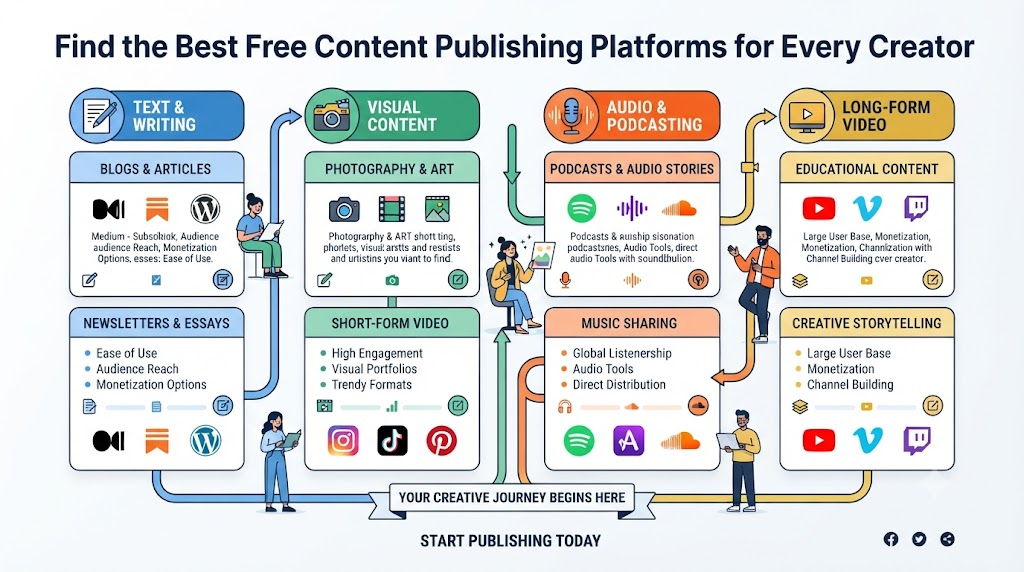
Free content publishing platforms are web applications, hosted directories, and online portals that allow creators, businesses, and developers to publish digital media without paying upfront hosting or membership fees. These sites host written articles, blog posts, video files, discussion threads, and corporate listings, providing built-in infrastructure for digital publishing.
How They Work
These systems operate on open, freemium, or community-driven distribution models. Users register an account, set up a profile, and upload or draft their material through a web-based content management interface. Once published, the platform hosts the page, indexes it for search engines, and often distributes it to an established network of readers through algorithmic feeds, tag systems, or internal search indices.
Why They Matter
Building a standalone website from scratch requires significant technical management, domain maintenance, and initial search engine marketing efforts. Hosted distribution channels eliminate technical barriers to entry. According to web standard documentation from the Mozilla Developer Network, leveraging existing web infrastructure allows content creators to focus entirely on editorial quality and semantic markup rather than server management.
Benefits for Individuals and Businesses
- Immediate Audience Access: Tap into pre-built communities without waiting months for search engine indexing.
- Cost Efficiency: Distribute marketing materials, technical documentation, and thought leadership without capital expenditure.
- Brand Visibility: Establish multiple search engine result page (SERP) touchpoints across diverse domain names.
- Networking Opportunities: Connect with niche-specific writers, industry experts, and potential customers in shared online spaces.
When evaluating distinct options, consulting organized lists of free posting sites helps you select channels that match your editorial goals without wasting resources on low-quality platforms.
Why Choosing the Right Platform Is Important
Selectively matching content to the correct platform directly impacts how your work is received, indexed, and distributed across the web.
+-----------------------------------------------------------------------+
|                   STRATEGIC PLATFORM SELECTION                        |
+-----------------------------------+-----------------------------------+
|       POOR PLATFORM MATCH         |        OPTIMAL PLATFORM MATCH     |
+-----------------------------------+-----------------------------------+
| * High bounce rates               | * Targeted audience reach         |
| * Spam flags & quick removal      | * Sustained organic traffic       |
| * Wasted production effort        | * Enhanced domain authority       |
| * Negative brand perception       | * Meaningful community interaction|
+-----------------------------------+-----------------------------------+
Better Audience Reach
Publishing an technical guide on a general lifestyle site rarely generates engagement. Matching technical tutorials with developer-focused platforms or professional business articles with industry directories ensures your messaging reaches users actively seeking that information.
Improved Visibility and SEO Opportunities
High-authority publishing networks allow your articles to rank rapidly for niche search queries. According to guidelines outlined in Google Search Central, search engine crawlers prioritize pages hosted on established sites that demonstrate technical stability, security, and clear organizational hierarchy.
Higher Engagement and Long-Term Value
When users discover well-structured posts on platforms tailored to their interests, they are more likely to bookmark, comment on, and share the material. Evergreen educational guides published on reputable networks can continuously drive targeted organic referral traffic for years after their initial release date.
Types of Free Posting Sites
Different content types require distinct hosted environments. Understanding the core categories helps ensure your content reaches the correct demographics.
Free Article Posting Sites
Article submission portals allow writers to contribute long-form informational content, thought leadership, and educational material. These platforms generally feature structured content categories and editorial standards that encourage detailed, authoritative writing.
Free Blog Posting Sites
Hosted blogging environments give writers dedicated channels or profile spaces to publish sequential posts, news updates, and personal narratives. They offer customization features, tagging systems, and personal RSS feeds without requiring server maintenance.
Free Forum Posting Sites
Discussion forums emphasize community interaction, Q&A formats, and direct user engagement. Participating in forum communities requires adhering to community rules, but it provides direct access to highly focused user communities.
Free Business Listing Sites
Business directories allow companies to publish official profiles featuring their name, address, contact details, product catalogs, and service summaries. These channels enhance local discoverability and assist potential clients in verifying company authenticity. Browse verified listings in the FreePostFinder Business Listing Categories to identify reputable submission targets.
Free Video Posting Sites
Video sharing networks allow users to upload, host, and embed video media. These channels are ideal for visual tutorials, product demos, interviews, and brand storytelling.
Community Publishing Platforms
Community-driven content ecosystems combine social networking functions with long-form posting. Readers upvote, highlight, or re-share content based on community interest, accelerating organic reach for top-rated pieces.
Directory Submission Platforms
Structured web directories categorize links, documents, and corporate records into logical hierarchies. These sites serve as curated reference catalogs for specific industries or topical niches.
Knowledge Sharing Platforms
Knowledge hubs focus strictly on answering specific questions, providing technical documentation, or publishing peer-reviewed instructional content. They prioritize factual accuracy, clear structure, and direct answers.
How to Choose the Best Platform for Your Content
Selecting the ideal platform requires evaluating several key technical and structural metrics:
+-----------------------------------------------------------------+
|                    PLATFORM SELECTION MATRIX                    |
+----------------------+------------------------------------------+
| CRITERIA             | KEY EVALUATION FACTORS                   |
+----------------------+------------------------------------------+
| Content Type         | Text depth, visual support, code support |
| Target Audience      | Demographic alignment, technical level   |
| Moderation Rules     | Strictness, link policies, ad tolerance  |
| Domain Authority     | Existing trust, indexing reliability     |
| Community Culture    | Active discussions, comment quality      |
+----------------------+------------------------------------------+
- Content Type Matching: Ensure the site format supports your medium, whether it requires long-form markdown text, embedded media, or code blocks.
- Target Audience Alignment: Research user demographics to confirm your content aligns with what the site’s visitors read.
- Moderation Policies and Rules: Read submission rules thoroughly. Responsible channels enforce strict content quality rules to prevent spam and retain readers.
- Domain Authority and Indexing Velocity: Choose platforms that search engines crawl frequently to ensure faster indexation and better rank potential.
- Community Engagement: Observe existing post activity. A platform with active comment sections and sharing channels yields better conversion and visibility rates.
FreePostFinder as a Content Publishing Platform Finder
Finding reputable, active publishing channels manually can take hours of research. FreePostFinder functions as a centralized discovery directory and recommendation index designed to streamline this process.
+-----------------------------------------------------------------------+
|                      FREEPOSTFINDER ECOSYSTEM                         |
+-----------------------------------------------------------------------+
|  [ User Input: Content Goal ] --> [ Advanced Search & Filter Tools ]  |
|                                                    |                  |
|                                                    v                  |
|  [ Verified Directory Data ] <--- [ Category-Based Indexing ]         |
|                                                    |                  |
|                                                    v                  |
|  [ Selected Platform ] <----------- [ Platform Comparison Pages ]     |
+-----------------------------------------------------------------------+
By functioning as a dedicated content publishing platform finder, the site classifies hundreds of submission outlets into distinct categories. Users can access specialized directory tools, including:
- Category-Based Search: Quickly discover specific channels through the dedicated FreePostFinder Forum Categories or explore blogging sites via FreePostFinder Blog Categories.
- Advanced Filters: Filter submission sites by industry niche, domain authority, submission rules, and content formats.
- Platform Comparison Pages: Compare platform features, user limitations, and publishing guidelines side-by-side using structured FreePostFinder Search & Filter Tools.
- Verification Standards: Access updated details regarding moderation speed, registration requirements, and link policies before creating an account.
Using a curated finder ensures you focus your efforts on verified free public posting platforms rather than outdated, abandoned, or low-quality submission sites.
Best Practices for Publishing Content Online
To maximize reach and maintain brand reputation across external channels, follow these industry standards:
+-----------------------------------------------------------------+
|               ETHICAL PUBLISHING WORKFLOW                      |
+-----------------------------------------------------------------+
|  1. Draft Original, High-Value Content                          |
|  2. Format with Clear Headings (H2/H3) and Scannable Lists      |
|  3. Add Contextual Internal/External Citations                  |
|  4. Review Target Platform Guidelines & Moderation Terms        |
|  5. Publish and Actively Engage in Community Discussions        |
+-----------------------------------------------------------------+
- Create Original, High-Value Material: Never publish duplicate or auto-generated low-quality text. Original insights rank higher and generate better reader trust.
- Respect Platform Moderation Guidelines: Follow formatting standards, word count minimums, and promotional link limits enforced by platform owners.
- Focus on Reader Intent: Write informative content that solves specific problems instead of pure sales pitches. Digital marketing research from the Content Marketing Institute shows that educational guides outperform promotional posts in driving long-term reader retention.
- Structure for Readability: Break up long prose using subheadings, bold summary text, tables, and short bullet points to improve user readability.
- Update Legacy Content Regularly: Periodically review and update older published guides to ensure links, facts, and statistics remain accurate.
Common Mistakes to Avoid
- Cross-Posting Exact Duplicate Text: Publishing identical articles across multiple platforms can cause search engine indexing issues and dilute overall traffic value.
- Ignoring Platform Rules: Over-promoting products or dropping excessive external links often triggers automated spam filters, leading to account suspension.
- Selecting Irrelevant Categories: Submitting content to unrelated categories frustrates readers and lowers engagement signals.
- Neglecting Post-Publishing Engagement: Failing to answer comments or engage with users reduces post visibility on algorithm-driven platforms.
- Using Spammy Link Tactics: Avoid black-hat submission networks or automated link farms. Focus on establishing genuine, high-quality content distributions on ethical free article posting sites.
Comparison of Publishing Platform Categories
The table below summarizes key metrics across standard publishing options:
| Platform Category | Best For | Typical Content Format | Target Audience | Key Benefits |
| Article Sites | Industry Experts, Educators | Long-form Guides, Case Studies | Professionals, Researchers | High domain authority, strong SEO value |
| Blog Networks | Storytellers, Content Marketers | Posts, Series, News Updates | General Readers, Niche Fans | Dedicated profiles, distribution feeds |
| Business Directories | Companies, Agencies | Corporate Profiles, NAP Data | Local Customers, B2B Clients | Verified listings, citation trust |
| Discussion Forums | Technical Experts, Community Managers | Threads, Q&A, Short Responses | Highly Focused Niche Communities | Direct interaction, fast feedback |
| Video Networks | Visual Creators, Educators | Video Tutorials, Demos, Vlogs | Visual Learners, Consumers | High engagement, high time-on-page |
| Knowledge Hubs | Subject Matter Experts | Detailed Tutorials, Docs | Technical Users, Students | Long term evergreen value, user trust |
Who Can Benefit From Free Content Publishing?
+-----------------------------------------------------------------------+
|                      WHO BENEFITS FROM FREE PUBLISHING                |
+-----------------------------------------------------------------------+
|  [ Bloggers & Writers ] ---------> Personal Brand & Portfolio          |
|  [ Startups & Businesses ] ------> Cost-Effective Digital Footprint    |
|  [ Content Marketers ] ----------> Audience Expansion & Organic Reach  |
|  [ Developers & Creators ] ------> Knowledge Sharing & Community Trust |
|  [ Agencies & Freelancers ] ------> Client Visibility & Channel Growth |
+-----------------------------------------------------------------------+
Bloggers and Independent Writers
Independent writers can build public portfolios, refine their writing style, and establish personal brands without hosting infrastructure costs.
Businesses and Startups
Early-stage startups can publish product updates, educational articles, and press releases across free blog posting sites, building visibility without large marketing budgets.
Content Marketers and Agencies
Marketing professionals can diversify client content distribution networks, reaching multi-channel audiences through structured syndication strategies.
Developers and Technical Experts
Software engineers and IT professionals can contribute to knowledge-sharing forums, document technical solutions, and build authority within developer communities.
Educators, Students, and Influencers
Teachers and thought leaders can publish open-access learning guides, course summaries, and visual presentations to global audiences.
The Future of Digital Publishing
The digital publishing landscape continues to evolve toward decentralized, creator-centric models. Key structural shifts include:
- Growth of Independent Creator Networks: Audience preference is shifting toward verified independent subject matter experts over generic mass-media portals.
- Emphasis on First-Party Experience (E-E-A-T): Search engines increasingly reward content written by authors demonstrating verified, real-world experience.
- Integrated Multi-Channel Syndication: Publishing strategies now require distributing unified brand messaging across written, visual, and forum platforms simultaneously.
- Structured Data and Standard Compliance: Adhering to web standards created by organizations like the W3C ensures published content remains discoverable, accessible, and easily parsed by modern discovery engines and semantic AI crawlers.
How FreePostFinder Helps Users Publish Smarter
Navigating the vast web of websites to post content for free requires reliable data. FreePostFinder simplifies research by organizing global publishing opportunities into an easily searchable, continuously updated platform.
+-------------------------------------------------------------------+
|                  SMARTER PUBLISHING WORKFLOW                      |
+-------------------------------------------------------------------+
|  1. DISCOVER  : Search vetted directories by topic & format       |
|  2. EVALUATE  : Review metrics, guidelines, & moderation rules    |
|  3. COMPARE   : Analyze side-by-side platform capabilities        |
|  4. EXECUTE   : Publish high-quality content on chosen channels   |
+-------------------------------------------------------------------+
Instead of spending valuable creative time testing unverified sites, users can leverage FreePostFinder’s catalog to discover free forum posting sites, evaluate domain requirements, and find specialized channels tailored to their specific niche. By removing distribution guesswork, the platform empowers creators to focus on producing outstanding content that reaches the right readers.
Frequently Asked Questions (FAQ)
1. What are free posting sites?
Free posting sites are online platforms, directories, forums, and blogs that allow users to publish written, visual, or audio content without paying subscription or hosting fees. These sites provide existing infrastructure, audience networks, and search engine indexing capabilities. They are commonly used by bloggers, marketers, and businesses to expand their online footprint, showcase expertise, and distribute educational material efficiently across modern web environments.
2. Where can I post content for free?
You can post content across a wide variety of free channels depending on your medium. Options include general article submission portals, hosted blogging platforms, niche discussion forums, business directory listings, social knowledge hubs, and visual media sites. Using a directory tool like FreePostFinder helps you search, filter, and discover verified platforms categorized by niche, format, and platform rules.
3. What are free article posting sites?
Free article posting sites are hosted portals designed for publishing long-form written content, research papers, tutorials, and thought leadership pieces. These channels generally prioritize structured text, editorial depth, and clear author profiles. They allow writers to reach established reader bases while gaining search engine visibility through well-categorized topical sections.
4. Which free blog posting sites are best for beginners?
The best free blog posting sites for beginners are those that feature intuitive layout editors, built-in audiences, automatic technical optimization, and minimal setup requirements. Platforms that manage mobile responsiveness, security, and hosting allow new bloggers to focus on creating content rather than managing software updates.
5. How do free business listing sites help SEO?
Free business listing sites help search engine optimization by providing consistent online name, address, and phone number (NAP) details across local search engines. These listings establish corporate trust, improve local discoverability, generate direct consumer referrals, and assist search engine bots in confirming business legitimacy across geographic geographic service areas.
6. What are free forum posting sites?
Free forum posting sites are online message boards and Q&A communities organized around specific topics or industries. Users participate by posting questions, sharing insights, and discussing industry developments. They offer direct, highly targeted engagement with niche audiences, provided users follow community rules and avoid overly promotional messaging.
7. Which free video posting sites are worth using?
The most effective free video posting sites feature high video streaming reliability, wide global reach, robust search indexing, and simple embedding options. Utilizing established video platforms ensures fast load times across desktop and mobile devices while giving visual creators access to expansive internal discovery engines.
8. How do I choose the right publishing platform?
To choose the best platform, evaluate your content type, target demographic, editorial guidelines, domain authority, and community activity. Match your goals with the platform’s focus—for instance, post developer guides on tech communities and client updates on business directories. Utilizing comparison directories streamlines this research process significantly.
9. Is FreePostFinder suitable for businesses and creators?
Yes, FreePostFinder serves creators, freelancers, agencies, startups, and established enterprises. Its structured directory and filter features help users find platforms suited for technical articles, local business citations, creative blogs, or visual media, simplifying distribution research for any team size.
10. How can I avoid content rejection on publishing platforms?
To prevent rejection, thoroughly read and follow each site’s guidelines before submitting. Write original, high-quality content, avoid keyword stuffing, keep promotional links reasonable, and use clean formatting with standard headings. Respecting community guidelines ensures long-term publishing access and account safety.
Conclusion
Finding the right distribution channels is essential for any modern content strategy. By identifying reputable platforms, adhering to community guidelines, and structuring articles for reader clarity, you ensure your work earns the visibility it deserves. Selecting appropriate free content publishing platforms expands your reach, builds authority, and establishes sustainable organic search presence over time.Strategic content publishing relies on choosing platforms that align with your audience, niche, and content format.
Leave a Reply