Introduction
Modern preventive medicine relies heavily on identifying risk factors and structural anomalies before they progress into untreatable conditions. Among the various tools available in contemporary healthcare, preventive screenings serve as a vital pillar for managing long-term physical well-being. By incorporating regular assessments into a broader health framework, individuals can take a proactive approach to monitoring their internal systems, catching cellular changes early, and preserving their long-term health.Learning about the diagnostic tools, timing guidelines, and clinical purposes of various health checks helps you make informed decisions for your long-term wellness. If you or a family member are looking for reliable healthcare summaries, want to understand preventive medicine protocols, or need help organizing your wellness schedule, consider exploring digital health resources like MyDoctorsNow. Connecting with trusted medical insights and educational content helps you navigate your preventive health journey with confidence and clarity.
What Are Cancer Screening Tests?
A cancer screening test is a medical procedure performed to look for signs of malignant cells or precancerous tissue changes before an individual displays any physical symptoms or clinical warning signs of disease. It is a proactive screening measure, not a reactive tool, meaning it is specifically intended for asymptomatic populations to find hidden abnormalities early in their development.
[ ASYMPTOMATIC POPULATION ]
            |
[ Cancer Screening Test ] ---> Identifies Hidden Cellular Anomalies Early
            |
[ Symptom-Free Window ] -----> Prior to Physical Warning Signs or Tissue Spread
It is critically important to understand the clinical difference between a screening test and a diagnostic test:
- Screening Tests: Performed on individuals who feel healthy and show no symptoms. The goal is to separate those who may have an increased likelihood of an underlying condition from those who do not. Screening tests are typically simple, non-invasive, and designed for broad, routine use.
- Diagnostic Tests: Performed when an individual presents with specific physical symptoms—such as a palpable lump, persistent pain, or unexplained bleeding—or when a routine screening test returns an abnormal finding. These procedures are more comprehensive, target localized areas, and aim to confirm or rule out a specific diagnosis.
Modern, evidence-based screening programs are developed through years of thorough clinical trials and epidemiological research. International oncology boards and medical societies establish strict criteria before recommending a screening method for general use. These guidelines ensure that a test provides clear health benefits, carries low physical risk, and targets specific conditions where early intervention is proven to improve recovery outcomes.
Why Cancer Screening Matters
Routine screening provides substantial clinical advantages that extend beyond immediate cellular detection, influencing long-term health monitoring and systemic disease management.
Catching Precancerous Changes Early
A key advantage of scheduled screenings is the ability to identify pre-malignant tissue variations before they transform into invasive disease. For instance, routine cervical cytologies can find abnormal cellular changes, and colonoscopies can locate benign polyps along the intestinal wall. Removing these irregular tissues early stops the disease process entirely, preventing advanced conditions from developing.
Expanding Treatment Options and Reducing Complications
When malignant tissues are identified during an early, localized stage, the options for medical care are often broader, more conservative, and highly effective. Early detection frequently allows surgeons to perform targeted, localized tissue removals, minimizing the need for extensive surgeries or systemic therapies. This targeted approach protects surrounding organs, lowers the risk of structural complications, and supports a better quality of life during recovery.
+-----------------------------------------------------------------+
|               EARLY DETECTION VALVE EFFICIENCY                  |
+--------------------------------+--------------------------------+
|  Early-Stage Discovery (Local) | Advanced-Stage Discovery (Wide)|
+--------------------------------+--------------------------------+
| - Targeted, minor removal      | - Invasive systemic therapies   |
| - Broad array of options       | - Limited structural choices   |
| - Lower complication rates     | - Elevated physical impact     |
+--------------------------------+--------------------------------+
Supporting Continuous Long-Term Health
Regular screening helps establish a consistent record of a patient’s physical health over time. This continuous tracking allows physicians to monitor subtle changes in tissues or biochemical markers, making it easier to notice any deviations from a patient’s stable baseline early. Ultimately, keeping a regular assessment schedule gives medical teams the data needed to make proactive adjustments, ensuring long-term wellness and peace of mind.
Common Types of Cancer Screening Tests
Advanced healthcare facilities offer several specialized screening methods, matching each approach to a specific organ system and tissue type.
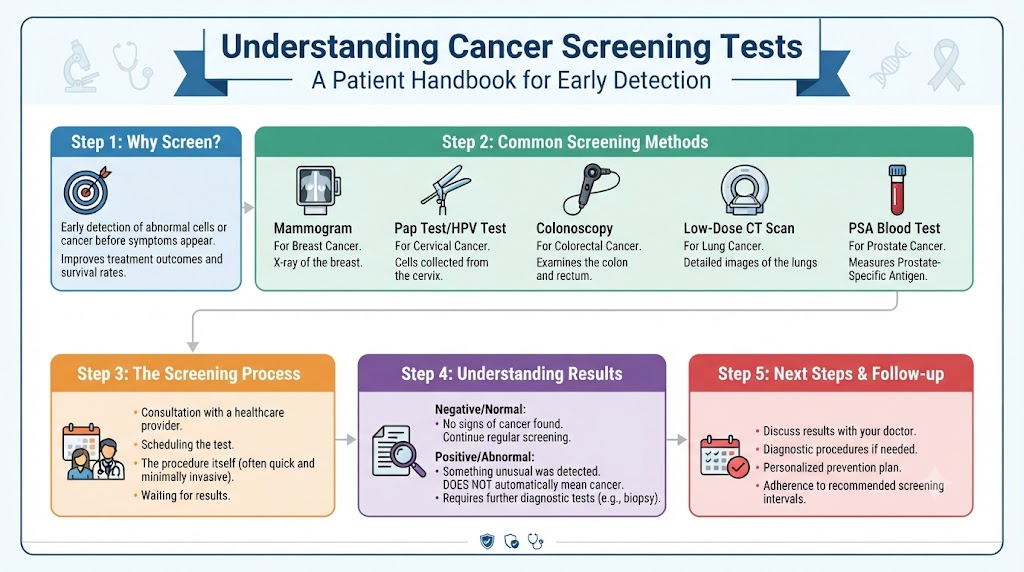
Mammography
A mammogram is a specialized, low-dose X-ray examination designed to capture high-contrast images of internal breast tissue. During the procedure, the breast is briefly compressed between two plates to smooth out the tissue layers, allowing the imaging system to detect tiny calcium deposits or deep structural changes that cannot be felt during a standard physical exam. It is a primary tool for early breast health monitoring.
Pap Test and HPV Molecular Typing
Cervical health screenings utilize two highly integrated testing methods to identify cellular changes early:
- The Pap Test (Cervical Cytology): A clinical procedure where a physician gently collects a small sample of cells from the surface of the cervix during a standard pelvic exam. The sample is analyzed under a microscope to look for abnormal cellular structures or pre-malignant variations.
- HPV DNA Testing: A molecular diagnostic test that checks the collected sample for the presence of high-risk strains of the Human Papillomavirus (HPV). This virus is directly linked to the development of cervical cellular mutations, making early detection key for managing risk.
[ Pap Test Cytology ] ------> Inspects physical cellular structures under a microscope
[ HPV Molecular Typing ] ---> Screens for high-risk viral DNA strains within the tissue
Colorectal Screening Options
To monitor colorectal health, medical centers provide both structural visualization procedures and non-invasive, stool-based laboratory analyses:
- Colonoscopy: A comprehensive structural procedure where a specialist inserts a long, flexible, illuminated tube equipped with a high-definition camera into the large intestine. This allows the physician to view the entire lining of the colon, locate irregularities, and remove precancerous polyps during the same session.
- Fecal Immunochemical Test (FIT): A non-invasive, take-home laboratory test that uses specific antibodies to detect hidden, microscopic amounts of blood in a stool sample, serving as an early indicator of potential intestinal irritation or tissue abnormalities.
Advanced Imaging and Targeted Assessments
For individuals with a history of significant tobacco exposure, hospitals utilize Low-Dose Computed Tomography (LDCT) scans to monitor lung health. This high-speed imaging test takes multiple cross-sectional pictures of the lungs using minimal radiation, helping doctors locate early, small anomalies while they are highly treatable.
Additionally, physicians may recommend Prostate-Specific Antigen (PSA) blood tests after an informed discussion about the potential benefits and limitations for prostate health. Routine care plans also incorporate comprehensive dermatological skin reviews to check for shifting moles, alongside structured oral cavity evaluations to inspect mucous membranes for signs of cellular change.
Cancer Screening Tests Comparison Table
| Screening Method | Targeted Organ System | Core Clinical Purpose | Primary Operational Approach |
| Mammogram | Breast tissue matrix | Detects early micro-calcifications and structural density shifts | Low-dose localized X-ray imaging using gentle mechanical compression |
| Pap & HPV Test | Cervical epithelial layers | Identifies pre-malignant cellular changes and high-risk viral DNA | Surface cell collection during a standard, routine pelvic examination |
| Colonoscopy | Large intestine and rectum | Locates, evaluates, and removes precancerous polyps safely | Direct interior visual inspection using a flexible, high-definition camera |
| FIT Test | Gastrointestinal tract | Identifies microscopic, hidden blood traces within a stool sample | Simple, non-invasive take-home collection kit analyzed in a laboratory |
| Low-Dose CT | Pulmonary lung fields | Detects small nodules or deep pulmonary structural changes | Fast, cross-sectional radiographic imaging utilizing low-dose radiation |
| PSA Test | Prostate gland health | Measures specific protein levels to screen for prostate concerns | Standard laboratory blood analysis often paired with physical exams |
Who Should Consider Cancer Screening?
Preventive health schedules are highly individualized. Healthcare providers do not apply a single template to every patient; instead, they determine your appropriate screening routine by evaluating a combination of specific health factors.
- Age-Based Medical Recommendations: Standard clinical guidelines introduce specific health checks at predetermined milestones, as the natural risk for cellular changes shifts as the body ages.
- Lineal Family History: Having close relatives who have experienced cellular irregularities or chronic conditions can point to shared genetic risk factors, making early screening beneficial.
- Personal Medical Records: Pre-existing health conditions, chronic systemic inflammation, or a history of atypical cell changes require customized, ongoing surveillance schedules.
- Smoking and Tobacco Exposure: A long history of tobacco use significantly alters respiratory health risks, making low-dose lung CT screenings an important consideration for eligible individuals.
- Identified Genetic Risks: Possessing known inherited gene changes, such as Lynch syndrome or variations in the BRCA1 and BRCA2 genes, requires early, specialized screening plans.
- Day-to-Day Lifestyle Habits: Diet choices, physical activity levels, weight management, and alcohol use all influence metabolic pathways and overall health baselines.
- Occupational and Environmental Exposures: Regular contact with industrial chemicals, heavy metals, asbestos, or secondary smoke during your career can alter your specific physiological risk profile.
- Direct Physician Guidance: Your primary care doctor can help coordinate your preventive care by balancing standard medical guidelines against your personal history.
                  +-----------------------------------+
                  |  PERSONALIZED SCHEDULE MATCHING   |
                  +-----------------------------------+
                   /               |                 \
                  /                |                  \
      [ Chronological Age ] [ Inherited Tracking ]  [ Exposure Background ]
       - Population baselines - Family histories      - Career settings, smoking
       - Standard milestones  - Genetic markers         habits, and environment
Benefits of Early Cancer Detection
Catching tissue changes during their earliest stages provides substantial health benefits that can significantly impact a patient’s care journey and long-term well-being.
- Access to Conservative Treatment Paths: Finding abnormalities early often allows for smaller, localized treatments, which helps reduce physical stress on the body and shortens recovery times.
- Broader Array of Care Options: Early-stage detection means medical teams can choose from a wide range of well-established, evidence-based care plans tailored to the patient’s exact profile.
- Streamlined Medical Monitoring: Localized anomalies are easier for clinical teams to track, measure, and manage accurately over time, supporting consistent, data-driven decisions.
- Preserved Quality of Life: Conservative, early-stage interventions limit the need for extensive therapies, helping patients maintain their energy, comfort, and daily routines.
- Grown Awareness of General Health: Participating in regular screenings helps patients learn more about their body’s baseline signals, encouraging a proactive approach to wellness.
- Clearer Long-Term Health Trends: Keeping a consistent history of health checks provides your care team with a reliable map of your wellness, making it easier to spot future physiological changes early.
Preparing for Cancer Screening Tests
Proper preparation helps ensure that your screening tests are accurate, efficient, and comfortable. Taking a few practical steps before your appointment can help you feel more confident and supported.
Consult Your Healthcare Provider
Before your test, schedule a brief conversation with your primary care doctor to discuss the clinical purpose of the upcoming assessment. This is an excellent time to go over your complete medical history, review your family tree for relevant health patterns, and talk about any specific lifestyle habits or environmental exposures that might influence your care plan.
Follow Preparation Instructions Carefully
Different screening tests require specific preparation steps to ensure the clearest possible results. For a colonoscopy, this involves adhering strictly to a liquid diet and taking prescribed bowel prep solutions to clear the intestinal tract. For a mammogram, patients are advised to avoid applying deodorants, powders, or lotions under the arms on the day of the test, as these products can create faint spots on the X-ray images.
[ Colonoscopy Prep ] ---> Liquid diet and prescribed solutions to clear the intestinal lining
[ Mammogram Prep ] -----> No deodorants or powders under the arm to ensure clear X-ray views
Manage Test Anxiety and Ask Questions
It is completely normal to feel a bit anxious before a medical test. To help manage these feelings, write down any questions you have beforehand so you can discuss them openly with your care team. Consider asking:
- How long does the procedure typically take?
- When and how will I receive my results?
- Are there any temporary activity limits I should plan for after the test?
- Knowing what to expect can help ease your mind and ensure a smoother visit.
Understanding Screening Results
Receiving your screening results is an important step in your preventive care. Understanding what different findings mean can help you discuss next steps clearly with your healthcare team.
Interpreting Basic Test Findings
A normal or negative result indicates that no signs of cellular abnormalities or unusual tissue variations were found within the area tested during the procedure. This means you can comfortably maintain your recommended screening schedule.
An abnormal or positive finding does not mean you have a definitive diagnosis. It simply indicates that the test located an unexpected change or irregular tissue variance that requires closer evaluation through further testing or diagnostic procedures.
Navigating Statistical Variances
Screening tests are highly accurate, but like all medical assessments, they operate within certain statistical limits:
- False-Positive Results: Occur when a test flags an abnormality that initially looks concerning but turns out to be entirely benign upon further diagnostic review. This variance can cause temporary worry but is resolved through follow-up care.
- False-Negative Results: Occur when a test does not locate an abnormality that is actually present in the tissue. While rare in well-regulated, modern programs, this possibility highlights why sticking to a consistent, recurring screening schedule is essential for your long-term safety.
[ False-Positive ] -> Test flags an anomaly -> Advanced testing confirms tissue is BENIGN
[ False-Negative ] -> Test looks clear -------> Hidden anomaly missed; caught during next check
If your results require clarity, your healthcare provider will organize a follow-up appointment to discuss the findings together. They can explain the data simply, answer your questions, and coordinate any additional tests needed to give you an accurate overview of your health.
Risk Factors That May Increase Cancer Risk
While screening focuses on early detection, understanding the underlying risk factors that can influence cell mutations allows individuals to make proactive choices to protect their health.
                  +-----------------------------------+
                  |    SYSTEMIC INFLUENCE MATRIX      |
                  +-----------------------------------+
                   /               |                 \
                  /                |                  \
      [ Behavioral Habits ]  [ Biological Tracking ] [ Environmental Factors ]
       - Tobacco use, alcohol - Age, family genetics  - Radiation, industrial
         patterns, and diet     and chronic histories   compounds, solar rays
- Tobacco and Nicotine Use: Tobacco smoke introduces harmful chemical compounds that damage cellular DNA throughout the vascular and respiratory systems, accelerating atypical cell mutations.
- Regular Alcohol Consumption: Frequent alcohol use can lead to tissue inflammation and metabolic imbalances, making it harder for the body to repair everyday cellular wear.
- Carrying Excess Body Weight: Severe obesity can cause chronic, low-level inflammation across internal organs and disrupt normal hormone levels, altering the cellular environment over time.
- Prolonged Physical Inactivity: A sedentary lifestyle can slow metabolic performance, weaken immune tracking, and contribute to weight gain, impacting overall vascular health.
- Lineal Family Health History: Inheriting specific altered genes from close relatives can lower your body’s natural defense against cellular mutations, raising your baseline risk.
- Chronic Viral and Bacterial Infections: Long-standing viral or bacterial exposures, such as high-risk HPV strains or chronic hepatitis infections, can cause ongoing tissue stress that can lead to cell mutations if left unmanaged.
- Unprotected Sun and UV Exposure: Frequent exposure to ultraviolet rays from the sun or tanning beds can damage the DNA structures within skin cells, causing surface damage and accelerating tissue aging.
- Environmental and Industrial Exposures: Long-term contact with industrial compounds like asbestos, radon gas, benzene, or heavy metals can introduce microscopic hazards into tissue matrices over time.
Lifestyle Habits That Support Cancer Prevention
Adopting health-promoting everyday habits works alongside regular screenings to strengthen your body’s natural systems, support metabolic health, and reduce long-term wellness risks.
- Prioritize a Balanced Nutrition Plan: Base your daily meals on whole foods, including fiber-rich vegetables, fresh fruits, whole grains, legumes, and lean proteins. Minimize your intake of ultra-processed foods, refined sugars, and heavily salted items to protect your digestive and vascular systems.
- Incorporate Regular Daily Exercise: Aim for at least 150 minutes of moderate-intensity aerobic physical activity—such as brisk walking, swimming, or cycling—each week, paired with regular strength training to support muscle health and metabolism.
- Focus on Long-Term Weight Management: Use a combination of balanced nutrition and steady physical activity to keep your weight within a healthy range, helping to reduce chronic inflammation throughout your body.
- Commit to a Tobacco-Free Lifestyle: Avoid all forms of tobacco, including cigarettes, cigars, chewing tobacco, and electronic vaping devices. Choosing a tobacco-free path is one of the most effective steps you can take to protect your respiratory and vascular health.
- Limit Your Alcohol Intake: If you choose to drink alcohol, do so in moderation. Minimizing alcohol consumption helps protect your liver and maintains healthy cellular metabolism.
- Practice Consistent Sun Protection: Protect your skin by applying broad-spectrum, high-SPF sunscreen daily, wearing wide-bristled hats and UV-blocking sunglasses, and seeking shade during peak daylight hours.
- Stay Up to Date with Recommended Vaccinations: Discuss protective immunizations with your healthcare team, including the HPV vaccine to safeguard cervical health and the Hepatitis B vaccine to protect liver function.
- Maintain a Schedule of Regular Medical Checkups: Schedule annual wellness visits with your primary care provider, allowing you to track your vital statistics, review your health trends, and update your personal screening schedule on time.
Cancer Screening Checklist
| Recommended Action | Core Clinical Significance | Practical Everyday Implementation |
| Schedule Regular Checkups | Provides a consistent history of your health trends and allows for early risk tracking | Book an annual wellness visit with your primary care doctor every year |
| Map Your Family History | Identifies potential inherited risk factors to help customize your care plan | Write down your relatives’ health histories and share them with your care team |
| Follow Your Screening Schedule | Catches subtle tissue and cell changes early while they are highly manageable | Use digital calendar alerts or apps to track upcoming medical appointments |
| Maintain a Healthy Lifestyle | Supports your body’s natural defense systems and balances your metabolism | Eat a diet rich in whole foods, stay active daily, and avoid tobacco products |
| Discuss Concerns with Your Doctor | Ensures your screening choices match your unique health history and profile | Bring a written list of questions to your appointments to go over with your provider |
Common Myths vs Facts
Myth: Getting a cancer screening test provides an absolute guarantee that you will never develop an illness.
Fact: Screening tests are excellent tools for finding specific abnormalities early in their development, but they do not prevent cell changes from occurring in the future. Instead, they catch variations early so they can be managed safely, which is why keeping a regular screening schedule is essential.
Myth: Health screenings are only necessary for elderly individuals or those who are already sick.
Fact: Preventive screenings are specifically designed for healthy, symptom-free individuals across various stages of adulthood. Your appropriate testing timeline is determined by balancing standard age milestones against your personal history, lifestyle habits, and family tree.
Myth: If you feel completely healthy and display no physical symptoms, you do not need to undergo screenings.
Fact: Many early-stage cellular changes develop silently without causing any physical pain, discomfort, or warning signs. Screenings are intended to locate these hidden changes before symptoms emerge, allowing for early and effective intervention.
Myth: If a previous screening test returned a normal result, you can permanently skip future checks.
Fact: A clear result confirms that your tissues were healthy at the time of that specific test. Because your body changes continuously, regular repeat screenings are necessary to monitor your health over time and catch any new variations early.
Common Mistakes People Make
Managing your preventive care requires active communication and a systematic approach to your wellness goals. Avoiding common missteps can help keep your health tracking accurate, safe, and on schedule.
Postponing Recommended Screenings Due to Anxiety or Busyness
A frequent pitfall is putting off scheduled health checks because of worry about the testing process or a full daily schedule. Delaying a routine test allows potential, silent tissue changes to develop unmonitored, which can narrow your treatment choices if an abnormality is located later. Prioritizing these routine appointments is an essential step for protecting your long-term health.
Keeping Your Family Medical History Private from Your Care Team
Some patients fail to mention relevant health patterns found in their family trees, assuming that distant relatives’ histories do not impact their own risks. Leaving out these details creates gaps in your health records, making it harder for your provider to customize your screening schedule. Sharing your family history openly ensures your screening timeline matches your genetic profile.
Missing Scheduled Diagnostic Follow-Up Visits
If a routine screening identifies an unexpected change, some patients delay booking their follow-up appointments out of worry or a belief that they feel too healthy to need more care. An abnormal screening result is not a definitive diagnosis; it simply points to a variation that needs closer review. Skipping follow-ups leaves these questions unanswered, missing the chance for early clarity.
Assuming a Healthy Lifestyle Removes All Genetic Health Risks
Maintaining a nutrient-dense diet, staying active, and avoiding tobacco are fantastic habits that support your metabolic health. However, a healthy lifestyle does not completely rewrite inherited genetic markers or erase past environmental exposures. Viewing good habits as a valuable partner to regular medical checks—rather than a replacement for them—provides the most complete approach to your long-term wellness.
Practical Solutions
To keep your preventive care running smoothly:
- Use digital calendar tools or specialized smartphone apps to organize your upcoming health checkups and set helpful reminders well ahead of time.
- Talk with your relatives to build a clear summary of your family’s health history, and bring a copy to your next annual exam.
- Remember that screening is a normal, supportive part of routine healthcare, designed to provide you with the data needed to make informed choices with peace of mind.
Real-Life Educational Scenarios
Scenario A: Catching Structural Changes Through Routine Breast Screening
A 45-year-old individual scheduled their first routine mammogram in accordance with standard preventive guidelines, despite feeling perfectly healthy and having no family history of breast health concerns. The imaging process went smoothly and required about 30 minutes.
When the radiologist reviewed the X-ray scans, the imaging system located a tiny cluster of micro-calcifications deep within the breast tissue that could not be felt during a standard physical exam. Because the variation was identified during this localized, early stage, the patient’s care team designed a conservative, targeted plan. This early intervention successfully resolved the issue while preserving the surrounding healthy tissue, allowing the patient to return to their normal routine with clear trends to monitor in the future.
Scenario B: Identifying and Removing Precancerous Tissue Early
A 52-year-old individual booked a routine colonoscopy after discussing age-based preventive care with their primary care physician. The patient followed the liquid diet and bowel preparation guidelines carefully to ensure the specialist had a clear view of the intestinal lining.
[ Scheduled Colonoscopy ] ------> Direct high-definition visualization of intestinal walls
                                     |
[ Polyp Located & Removed ] ----> Safely cleared a pre-malignant tissue irregularity
                                     |
[ Long-Term Health Protected ] -> Stopped a progressive disease pathway before symptoms began
During the procedure, the gastroenterologist located a small, benign polyp along the wall of the large intestine. The specialist removed the polyp safely during the session, and laboratory analysis confirmed it was a precancerous tissue variation. By finding and removing the polyp early, the care team stopped a progressive disease pathway before it could cause physical symptoms, and the patient returned home with an updated, long-term monitoring plan.
Scenario C: Navigating an Abnormal Cervical Screening Result Calmly
A 32-year-old individual received an abnormal finding from their scheduled Pap and HPV health screening. Initially, the patient felt anxious, worrying that the positive test result pointed to a definitive diagnosis.
Their gynecologist organized a follow-up appointment to explain the results clearly, reassuring the patient that the test had simply located an early cellular change linked to a common viral strain. The doctor scheduled a detailed, non-surgical follow-up evaluation called a colposcopy to view the surface tissues closely. This step allowed the specialist to manage the minor cellular variation early and design a tailored monitoring schedule, showing how regular tracking supports proactive health adjustments with peace of mind.
FAQs (15 Questions)
1.What is a cancer screening test?
A cancer screening test is a preventive medical procedure used to look for early signs of atypical cell mutations or precancerous tissue changes in healthy, asymptomatic individuals before any physical symptoms appear.
2.Why is keeping a regular screening schedule important?
Regular screenings are vital because they allow medical teams to catch subtle cellular changes early when they are highly localized, which expands your treatment choices, lowers complication risks, and supports better recovery outcomes.
3.Which common health conditions can be monitored through screening tests?
Standard, evidence-based programs focus on monitoring breast tissue (mammography), cervical wellness (Pap and HPV typing), colorectal health (colonoscopy and FIT), and lung function (low-dose CT scans) for eligible individuals.
4.At what age should I begin scheduling routine health screenings?
Your appropriate starting age depends on the specific test, your personal medical history, and your family tree. Standard guidelines often introduce breast and colorectal checks between ages 40 and 50, while cervical checks begin earlier in adulthood.
5.Are common health screening tests painful or uncomfortable?
Most screenings are non-invasive and cause minimal discomfort. A mammogram involves temporary pressure on breast tissue for a few seconds, while structural procedures like a colonoscopy utilize light sedation to ensure you remain comfortable throughout the visit.
6.How frequently do I need to repeat my screening tests?
Testing intervals are customized to your profile. Stool tests like the FIT are typically completed annually, mammograms are scheduled every one to two years, and structural colonoscopies may be repeated every five to ten years for individuals with clear baselines.
7.What should I do if a routine screening test returns an abnormal finding?
An abnormal result is not a definitive diagnosis. It simply means the test found a tissue variation that needs a closer look. You should coordinate a follow-up appointment with your doctor to review the data and plan any needed diagnostic steps.
8.Can health screenings catch every potential cellular change in the body?
No medical test is perfect. While modern screening tools are highly effective at locating targeted abnormalities, some variations can develop between scheduled checks, which is why sharing any persistent physical symptoms with your doctor remains important.
9.Do I still need screenings if I feel completely healthy and active?
Yes. Many early-stage cellular changes develop silently without causing any physical pain or outward warning signs. Screenings are specifically intended to find these hidden variations while you feel perfectly well.
10.How should I prepare for an upcoming imaging or laboratory test?
Preparation steps depend on the specific test. For a colonoscopy, you will follow a liquid diet and bowel prep instructions. For a mammogram, you should avoid using underarm deodorants, powders, or lotions on the morning of your appointment.
11.Are modern cancer screening tests safe for regular use?
Yes, recommended screening tests are highly safe. Specialized tools like mammograms and lung scans utilize minimal doses of radiation, and medical boards verify that the health benefits of early detection far outweigh any minor physical risks.
12.Does my family medical tree impact my screening recommendations?
Yes. Having close relatives who have experienced cellular changes or chronic health conditions can point to shared genetic risk factors, prompting your doctor to recommend starting your screenings earlier or using specialized diagnostic tools.
13.Can adopting healthy habits replace the need for regular medical tests?
No. Eating a diet rich in whole foods and staying active are wonderful for your metabolism and general wellness, but they do not erase inherited genetic risks. Combining a healthy lifestyle with regular screening provides the most complete protection.
14.How do I know which specific screening tests match my health profile?
The most reliable path is to schedule a wellness conversation with your primary care provider. They can analyze your age, family tree, career exposures, and personal history to design a clear, customized care roadmap.
15.When should I schedule a consultation with my primary care doctor?
You should book an appointment if you are due for an annual checkup, need to update your family health history, want to discuss specific screening guidelines, or notice any new, persistent changes in your physical health.
Final Thoughts
Learning about cancer screening tests is an important step in managing your long-term health, helping you make informed choices that protect your daily vitality and peace of mind. By utilizing tools like mammograms, cervical cytologies, colonopies, and non-invasive lab kits, modern preventive medicine can find subtle tissue variations long before they cause physical symptoms. Catching these changes early ensures you have access to broader, more conservative care plans, lowering the risk of complications and supporting a smoother recovery.
Leave a Reply