Introduction
Managing your health is a journey that often requires the support of a dedicated medical team. While your primary care physician acts as your first point of contact for general wellness and routine concerns, there are times when your healthcare needs require the deep, focused expertise of a medical specialist. Choosing the right specialist can be one of the most significant decisions you make for your long-term health, as it directly impacts the accuracy of your diagnosis and the effectiveness of your treatment plan.In this guide, we will explore the roles of various specialists, how to navigate referrals, and the key factors to consider when selecting a doctor. For reliable, accessible healthcare information, patient education resources, and guidance on navigating the medical landscape, MyDoctorsNow serves as a helpful partner in your wellness journey.
What Is a Medical Specialist?
A medical specialist is a doctor who has completed advanced medical training in a specific field of medicine. While a primary care physician (PCP) is trained to look at your overall health and manage a wide range of common illnesses, a specialist focuses on a single organ system, a specific type of disease, or a defined age group.
The Role of Specialization
Specialization allows doctors to stay at the cutting edge of research, technology, and treatment protocols within their niche. When a condition is complex, chronic, or requires a delicate procedure, a specialist brings the depth of knowledge necessary to provide the most precise care possible.
When Should You See a Specialist?
Not every concern requires a specialist, and it is usually best to consult your PCP first. However, consider seeking a specialist if you experience:
- Persistent Symptoms: Health issues that do not resolve despite initial treatment.
- Complex Conditions: Symptoms that affect multiple body systems or require advanced diagnostic equipment.
- Chronic Disease Management: Conditions like diabetes, rheumatoid arthritis, or heart disease that require ongoing, specialized monitoring.
- Need for Surgical Evaluation: When your primary doctor determines that a surgical procedure might be necessary.
- Diagnostic Uncertainty: When your doctor cannot definitively identify the cause of your symptoms.
Common Medical Specialists and Their Roles
Understanding the landscape of medical specialists can help you participate more effectively in your own care.
Medical Specialist Comparison Table
| Specialist | Common Conditions Treated | When to Visit |
| Cardiologist | Heart disease, hypertension | Chest pain, heart symptoms |
| Neurologist | Brain and nerve disorders | Headaches, seizures, weakness |
| Orthopedic Surgeon | Bone and joint problems | Fractures, arthritis |
| Gastroenterologist | Digestive disorders | Persistent abdominal symptoms |
| Dermatologist | Skin, hair, nail conditions | Persistent skin changes |
Factors to Consider When Choosing a Specialist
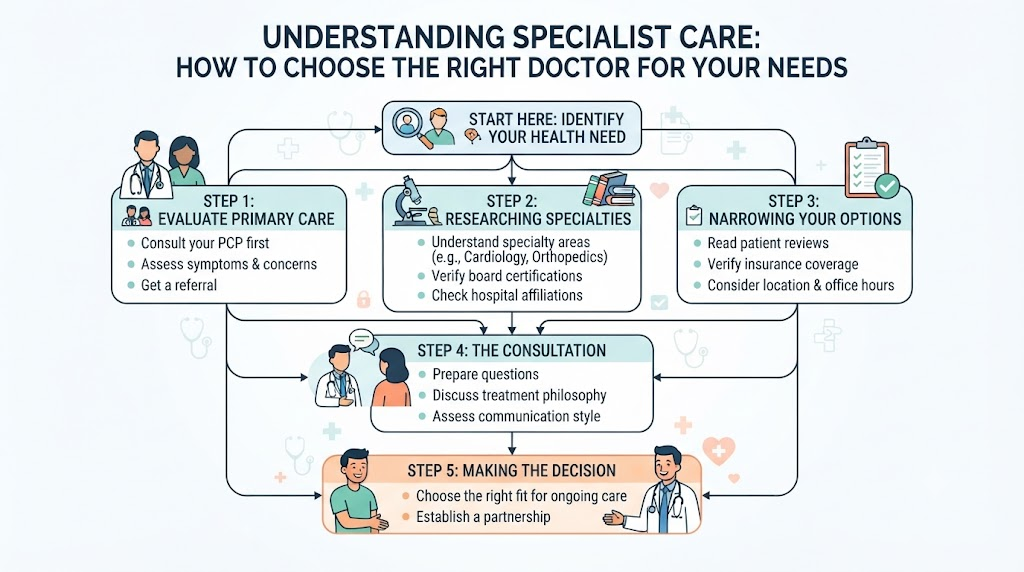
When you have been referred to a specialist, take the time to research your options. Key factors include:
- Board Certification: Confirm that the doctor is certified in their specialty by a recognized medical board.
- Clinical Experience: How often does the doctor treat your specific condition? High volume often correlates with better outcomes for complex procedures.
- Hospital Affiliations: Where does the doctor perform surgery or admit patients? This can impact the quality of care and convenience.
- Communication Style: Does the doctor listen to you? A good specialist should be a partner in your care who explains things clearly.
- Patient-Centered Care: Look for a practice that values your time and provides clear, coordinated communication with your primary care team.
Preparing for a Specialist Consultation
You only have a limited amount of time during an appointment, so preparation is key.
- Gather Records: Bring copies of recent blood work, imaging reports (X-rays, MRIs), and your current medication list.
- Symptom History: Write down when your symptoms started, what makes them better or worse, and how they have changed over time.
- List Questions: Prepare a written list of questions so you do not forget anything under the stress of the appointment.
- Bring a Companion: If you are nervous, bringing a friend or family member can help you take notes and ask questions you might miss.
Telemedicine vs. In-Person Specialist Visits
With the growth of digital health, you may have the option for virtual consultations.
Comparison Table
| Consultation Type | Best For | Limitations |
| Telemedicine | Follow-ups, routine advice, med changes | Limited physical examination |
| In-Person Visit | Comprehensive evaluation, complex exams | Travel may be required |
Common Mistakes Patients Make
Even well-informed patients can fall into common traps.
- Delaying Evaluation: Putting off a visit when symptoms are worsening only allows the condition to become more difficult to treat.
- Ignoring Referrals: If your doctor suggests a specialist, it is usually because they believe you need a higher level of insight.
- Choosing Based Only on Convenience: While location matters, prioritize expertise and quality outcomes over a short commute.
- Withholding Information: Be honest about your habits, previous treatments, and family history. Your doctor cannot treat what they don’t know about.
FAQs
- What is a medical specialist?
A doctor with advanced training in a specific field. - When should I see one?
When your condition is complex or needs specific expertise. - Do I always need a referral?
It depends on your insurance and the healthcare system. - How do I choose the right one?
Look at board certification, experience, and communication. - What questions should I ask?
Ask about your diagnosis, risks, and recovery. - Can I get a second opinion?
Yes, it is your right to seek a second opinion. - Are telemedicine appointments effective?
They are great for follow-ups and advice. - How do they work with PCPs?
They communicate findings to your primary doctor for coordinated care. - What records should I bring?
All previous test results and medication lists. - How do I check qualifications?
Use official medical board websites or hospital portals. - Does insurance cover it?
Most insurance plans cover specialist care, but always verify coverage. - How long should I wait?
Do not wait if your symptoms are severe. - Can one specialist treat multiple conditions?
Some do, especially if the conditions are related. - How often should I have follow-ups?
As recommended by the specialist based on your condition. - When should I seek urgent specialist care?
If your symptoms indicate a sudden medical crisis (e.g., chest pain, loss of vision).
Final Thoughts
Choosing the right medical specialist is a vital part of taking charge of your health. By conducting thorough research, preparing for your visits, and maintaining open communication with all your healthcare providers, you can ensure that you receive the most effective care possible. Remember that your health is a team effort, and you are the most important member of that team.For further reading on patient rights, navigating insurance, understanding different medical conditions, and wellness tips, we encourage you to explore the articles at MyDoctorsNow.
Leave a Reply