Introduction
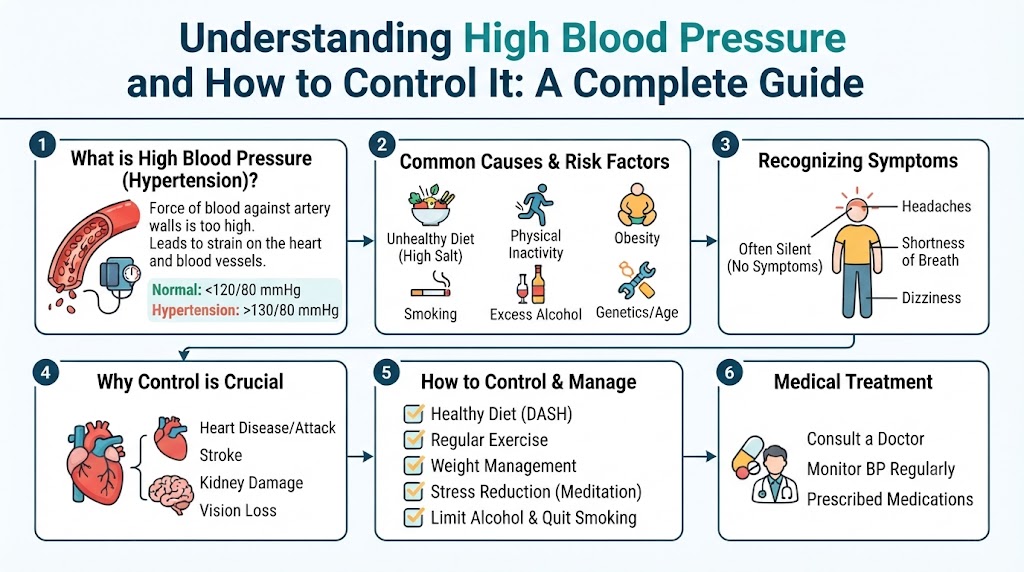
High blood pressure, or hypertension, is a common condition where the long-term force of the blood against your artery walls is high enough that it may eventually cause health problems, such as heart disease. Often called a “silent” condition because it frequently presents without noticeable symptoms, hypertension can quietly damage your body for years before it is discovered.At MyDoctorsNow, we believe that patient education is the first step toward better health. This guide will provide you with a clear understanding of what blood pressure is, how to monitor it, and the steps you can take toward effective control.
Understanding High Blood Pressure
Blood pressure is the measure of the force of your blood pushing against the sides of your arteries as your heart pumps it through your body. It is recorded using two numbers:
- Systolic Pressure (Top Number): Measures the pressure in your arteries when your heart beats.
- Diastolic Pressure (Bottom Number): Measures the pressure in your arteries when your heart rests between beats.
Hypertension occurs when this force is consistently too high. Over time, the extra strain can damage the delicate lining of your arteries, making them less elastic and increasing the risk of cardiovascular events.
BLOOD PRESSURE OVERVIEW TABLE
| Aspect | Description |
| Medical Condition | Hypertension |
| Organs Affected | Heart, Blood vessels, Kidneys, Brain, Eyes |
| Main Causes | Genetic factors, Diet, Lifestyle, Age, Underlying health conditions |
| Common Risk Factors | Obesity, Smoking, Stress, Lack of exercise |
| Treatment Goal | Lowering pressure to healthy, safe levels |
Blood Pressure Categories
Understanding your blood pressure readings is essential for knowing where you stand.
BLOOD PRESSURE CATEGORIES TABLE
| Category | Systolic (mmHg) | Diastolic (mmHg) | General Meaning |
| Normal | Less than 120 | and less than 80 | Healthy range |
| Elevated | 120–129 | and less than 80 | Needs monitoring |
| Stage 1 | 130–139 | or 80–89 | Requires lifestyle changes/management |
| Stage 2 | 140 or higher | or 90 or higher | Requires medical attention |
| Hypertensive Emergency | Higher than 180 | and/or higher than 120 | Seek emergency care immediately |
Common Causes of High Blood Pressure
While many factors contribute to hypertension, some are within our control, while others (like age or family history) are not.
CAUSES & RISK FACTORS TABLE
| Risk Factor | How It Increases Blood Pressure | Can It Be Managed? |
| Family History | Genetic predisposition to hypertension | No (but monitored) |
| Obesity | Increased workload on the heart | Yes |
| High Sodium Intake | Causes fluid retention, raising pressure | Yes |
| Smoking | Damages artery walls instantly | Yes |
| Diabetes | Leads to vessel damage | Yes |
| Kidney Disease | Impairs body’s fluid regulation | Yes (medically) |
Symptoms of High Blood Pressure
Most people with high blood pressure have no signs or symptoms, even if their blood pressure readings reach dangerously high levels. This is why regular screenings are vital.
SYMPTOMS TABLE
| Symptom | May Occur In | Medical Evaluation Needed |
| Headache | Severe Hypertension | Yes |
| Dizziness | Severe Hypertension | Yes |
| Blurred Vision | Severe Hypertension | Yes |
| Chest Pain | Severe/Emergency cases | Yes (Emergency) |
| Shortness of Breath | Severe Hypertension | Yes |
| Nosebleeds | Severe Hypertension | Yes |
Possible Complications
Uncontrolled hypertension functions like a slow-moving storm that can impact several vital organs.
COMPLICATIONS TABLE
| Complication | Why It Happens | Prevention Strategy |
| Heart Disease | Arteries become blocked or narrowed | Manage BP, diet, exercise |
| Stroke | Damaged or blocked vessels in the brain | Consistent BP control |
| Kidney Damage | Vessels in the kidneys weaken | Monitor kidney function |
| Vision Loss | Damage to eye blood vessels | Regular eye exams |
| Heart Failure | Heart works too hard to pump | Lifestyle + Medication |
How High Blood Pressure Is Diagnosed
Diagnosis requires more than just one high reading, as blood pressure fluctuates based on activity, stress, and time of day.
DIAGNOSTIC TESTS TABLE
| Test | Purpose | What It Evaluates |
| Blood Pressure Check | Routine screening | Your baseline pressure |
| Home Monitoring | Trends over time | Consistency in readings |
| Ambulatory Monitoring | 24-hour reading | Pressure during daily life |
| Blood Tests | Assessing health | Cholesterol, glucose, kidney health |
| ECG | Heart assessment | Electrical activity of the heart |
Lifestyle Changes That Help Control High Blood Pressure
Small changes often yield significant results in long-term blood pressure control.
LIFESTYLE CHANGES TABLE
| Lifestyle Habit | Benefit |
| Healthy Diet (DASH) | Provides potassium/magnesium for vessel health |
| Reduced Sodium | Decreases fluid retention |
| Exercise | Strengthens the heart |
| Healthy Weight | Relieves the heart’s workload |
| Better Sleep | Allows the heart and vessels to rest |
| Stress Reduction | Prevents temporary pressure spikes |
| Smoking Cessation | Improves artery flexibility |
Medications for High Blood Pressure
Sometimes, lifestyle changes are not enough to reach target levels. Healthcare providers may prescribe medications to work alongside lifestyle habits. Always take these as prescribed, and never stop them without consulting your provider.
MEDICATION MANAGEMENT TABLE
| Medication Goal | Importance |
| Lower Blood Pressure | Reduces physical strain on arteries |
| Protect Organs | Prevents damage to kidneys and heart |
| Reduce Cardiovascular Risk | Prevents stroke and heart attack |
Tips for Monitoring Blood Pressure at Home
HOME MONITORING CHECKLIST TABLE
| Step | Why It Matters |
| Proper Position | Ensures accurate measurement |
| Correct Cuff Size | Avoids incorrect readings |
| Consistent Timing | Captures reliable, comparable data |
| Record Readings | Provides the doctor with a clear picture |
| Regular Follow-Up | Allows for timely plan adjustments |
Future of Hypertension Care
| Innovation | Potential Benefit |
| AI Monitoring | Analyzing trends for predictive alerts |
| Wearable Devices | Continuous, real-time blood pressure tracking |
| Remote Monitoring | Instant communication with your doctor |
| Personalized Care | Treatment tailored to your genetics |
| Digital Health Apps | Gamifying and encouraging healthy habits |
FAQs
- What is high blood pressure?
Force of blood against artery walls is too high. - What causes it?
Lifestyle, genetics, and underlying health issues. - Can it have no symptoms?
Yes, it is often a silent condition. - What is normal?
Below 120/80 mmHg. - Can lifestyle changes help?
Yes, diet and exercise are key. - How much salt?
Generally less than 2,300mg per day. - Is medication forever?
Depends on whether lifestyle changes work. - How often to check?
As advised by your doctor. - Does stress increase it?
Yes, it can cause temporary spikes. - When is it an emergency?
Over 180/120 mmHg. - Can it go away?
It can be managed, but rarely “cured.” - Does age matter?
Yes, arteries naturally stiffen with age. - Is home monitoring accurate?
Yes, if using a validated device. - What is the DASH diet?
Diet focused on fruits, veggies, and low sodium. - Can I exercise?
Yes, doctors encourage moderate activity.
Final Thoughts
Managing blood pressure is a journey, not a sprint. By focusing on consistent monitoring, healthy eating, and a commitment to movement, you can take control of your heart health. Regular visits to your healthcare provider are essential to ensure your management plan is effective.We encourage you to visit MyDoctorsNow to explore our preventive care resources and wellness guidance. Taking action today is the best investment you can make for your long-term health.
Leave a Reply