Introduction
The heart is the engine of the human body, responsible for sustaining every other system through the continuous circulation of life-giving blood. Given its critical role, cardiovascular health is a cornerstone of overall wellness. However, heart-related issues are increasingly prevalent, affecting millions of people across the globe. Understanding these conditions is the first step toward living a longer, healthier life.For those looking for reliable medical information and professional guidance, MyDoctorsNow stands as a trusted resource for navigating complex heart health topics and wellness management. This guide explores the spectrum of heart conditions, the importance of diagnostic testing, and the modern approaches to treatment and prevention.
Understanding Heart Disease
Heart disease, often used as an umbrella term, refers to a range of conditions that affect the structure or function of the heart. The cardiovascular system consists of the heart, blood vessels, and the blood itself, working in a perfectly synchronized rhythm.
When any part of this system is compromised—whether due to blocked arteries, weakened muscles, or abnormal electrical signals—it impacts the body’s ability to circulate oxygen. Heart conditions can be acute, occurring suddenly, or chronic, developing slowly over many years. Early diagnosis is essential because many cardiovascular issues can be effectively managed—or even prevented—when identified during their nascent stages.
Why Heart Health Awareness Is Important
Awareness is the most powerful tool in preventive cardiology. By understanding your body’s signals, you can secure several key benefits:
- Early Intervention: Detecting issues before they become life-threatening.
- Better Outcomes: Treatments are generally more effective when started promptly.
- Reduced Complications: Managing risks prevents secondary damage to the body.
- Improved Quality of Life: A healthy heart translates to more energy, better sleep, and greater physical freedom.
HEART CONDITIONS OVERVIEW TABLE
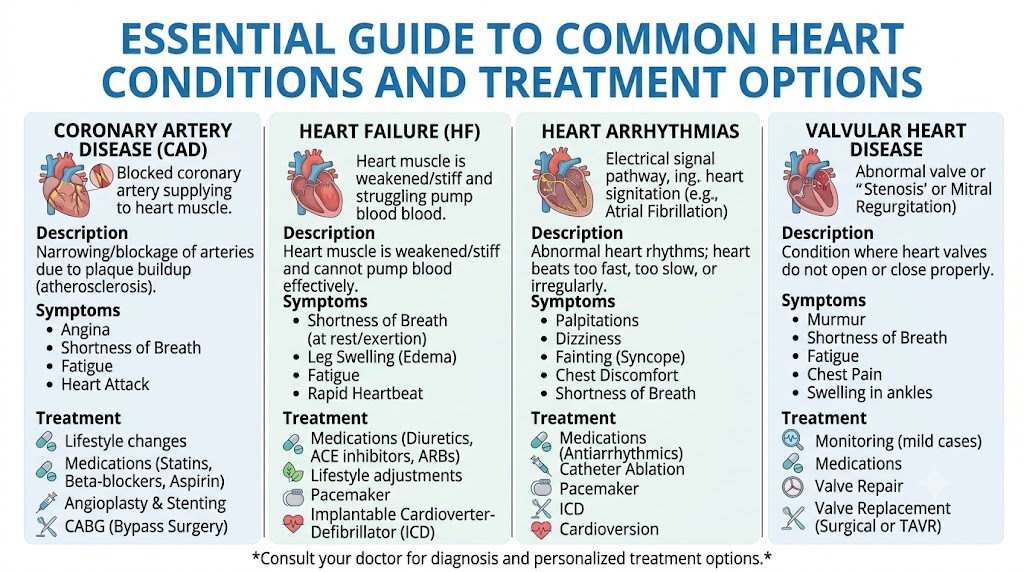
| Condition | Description | Common Symptoms | Typical Treatment |
| Coronary Artery Disease | Plaque buildup in arteries | Chest pain, breathlessness | Medication, lifestyle changes, surgery |
| Heart Failure | Heart cannot pump effectively | Fluid retention, exhaustion | Medication, lifestyle management, devices |
| Arrhythmia | Irregular heartbeat rhythm | Palpitations, dizziness | Medication, ablation, pacemaker |
| Heart Valve Disease | Valve malfunction | Heart murmur, fatigue | Medication, valve repair/replacement |
| Congenital Heart Disease | Structural issues present at birth | Cyanosis, fatigue | Monitoring, surgery |
Common Heart Conditions Explained
Coronary Artery Disease
This is the most common form of heart disease. It occurs when the arteries that supply blood to the heart become narrowed due to the buildup of cholesterol-containing deposits, known as plaque. Over time, this restricts blood flow and can lead to chest pain (angina) or a heart attack. Treatment often involves blood-thinning medications, lifestyle adjustments, or procedures to open the arteries.
Heart Failure
Heart failure does not mean the heart has stopped working; rather, it means the heart is not pumping blood as efficiently as it should. This can be caused by long-term high blood pressure, diabetes, or previous heart attacks. Management strategies focus on reducing the heart’s workload through diet, fluid restriction, and targeted medication to improve cardiac function.
Arrhythmias
Arrhythmias occur when the electrical signals that coordinate heartbeats are faulty. This can cause the heart to beat too fast, too slow, or irregularly. While some arrhythmias are harmless, others can be dangerous. Approaches range from lifestyle modification and medication to more advanced procedures like electrical cardioversion or implantable devices.
Heart Valve Disease
The heart has four valves that act as gates, ensuring blood flows in the correct direction. When these valves become too narrow (stenosis) or fail to close properly (regurgitation), the heart must work harder. Treatments involve regular monitoring, medications to support heart rhythm, or surgical repair/replacement of the valve.
Congenital Heart Disease
These are structural abnormalities of the heart present at birth. While some defects are minor and need only monitoring, others are more complex and require surgical intervention during infancy or childhood. Modern diagnostics now allow for early detection, ensuring that these conditions can be managed effectively as the child grows.
Common Symptoms of Heart Conditions
Symptoms can vary significantly from person to person. While some may experience intense pain, others may only feel mild fatigue or lightheadedness.
HEART SYMPTOMS TABLE
| Symptom | Possible Significance |
| Chest Pain | Potential sign of blocked arteries or ischemia |
| Shortness of Breath | Often linked to heart failure or valve issues |
| Fatigue | May indicate the heart is struggling to pump |
| Palpitations | Suggests an underlying arrhythmia |
| Dizziness | Can result from poor blood flow to the brain |
| Leg Swelling | Often a symptom of fluid buildup in heart failure |
Major Risk Factors for Heart Disease
HEART RISK FACTORS TABLE
| Risk Factor | Impact on Heart Health | Prevention Strategy |
| High Blood Pressure | Damages artery walls | Low-sodium diet, regular exercise, medication |
| High Cholesterol | Causes plaque buildup | Healthy fats, fiber intake, medical monitoring |
| Smoking | Stiffens arteries | Quitting smoking, behavioral support |
| Obesity | Increases heart workload | Portion control, regular activity |
| Diabetes | Damages blood vessels | Blood sugar monitoring, insulin control |
| Physical Inactivity | Weakens heart muscle | Consistent aerobic exercise routine |
Diagnostic Tests Used for Heart Conditions
DIAGNOSTIC TESTS TABLE
| Test | Purpose | Benefit |
| ECG | Monitors electrical activity | Detects rhythm irregularities |
| Echocardiogram | Ultrasound imaging of the heart | Visualizes structure and valve movement |
| Stress Test | Monitors heart during physical activity | Uncovers issues that only appear under load |
| Blood Tests | Analyzes biomarkers (like troponin) | Identifies cell damage or cholesterol levels |
| CT Scan | Provides detailed 3D imagery | Checks for calcium deposits in arteries |
| Cardiac Catheterization | Direct access to the heart | Both diagnostic and therapeutic capability |
Treatment Options for Common Heart Conditions
TREATMENT OPTIONS TABLE
| Treatment Type | Purpose | Common Use |
| Lifestyle Changes | Eliminating risk factors | First-line defense for almost all conditions |
| Medications | Managing symptoms/risks | Controlling BP, cholesterol, and rhythm |
| Angioplasty | Opening blocked arteries | Restoring blood flow in coronary disease |
| Pacemaker | Regulating electrical rhythm | Correcting slow or irregular heartbeats |
| Valve Surgery | Repairing/replacing valves | Treating severe valve disease |
| Bypass Surgery | Creating new paths for blood flow | Treating severe blockages |
How to Maintain Good Heart Health
Maintaining heart health is a lifelong commitment. A heart-healthy diet rich in vegetables, fruits, and lean proteins is foundational. Consistent exercise, even if it’s just a brisk 30-minute walk daily, strengthens the heart muscle. Stress reduction via meditation or hobbies prevents chronic physiological strain, and quality sleep allows the cardiovascular system to recover. Finally, regular checkups are essential for catching silent issues like hypertension before they result in long-term damage.
Benefits of Early Detection and Treatment
Early detection leads to higher survival rates and lower long-term costs. When caught early, heart disease can often be managed through diet and minor medication, avoiding invasive procedures entirely. Improved quality of life is the greatest benefit, allowing individuals to remain active and healthy for years longer.
Real-Life Patient Scenarios
- Early Diagnosis: A 50-year-old patient felt mild fatigue. A routine ECG detected an arrhythmia, which was successfully managed with medication before any complications arose.
- Successful Management: A patient with high cholesterol adopted a plant-based diet and consistent walking regimen, successfully lowering their numbers and reducing their dependence on cholesterol medication.
Common Mistakes People Make
- Ignoring symptoms: Thinking chest pain is just heartburn or stress.
- Skipping medications: Not realizing that heart medication needs to be taken consistently to work.
- Fearing the doctor: Delaying appointments until an emergency occurs.
- Unhealthy Habits: Assuming a “cheat day” can be a “cheat life” regarding diet and smoking.
Future of Heart Care
FUTURE OF CARDIOLOGY TABLE
| Innovation | Potential Benefit |
| AI Diagnostics | Rapid, accurate analysis of medical data |
| Wearables | Real-time monitoring of heart rhythm and BP |
| Remote Monitoring | Lower hospital readmission rates |
| Personalized Medicine | Tailored drugs based on genetic profiles |
| Minimally Invasive Procedures | Faster recovery and reduced scarring |
FAQs
- What is the most common heart disease?
Coronary artery disease. - Are heart symptoms the same for everyone?
No, symptoms vary significantly, especially between men and women. - Can I prevent heart disease?
Many forms are preventable through healthy lifestyle habits. - When should I see a doctor?
If you have unexplained chest pain, fatigue, or breathlessness. - How does stress affect the heart?
Chronic stress raises blood pressure and inflammation levels. - Are heart conditions hereditary?
Yes, family history is a significant risk factor. - Is coffee bad for the heart?
In moderation, coffee is generally considered safe. - What is an ECG?
An EKG/ECG records the electrical activity of the heart. - How do I know if I have high blood pressure?
It is often silent; it must be measured by a professional. - Can I exercise with heart disease?
Generally, yes, but only under the guidance of a physician. - Are heart surgeries painful?
Modern medicine ensures comprehensive pain management. - What does a cardiologist do?
They specialize in diagnosing and treating heart conditions. - How often should I get my heart checked?
At least annually after the age of 40. - What is an angioplasty?
A procedure to widen a narrowed or blocked artery. - Is recovery after heart surgery long?
It varies, but modern rehab programs focus on getting patients back to normal life efficiently.
Final Thoughts
Heart disease awareness is not just about avoiding illness; it is about embracing a lifestyle that supports your longevity and vitality. By identifying risks, listening to your body, and partnering with medical professionals, you can significantly reduce your chances of developing severe cardiac conditions. Prioritize your heart health today, because it is the foundation for every tomorrow.For further information on heart health, symptoms, and preventive measures, we invite you to explore the vast healthcare resources available at MyDoctorsNow.
Leave a Reply