Introduction
In the modern healthcare environment, the effectiveness of a facility is often measured not just by the quality of clinical care, but by the efficiency of its operational systems. At the heart of this operational success lies the appointment scheduling process. It is the primary interface between the patient and the provider, serving as the gateway to care and the foundation of clinic productivity. Poor scheduling doesn’t just result in empty chairs or crowded waiting rooms; it creates a domino effect that impacts staff morale, financial viability, and, most importantly, the quality of patient outcomes. Hospitals and clinics that master the art of scheduling are those that can effectively balance high patient volume with personalized, empathetic service.
At MYDOCTORSNOW, we understand that every missed appointment or disorganized clinic hour represents a missed opportunity to improve a patient’s life. Effective scheduling is an intricate balance of logistics, technology, and human communication. It requires an operational strategy that respects the patient’s time while ensuring the physician’s expertise is utilized to its full potential. In an era where patients increasingly expect the same digital convenience in healthcare that they receive in travel or retail, the pressure on clinics to innovate is higher than ever. This guide provides a comprehensive overview of the best practices in medical appointment scheduling, designed to help administrators and practitioners transform their operations into a seamless, high-efficiency system that benefits everyone involved.
What is Medical Appointment Scheduling?
Medical appointment scheduling is the systematic process of coordinating the time, resources, and personnel required for patient care. It encompasses everything from the initial request for an appointment to the final follow-up, ensuring that providers are prepared, patients are notified, and clinic resources (such as examination rooms and diagnostic equipment) are optimized.
While it may seem like a purely administrative task, scheduling is actually a critical component of the healthcare delivery system. It acts as the regulator of patient flow, preventing bottlenecks during peak hours and ensuring that urgent cases receive priority. By aligning patient needs with provider availability, scheduling systems create a predictable environment where care can be delivered safely and effectively. Without this systemic approach, a clinic would quickly succumb to chaos, leading to exhausted staff and neglected patients.
Challenges in Medical Scheduling
The complexities of modern medicine make the scheduling process inherently difficult. Even the most organized clinics face systemic challenges that can disrupt operations:
- No-Shows: Perhaps the most significant frustration for administrators, no-shows represent lost revenue, wasted resources, and a gap in a patient’s continuum of care.
- Overbooking: Many clinics overbook in an attempt to compensate for no-shows, but this strategy often backfires, leading to excessive wait times and overcrowded facilities.
- Long Waiting Times: When a clinic runs behind schedule, it leads to patient dissatisfaction and increased anxiety, which can impact the clinical encounter itself.
- Staff Overload: Front-desk staff are often bombarded with phone calls, manual entry tasks, and patient intake paperwork, leading to burnout and an increase in booking errors.
Importance of Efficient Scheduling Systems
A robust scheduling system is not just about keeping the calendar full; it is about strategic resource management. When a clinic runs efficiently, the patient experience is elevated. Patients feel respected, as they spend less time waiting and more time engaged in meaningful interaction with their healthcare provider.
From a financial perspective, optimized scheduling is vital. Every empty slot is a sunk cost that contributes to financial instability. Conversely, when a system is optimized, it maximizes the number of patients seen without increasing provider stress. This revenue predictability allows for better budgeting, reinvestment in medical technology, and the ability to expand services to reach more patients in need.
Core Scheduling Models in Healthcare
Different clinics have different needs, and choosing the right model is essential for success.
- Time-slot Scheduling: The most common model, where each patient is assigned a specific, fixed duration. It provides order but can be disrupted by one long appointment.
- Open-access Scheduling: A strategy where a portion of the day is left open for same-day bookings. This is highly effective for primary care but requires high organizational agility.
- Wave Scheduling: Patients are scheduled at the top of the hour and seen in the order of their arrival. This prevents the clinic from being empty if one patient is late.
- Hybrid Models: These combine different approaches, such as fixed slots for routine checkups and open-access blocks for urgent sick visits, providing the best of both worlds.
TABLE 1 — SCHEDULING MODELS COMPARISON TABLE
| Scheduling Model | Purpose | Efficiency Level | Patient Experience | Use Case |
| Time-slot Scheduling | Fixed appointments | Medium | Moderate | General clinics |
| Open-access Scheduling | Same-day booking | High | Very High | Primary care |
| Wave Scheduling | Balance delays | High | High | Busy hospitals |
| Hybrid Model | Flexible system | Very High | Very High | Large hospitals |
TABLE 2 — APPOINTMENT OPTIMIZATION STRATEGIES
| Strategy | Purpose | Benefit | Impact on Hospital |
| Automated Reminders | Reduce no-shows | High attendance | Better revenue |
| Waitlist Management | Fill cancellations | Efficient slots | Reduced idle time |
| Online Booking | Easy access | Patient convenience | Reduced staff load |
| Triage System | Priority-based care | Faster urgent care | Better outcomes |
| Buffer Time | Reduce delays | Smooth workflow | Less burnout |
Role of Technology in Appointment Scheduling
Technology is the backbone of modern healthcare operations. Cloud-based scheduling platforms have made it possible for clinics to operate with unprecedented precision. Features such as real-time calendar synchronization allow providers to see their schedule from anywhere, while patient portals empower individuals to book, reschedule, or cancel appointments without needing to call the office.
Furthermore, data analytics within these systems can reveal hidden operational patterns. For example, by analyzing “no-show” data, a hospital might discover that a certain type of appointment has a high cancellation rate at a specific time of day. This data allows administrators to adjust their scheduling models, such as overbooking slightly for those specific slots or implementing mandatory pre-payment for those types of visits.
How to Reduce Patient No-Shows
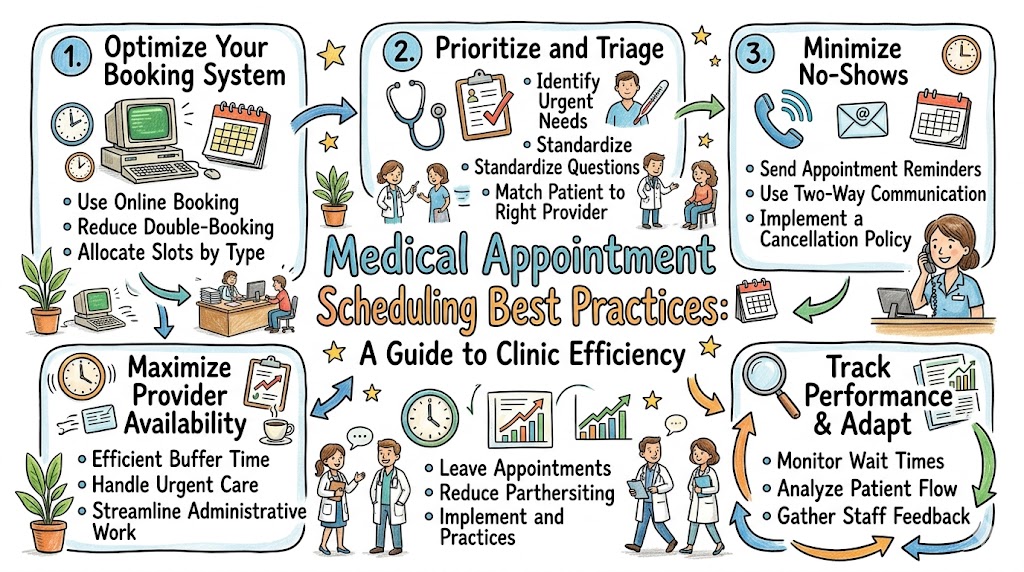
No-shows are often a symptom of miscommunication rather than a lack of patient intent. To reduce no-shows, start by implementing a multi-channel reminder system: text, email, and phone calls. Reminders should be sent 48 hours and 24 hours prior to the visit.
Another strategy is to improve the scheduling process itself. If a patient feels the appointment is “easy” to make, they are more likely to prioritize it. Use a user-friendly interface that allows for one-click confirmation. Finally, consider a clear cancellation policy that is communicated at the time of booking. When patients understand that their slot is a valuable resource, they are more likely to notify the clinic if their plans change, allowing the clinic to reassign the slot to someone else.
Improving Patient Experience Through Scheduling
The patient experience begins the moment they interact with the scheduling system. A complex, rigid system is frustrating and sets a negative tone for the entire visit. Conversely, a patient who can easily book an appointment, receive a confirmation, and access their visit information is already primed for a positive encounter.
Clinics should ensure that scheduling staff—or the online interface—are empathetic. For example, if a patient calls for an urgent matter, they should be offered a range of solutions rather than a curt “no, we are booked.” By offering to place them on a waitlist or providing an urgent care alternative, the clinic maintains a reputation for being helpful and patient-centric.
Common Mistakes in Hospital Scheduling
Even experienced administrators often fall into common traps. One major mistake is failing to account for “provider variability.” Not all doctors or clinicians move at the same speed; some patients require more time, and some providers are more efficient than others.
Another mistake is a lack of standardization. When every receptionist uses a different method for booking, the schedule becomes disorganized. Standardized booking protocols, where all staff follow the same rules regarding appointment duration and slot categorization, are vital for maintaining consistency. Lastly, clinics often neglect to keep patient information updated, resulting in wasted time spent trying to contact patients with outdated phone numbers or emails.
Key Takeaways
- Effective scheduling is a strategic asset, not just an administrative burden.
- Choose a scheduling model that aligns with your clinic’s specialty and volume.
- Technology is essential for optimizing patient flow and managing data-driven improvements.
- Prioritize patient convenience to improve attendance and overall satisfaction.
- Consistency in booking protocols prevents internal confusion and improves staff morale.
FAQ SECTION
1. What is the most effective way to reduce no-shows?
Automated multi-channel reminders (text, email, and call) sent well in advance are the most effective method.
2. How do I choose between open-access and time-slot scheduling?
Open-access is best for primary care where urgent issues are common, while time-slot scheduling is better for specialty clinics with complex, longer procedures.
3. What is “buffer time”?
Buffer time is a small, built-in gap in the schedule intended for charting, unforeseen patient complications, or staff rest.
4. Why is waitlist management important?
It maximizes revenue and utility by filling late cancellations immediately, ensuring no appointment slots go to waste.
5. How does technology improve the scheduling experience?
It provides 24/7 self-booking access for patients and gives administrators data analytics to spot bottlenecks.
6. Should I overbook to compensate for no-shows?
It is a risky strategy. It is generally better to use a waitlist system than to deliberately overbook and risk overcrowding.
7. How can I make my scheduling staff more efficient?
Provide them with standardized protocols, intuitive software, and training on how to triage urgent versus routine calls.
8. What is the role of patient portals in scheduling?
Patient portals reduce the administrative burden on your staff by allowing patients to handle their own routine scheduling and rescheduling.
9. How do I handle a patient who is a repeat no-show?
Consider a policy that requires a deposit for future bookings or restricts them to “walk-in only” status after a certain number of infractions.
10. Why is standardizing booking protocols important?
It prevents scheduling errors and ensures that all staff members are managing appointment durations consistently across the calendar.
CONCLUSION
The scheduling department is the nervous system of a medical facility; when it functions smoothly, the entire organization thrives. By embracing the best practices outlined in this guide—from selecting the right scheduling model to utilizing cutting-edge technology and standardized staff protocols—clinics can transform their operations. This transformation goes far beyond administrative efficiency. It is ultimately about providing care that is accessible, predictable, and respectful of the patient’s time.
In a competitive healthcare landscape, the ability to manage your clinic effectively is a massive differentiator. Patients notice when a system is organized; they feel the difference when their time is valued and their appointments are managed with professional rigor. As you refine your scheduling processes, remember that every change you make is an investment in your staff’s quality of life and your patients’ overall health outcomes. Keep evaluating your metrics, keep listening to your team, and continue to leverage technology to create a clinic that truly serves its community. By prioritizing excellence in scheduling today, you are laying the groundwork for a more robust, sustainable, and patient-centered future for your practice.
Leave a Reply