Introduction
Laboratory testing is one of the most powerful tools in modern medicine. When you visit a doctor, a series of blood or diagnostic tests often provides the “blueprint” for your health. However, receiving a lab report filled with medical jargon, mysterious abbreviations, and numbers can be intimidating. Understanding your lab test results is not just about comparing a number to a reference range; it is about recognizing how your body’s unique chemistry reflects your overall health.
At MYDOCTORSNOW, we believe that informed patients are healthier patients. By providing accessible healthcare information, we aim to bridge the gap between complex diagnostic data and actionable health knowledge. In this guide, we will break down the basics of laboratory reports, explain how doctors interpret your data within the context of your unique medical history, and help you prepare for productive conversations with your healthcare provider. Your health is personal, and understanding your lab results is a proactive step toward maintaining it.
What Are Lab Tests?
Lab tests are medical procedures that involve testing samples of blood, urine, or other substances from the body.
- Definition: These tests measure various chemical, biological, and physical markers.
- Purpose: They are used to screen for diseases, monitor chronic conditions, evaluate the effectiveness of treatment, and identify risk factors before symptoms appear.
- Preventive Healthcare: Regular screenings help catch issues early, often when they are most treatable.
Understanding Your Lab Test Results: The Basics
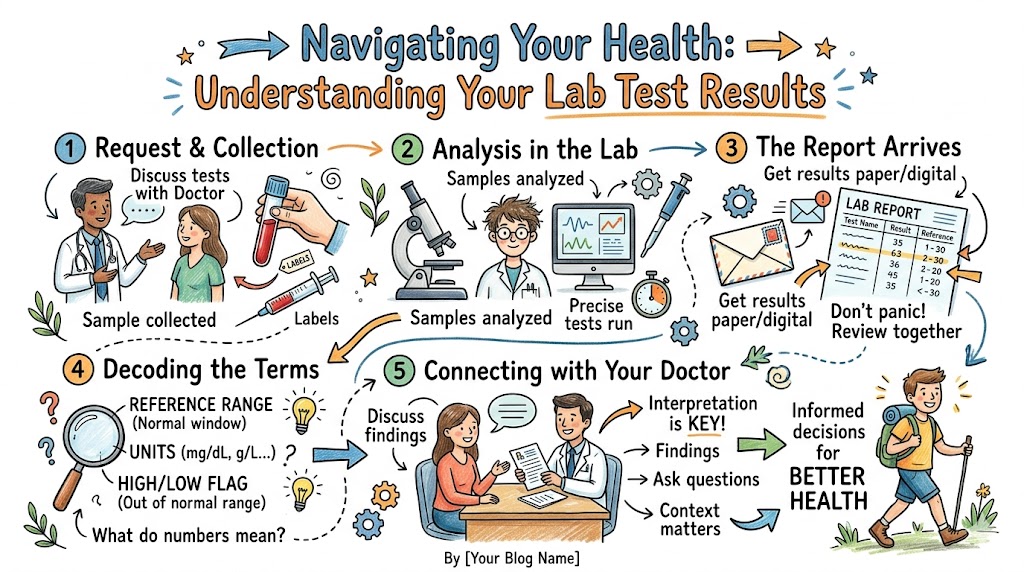
Your lab report is a summary of your health data. Here is what to look for:
- Test Name: What exactly is being measured?
- Result Value: The numerical or qualitative finding from your sample.
- Reference Range: The “normal” range established by the laboratory.
- Flags (H/L): Markers that indicate a result is outside the standard reference range.
- Units of Measurement: The scale used (e.g., mg/dL, mmol/L), which varies depending on the laboratory.
Note: A result marked “High” or “Low” simply means it falls outside the laboratory’s standard population range—not necessarily that you are sick.
How Doctors Interpret Lab Results
Doctors do not interpret results in a vacuum. Instead, they integrate:
- Medical History: Your long-term health trends.
- Symptoms: How you are feeling physically.
- Medications: Many drugs can artificially raise or lower specific test values.
- Lifestyle Factors: Recent diet, exercise intensity, or stress levels.
- Trend Analysis: A result that is “abnormal” for the general population might be completely normal for you based on previous tests.
Common Lab Tests Explained
| Test | What It Measures | Why It Matters |
| CBC | Red/white cells, platelets | Checks for infection, anemia, or clotting issues. |
| CMP | Electrolytes, kidney/liver status | Assesses overall metabolic health and organ function. |
| Lipid Profile | Cholesterol and triglycerides | Evaluates heart disease risk. |
| HbA1c | Average blood sugar over 3 months | Screens for and monitors diabetes. |
Understanding Reference Ranges
Reference ranges are determined by testing large groups of healthy individuals. However:
- Age and Gender: What is “normal” for a 70-year-old may differ from a 20-year-old.
- Lab-to-Lab Variation: Different labs use different equipment and methods, meaning ranges can vary slightly between locations.
- Individual Variation: Everyone has a unique biological baseline.
What High and Low Results Can Mean
- Elevated Values: Can be caused by acute infection, dehydration, diet, or specific health conditions.
- Low Values: Might indicate nutritional deficiencies, chronic inflammation, or side effects of treatment.
- Temporary Changes: A “bad” result one day might be perfectly normal two days later after proper hydration or rest.
Common Reasons for Abnormal Results
- Dehydration: Highly concentrated blood can skew electrolyte and kidney markers.
- Recent Diet: Eating a high-fat or high-sugar meal before a test can impact glucose and lipids.
- Exercise: Intense physical activity can temporarily increase muscle enzymes (like AST/ALT).
- Medications: Both over-the-counter and prescription drugs can alter blood chemistry.
Most Common Blood Test Markers
- RBC/WBC: Markers for oxygen transport and immune function.
- Hemoglobin: Crucial for measuring anemia.
- Cholesterol (LDL/HDL): Indicators of cardiovascular risk.
- Glucose: A measure of blood sugar levels.
- Creatinine: A key marker for kidney filtration capacity.
- ALT/AST: Enzymes that indicate liver health.
Questions Patients Should Ask Their Doctor
- “Are these results significantly outside the normal range?”
- “Do these results explain my current symptoms?”
- “Is any follow-up testing needed to confirm these findings?”
- “Should I make any specific changes to my diet or exercise?”
- “Is this a result of any medication I am currently taking?”
Common Misconceptions About Lab Results
- Myth: “My result is abnormal, so I must be sick.” Fact: Many abnormal values are benign, transient, or lab-related errors.
- Myth: “My result is normal, so I have nothing to worry about.” Fact: Normal results should be viewed alongside symptoms; some conditions don’t show up in labs until they are advanced.
- Myth: “I can interpret this perfectly on my own.” Fact: Online data cannot account for your personal clinical history.
How MYDOCTORSNOW.COM Helps Patients
At MYDOCTORSNOW, we provide tools and resources to help you bridge the gap between your health data and clinical guidance. We encourage patient education, helping you prepare for appointments so you can ask informed questions and take charge of your health.
Future of Laboratory Medicine
The future of diagnostic testing is moving toward personalization. AI will soon allow doctors to compare your results not just against a general population, but against your own long-term historical data, making it easier to spot subtle, dangerous trends before they become major health issues.
Expert Tips for Understanding Your Lab Reports
- Keep a Personal Record: Store all your lab results in one place to track your own trends.
- Don’t “Dr. Google”: Avoid searching for worst-case scenarios online.
- Wait for the Doctor: Always discuss results with your provider before deciding on lifestyle changes.
- Be Consistent: Try to get tests done under similar conditions (e.g., fasting, same time of day) for consistency.
FAQs
Q1. What do lab test results mean?
A: They are quantitative snapshots of your current health markers.
Q2. What is a normal reference range?
A: The standard range where 95% of the healthy population falls.
Q3. Why are some results marked high or low?
A: To help identify markers that deviate from the standard baseline.
Q4. Should I worry about one abnormal result?
A: Generally, no. Most doctors will repeat the test to confirm a result.
Q5. Can medications affect lab results?
A: Yes, many medications interfere with blood chemistry.
Q6. What is a “fasting” test?
A: A test requiring no food or drink (other than water) for 8–12 hours.
Q7. Can stress impact my labs?
A: Absolutely, high stress can affect glucose and cortisol levels.
Q8. Should I show my lab results to other doctors?
A: Yes, keeping all your providers updated is essential.
Q9. Is a “normal” result always good?
A: Usually, but it must be interpreted alongside your current symptoms.
Q10. How quickly are results ready?
A: Varies from same-day for basic tests to several days for complex diagnostics.
Q11. Are lab errors common?
A: They are rare, but possible; this is why follow-up testing is standard.
Q12. Do I need to be calm for a blood draw?
A: Yes, extreme anxiety can impact heart rate and blood pressure readings.
Q13. Can I drink water before a fast?
A: Usually, yes, but clarify with your doctor first.
Q14. What does “WNL” mean?
A: “Within Normal Limits.”
Q15. Where can I find more help?
A: Check MYDOCTORSNOW for more resources.
Conclusion
Understanding your lab test results is an act of empowerment. While the numbers on your report may seem cold and clinical, they are a reflection of your body’s daily life—how you sleep, eat, move, and respond to stress. Navigating these reports requires patience, a bit of medical context, and, most importantly, a strong relationship with a healthcare professional who understands your full story.
It is natural to feel a spike of anxiety when you see a flagged result, but it is important to pause and look at the full picture. Laboratory values are dynamic, not static. A single test is merely one frame in the long movie of your health. By learning to look at your data over time—and by partnering with a doctor who interprets these numbers based on your symptoms, medications, and history—you can transform your lab reports from a source of confusion into a powerful tool for wellness.
Leave a Reply