Introduction
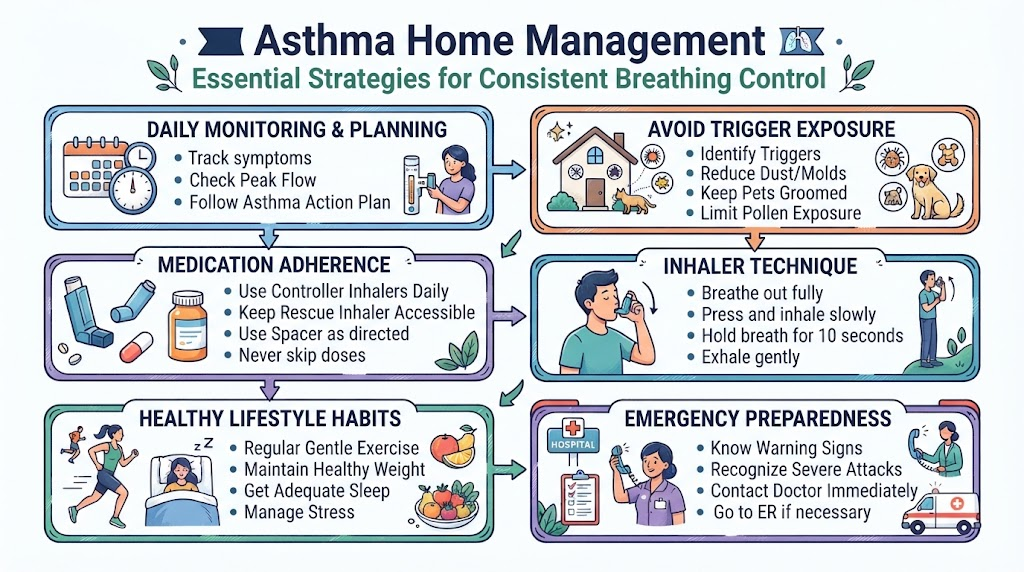
Asthma is a chronic condition that affects the airways, making it harder for air to flow in and out of the lungs. For millions of people, asthma is a daily reality, but it does not have to dictate the quality of your life. When managed effectively, asthma can be kept under control, allowing for active, healthy, and comfortable living.This guide is designed to provide you with actionable strategies to take charge of your respiratory health. For reliable medical information and support on your breathing journey, we encourage you to explore MyDoctorsNow.
What Is Asthma?
Asthma is a long-term condition that causes inflammation and narrowing of the airways in the lungs. When you have asthma, your airways are extra sensitive and react to various “triggers.”
When exposed to these triggers, the muscles around the airways tighten, the lining of the airways becomes swollen, and the body produces excess mucus. This narrows the space for air to travel, leading to common symptoms such as:
- Wheezing (a whistling sound while breathing).
- Frequent coughing, especially at night.
- Shortness of breath.
- Tightness or pain in the chest.
Common Triggers of Asthma at Home
Understanding your triggers is the first step toward prevention. Common household irritants include:
- Dust Mites: Often found in carpets, curtains, and bedding.
- Smoke: From cigarettes, incense, or cooking fumes.
- Pet Dander: Tiny flakes of skin shed by cats, dogs, and birds.
- Mold and Humidity: Thrives in damp areas like bathrooms and kitchens.
- Strong Scents: Perfumes, chemical cleaners, and aerosol sprays.
- Cold Air: Can cause the airways to constrict rapidly.
Why Home Management of Asthma Matters
Home management is not just about reacting when you feel breathless; it is about creating a stable environment where your lungs can thrive. Consistent care helps by:
- Reducing the frequency and severity of asthma attacks.
- Improving your daily activity levels and sleep quality.
- Minimizing reliance on rescue medications.
- Ensuring that your long-term treatment plan remains effective.
Daily Tips for Managing Asthma at Home
- Take Medicines Regularly: Always follow the schedule set by your doctor, even when you feel fine.
- Follow Your Asthma Action Plan: Know exactly what to do when symptoms are stable versus when they start to worsen.
- Keep Your Inhaler Accessible: Always know where your rescue inhaler is located.
- Monitor Symptoms: Keep a simple log of your symptoms to help your doctor adjust your treatment if necessary.
Asthma Action Plan Overview
An Asthma Action Plan is a written document provided by your healthcare provider. It categorizes your health into three zones:
- Green Zone (Doing Well): You have no symptoms; continue your daily controller medications.
- Yellow Zone (Caution): You have some symptoms; follow your doctor’s instructions for additional medication.
- Red Zone (Danger): You are experiencing severe difficulty breathing; use your rescue inhaler and seek emergency medical attention immediately.
Home Environment Control for Asthma
Creating an “asthma-friendly” space can significantly reduce your daily symptom burden.
Asthma-Friendly Home Checklist Table
| Area | Action | Benefit |
| Bedroom | Use allergen-proof covers | Fewer dust mites while sleeping |
| Kitchen | Use an exhaust fan | Less smoke and chemical buildup |
| Living Room | Vacuum regularly | Lower accumulation of allergens |
| Bathroom | Improve ventilation | Prevents mold growth |
| Entire Home | Keep surfaces clean | Better overall air quality |
Diet and Lifestyle Tips for Asthma Control
While there is no specific “asthma diet,” overall health plays a major role:
- Hydration: Drinking enough water helps keep the mucus in your airways thin.
- Healthy Weight: Excess weight can put pressure on your lungs, making breathing more difficult.
- Stress Management: High stress can trigger asthma symptoms in many people.
- Physical Activity: Regular, safe exercise helps strengthen your heart and lungs. Always talk to your doctor about which exercises are best for you.
Breathing Exercises for Asthma Relief
Breathing exercises can help you gain better control over your airflow:
- Pursed Lip Breathing: Inhale through your nose and exhale slowly through pursed lips. This helps keep airways open longer.
- Diaphragmatic Breathing: Breathe deeply into your belly rather than shallowly into your chest. This engages your diaphragm, the primary muscle for breathing.
Asthma Medications and Safe Usage
- Controller Inhalers: These are taken daily to reduce inflammation. They take time to work and should not be skipped.
- Rescue Inhalers: These provide immediate relief during a flare-up.
- Proper Technique: Always ensure you are using your inhaler correctly. If you are unsure, ask your healthcare provider at MyDoctorsNow to demonstrate the proper technique.
Warning Signs That Need Medical Attention
If you experience any of the following, do not delay—seek medical help immediately:
- Severe breathlessness that prevents you from speaking in full sentences.
- Chest tightness that does not improve after using your rescue inhaler.
- Blue tint to your lips or fingernails.
- Symptoms that occur frequently at night, disrupting your sleep.
Common Mistakes in Asthma Management
- Ignoring Early Warning Signs: Small symptoms often precede large attacks.
- Overusing Rescue Inhalers: If you need your rescue inhaler more than twice a week, your asthma is likely not well-controlled.
- Skipping Doses: Consistency is the key to preventing airway inflammation.
- Delaying Medical Checkups: Regular review of your medications is vital.
Preventing Asthma Attacks at Home
Prevention is built on two pillars: Trigger avoidance and Medication adherence. By staying consistent with your daily routine and keeping your living space free of dust, smoke, and moisture, you create the best possible conditions for stable breathing.
FAQs (15 Questions)
- What is asthma in simple words?
A condition where airways become inflamed and narrow, making it hard to breathe. - Can asthma be controlled at home?
Yes, through lifestyle management and following your doctor’s plan. - What triggers asthma most at home?
Dust, smoke, pet dander, and mold are common. - Which inhaler is used for asthma?
Controllers for daily use and rescue inhalers for emergencies. - Can exercise help asthma?
Yes, regular, doctor-approved exercise improves lung health. - Is asthma permanent?
It is a chronic condition, but it is highly manageable. - How can I stop asthma attacks?
By consistently avoiding triggers and using your medications as prescribed. - What foods help asthma patients?
A balanced diet rich in fruits and vegetables. - Is dust bad for asthma?
Yes, dust mites are a very common trigger. - Can stress trigger asthma?
Yes, emotional stress can lead to symptoms. - When should I use my inhaler?
Follow your doctor’s instructions for daily use and emergency use. - Are breathing exercises helpful?
Yes, they improve lung function and breathing control. - Can asthma get worse at night?
Yes, this is a common symptom of poorly controlled asthma. - How often should I clean my home?
Regularly, focusing on removing dust and controlling moisture. - When should I go to the hospital?
If symptoms do not improve after using your rescue inhaler.
Final Thoughts
Managing asthma effectively is an ongoing process of staying aware of your environment, listening to your body, and following the medical guidance provided by your healthcare team. While asthma is a lifelong companion for many, it does not have to define your potential. By implementing these home care strategies and maintaining a consistent daily routine, you can breathe easier and live more fully.Always remember that your healthcare provider is your best partner in this journey. For trusted medical guidance, symptom management tips, and professional respiratory care information, explore MyDoctorsNow. Stay consistent, stay informed, and prioritize your lung health every day.
Leave a Reply