Introduction
A health checkup is a proactive step toward maintaining long-term wellness. It serves as a diagnostic window into your current health, helping you identify potential issues before they become significant concerns. However, the quality of these diagnostic results is heavily dependent on how well you prepare.At MyDoctorsNow, we believe that knowledge is the foundation of good health. In this guide, we will explore why preparation is critical, provide a step-by-step approach to readying yourself for your appointment, and help you navigate the process with confidence.
Understanding Health Checkups
A health checkup, often referred to as a full-body checkup or preventive health screening, is a series of tests and physical examinations conducted to evaluate your general state of health. These checkups are not just for the ill; they are essential for healthy individuals to monitor baseline wellness and detect silent conditions such as high blood pressure, elevated cholesterol, or early-stage blood sugar abnormalities.
Regular screenings allow for the early detection of diseases, which often leads to better management, less invasive treatments, and improved long-term health outcomes.
HEALTH CHECKUP OVERVIEW TABLE
| Aspect | Description |
| Purpose | Early disease detection and wellness monitoring |
| Common Tests | Blood panels, ECG, imaging, physical examination |
| Frequency | Typically annual, or as advised by your physician |
| Preparation Needed | Varies by test (fasting, hydration, medication management) |
| Outcome Goal | Baseline data for informed health management |
Why Proper Preparation Is Important
Preparation is the bridge between a test and an accurate diagnosis. Without adequate prep, your physiological state—affected by your recent diet, sleep, or activity—can interfere with the test’s ability to measure your true baseline health.
Improves Accuracy of Test Results
Clear physiological markers depend on standard conditions, such as an empty stomach for glucose tests.
Reduces Need for Repeat Tests
Following instructions the first time avoids the cost and inconvenience of returning for additional blood draws.
Helps Early Disease Detection
Stable, baseline results ensure that even minor shifts in health data are noticed by your doctor.
Ensures Safe Blood Collection
Proper hydration and rest make the process of drawing blood easier and more comfortable.
Reduces Patient Anxiety
Knowing what to expect and being prepared makes the entire experience much smoother and less stressful.
FACTORS AFFECTING TEST RESULTS TABLE
| Factor | How It Affects Results | How to Control It |
| Diet | Influences blood sugar/lipids | Fast as instructed |
| Sleep | Affects blood pressure/hormones | Get 7–8 hours of rest |
| Exercise | Can alter muscle enzymes | Avoid heavy workouts for 24h |
| Medications | Interfere with test chemicals | Consult your doctor first |
| Alcohol | Impacts liver/sugar tests | Abstain for at least 48h |
General Preparation Before a Health Checkup
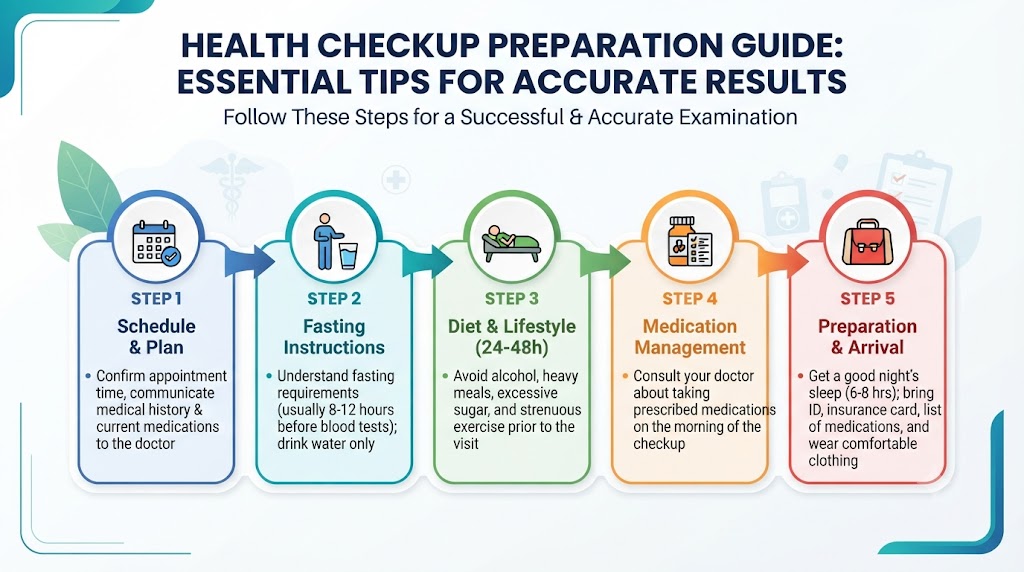
Preparation is rarely a one-size-fits-all process. Depending on the tests scheduled, you may be required to follow specific guidelines.
Fasting Requirements
Most blood tests for sugar and lipids require 8–12 hours of fasting. Drink only plain water, as coffee, tea, or juice can alter test outcomes.
Hydration Guidelines
Staying hydrated makes blood collection easier. Unless instructed otherwise, continue drinking plain water.
Medication Instructions
Do not stop prescribed medications without consulting your doctor. Some medications must be taken as scheduled, while others should be paused.
Alcohol and Smoking Restrictions
Avoid alcohol for at least 48 hours prior to your checkup. Avoid smoking on the morning of the test, as it can spike blood pressure and heart rate.
Sleep and Rest Importance
A tired body exhibits stress markers. Prioritize a full night’s sleep to ensure your heart rate and blood pressure readings are at their normal baseline.
PRE-CHECKUP PREPARATION TABLE
| Step | Purpose | Importance |
| Fasting | Stabilize sugar/lipid levels | Essential for accurate results |
| Hydration | Facilitate easy blood draw | High |
| Medication Review | Prevent test interference | Critical |
| Rest | Baseline vitals stabilization | High |
| Avoid Alcohol | Prevent metabolic skewing | Critical |
What to Do the Day Before Checkup
- Eat a Light Dinner: Avoid heavy, oily, or high-sugar meals.
- Avoid Heavy Exercise: Give your muscles time to recover so enzymes don’t show up in your blood work.
- Stay Hydrated: Drink plenty of water throughout the day.
- Sleep Well: Aim for 7–8 hours of quality rest.
- Prepare Documents: Gather your paperwork in advance to save time.
DOCUMENTS CHECKLIST TABLE
| Document | Why Needed |
| ID Proof | Required for registration |
| Medical History | Provides context for doctors |
| Medication List | Prevents errors during evaluation |
| Previous Reports | Allows for longitudinal health tracking |
| Insurance Details | Facilitates billing and processing |
What Happens During a Health Checkup
A standard checkup usually follows a structured flow to ensure efficiency and comfort.
CHECKUP PROCESS TABLE
| Step | Description | Purpose |
| Registration | Verifying ID and insurance | Confirming patient identity |
| History Review | Discussing symptoms/concerns | Tailoring the exam to you |
| Physical Exam | Vitals, vision, heart/lung sounds | Baseline physical assessment |
| Lab Tests | Blood, urine, or stool samples | Molecular/chemical analysis |
| Reports | Compilation of data | Providing a snapshot of health |
Common Tests in Health Checkups
- Blood Sugar: Monitors glucose metabolism.
- Lipid Profile: Measures cholesterol (LDL, HDL, Triglycerides).
- ECG: Records electrical activity of the heart.
- Liver/Kidney Tests: Evaluate organ function.
- Thyroid Test: Checks hormone production levels.
COMMON TESTS TABLE
| Test | Purpose | What It Detects |
| Blood Sugar | Glucose regulation | Diabetes/Pre-diabetes |
| Lipid Profile | Fat metabolism | Heart disease risk |
| ECG | Heart rhythm | Arrhythmias/Past damage |
| Liver Test | Organ metabolic health | Liver stress or infection |
| Thyroid Test | Hormone levels | Metabolic rate issues |
Tips for a Smooth Health Checkup Experience
- Arrive on Time: Avoid rushing, which can elevate your heart rate and blood pressure.
- Wear Comfortable Clothes: Wear sleeves that can be easily rolled up for blood collection.
- Stay Calm: If you fear needles, let the technician know so they can help you feel more comfortable.
- Follow Instructions Carefully: Don’t hesitate to ask the staff if you are unsure about a specific instruction.
Common Mistakes People Make
- Not Fasting Properly: Eating a snack late at night can render a glucose test inaccurate.
- Incorrect Medication Usage: Taking a blood pressure medication that shouldn’t be taken on the morning of the test.
- Over-Exercising: Doing a heavy workout the night before, which can lead to muscle enzyme elevation in blood work.
- Not Sharing History: Withholding family history or current symptoms.
Real-Life Scenarios
- Scenario 1: A patient fasted for 12 hours but drank black coffee, leading to an artificially high blood pressure reading.
- Scenario 2: By arriving early and staying calm, a patient successfully provided blood samples without the usual anxiety-induced spikes in their vitals.
Benefits of Regular Health Checkups
- Early Detection: Catching conditions early often leads to simpler treatment plans.
- Preventive Care: Aligning your lifestyle with your health data.
- Peace of Mind: Understanding your baseline helps remove unnecessary worry.
BENEFITS TABLE
| Benefit | Why It Matters |
| Early Detection | Often the difference between simple and complex treatment |
| Prevention | Empowers you to make healthy lifestyle changes |
| Monitoring | Detects subtle changes over time |
| Lifestyle Awareness | Bridges the gap between habits and health |
| Reduced Risk | Minimizes long-term health complications |
Future of Health Checkups
The future of preventive care is personalized and digital.
FUTURE HEALTHCARE TABLE
| Innovation | Benefit |
| AI Screening | Rapid pattern recognition in results |
| Wearables | Continuous data instead of static snapshots |
| Home Testing | Improved convenience for patient monitoring |
| Digital Reports | Easier access to your longitudinal data |
| Predictive Tools | Forecasting health risks based on trends |
FAQs
- What is a health checkup? A routine assessment of your current health.
- How should I prepare for blood tests? Follow the fasting instructions precisely.
- Is fasting always required? Only for specific tests like blood sugar.
- Can I take medicine? Only if approved by your doctor beforehand.
- What should I wear? Loose, comfortable clothing.
- How long does it take? Usually 1–3 hours depending on the tests.
- What tests are included? Depends on the chosen package.
- Can exercise affect results? Yes, it can alter certain blood markers.
- Why do results change? Lifestyle, diet, and stress affect health markers.
- How often should I do checkups? Once a year is standard for most adults.
- Do I need an appointment? Yes, booking ahead ensures efficiency.
- Should I bring my records? Yes, this helps the doctor track your history.
- Is it painful? Blood tests are quick and involve only a minor prick.
- What if I’m nervous? Inform the technician; they are trained to help.
- Can I drink water? Yes, plain water is almost always allowed.
Final Thoughts
Preparing for your health checkup is the first step toward taking ownership of your health. By prioritizing preparation and following medical guidance, you ensure that the insights you receive are accurate and actionable. Regular checkups provide the peace of mind that comes from knowing you are doing everything possible to maintain your well-being.For trusted health education and preventive care resources, explore MyDoctorsNow. Your health is your most valuable asset, and a proactive approach is the best way to protect it.
Leave a Reply