Managing diabetes is a lifelong commitment to your health. Whether you have recently been diagnosed or have been managing the condition for years, understanding how to balance blood sugar, nutrition, and daily activity is the cornerstone of a vibrant life. Diabetes management is not about restriction; it is about empowerment and making informed choices that protect your long-term well-being.
Early diagnosis and consistent monitoring are the most effective tools for preventing complications and ensuring your body receives the care it needs. By integrating healthy lifestyle habits and working closely with your healthcare team, you can take control of your health journey. For those seeking trusted resources and expert-led guidance, MyDoctorsNow provides the educational support and clinical insights needed to navigate diabetes care effectively.
Understanding Diabetes
Diabetes mellitus is a metabolic condition where your body struggles to regulate blood glucose (sugar) levels. Glucose, derived from the food you eat, is the body’s primary energy source. Insulin, a hormone produced by the pancreas, acts like a key, allowing glucose to enter your cells. In diabetes, this process is impaired.
DIABETES OVERVIEW TABLE
Aspect
Description
Medical Condition
Metabolic disorder (High blood glucose)
Main Cause
Lack of insulin or insulin resistance
Common Types
Type 1, Type 2, Gestational, Prediabetes
Common Symptoms
Excessive thirst, fatigue, frequent urination
Long-Term Goal
Stable blood sugar and complication prevention
Types of Diabetes
TYPES OF DIABETES TABLE
Type
Main Cause
Common Management
Type 1
Autoimmune destruction of insulin cells
Insulin therapy
Type 2
Insulin resistance and relative deficiency
Lifestyle, oral meds, insulin
Gestational
Pregnancy-related hormonal changes
Diet, monitoring, insulin if needed
Prediabetes
Blood sugar higher than normal
Lifestyle modifications
Common Symptoms
SYMPTOMS TABLE
Symptom
Possible Reason
See a Doctor?
Increased Thirst
High sugar drawing water from tissues
YES
Frequent Urination
Kidneys working to remove excess sugar
YES
Fatigue
Cells not getting enough energy
YES
Blurred Vision
Fluid shifts in the eye lenses
YES
Slow Healing
Impaired circulation and immune response
YES
Weight Loss
Body burning fat instead of glucose
YES
Daily Diabetes Management
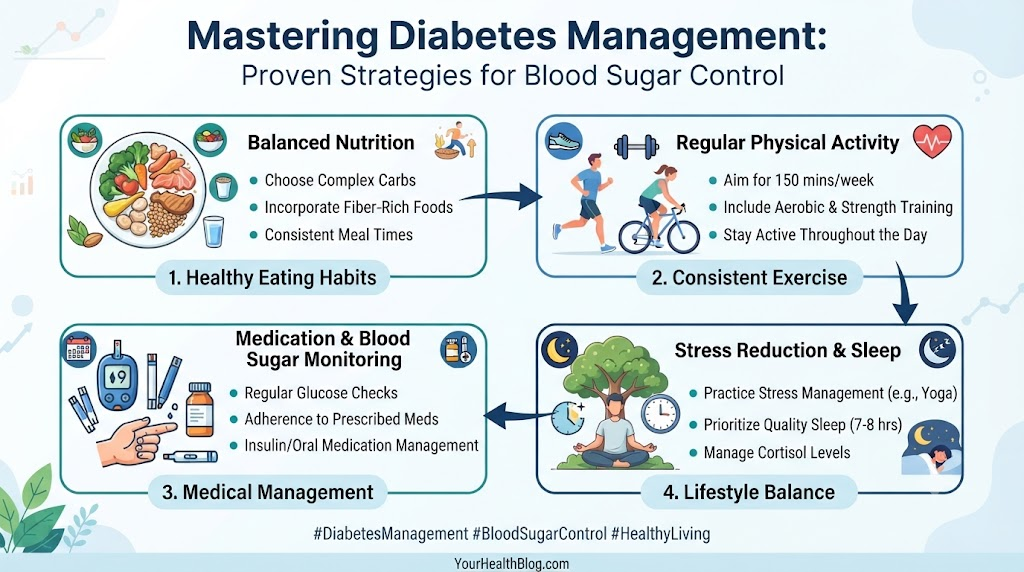
Effective management is built on small, consistent daily actions.
DAILY MANAGEMENT TABLE
Daily Habit
Purpose
Benefit
Monitoring
Track glucose trends
Allows for timely adjustments
Healthy Diet
Control sugar influx
Prevents glycemic spikes
Exercise
Enhances insulin sensitivity
Lowers blood sugar naturally
Medication
Replenish or stimulate insulin
Stabilizes metabolic function
Sleep
Regulates stress hormones
Improves overall glucose control
Hydration
Helps kidneys flush sugar
Prevents dehydration
Healthy Eating for Diabetes
Focus on nutrient-dense foods that have a low impact on blood glucose.
DIABETES NUTRITION TABLE
Food Group
Recommended Choices
Benefit
Whole Grains
Oats, quinoa, brown rice
Provides steady energy
Vegetables
Broccoli, leafy greens, peppers
High fiber, low calorie
Fruits
Berries, apples, citrus
Contains antioxidants
Lean Protein
Chicken, fish, tofu, beans
Keeps you full
Healthy Fats
Avocado, nuts, olive oil
Heart-healthy energy
Dairy
Greek yogurt, low-fat milk
Calcium and protein
Exercise and Physical Activity
Activity helps your muscles use glucose for energy, lowering your blood sugar levels.
EXERCISE TABLE
Exercise
Frequency
Benefit
Walking
Daily (30 mins)
Accessible, improves heart health
Cycling
3–4 times per week
Excellent cardiovascular training
Swimming
2–3 times per week
Low impact, full-body workout
Strength
2 times per week
Builds muscle for glucose uptake
Stretching
Daily
Increases flexibility/reduces stress
Monitoring Blood Sugar
BLOOD SUGAR MONITORING TABLE
Test
Purpose
Frequency
Glucometer
Real-time glucose reading
Based on provider advice
CGM
Continuous tracking/trends
Constant
HbA1c
3-month average glucose
Every 3–6 months
Blood Pressure
Cardiovascular risk tracking
Regularly
How to Prevent Complications
PREVENTION TABLE
Prevention Strategy
Benefit
Healthy Eating
Sustains long-term metabolic health
Physical Activity
Reduces inflammation and insulin resistance
Blood Sugar Monitoring
Prevents dangerous highs and lows
Regular Check-ups
Early detection of potential issues
Foot Care
Prevents serious diabetic ulcers
Eye Care
Protects vision from diabetic retinopathy
Future of Diabetes Care
FUTURE OF DIABETES CARE TABLE
Innovation
Potential Benefit
AI Monitoring
Predictive analysis of glucose trends
CGM Advances
Less invasive, more accurate sensors
Smart Insulin
Automated delivery based on needs
Telemedicine
Easier access to your care team
Personalized Care
Treatment plans based on individual data
Frequently Asked Questions (FAQs)
What is diabetes? A chronic condition affecting how your body turns food into energy.
Difference between Type 1 and 2? Type 1 is autoimmune; Type 2 is resistance-based.
Can it be managed successfully? Yes, millions live full, active lives with proper management.
What foods help control it? High-fiber, whole foods are best.
How often to check blood sugar? As often as your specific care plan requires.
Is exercise important? It is essential for insulin sensitivity.
What is HbA1c? A measure of your average blood sugar over 3 months.
Can stress affect blood sugar? Yes, stress hormones can cause spikes.
How do I reduce complications? Tight blood sugar control and routine screening.
When to consult a doctor? If you have unexplained symptoms or readings.
Do I have to stop eating sugar? Moderation is key; focus on natural sugars.
Is medication permanent? Sometimes, though lifestyle changes can decrease needs.
What is hypoglycemia? Critically low blood sugar.
How to care for feet? Inspect daily for cuts or sores.
Are there support groups? Yes, peer support is very helpful.
Final Thoughts
Diabetes management is a proactive partnership between you and your healthcare providers. By embracing consistent monitoring, balanced nutrition, and regular activity, you are actively investing in your future health. Remember that progress, not perfection, is the goal.
For ongoing education, preventive health screenings, and professional guidance tailored to your needs, visit MyDoctorsNow to find the resources you need to thrive.
Leave a Reply