Introduction
Healthy breathing is important for daily life. It helps the body get needed oxygen. Respiratory disorders can affect normal breathing in many ways. Some problems last only a short time. Others can become long-term health conditions helps readers explore doctors, health information, and consultation options when appropriate. MyDoctorsNow can also help people prepare for healthcare visits.
What Are Respiratory Disorders?
Respiratory disorders affect the breathing system. This system includes the nose, throat, airways, and lungs. Breathing muscles also help move air through the body. These parts work together with each breath. A problem in one area can affect breathing. Respiratory disorders can cause cough, wheezing, or breathlessness. Some conditions are short-term. Others need ongoing respiratory care.
Common Types of Respiratory Disorders
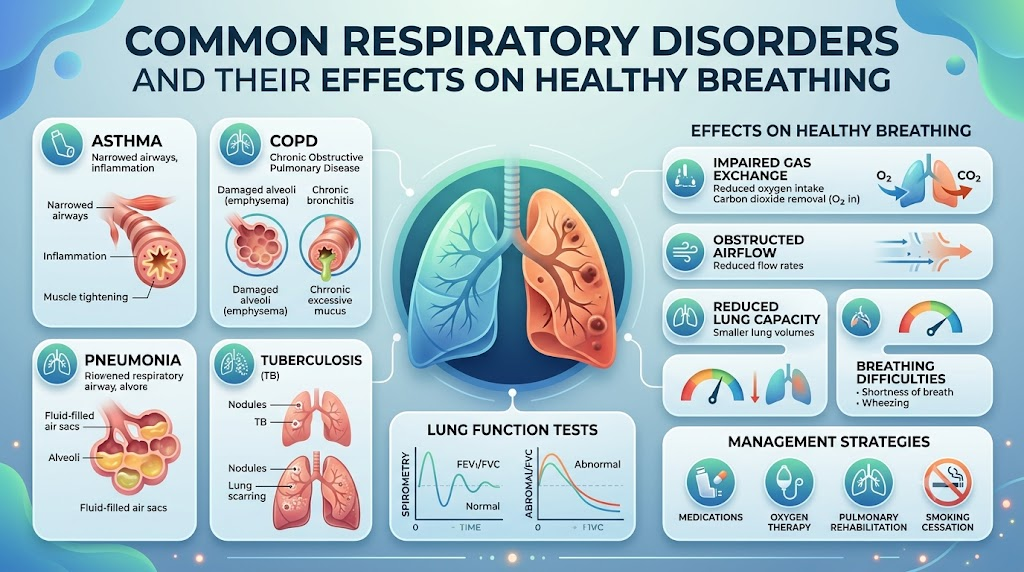
Many respiratory diseases can affect people. Some are linked to infections or allergies. Others can develop over a longer time. Common examples include asthma, bronchitis, pneumonia, and COPD. Each condition can affect breathing in different ways. So, symptoms may also differ between people.
Asthma
Asthma is a condition that affects the airways. The airways can become swollen and narrow. This can make breathing harder at times. Common symptoms include cough and wheezing. Chest tightness can also occur. Symptoms may come and go. A healthcare professional can assess asthma symptoms.
Bronchitis
Bronchitis means inflammation of the breathing tubes. Short-term bronchitis often follows an infection. It may cause cough and mucus. Long-term bronchitis is different. It can involve ongoing breathing problems over time. A doctor can assess symptoms and possible causes.
Pneumonia
Pneumonia is an infection that affects the lungs. It can be caused by different germs. These include some bacteria and viruses. Symptoms can include cough and fever. Breathing problems may also occur. Symptoms can vary by person and infection.
COPD
COPD means chronic obstructive pulmonary disease. It is a long-term breathing condition. It can make airflow through the lungs harder. Cough and breathlessness can occur. Smoking is a major risk factor. Some people may also have long-term mucus problems.
Respiratory Infections
Respiratory infections affect parts of the breathing system. Viruses cause many common respiratory infections. Some infections can also involve other germs. Symptoms may include cough, fever, and tiredness. Most infections are not the same. Proper medical assessment may be needed when symptoms persist.
Allergic Respiratory Problems
Allergies can affect the nose and airways. Some people may develop breathing symptoms after exposure. Dust, pollen, or other allergens can trigger symptoms. Wheezing can occur in some people. However, not every breathing problem comes from allergies.
Common Symptoms of Respiratory Disorders
Respiratory disorder symptoms can vary widely. A cough is one common symptom. Wheezing may also occur with some conditions. Shortness of breath can make activity harder. Chest tightness can occur in some disorders. Mucus may appear with certain infections or conditions. Tiredness can also occur. Fever may happen with some infections. Symptoms alone cannot confirm a diagnosis.
Common Causes and Risk Factors
Many factors can affect respiratory health. Smoking can damage the lungs over time. Secondhand smoke can also affect breathing. Air pollution may irritate the airways. Dust and workplace exposure can also cause problems. Allergens may trigger symptoms in some people. Respiratory infections can affect breathing too. Family history may increase risk for some conditions. Age and other health problems can also matter. A risk factor does not mean disease will develop.
How Respiratory Disorders Are Checked
Doctors start by asking about symptoms. They may also review medical history. A physical examination can provide more information. The doctor may listen to breathing sounds. Oxygen levels may also be checked. Some people may need lung function tests. Spirometry is one common lung function test. It measures how air moves through the lungs. Chest imaging may also be used when needed. The doctor decides which tests are suitable.
Treatment Approaches for Respiratory Disorders
Respiratory disease treatment depends on the condition. Some problems may need medicines. Inhaled medicines may help with certain conditions. Antibiotics may be used for some bacterial infections. They do not treat every respiratory infection. Allergy care may help when allergies affect breathing. Some people may need breathing support. Pulmonary rehabilitation may help selected patients. Lifestyle changes can also support respiratory care. Treatment should always follow professional medical advice.
Common Respiratory Disorders at a Glance
| Respiratory Disorder | Main Area Affected | Common Symptoms | General Description |
|---|---|---|---|
| Asthma | Airways | Cough, wheezing, chest tightness | Airways can become narrow and inflamed |
| Bronchitis | Breathing tubes | Cough, mucus | The breathing tubes become inflamed |
| Pneumonia | Lungs | Cough, fever, breathing problems | An infection affects lung tissue |
| COPD | Lungs and airways | Breathlessness, cough, mucus | A long-term condition that limits airflow |
| Respiratory infections | Airways or lungs | Cough, fever, tiredness | Infections can affect different breathing areas |
| Allergic breathing problems | Nose and airways | Sneezing, wheezing, congestion | Allergens can trigger breathing symptoms |
Managing Long-Term Respiratory Conditions
Some respiratory disorders need ongoing care. Regular medical follow-up can help track health. Patients may also need to track symptoms. Following the care plan from a doctor is important. Avoiding known triggers may also help when advised. Keeping medical records can make visits easier. Patients should report important changes to their healthcare team. Long-term respiratory care may also include healthy daily habits.
Respiratory Health and Daily Habits
Simple habits can support healthy breathing. Avoiding tobacco smoke is an important step. Reducing exposure to harmful air can also help. Keeping indoor spaces clean may reduce some irritants. Regular hand washing can help reduce infection spread. Recommended vaccines can help prevent some illnesses. Physical activity can support general health when suitable. Good rest also supports overall well-being. People with allergies should follow professional advice.
Respiratory Disorders in Children
Children can develop different breathing problems. Asthma is common among childhood respiratory disorders. Respiratory infections can also affect children. Allergies may cause breathing or nasal symptoms. Some children may develop repeated wheezing. Children may show symptoms differently from adults. Parents should pay attention to unusual breathing changes. Concerning symptoms should be discussed with a healthcare professional. Children with serious symptoms may need urgent medical attention.
Respiratory Problems in Older Adults
Older adults may need closer attention to breathing changes. Long-term lung conditions can affect daily activity. Other health problems may also affect breathing. Respiratory infections can become more concerning in some cases. A change in normal activity can be an important sign. New or worsening symptoms should not be ignored. Older adults should discuss concerning breathing changes with a doctor.
When to Speak With a Doctor
Some breathing symptoms need professional evaluation. A cough that does not go away needs attention. Repeated wheezing may also need medical review. Ongoing shortness of breath should be discussed with a doctor. Repeated chest infections may need further assessment. Breathing problems during normal activities can also matter. Symptoms that keep returning deserve attention. Unexplained breathing changes should not be ignored.
Urgent Warning Signs
Some breathing problems need urgent medical care. Severe difficulty breathing is one warning sign. Blue or gray lips can also be serious. Severe chest pain needs urgent attention. Sudden major breathing problems should not be ignored. Confusion or unusual drowsiness can be concerning. Fainting can also require urgent medical assessment. A serious allergic reaction with breathing trouble is urgent. Rapid worsening of symptoms also needs prompt care. Seek urgent medical help when serious symptoms occur.
Choosing the Right Healthcare Professional
Different healthcare professionals can help with breathing concerns. A general physician can assess many common symptoms. A pulmonologist focuses on lung and breathing disorders. A pediatrician can assess breathing problems in children. An allergy specialist may help with allergy-related concerns. Emergency care teams handle serious and sudden symptoms. The right professional depends on the health situation. A doctor can help decide the next step.
Online Doctor Consultation
Online doctor consultation can help with some concerns. Patients can explain symptoms during an online visit. They can also share their medical history. Previous reports may be discussed when available. Patients can ask general health questions too. A doctor may explain whether further assessment could help. However, online care has clear limits. Some breathing problems need an in-person examination. Emergency symptoms always need urgent medical care.
Common Mistakes to Avoid
People sometimes ignore a cough for too long. They may assume every cough is a simple cold. Repeated wheezing should not always be ignored. Smoking can also worsen breathing health. Taking antibiotics without medical advice is another mistake. People should not stop prescribed medicines without guidance. Severe breathing problems should never be delayed. Internet searches should not replace professional medical evaluation.
A Simple Fictional Example
Fictional example: A person has a cough that keeps returning. They first think it is a simple cold. The cough continues and affects normal daily activities. They decide to speak with a healthcare professional. The doctor reviews their symptoms and medical history. This helps the doctor decide if more evaluation is needed. The example shows why ongoing symptoms deserve proper attention.
How MyDoctorsNow Can Help
MyDoctorsNow can help people explore healthcare options. Users can explore general physicians and specialists. They can also explore pulmonology-related care. The platform can help users compare available healthcare options. Appointment services may also be available. Online consultation options can help with suitable concerns. Users can prepare questions before speaking with a doctor. The platform does not replace emergency care. It also cannot diagnose every respiratory condition. Medical decisions should remain with qualified healthcare professionals.
FAQs About Common Respiratory Disorders
1. What are common respiratory disorders?
Common respiratory disorders include asthma and bronchitis. Pneumonia and COPD are also common examples. Respiratory infections and allergies can affect breathing too.
2. What are the most common symptoms of respiratory disorders?
Common symptoms include cough and wheezing. Shortness of breath and chest tightness can occur. Mucus, tiredness, and fever may also happen.
3. What causes respiratory disorders?
Causes can vary between different conditions. Infections, smoking, pollution, and allergies can play roles. Family history and other factors may also matter.
4. Is asthma a respiratory disorder?
Yes, asthma is a respiratory disorder. It affects the airways and can make breathing harder. Symptoms can include cough, wheezing, and chest tightness.
5. What is the difference between bronchitis and pneumonia?
Bronchitis affects the breathing tubes. Pneumonia is an infection that affects the lungs. Both conditions can cause cough and breathing problems.
6. What is COPD?
COPD is a long-term breathing condition. It can make airflow through the lungs harder. Smoking is an important risk factor.
7. When should I see a doctor for breathing problems?
See a doctor for ongoing or repeated symptoms. Persistent cough and wheezing deserve medical attention. Ongoing breathlessness should also be checked.
8. Which doctor treats respiratory disorders?
A general physician can assess many breathing concerns. A pulmonologist focuses on lung disorders. Children may need assessment from a pediatrician.
9. Can respiratory disorders be prevented?
Some risks can be reduced with healthy habits. Avoiding tobacco smoke is especially important. Hand washing and recommended vaccines can also help.
10. Can I consult a doctor online for respiratory concerns?
Yes, online consultation can help with some concerns. It has limits for serious breathing problems. Emergency symptoms need urgent in-person medical care.
Final Thoughts
Respiratory disorders can affect breathing in many ways. Different conditions can have different causes and symptoms. Persistent or worsening symptoms deserve professional attention. Good respiratory care can support better health decisions. MyDoctorsNow.com can help readers explore doctors and consultation options. However, urgent breathing problems need urgent medical care.
Leave a Reply