Introduction
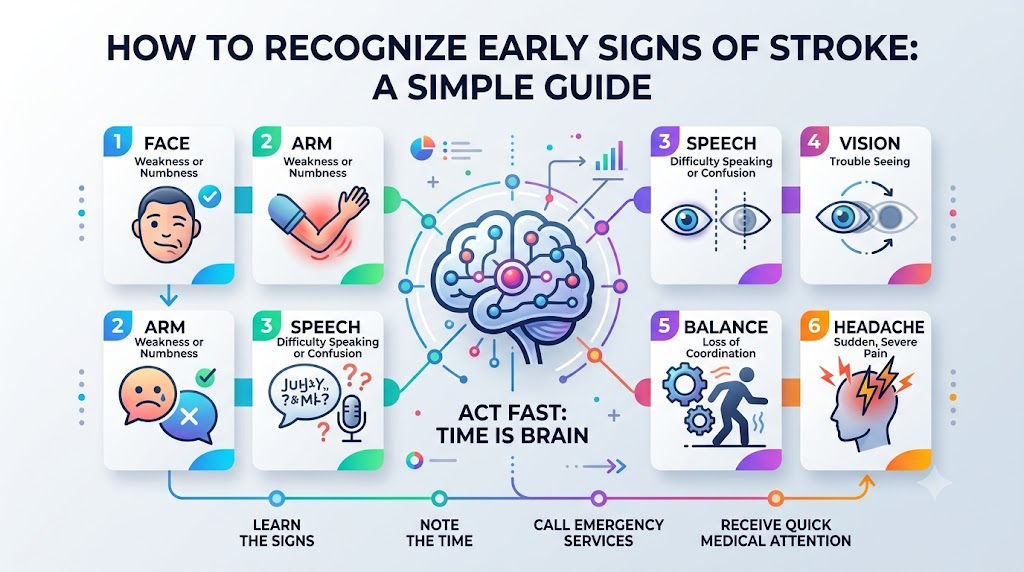
A stroke can happen suddenly, and knowing the early signs of stroke may help people recognize a medical emergency sooner. A person may suddenly have weakness on one side, trouble speaking, changes in vision, dizziness, or difficulty walking. These symptoms should never be ignored or watched at home to see if they go away. Learning the warning signs can help family members, caregivers, and people nearby respond quickly when every minute may matter. The B.E. F.A.S.T. method offers a simple way to remember common stroke symptoms. You can also find general healthcare information and support through MyDoctorsNow.
What Is a Stroke?
A stroke happens when blood flow to part of the brain is interrupted or when a blood vessel in the brain breaks and causes bleeding.
There are two main types. An ischemic stroke occurs when a blood vessel supplying the brain becomes blocked. A hemorrhagic stroke occurs when a blood vessel breaks and bleeding occurs in or around the brain.
The symptoms can be similar, so a person should not try to determine the type of stroke themselves. Healthcare professionals need to evaluate the person and use appropriate medical tests to identify the cause and decide on treatment.
Early Warning Signs of Stroke
Stroke symptoms often begin suddenly. A person may develop one symptom or several symptoms, and not everyone will experience the same warning signs.
Sudden Facial Drooping
One side of the face may suddenly feel weak or look uneven. A smile may appear crooked, or one side of the mouth may droop.
If a person’s face suddenly changes in this way, especially along with other symptoms, emergency medical assessment is needed.
Sudden Weakness or Numbness
Sudden weakness or numbness may affect an arm, leg, or one side of the body. Someone may have difficulty lifting one arm or notice that one side feels different from the other.
The weakness can sometimes affect the face and arm together. Sudden weakness should be treated as a possible stroke warning sign.
Sudden Speech or Understanding Problems
A person may suddenly have trouble speaking clearly, finding the right words, or understanding what others are saying. Their speech may sound unusual or difficult to understand.
A sudden change in communication is one of the important symptoms of stroke and requires urgent evaluation.
Sudden Vision Changes
Stroke may cause sudden changes in vision in one or both eyes. A person may experience blurred or lost vision or notice that their vision has suddenly become different.
Sudden vision problems can have many causes, but when they appear unexpectedly, they should be assessed urgently.
Sudden Dizziness or Trouble Walking
A person may suddenly feel dizzy, unsteady, or unable to walk normally. They may have trouble coordinating their movements or feel as though they are losing their balance.
Dizziness alone does not always mean stroke, but sudden dizziness combined with other neurological changes can be a serious warning sign.
Sudden Severe Headache
A sudden, severe headache without a known cause can sometimes occur with a stroke, particularly certain types of bleeding in the brain.
A severe headache may also have many other causes. When it is sudden or unusual, especially with weakness, confusion, vision problems, or difficulty speaking, urgent medical assessment is needed.
B.E. F.A.S.T. for Stroke Recognition
The B.E. F.A.S.T. stroke signs approach provides an easy way to remember several important symptoms.
B — Balance
Watch for sudden loss of balance, dizziness, difficulty walking, or problems with coordination.
E — Eyes
Look for sudden changes in vision, including blurred or lost vision or difficulty seeing normally.
F — Face
Ask the person to smile. Check whether one side of the face appears to droop or feels different.
A — Arms
Ask the person to raise both arms. Sudden weakness, numbness, or difficulty keeping one arm raised can be a warning sign.
S — Speech
Ask the person to repeat a simple sentence. Listen for slurred speech, unusual words, difficulty speaking, or difficulty understanding.
T — Time
Time means acting immediately. If any of these symptoms appear suddenly, seek emergency medical help rather than waiting to see what happens. Some stroke treatments are time-sensitive, and eligibility depends on factors such as the type of stroke, when symptoms started, medical findings, and the person’s overall situation.
What to Do If Stroke Symptoms Appear
If someone suddenly develops possible stroke symptoms, seek emergency medical help immediately. Do not wait for the symptoms to improve on their own.
Try to remember or record the time the symptoms first appeared, or the last time the person was known to be well if the exact time is unclear. This information can be useful to the medical team when assessing possible treatment options.
Do not try to diagnose the type of stroke yourself. Avoid delaying emergency care while searching online for an explanation.
TIA or “Mini-Stroke” Symptoms
A transient ischemic attack (TIA) can cause stroke-like symptoms that improve or disappear because the interruption of blood flow is temporary.
Even if the symptoms completely disappear, urgent medical attention is still needed. At the beginning, it may not be possible to tell whether symptoms are caused by a TIA or a major stroke.
Stroke Risk Factors
Several factors can increase the chance of having a stroke. These include high blood pressure, smoking, diabetes, high cholesterol, obesity, physical inactivity, certain heart conditions, increasing age, and a previous stroke or TIA.
Having a risk factor does not mean that a person will definitely have a stroke. Risk can vary from person to person, and managing health conditions and lifestyle factors should be discussed with a qualified healthcare professional.
How Stroke Symptoms Can Differ From Other Problems
Many conditions can cause dizziness, headache, weakness, vision changes, or speech difficulties. That is why an article cannot safely determine the cause of a person’s symptoms.
The sudden onset of a new neurological problem is especially important. Rather than trying to decide whether the problem is a stroke, migraine, low blood sugar, or another condition, seek urgent medical evaluation when stroke is suspected.
What Family Members and Caregivers Should Remember
People nearby may notice stroke symptoms before the affected person realizes something is wrong. Look for sudden changes in facial movement, arm strength, speech, balance, coordination, or vision.
If something suddenly seems different, act quickly. Even if the person’s symptoms improve before help arrives, they still need emergency medical evaluation because temporary symptoms may be related to a TIA or another serious condition.
Stroke Warning Signs at a Glance
| Stroke Warning Sign | What You May Notice | Why Immediate Action Matters |
|---|---|---|
| Face | One side of the face suddenly droops | May indicate sudden brain-related weakness |
| Arms | Sudden weakness or numbness in one arm or side | Can be a sign of interrupted brain blood flow |
| Speech | Slurred speech, confusion, or difficulty understanding | Sudden language changes can indicate stroke |
| Eyes | Sudden loss or change in vision | May reflect a neurological problem |
| Balance | Sudden dizziness, unsteadiness, or trouble walking | Can occur with certain strokes |
| Severe headache | Sudden, unusual, severe headache | Can occur with some serious types of stroke |
When to Seek Emergency Help
Seek emergency medical help immediately if stroke symptoms are suspected, especially when they begin suddenly. Remember B.E. F.A.S.T.: Balance, Eyes, Face, Arms, Speech, and Time.
Do not wait to see whether symptoms disappear. Even temporary symptoms need urgent assessment, and noting when symptoms began can provide useful information to healthcare professionals.
Frequently Asked Questions
1. What are the first signs of a stroke?
Early signs may include sudden facial drooping, weakness or numbness on one side, speech difficulty, vision changes, dizziness, balance problems, or a sudden severe headache. Symptoms can vary between people.
2. What does B.E. F.A.S.T. mean?
B.E. F.A.S.T. stands for Balance, Eyes, Face, Arms, Speech, and Time. It is a simple way to remember several important stroke warning signs and the need to act quickly.
3. Can stroke symptoms disappear?
Yes, some stroke-like symptoms may improve or disappear, such as with a TIA. However, symptoms that disappear still require urgent medical evaluation.
4. Can a headache be a sign of stroke?
A sudden, severe, or unusual headache can sometimes occur with a stroke. A headache has many possible causes, so sudden severe headache with other neurological symptoms needs urgent assessment.
5. Can dizziness indicate a stroke?
Sudden dizziness can occur with some strokes, particularly when it happens with balance, walking, vision, speech, or coordination problems. Dizziness alone has many possible causes and cannot be safely diagnosed through an article.
6. What should I do if someone suddenly has difficulty speaking?
Treat sudden speech difficulty as a possible stroke warning sign and seek emergency medical help immediately. Note when the problem began and do not wait for it to improve.
7. Can young adults have strokes?
Yes, strokes can occur in younger adults, although risk factors and causes may differ from those more commonly seen in older adults. Sudden stroke-like symptoms should receive urgent medical attention at any age.
8. What does a TIA mean?
TIA stands for transient ischemic attack. It causes temporary stroke-like symptoms, but the symptoms may disappear; this still requires urgent medical assessment.
9. Why does the time of symptom onset matter?
The timing of symptoms can help healthcare professionals assess the situation and determine which evaluations and treatment options may be appropriate. Some stroke treatments are time-sensitive.
10. Should I wait for stroke symptoms to improve before seeking help?
No. Waiting can delay emergency evaluation and potentially time-sensitive care. Seek emergency medical help immediately when a stroke is suspected, even if symptoms begin to improve.
Conclusion
Recognizing the early signs of stroke can help people respond quickly when a sudden medical problem occurs. Remember B.E. F.A.S.T.: Balance, Eyes, Face, Arms, Speech, and Time. Sudden weakness, speech problems, vision changes, dizziness, balance difficulties, or unusual severe headache should not be ignored. Do not wait for symptoms to improve or try to identify the type of stroke yourself. When stroke is suspected, seek emergency medical help without delay and share the time the symptoms began with healthcare professionals.
Leave a Reply