Introduction
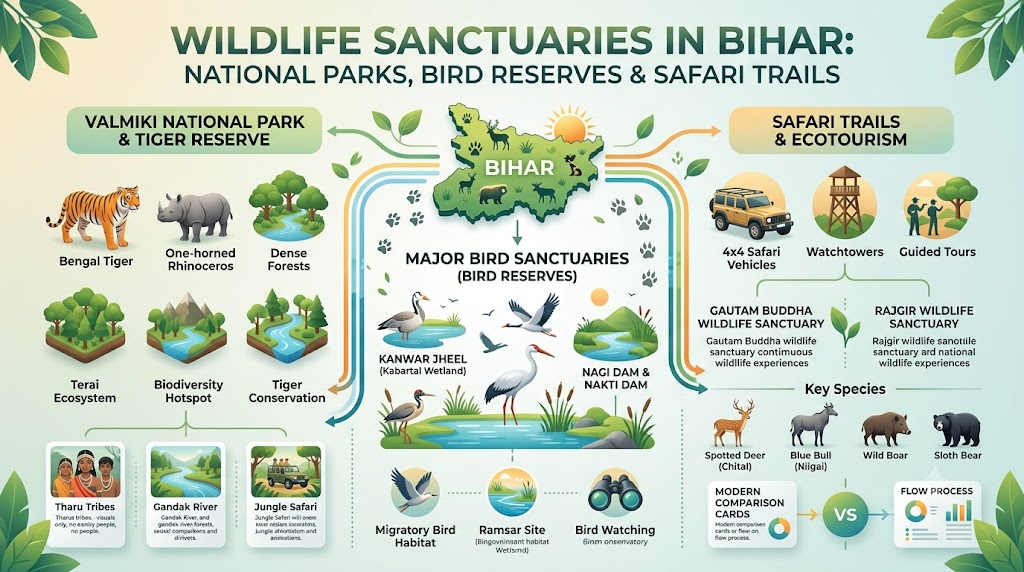
Beyond its legendary ancient universities, sacred pilgrimage sites, and historical monuments, Bihar holds an extraordinary ecological secret. Dense Sal forests, sprawling Himalayan Terai grasslands, ancient sandstone plateaus, and thriving wetland ecosystems host a rich diversity of flora and fauna. From the royal Bengal tigers roaming the Himalayan foothills of West Champaran to the Gangetic dolphins gliding through the currents of the Ganges, Bihar offers incredible opportunities for eco-tourism and nature exploration.Whether you want to trek through ancient dry-deciduous forests, embark on river boat safaris, or observe migratory birds in seasonal wetlands, this guide provides practical, locally informed travel details. At Mera Apna Bihar, we document regional stories and practical travel information to help you discover the natural heritage of the state.
Overview of Wildlife Sanctuaries in Bihar
Bihar’s geography transitions from the northern Terai floodplain bordering Nepal down to the southern Kaimur plateau extending into the Vindhyan range. This varied topography creates distinct ecological zones, preserving diverse wildlife habitats across the state.
The state’s protected network includes a national park, a tiger reserve, expansive wildlife sanctuaries, high-altitude wetlands, and riverine protected zones. These regions serve as critical habitats for endangered species, including the Bengal tiger, Indian leopard, sloth bear, gaur (Indian bison), Gangetic dolphin, gharial, and hundreds of resident and migratory bird species.
Why Bihar’s Eco-Tourism is Worth Exploring
Exploring wildlife sanctuaries in Bihar offers an authentic experience away from overcrowded commercial tourist circuits.
- Biodiversity Hotspots: The Himalayan Terai ecosystem in West Champaran ranks among India’s most important biodiversity conservation zones.
- Rare Wildlife Species: Bihar is one of the few places in India where you can observe freshwater Gangetic dolphins in their natural river habitat alongside gharials and mugger crocodiles.
- Blend of Nature and Heritage: Many reserves in Bihar weave natural landscapes with historical landmarks, such as rock art shelters, ancient cave temples, and hilltop forts set deep inside forested sanctuaries.
- Birdwatching Destinations: The state’s river basins and wetlands sit along major migratory flyways, bringing thousands of Central Asian waterfowl every winter.
Major Wildlife Sanctuaries and National Parks in Bihar
1. Valmiki National Park & Tiger Reserve (West Champaran)
Located at the Indo-Nepal border in West Champaran district, Valmiki National Park forms the easternmost limit of the Himalayan Terai forest in India. It stands as Bihar’s premier national park and sole tiger reserve.
- Key Wildlife: Bengal tiger, leopard, Indian gaur, sloth bear, rhinos (crossing occasionally from Nepal’s Chitwan), flying squirrel, barking deer, and python.
- Landscape: Bounded by the Gandak River, the terrain features dense moist deciduous Sal forests, cane brakes, open grasslands, and riverine tracts.
- Activities: Guided Jeep safaris, Gandak river boat safaris, jungle cycling trails, and border treks toward Someshwar Peak.
2. Kaimur Wildlife Sanctuary (Kaimur & Rohtas Districts)
Spanning over 1,500 square kilometers across the Rohtas and Kaimur plateaus, Kaimur Wildlife Sanctuary is the largest protected area in Bihar.
- Key Wildlife: Indian leopard, striped hyena, sloth bear, wild boar, nilgai, blackbuck, and various raptors.
- Top Highlights: Natural waterfalls (Telhar Kund, Karkatgarh, Dhua Kund), historic Rohtasgarh and Shergarh forts inside the forest, and prehistoric rock art shelters.
- Landscape: Rugged sandstone cliffs, dry deciduous Sal forests, gorge valleys, and natural streams.
3. Vikramshila Gangetic Dolphin Sanctuary (Bhagalpur)
Stretching across a 50 km segment of the Ganges River from Sultanganj to Kahalgaon in Bhagalpur district, this is India’s only protected area established specifically for the conservation of the endangered Gangetic dolphin (Platanista gangetica).
- Key Wildlife: Gangetic river dolphin (locally called Sons), smooth-coated otter, gharial, mugger crocodile, and freshwater turtles.
- Activities: Riverboat rides from concrete ghats in Bhagalpur to observe dolphins surfacing, along with winter migratory birdwatching on river sandbars.
4. Kanwar Lake Bird Sanctuary / Kabar Taal (Begusarai)
Recognized as Bihar’s first Ramsar site, Kanwar Lake (Kabar Taal) in Begusarai is one of Asia’s largest freshwater oxbow lakes, formed by the meandering channel of the Gandak River.
- Key Wildlife: Over 200 bird species, including migratory waterfowl such as the red-crested pochard, Eurasian wigeon, ferruginous duck, and endangered vultures.
- Best Experience: Early morning country boat rides with local fishermen to observe wintering flocks across the marshland.
5. Bhimbandh Wildlife Sanctuary (Munger)
Situated in the Kharagpur hills of Munger district, Bhimbandh is famous for its dense forest cover and natural hot springs.
- Key Wildlife: Sloth bear, leopard, wild boar, chital, sambar, and various forest bird species.
- Key Highlights: Natural hot water springs containing minerals, surrounding forest trails, and scenic valley views near Rishi Kund.
6. Gautam Buddha Wildlife Sanctuary (Gaya)
Located near the border of Bihar and Jharkhand in Gaya district, this sanctuary covers undulating hills and dry deciduous forest patches.
- Key Wildlife: Chital, sambar, leopard, nilgai, wild dog, and seasonal migratory birds.
- Cultural Connection: Offers a tranquil forest visit for travelers visiting the Buddhist pilgrimage site of Bodh Gaya.
7. Pant (Rajgir) Wildlife Sanctuary (Nalanda)
Encircling the picturesque five hills of Rajgir, this compact sanctuary protects forest slopes and valley ecosystems surrounding historical sites.
- Key Wildlife: Barking deer, nilgai, hyena, jungle cat, and resident woodland birds.
- Key Highlights: Combines natural forest trails with visits to the Vishwa Shanti Stupa, Griddhakuta Peak, and local hot springs.
Bihar Travel Itineraries for Nature & Wildlife
       [PATNA] (Starting Hub)
          |
   +------+------+
   |             |
(North-West)   (South-West)
   |             |
[WEST CHAMPARAN] [KAIMUR & ROHTAS]
Valmiki Tiger    Kaimur Sanctuary
Reserve          Waterfalls & Forts
   |             |
(3 Days)       (2-3 Days)
2-Day Nature & Heritage Itinerary (Kaimur & Rohtas)
- Day 1: Waterfalls & Temples. Arrive at Sasaram or Bhabua. Visit the Mundeshwari Devi Temple, followed by a drive to Telhar Kund and Karkatgarh waterfalls within the Kaimur range. Overnight stay in Sasaram or net-connected eco-lodges nearby.
- Day 2: Historical Exploration & Wildlife Trails. Trek to the hilltop Rohtasgarh Fort inside the forested plateau or visit Dhua Kund waterfalls before heading to Sasaram Junction for departure.
3-Day Wildlife Safari Itinerary (Valmiki Tiger Reserve)
- Day 1: Arrival & Evening Nature Walk. Travel from Patna to Valmikinagar (approx. 7–8 hours by road). Check into forest department eco-huts, attend the evening wildlife film show, and take a guided sunset walk along the Gandak River.
- Day 2: Safaris & River Exploration. Take an early morning Open-Jeep Safari through the core/buffer forest zone. In the afternoon, take a Gandak River boat safari to spot gharials and Gangetic dolphins.
- Day 3: Border Trek & Return. Early morning guided cycling trail or local nature walk before departing back toward Patna or Gorakhpur.
How to Reach Wildlife Destinations in Bihar
Air Connectivity
- Jay Prakash Narayan Airport (Patna): Best gateway for Valmiki National Park, Kanwar Lake, and Bhimbandh.
- Gaya Airport: Convenient for Gautam Buddha Sanctuary and Pant (Rajgir) Sanctuary.
- Lal Bahadur Shastri Airport (Varanasi): Nearest major airport for Kaimur Wildlife Sanctuary and Rohtas destinations.
Rail Connectivity
- For Valmiki Reserve: Valmiki Nagar (VNE) or Bagaha (BUG) railway stations.
- For Kaimur & Rohtas: Sasaram Junction (SSM) or Bhabua Road (BBU) on the Howrah-New Delhi line.
- For Vikramshila Dolphin Sanctuary: Bhagalpur Junction (BGP).
- For Kanwar Lake: Begusarai (BGS) or Barauni Junction (BJU).
Road Access
Primary highways including NH-27 (for West Champaran), NH-19/Grand Trunk Road (for Kaimur and Sasaram), and NH-31 connect key cities with local district roads leading to forest gates. State transport buses, private taxis, and shared autos operate between railheads and sanctuary entry points.
Best Time to Visit
| Destination | Ideal Months | Weather Condition | Primary Attraction |
| Valmiki Tiger Reserve | October to March | Pleasant (8°C–25°C) | Jeep safaris, migratory birds, pleasant weather |
| Kaimur Wildlife Sanctuary | October to March | Cool to mild (6°C–26°C) | Full waterfalls, forest treks, cooler weather |
| Kanwar Lake / Kabar Taal | November to February | Cold mornings (7°C–20°C) | Peak winter migratory bird concentrations |
| Vikramshila Dolphin Reserve | October to April | Moderate river temperatures | Riverboat rides, high dolphin activity |
Note: Most terrestrial wildlife reserves like Valmiki close core safari tracks during the monsoon season (July to September) due to heavy rains and river flooding. Always verify opening status with official forest department channels prior to making reservations.
Things to Do: Local Experiences and Regional Cuisine
Local Experiences
- Forest Cycling Safaris: Rent a bicycle at Valmikinagar entry gates to explore designated buffer-zone tracks under expert guide supervision.
- Rural & Tribal Interaction: Observe traditional Tharu tribal life around the edge villages of West Champaran, featuring unique bamboo architecture and handicrafts.
- Photography: Capture rugged gorge landscapes, mist-covered waterfalls, historic ruins, and diverse birdlife across Kaimur and Munger.
Trying Local Food
When traveling near these nature spots, sample regional Bihar culinary staples:
- Litti Chokha: Roasted wheat balls stuffed with spiced sattu (roasted gram flour), served with roasted eggplant and tomato mash.
- Sattu Paratha & Sharbat: Nutritious, cooling meal option widely available along highways and rural dhabas.
- Local Sweets: Sample Khaja near Nalanda/Rajgir, Tilkut in Gaya, or fresh Makhanas (fox nuts) across central and northern wetland routes.
Comparison of Key Wildlife Destinations
| Feature | Valmiki National Park | Kaimur Wildlife Sanctuary | Vikramshila Reserve | Kanwar Lake |
| Primary Landscape | Terai forest & Gandak riverbed | Sandstone plateau & waterfalls | Open Ganges river segment | Oxbow lake & marshland |
| Star Animal Species | Bengal Tiger, Gaur, Elephant | Leopard, Sloth Bear, Blackbuck | Gangetic Dolphin, Otter | Migratory Waterfowl |
| Safari Types Offered | Open Jeep, Motorboat, Cycling | Self-guided/Trek, Vehicle access | Country Boat rides | Country Boat rides |
| Ideal Trip Duration | 2–3 Days | 1–2 Days | 1 Day | 1 Day |
Practical Examples for Travel Planning
Example A: Weekend Trip from Patna for Families
A family looking for a quick nature getaway can take an early morning drive from Patna to Rajgir (approx. 3 hours). Explore the Pant Wildlife Sanctuary eco-trails, visit the Nature Safari and Glass Bridge, and return by late evening or stay overnight at Rajgir.
Example B: Solo Explorer & Photography Enthusiast
A solo traveler interested in landscape photography can take a train to Sasaram, hire a local private taxi, and spend two days exploring Telhar Kund, Karkatgarh, and Rohtasgarh Fort inside Kaimur Wildlife Sanctuary during the post-monsoon months (October–November).
Decision-Making Framework for Travelers
What is your main interest?
 ├── Large Mammals & Tigers ──> Head to Valmiki Tiger Reserve (West Champaran)
 ├── Waterfalls & Forts ──────> Head to Kaimur Wildlife Sanctuary (Kaimur/Rohtas)
 ├── Aquatic Wildlife ────────> Head to Vikramshila Dolphin Sanctuary (Bhagalpur)
 └── Birdwatching ────────────> Head to Kanwar Lake / Kabar Taal (Begusarai)
To choose the right destination, consider these key factors:
- Available Time: For 1-day trips from central Bihar, choose Rajgir, Kanwar Lake, or Bhimbandh. For a 3-day holiday, plan for Valmiki Tiger Reserve.
- Mobility & Fitness: Destinations like Rohtasgarh Fort or Someshwar Peak require moderate trekking. For easy walking or vehicle access, opt for Valmiki Jeep Safaris or Rajgir Nature Trails.
- Travel Season: Waterfalls in Kaimur peak during and immediately after the monsoon (August–November), whereas tiger safaris and birdwatching are best in winter (November–February).
Common Travel Mistakes to Avoid
- Visiting During Monsoon Closures: Safaris in core forest areas like Valmiki are closed during the heavy monsoon months (July to September). Check opening dates beforehand.
- Overpacking the Itinerary: Trying to cover both Valmiki (North-West) and Kaimur (South-West) in a single weekend trip involves over 10 hours of transit between them. Focus on one region per trip.
- Expecting Commercialized Luxury: Many forest reserves offer government eco-huts or modest local hotels. Book government accommodations in advance via official Bihar Tourism or Forest Department portals.
- Ignoring Local Guide Regulations: Stepping off designated trails without a certified local guide in dense reserves like Kaimur or Valmiki can lead to safety hazards or legal fines.
Practical Tips / Key Takeaways
- Verify Safari Timings: Morning safaris generally start early (6:00 AM – 7:00 AM), while evening safaris depart around 3:00 PM. Arrive at entry gates 30 minutes in advance.
- Carry Government ID: Original photo identification (Aadhaar, Passport, Voter ID) is mandatory for entry permits and eco-hut check-ins.
- Dress in Earth Tones: Wear dull colors like khaki, green, or brown on safaris. Avoid bright colors or loud music that can disturb wildlife.
- Carry Cash: Mobile network signals and online payment processing can be spotty near forest gates and rural sanctuaries.
- Respect Local Regulations: Do not litter, use plastic bottles inside sanctuary boundaries, or feed wild animals.
Frequently Asked Questions (FAQs)
1. What are the best wildlife sanctuaries in Bihar to visit?
The premier wildlife destinations include Valmiki National Park & Tiger Reserve in West Champaran, Kaimur Wildlife Sanctuary spanning Kaimur and Rohtas districts, Vikramshila Gangetic Dolphin Sanctuary in Bhagalpur, and Kanwar Lake Bird Sanctuary in Begusarai.
2. What is the best time to visit wildlife sanctuaries in Bihar?
The ideal period for wildlife safaris and birdwatching is from October to March when temperatures are pleasant and forest tracks are open. Post-monsoon months (October–November) are best for viewing full waterfalls across Kaimur.
3. How can I book a safari at Valmiki Tiger Reserve?
Jeep, boat, and cycling safaris can be booked online via the official Bihar Forest Department portal (valmikitigerreserve.com) or directly at the tourism reception centers at Valmikinagar, Manguraha, or Kotraha.
4. Can you spot tigers in Bihar?
Yes, Valmiki Tiger Reserve in West Champaran district is home to a growing population of royal Bengal tigers. Sightings take place during guided jeep safaris, particularly near waterholes during dry winter and summer months.
5. Is Kaimur Wildlife Sanctuary good for eco-tourism?
Kaimur Wildlife Sanctuary is excellent for eco-tourism, offering a combination of dry deciduous forests, rugged plateau terrain, natural waterfalls like Telhar Kund, and historic landmarks like Rohtasgarh Fort.
6. Where can I see Gangetic Dolphins in Bihar?
You can observe Gangetic dolphins in the Vikramshila Gangetic Dolphin Sanctuary in Bhagalpur or along the Gandak River during boat safaris inside Valmiki National Park.
7. Are there eco-friendly places to stay near forest reserves in Bihar?
Yes, the Bihar Forest Department operates eco-huts, bamboo huts, and treehouses at sites like Valmikinagar, Manguraha, and Rajgir. Private hotels and state tourism guest houses are also available in nearby towns.
8. What bird species can be seen at Kanwar Lake Sanctuary?
Kanwar Lake hosts over 200 bird species, including resident wetland birds and winter migratory species like the red-crested pochard, Eurasian wigeon, ferruginous duck, storks, and herons.
9. How many days are needed for a Bihar wildlife tour?
A focused 2-day to 3-day itinerary is sufficient for major reserves like Valmiki Tiger Reserve or Kaimur Wildlife Sanctuary. Combining multiple regional destinations requires a 5 to 7-day trip.
10. Are wildlife sanctuaries in Bihar safe for family trips?
Yes, designated tourist zones in Bihar’s wildlife reserves are safe for family visits. Using official forest department vehicles, licensed local guides, and staying in verified eco-lodges ensures a safe experience.
Conclusion
Bihar’s eco-tourism destinations present a unique landscape for travelers looking to experience untouched nature, rich biodiversity, and deep-rooted heritage. From the forested hills of West Champaran to the sandstone waterfalls of the Kaimur range, exploring these wildlife reserves offers an authentic view of the state’s ecological heritage.By planning your visit around the right travel season, booking official forest tours, and following responsible eco-tourism practices, you can enjoy a safe and memorable journey. For more detailed travel guides, route breakdowns, and local cultural insights, explore Mera Apna Bihar to start planning your next travel experience.
Leave a Reply