Introduction
Undergoing a surgical procedure can feel like a major life event. Whether you are scheduling a routine outpatient procedure or preparing for a complex inpatient surgery, it is entirely natural to experience a mix of anticipation, hope, and anxiety. The journey through surgery involves far more than just the time spent in the operating room. It begins weeks before your actual surgical date and continues well into your home recovery period.Navigating health information empowers you to make proactive choices for your well-being. For educational resources, surgical checklists, and general health support, MYDOCTORSNOW provides patient-centered information to help you understand medical procedures and prepare effectively for clinical care.
Why Surgical Preparation Matters
Preparing for surgery is not simply a matter of arriving at the hospital on time. Preoperative protocols are designed to protect your physical safety, optimize your body’s physiological resilience, and streamline your eventual healing process.
Why Preoperative Preparation Matters
 ├─ Reduces Surgical Risks (Pre-clears cardiac, respiratory, & blood parameters)
 ├─ Supports Anesthesia Safety (Minimizes aspiration risks & drug interactions)
 ├─ Prevents Avoidable Delays (Ensures insurance, testing, & consent are complete)
 ├─ Accelerates Home Recovery (Pre-organizes medications, meals, & mobility aids)
 └─ Enhances Psychological Readiness (Lowers stress through clear expectations)
Reducing Surgical Risks
Surgical procedures place temporary physical stress on the body. Preoperative evaluations help your care team identify and manage underlying health conditions—such as high blood pressure, diabetes, or breathing issues—before you enter the operating room. Optimizing these factors lowers the risk of intraoperative cardiovascular stress or excessive bleeding.
Supporting Anesthesia Safety
Anesthesia medications temporarily alter your body’s automatic reflexes, including breathing, heart rate, and airway protection. Following instructions regarding fasting and medication management ensures that your body processes anesthesia safely, minimizing complications such as aspiration or unintended drug interactions.
Preventing Avoidable Complications and Delays
Missing a required blood test, taking an unapproved supplement, or eating past the designated fasting deadline can force a surgical team to postpone or cancel a procedure for your safety. Thorough preparation prevents these frustrating delays and keeps your treatment timeline on track.
Building Patient Confidence and Reducing Stress
Uncertainty is a primary driver of pre-surgery anxiety. Knowing what to expect at each stage—from check-in to home recovery—helps turn an unfamiliar clinical experience into a manageable, step-by-step process.
Common Types of Surgical Procedures
Preparation protocols are tailored to the specific type of surgery you are undergoing, as well as the level of care required before and after the operation.
- Outpatient (Same-Day) Surgery: Minor to moderate procedures where patients arrive, undergo surgery, recover from anesthesia, and return home on the very same day. Examples include cataract surgery, simple hernia repairs, or arthroscopic joint procedures.
- Inpatient Surgery: Complex procedures that require an overnight stay or a multi-day hospital admission for continuous monitoring, pain management, and nursing support. Examples include joint replacements, open heart surgery, or major abdominal operations.
- Minimally Invasive Surgery: Techniques performed through tiny incisions using specialized cameras and instruments, such as laparoscopic or robotic-assisted surgery. These procedures generally result in less tissue trauma, lower infection rates, and faster initial recovery times compared to traditional open surgery.
- Major Surgery: Operations involving major organ systems, large incisions, or significant physiological alterations that carry higher risks and require extensive preoperative evaluation and post-operative care.
- Elective Surgery: Procedures that are planned in advance and are not immediate medical emergencies, such as cosmetic procedures, joint rebuilds, or scheduled gall bladder removals. This timeframe allows ample opportunity for thorough preoperative preparation.
- Emergency Surgery: Immediate surgical interventions required to address life-threatening or urgent conditions, such as appendicitis, severe trauma, or acute internal bleeding. In these situations, preoperative preparation is condensed into a brief, rapid evaluation by the emergency care team.
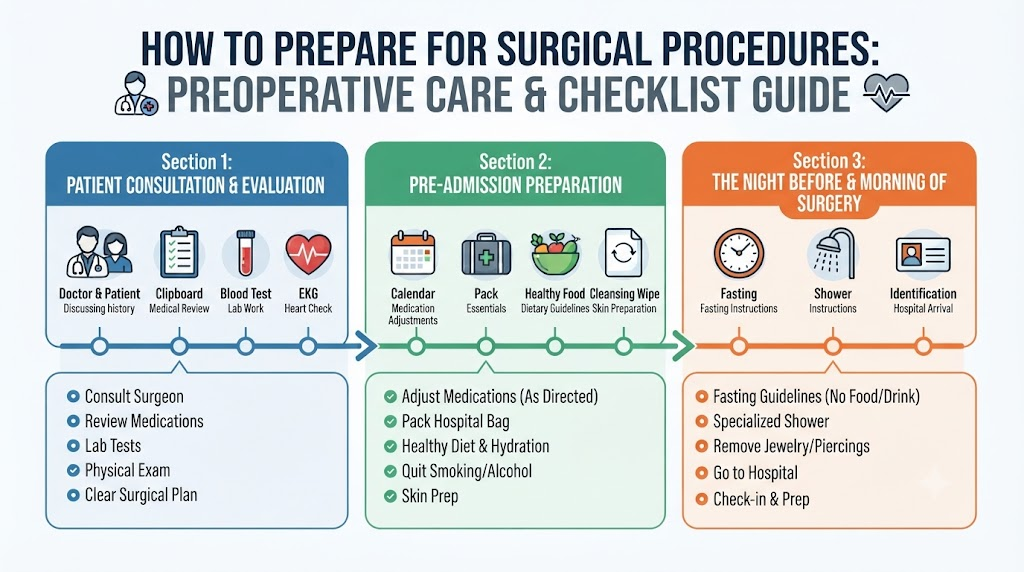
Preoperative Preparation Checklist
Before any scheduled surgery, healthcare facilities conduct a structured preoperative evaluation to confirm that you are physically fit for the procedure and anesthesia.
Comprehensive Preoperative Evaluation
 ├── Clinical Assessments
 │    ├── Medical History Review (Chronic conditions, past surgeries, family history)
 │    ├── Medication & Supplement Audit (Prescriptions, OTCs, blood thinners)
 │    └── Allergy Assessment (Latex, iodine, antibiotics, anesthetics)
 ├── Preoperative Diagnostics
 │    ├── Blood Work (Complete Blood Count, metabolic panel, coagulation studies)
 │    ├── Electrocardiogram (ECG) (Heart rhythm and baseline cardiac safety)
 │    └── Diagnostic Imaging (X-rays, CT, or MRI specific to surgical site)
 └── Administrative Readiness
      ├── Anesthesia Consultation (Airway check, anesthesia plan selection)
      └── Documentation (Government ID, insurance approval, advance directives)
Medical Evaluation and History Review
Your surgeon or primary care physician will review your complete health history. This includes documenting chronic medical conditions (such as asthma, heart disease, kidney issues, or diabetes), reviewing past surgical experiences, and assessing any family history of adverse reactions to anesthesia (such as malignant hyperthermia).
Diagnostic Blood and Imaging Tests
Depending on your age, overall health, and the complexity of the procedure, your doctor may order baseline diagnostic tests:
- Blood Tests: A Complete Blood Count (CBC) checks for anemia or active infection, comprehensive metabolic panels evaluate kidney and liver function, and coagulation studies (PT/INR) measure how quickly your blood clots.
- Electrocardiogram (ECG): Evaluates electrical activity in your heart to identify potential rhythm abnormalities or underlying heart strain.
- Diagnostic Imaging: Chest X-rays, magnetic resonance imaging (MRI), or computed tomography (CT) scans may be reviewed to provide clear visual anatomical details of the surgical area.
Medication and Allergy Review
Your surgical team will conduct a meticulous audit of everything you take, including prescription drugs, over-the-counter pain relievers, vitamins, and herbal supplements. It is equally vital to disclose all known allergies, including sensitivities to specific medications, latex, adhesives, or iodine solutions.
Anesthesia Consultation
An anesthesiologist or certified registered nurse anesthetist (CRNA) will meet with you to discuss the type of anesthesia best suited for your procedure—whether general anesthesia, regional nerve blocks, spinal anesthesia, or local sedation. They will examine your airway, review your fasting requirements, and answer questions about pain control after surgery.
Surgery Preparation Checklist Table
The following summary table outlines key preoperative preparation steps and their clinical importance:
| Preparation Step | Clinical Purpose | Expected Patient Benefit |
| Preoperative Medical Evaluation | Confirms baseline physical fitness and clears chronic health conditions. | Lowers the risk of systemic medical complications during surgery. |
| Comprehensive Medication Review | Identifies drugs or supplements that could cause bleeding or drug interactions. | Prevents excessive bleeding and dangerous anesthesia interactions. |
| Diagnostic Pre-Testing | Checks blood counts, kidney/liver function, and cardiac activity. | Provides a clear baseline for the surgical team to monitor safety. |
| Strict Fasting Compliance | Empties stomach contents prior to receiving anesthesia. | Protects the airway and prevents aspiration during general anesthesia. |
| Transportation Planning | Establishes a safe, adult-accompanied ride home post-procedure. | Ensures safe travel when cognitive function is altered by sedatives. |
| Home Recovery Organization | Prepares living spaces, stocks meals, and clears pathways. | Lowers fall risks, reduces physical strain, and aids early healing. |
How to Prepare in the Days Before Surgery
In the week leading up to your procedure, focusing on daily health habits and adhering closely to clinical instructions helps prepare your body for surgery.
Countdown Timeline: Days Before Surgery
 ├── 7-14 Days Prior: Adjust medications/blood thinners (per doctor), stop herbal supplements
 ├── 3-7 Days Prior: Complete all lab work/ECG, stop smoking, organize home recovery area
 ├── 1-2 Days Prior: Confirm arrival times, pack hospital bag, stock easy-to-digest food
 └── Night Before: Follow fasting rules, take designated antiseptic shower, rest well
Follow Specific Medication Adjustments
Some routine medications must be temporarily paused or adjusted before surgery. Blood thinners (such as warfarin, aspirin, or clopidogrel), nonsteroidal anti-inflammatory drugs (NSAIDs like ibuprofen), and certain diabetes or blood pressure medications require precise timing adjustments. Never stop or change your medication dosages without explicit instruction from your surgeon or prescribing physician.
Pause Smoking and Alcohol Consumption
Tobacco smoke damages lung tissue, compromises oxygen delivery, and significantly impairs wound healing. Stopping smoking—even for just a few days or weeks before surgery—improves lung function, reduces coughing risks during recovery, and supports tissue repair. Similarly, limiting or eliminating alcohol intake protects liver function and prevents unexpected interactions with anesthetic agents.
Maintain Healthy Nutrition and Hydration
Eating balanced, nutrient-rich meals packed with lean proteins, vitamins, and minerals helps build tissue reserves necessary for post-surgical healing. Unless instructed otherwise by your doctor, stay well-hydrated with water during the days leading up to your procedure to support vascular health and kidney function.
Complete Required Testing and Address Questions
Ensure all ordered blood work, ECGs, or imaging studies are completed several days ahead of time so the results can be reviewed before your surgery date. Write down any lingering questions about pain management, expected recovery timelines, or physical restrictions, and discuss them with your clinical team.
What to Do the Night Before Surgery
The final 24 hours before your procedure require careful attention to personal hygiene, fasting guidelines, and logistics.
Adhere Strictly to Fasting Guidelines (NPO Status)
Medical facilities enforce strict rules regarding eating and drinking before surgery—often referred to as “NPO” (nil per os, meaning nothing by mouth). Standard guidelines typically require avoiding solid foods for 6 to 8 hours before arrival, though clear liquids may sometimes be allowed up to 2 hours prior if explicitly approved by your anesthesia team.
               ┌───────────────────────────────────────────────┐
               │    Critical Fasting Protocols (NPO Safety)    │
               └───────────────────────┬───────────────────────┘
                                       │
         ┌─────────────────────────────┴─────────────────────────────┐
         ▼                                                           ▼
┌─────────────────────────────────┐                         ┌─────────────────────────────────┐
│       Solid Foods & Dairy       │                         │       Approved Clear Liquids    │
├─────────────────────────────────┤                         ├─────────────────────────────────┤
│• Stop 6 to 8 hours before       │                         │• Only if explicitly approved    │
│  arrival (or per exact orders)  │                         │• Plain water, clear apple juice │
│• Includes candy, mints, & gum   │                         │• Must stop 2 hours prior        │
└─────────────────────────────────┘                         └─────────────────────────────────┘
Fasting ensures that your stomach is completely empty when anesthesia relaxes your upper airway reflexes. If food or liquid remains in the stomach, it can rise into the throat and enter the lungs (aspiration), causing severe respiratory complications. This rule applies to all foods, including mints, hard candies, and chewing gum.
Shower with Recommended Antiseptic Cleansers
To reduce skin bacteria and lower the risk of surgical site infections, your care team may instruct you to shower the night before or the morning of surgery using a specialized chlorhexidine gluconate (CHG) antiseptic soap. Wash carefully from the neck down, avoiding delicate areas, and dry off with a clean towel. Avoid applying lotions, perfumes, deodorants, or makeup after showering.
Prepare Clothing and Remove Jewelry
Wear loose, comfortable, front-buttoning or easy-to-slip-on clothing that can easily fit over surgical dressings or arm slings. Remove all jewelry, body piercings, contact lenses, and nail polish before heading to the facility, as metal can interfere with electrosurgical equipment and polished nails can hinder oxygen sensor readings.
What to Bring to the Hospital
Packing a small, well-organized bag the day before surgery ensures you have all necessary items without cluttering your hospital space.
Essential Hospital Bag Checklist
 ├── Identifiers & Documents
 │    ├── Government-issued photo ID (Driver's license or passport)
 │    ├── Insurance card & pre-authorization paperwork
 │    └── Legal documents (Advance directives, healthcare power of attorney)
 ├── Medical Information
 │    ├── Written list of all current medications & exact dosages
 │    └── Physician contact numbers & allergy lists
 └── Personal Essentials
      ├── Eyeglasses or hearing aids (with labeled protective cases)
      ├── Loose, comfortable clothing & non-skid footwear
      └── Minimal toiletries (tooth-brush, comb) for inpatient stays
- Official Identification: Government-issued photo ID, such as a driver’s license or passport.
- Insurance and Medical Documentation: Insurance cards, prescription coverage cards, pre-authorization letters, and copies of advance directives or healthcare power of attorney documents.
- Medication Information: A complete, written list of all prescription drugs, over-the-counter medications, and supplements you take, including dosages and schedules.
- Personal Assistive Devices: Eyeglasses, hearing aids, or dentures, along with sturdy, clearly labeled protective storage cases.
- Comfort Items for Inpatient Stays: A pair of non-skid slippers, comfortable sleepwear, basic personal care items, and charging cables for mobile devices. Leave jewelry, large sums of cash, and valuables securely at home.
What Happens on the Day of Surgery
Knowing the sequence of events on the day of your procedure helps ease anxiety as you move through check-in and preparation.
Surgical Day Workflow
 ├── 1. Registration & Check-In (Document verification & wristband placement)
 ├── 2. Preoperative Holding (Vital signs, gown change, IV placement)
 ├── 3. Team Safety Briefings (Meeting surgeon, anesthesiologist, & surgical site marking)
 ├── 4. Operating Suite (Anesthesia administration & procedure execution)
 ├── 5. PACU Recovery (Monitoring vital signs & managing early pain)
 └── 6. Discharge or Admission (Home discharge instructions or hospital room transfer)
Hospital Check-In and Preoperative Prep
Upon arrival at the surgical center, admissions staff verify your identification, review insurance paperwork, and place a protective patient identification wristband on your arm. You will then be escorted to the preoperative holding unit, where a nurse will check your vital signs, ask you to change into a hospital gown, and record your last food and liquid intake.
IV Placement and Surgical Team Meetings
A nurse will place an intravenous (IV) line into a vein in your hand or arm to deliver fluids and medications. During this period, you will meet directly with members of your surgical team:
- Your Anesthesiologist: Re-evaluates your health, answers lingering questions, and reviews the anesthesia plan.
- Your Surgeon: Confirms the details of the procedure, reviews the consent form with you, and uses a surgical marker to initial the specific surgical site on your body.
The Operating Room and PACU Recovery
When it is time for surgery, you will be transported into the operating suite. After the procedure is finished, you will be moved to the Post-Anesthesia Care Unit (PACU). Here, specialized recovery nurses continuously monitor your heart rate, blood pressure, breathing, and pain levels as the anesthesia wears off. Once you are awake, stable, and meeting clinical discharge criteria, you will either be transferred to an inpatient room or prepared for discharge home.
Preparing Your Home for Recovery
Organizing your home environment prior to surgery ensures a safe, comfortable transition from the clinical setting to your living space.
- Arrange Caregiver Support: Identify a reliable family member, friend, or professional caregiver who can drive you home after discharge and stay with you for at least the first 24 to 48 hours to assist with daily tasks and medication tracking.
- Set Up a Main Floor Recovery Area: If your home has multiple levels, consider setting up a temporary sleeping area on the main floor during early recovery to avoid climbing stairs. Keep essentials—such as water, phone chargers, tissues, books, and remote controls—within easy reach.
- Eliminate Household Fall Hazards: Clear walkways of clutter, loose electrical cords, and throw rugs that could cause trips. Ensure hallways, stairwells, and bathrooms are well-lit, placing nightlights in key areas.
- Stock Easy-to-Prepare Meals: Prepare and freeze light, nutritious, simple meals before your surgery date, or stock your pantry with easy-to-digest foods like soups, oatmeal, applesauce, and crackers.
- Pre-Organize Medications and Supplies: Set up a clean station for your prescription pain relievers, antibiotics, wound care dressings, and ice packs. Keep a written log or use a pill organizer to track exact medication times accurately.
Common Mistakes People Make
Avoiding common preparation errors helps prevent procedure delays and supports a safer surgical experience:
Common Mistakes to Avoid
 ├── Hiding or Forgetting to Report Herbal Supplements / OTC Medications
 ├── Violating Fasting Rules (Eating mints, drinking coffee, or chewing gum)
 ├── Smoking or Vaping Close to the Surgical Date
 ├── Attempting to Drive Home Unassisted After Receiving Anesthesia
 └── Skipping Post-Operative Wound Care & Medication Instructions
Hiding or Forgetting Herbal Supplements
Assuming that natural herbal products, vitamins, or over-the-counter supplements are completely harmless is a dangerous mistake. Common supplements like ginkgo biloba, garlic extract, St. John’s Wort, and vitamin E can affect blood clotting, blood pressure, or anesthesia metabolism. Always report everything you consume.
Violating Fasting Guidelines
Eating a light snack, chewing gum, or drinking coffee right before heading to the surgical center thinking “it won’t matter” can lead to dangerous anesthesia complications or force the surgical team to cancel your procedure.
Smoking Right Before Surgery
Smoking up until the morning of surgery irritates airways and increases the likelihood of breathing complications while under anesthesia. Adhere strictly to your care team’s recommendations regarding smoking cessation.
Attempting to Drive Home Alone
Anesthetics and sedative medications linger in your system long after you feel awake, impairing judgment, reflexes, and motor coordination. Surgical centers strictly prohibit patients from driving home alone or taking public transit unassisted after anesthesia.
Common Myths vs. Facts
Clearing up common misconceptions helps patients approach surgical care with realistic expectations:
| Myth | Fact |
| Every surgical procedure requires the exact same preparation steps. | Preparation guidelines are customized based on the procedure type, anesthesia method, and individual patient health factors. |
| Fasting rules are flexible if you only eat a very small amount. | Fasting protocols are strict medical requirements designed to prevent airway aspiration during anesthesia. |
| Natural or herbal supplements are always safe to continue before surgery. | Many herbal supplements affect blood clotting or interact with anesthetic agents and must be paused before surgery. |
| Recovery only begins once you are discharged from the operating room. | Physical readiness, nutrition, and home preparation before surgery directly impact how smoothly you heal afterward. |
| You should stop all of your routine prescription medications before surgery. | Certain essential medications (like cardiac drugs) are often continued with a small sip of water. Only pause drugs specified by your doctor. |
Real-Life Educational Scenarios
Scenario 1: Managing Medications Safely Before Outpatient Surgery
A patient scheduled for an outpatient knee arthroscopy provides a detailed medication list during their preoperative evaluation, including a prescription blood thinner and daily ibuprofen. The surgical team provides clear, written timelines detailing exactly when to pause the blood thinner and switch pain relief options prior to the procedure. Following these instructions precisely ensures normal blood clotting during surgery and a smooth recovery.
Scenario 2: Successfully Preparing the Home Environment
Prior to undergoing elective hip replacement surgery, a patient works with family members to prepare their home for recovery. They clear throw rugs from hallways, move their bed to the main floor, stock the freezer with pre-made meals, and set up a nightstand with water, medication logs, and phone chargers. Upon discharge, the patient navigates their home space safely without physical strain or fall risks.
Scenario 3: Adhering to Fasting for Anesthesia Safety
A patient scheduled for a afternoon abdominal procedure receives strict instructions to stop solid foods at midnight and clear liquids four hours before arrival. Despite feeling hungry in the morning, the patient follows the instructions carefully and avoids all food, mints, and gum. The anesthesia team completes the procedure safely without airway complications.
Scenario 4: Coordinating Post-Procedure Transportation and Support
An individual undergoing same-day sinus surgery arranges for a close friend to drive them to the surgical center, wait during the procedure, receive discharge instructions from the nursing staff, drive them home safely, and stay for the first 24 hours. Having reliable support allows the patient to rest quietly and focus entirely on healing.
FAQs (15 Questions)
1. Why is preoperative preparation important?
Preoperative preparation helps confirm that your body is physically ready for surgery and anesthesia, lowers the risk of surgical complications, prevents procedure delays, and supports a safe home recovery.
2. What tests are usually required before surgery?
Depending on your health and procedure complexity, tests may include blood work (complete blood count, metabolic panel, clotting studies), an electrocardiogram (ECG) to check heart rhythm, or imaging studies (X-rays, CT, or MRI).
3. Why must I fast before surgery?
Fasting empties stomach contents so that under anesthesia—when normal upper airway reflexes are relaxed—stomach contents cannot rise into the throat and enter the lungs (aspiration).
4. Should I stop taking my regular prescription medications?
Some medications (like blood thinners) must be paused, while others (like heart or blood pressure drugs) are often continued with a small sip of water. Follow your surgeon’s specific instructions.
5. Can I drink water on the morning of my surgery?
You should only drink water or clear liquids if explicitly permitted by your surgical or anesthesia team. Most facilities require complete fasting for a set number of hours before arrival.
6. What essential items should I pack for the hospital?
Bring a government ID, insurance cards, a written list of current medications, personal mobility aids, eyeglasses or hearing aids in protective cases, and comfortable, loose clothing.
7. How can I prepare my home for recovery?
Clear walkways of fall hazards, set up a comfortable resting area (preferably on the main floor), stock easy-to-digest meals, organize wound care supplies, and arrange for caregiver support.
8. Can I drive myself home after an outpatient procedure?
No. Anesthetics and sedatives impair reflexes and judgment for hours afterward. Hospitals require a responsible adult to drive you home safely.
9. What happens during an anesthesia consultation?
An anesthesiologist reviews your health history, checks your airway, discusses the safest anesthesia options for your procedure, explains pain management plans, and reviews fasting requirements.
10. Why do surgeons review my complete medical history?
Reviewing your history identifies underlying medical conditions, past anesthetic reactions, or health factors that could affect surgical safety, helping the team customize your care.
11. What should I do if I develop a fever or cold right before surgery?
Contact your surgeon’s office immediately. Respiratory infections, fever, or acute illness can compromise airway safety or healing, and your surgery may need to be rescheduled.
12. How can I reduce anxiety in the days leading up to surgery?
Ask your surgical team questions, read patient educational guides, practice relaxation techniques like deep breathing, and prepare your home early so you feel organized and in control.
13. What key questions should I ask my surgeon before the procedure?
Ask about expected recovery timelines, physical activity limits, pain management options, wound care instructions, and warning signs that require emergency attention.
14. How long does surgical recovery usually take?
Recovery timelines vary widely depending on the type of procedure, whether it is open or minimally invasive, your age, overall health, and how well post-operative guidelines are followed.
15. How does MYDOCTORSNOW help patients prepare for surgical procedures?
MYDOCTORSNOW provides educational health guides, surgical preparation checklists, and patient guidance resources to help individuals understand clinical care, prepare for procedures, and navigate recovery safely.
Final Thoughts
Preparing for a surgical procedure is a journey that requires time, clear communication, and attention to detail. While entering an operating room can feel intimidating, taking structured steps before surgery empowers you to protect your physical safety, support anesthesia care, and lay the groundwork for a smoother home recovery.Partnering closely with your surgeon, anesthesiologist, and nursing team ensures that your care plan is tailored to your unique health profile. By following preoperative instructions regarding testing, medication management, fasting, and home organization, you can approach your surgery date with confidence.
Leave a Reply